Fidelity vs Charles Schwab vs Vanguard: Which Brokerage Account Makes Sense in 2025
Advertising Disclosure: This article contains affiliate links. If you open an account through our links, we may earn a commission at no extra cost to you. This supports our research and keeps our content free. We only recommend brokerages we’ve vetted and would use ourselves.

Choosing a brokerage account means comparing commission schedules, account minimums, and features you might not even need. Most people spend hours on this and still pick wrong.
The best brokerage depends on what you’re doing. Fidelity has better research tools and fractional shares. Schwab integrates banking and has actual branches. Vanguard keeps costs lower for index fund investors who buy and hold.
Here’s how to pick.
—
Quick Summary
- Fidelity: Zero commissions, fractional shares, strong research platform for people who trade actively
- Charles Schwab: Checking account, debit card, 4,000+ fee-free ATMs worldwide
- Vanguard: Low expense ratios, client ownership structure, better for passive index investors
- Skip if: You need complex options strategies or futures trading—look at Interactive Brokers or TD Ameritrade instead
—
What Is Fidelity?
Fidelity Investments has been around since 1946 and manages $4.9 trillion in assets. They pioneered discount brokerage in the 1970s and built one of the more complete investment platforms available.
Fidelity lets you trade fractional shares on stocks and ETFs down to $1. Their research suite is comparable to platforms that cost $50/month. You get institutional grade tools without paying for them.
They charge $0 commissions on stocks, ETFs, and options (plus $0.65 per options contract). No account minimum. Free trades on mutual funds, including over 3,300 no-transaction-fee funds.
—
What Is Charles Schwab?
Charles Schwab started as a discount broker in 1971. They now manage $8.5 trillion across 34 million accounts. Schwab bought TD Ameritrade in 2020, which made them the largest retail brokerage in the U.S.
Schwab built full service banking into their brokerage. Open a Schwab Bank checking account with your investment account and get unlimited ATM fee rebates worldwide, plus a debit card with no foreign transaction fees. For travelers and expats, this matters.
Schwab charges $0 commissions on stocks, ETFs, and options ($0.65 per options contract). No account minimum on standard brokerage accounts. The Schwab Intelligent Portfolios robo-advisor requires $5,000 minimum but charges no advisory fees.
—
What Is Vanguard?
Vanguard invented the index fund in 1976 and built an $8.1 trillion business on keeping costs low and returning profits to investors. Unlike Fidelity and Schwab, Vanguard is owned by its funds, which means it’s owned by you.
Vanguard has the lowest expense ratios in the industry, averaging 0.08% compared to the industry average of 0.47%. If you’re a passive investor who buys index funds and ignores the noise, Vanguard’s structure means it will never prioritize short term profits over your long term returns.
Vanguard charges $0 commissions on stocks, ETFs, and Vanguard mutual funds. Most non-Vanguard mutual funds carry a $20 transaction fee. No account minimum for brokerage accounts, but $3,000 minimum for most mutual funds.
—
Feature Comparison Table
Feature Fidelity Charles Schwab Vanguard Stock/ETF commissions ✅ $0 ✅ $0 ✅ $0 Options commissions $0.65/contract $0.65/contract $1/contract Account minimum ✅ $0 ✅ $0 ✅ $0 (brokerage) Fractional shares ✅ Yes ❌ No ❌ No Banking integration ⚠️ Cash management ⭐ Full checking/savings ❌ No Branch access ⚠️ 200+ locations ⭐ 4,000+ ATMs + branches ❌ Phone/online only Research tools ⭐ Comprehensive Good Basic Mutual fund selection 3,300+ no-fee 4,000+ no-fee ⭐ Vanguard funds free, others $20 Robo-advisor $0 fee, $0 min $0 fee, $5K min 0.15% fee, $3K min Retirement accounts ✅ IRA, Roth, SEP, Solo 401(k) ✅ IRA, Roth, SEP, Solo 401(k) ✅ IRA, Roth, SEP, 401(k) plans Mobile app rating 4.8/5 (iOS) 4.7/5 (iOS) 4.6/5 (iOS)
Trading Costs and Hidden Fees
All three brokerages dropped stock and ETF commissions in 2019. The real cost differences are in the details.
Fidelity charges $0.65 per options contract, which is standard. The value shows up in mutual funds: 3,300+ funds trade commission free, and Fidelity’s own index funds (FZROX, FZILX) charge 0.00% expense ratios. Literally free.
Schwab matches Fidelity on options pricing at $0.65 per contract. Schwab’s edge is the checking account with unlimited ATM fee rebates. If you withdraw cash abroad 10 times a year, you’re saving $30-50 in fees most banks charge.
Vanguard charges $1 per options contract (higher than competitors) and adds a $20 fee on non-Vanguard mutual funds. But Vanguard’s index fund expense ratios average 0.08% compared to Schwab’s 0.10% and Fidelity’s 0.12% (excluding their zero fee funds). On a $100,000 portfolio, that 0.04% gap saves you $40 annually. Over 30 years at 7% returns, that’s $3,800.
Vanguard costs less for long term index investors. Fidelity costs less for active traders who value research tools.
—
Research Tools and Platform Quality
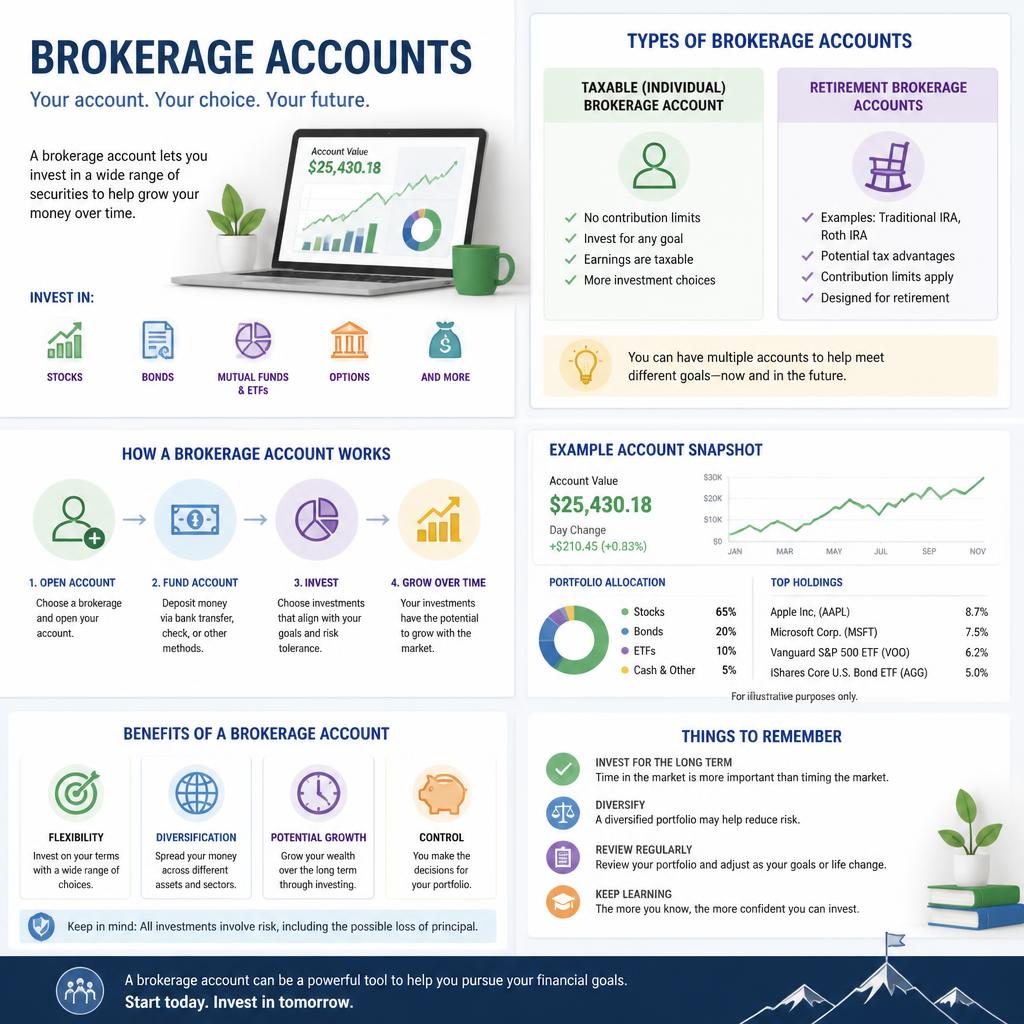
Fidelity gives you institutional grade research without charging for it. You get Morningstar equity and fund reports, Recognia technical analysis, and a stock screener with 140+ criteria. Active Trader Pro (their desktop platform) compares to Bloomberg Terminal for retail investors. Fractional shares let you invest $50 into Amazon instead of waiting to save $3,400 for one full share.
Schwab offers solid research through Schwab Equity Ratings, Market Edge, and Morningstar reports. The StreetSmart Edge platform handles most needs for intermediate traders but lacks the depth of Fidelity’s tools. Schwab’s strength is simplicity—the interface doesn’t overwhelm beginners with 47 chart indicators.
Vanguard provides basic research and deliberately avoids flashy tools that encourage overtrading. You get Morningstar reports, CFRA equity research, and a portfolio analysis tool. Vanguard’s philosophy: most investors make more money by doing less. The platform reflects this by making it easy to buy index funds and hard to day trade penny stocks.
Fidelity has the deepest research. Schwab is easier to use. Vanguard is simple by design.
If you’re just starting out and want guidance on account basics, check out our guide on best brokerage accounts for beginners.
—
Banking Integration and Cash Management
Fidelity offers a cash management account with a debit card, bill pay, and no monthly fees. But it’s not a full bank—it’s a brokerage cash account with banking features. FDIC insurance covers $250,000 per bank through a sweep program across multiple partner banks.
Schwab built a real bank. The Schwab Bank Checking Account gives you unlimited ATM fee rebates worldwide, no foreign transaction fees, and 0.48% APY on balances over $25,000. Combined with your brokerage account, you can move money instantly between investing and spending. For expats and frequent travelers, this matters.
Vanguard doesn’t offer banking. You link an external bank account and transfer funds. It’s a deliberate choice—Vanguard focuses on investing, not competing with Chase or Bank of America.
Charles Schwab wins here. If you need a brokerage and a checking account, Schwab’s setup makes the most sense.
—
Account Types and Minimums
All three brokerages offer:
- Individual and joint taxable accounts
- Traditional IRA, Roth IRA, SEP IRA
- Custodial accounts (UGMA/UTMA)
- Trust accounts
Fidelity requires $0 minimum to open any account. Mutual funds have their own minimums (typically $1-$2,500), but fractional shares eliminate barriers to ETFs and stocks.
Schwab requires $0 minimum for standard brokerage accounts. The Schwab Intelligent Portfolios robo-advisor requires $5,000. Schwab also offers 529 college savings plans and HSAs (health savings accounts) with no minimums.
Vanguard requires $0 for brokerage accounts but imposes $1,000-$3,000 minimums on most mutual funds. This keeps out small balance accounts that cost more to service than they generate in fees—part of Vanguard’s low cost structure.
All three accommodate beginners with $0 brokerage account minimums. Vanguard’s mutual fund minimums matter only if you’re buying funds instead of ETFs.
For a deeper look at brokerages with no hidden fees, see our comparison of best free brokerage accounts.
—
Customer Service and Support
Fidelity offers 24/7 phone support, live chat, and 200+ branch locations. Average phone wait time runs 3-5 minutes. Branch appointments let you sit with a rep for complex account questions—useful for rollovers and estate planning.
Schwab provides 24/7 phone and chat support with 2-4 minute average wait times. With 360+ branches across the U.S., Schwab offers more in-person access than Fidelity. The integration with TD Ameritrade added another 160 locations. Phone reps can screen share to walk you through platform features.
Vanguard operates phone support from 8am-8pm ET on weekdays, with extended hours during tax season. No branches. No live chat. Average wait time: 8-12 minutes. The tradeoff for lower costs is less immediate support. But when you reach a rep, they tend to be more knowledgeable—Vanguard doesn’t hire commission based salespeople.
Charles Schwab has better availability and branch access. Fidelity has better 24/7 support quality.
—
Mobile App Experience
Fidelity scores 4.8/5 on iOS and 4.6/5 on Android. The app handles everything: stocks, options, fractional shares, mutual funds, bill pay. You can deposit checks, monitor positions, and execute complex multi leg options trades. Push notifications for price alerts and filled orders.
Schwab rates 4.7/5 on iOS and 4.5/5 on Android. The app feels more consumer friendly than Fidelity’s—less cluttered, easier navigation for beginners. You can deposit checks, transfer funds, and trade. The Schwab Mobile app integrates with your checking account for a unified financial view.
Vanguard scores 4.6/5 on iOS and 4.3/5 on Android. The app is functional but dated. You can check balances, buy/sell, and set up automatic investments. It lacks the polish of Fidelity and Schwab but covers core needs. Vanguard’s app philosophy: fewer features mean fewer distractions from long term goals.
Fidelity has more features. Schwab has better user experience.
—
Pricing Breakdown
Fidelity Pricing Tiers
- Brokerage account: $0 minimum, $0 annual fee
- Stock/ETF trades: $0 commission
- Options trades: $0 base + $0.65 per contract
- Mutual funds: 3,300+ no-transaction-fee funds
- Margin rates: 8.325%-13.325% based on balance
Charles Schwab Pricing Tiers
- Brokerage account: $0 minimum, $0 annual fee
- Stock/ETF trades: $0 commission
- Options trades: $0 base + $0.65 per contract
- Mutual funds: 4,000+ no-transaction-fee funds
- Margin rates: 8.325%-13.325% based on balance
- Schwab Checking: $0 monthly fee, unlimited ATM rebates
Vanguard Pricing Tiers
- Brokerage account: $0 minimum, $0 annual fee
- Stock/ETF trades: $0 commission
- Options trades: $1 per contract
- Mutual funds: Vanguard funds free, others $20
- Margin rates: 8.15%-13.40% based on balance
Value comparison at three usage levels:
Usage Level Fidelity Schwab Vanguard Beginner (10 stock trades/year, $5K balance) $0/year $0/year $0/year Growing (50 trades/year, 10 options, $50K balance) $6.50/year $6.50/year $10/year Active (200 trades/year, 100 options, $250K balance) $65/year $65/year $100/year
Fidelity and Schwab cost less for active traders. Vanguard costs less for passive investors who rarely trade.
—
Fidelity Pros and Cons
Pros
- Fractional share trading on stocks and ETFs
- Strong research tools and Active Trader Pro platform
- 3,300+ no-transaction-fee mutual funds
- Zero expense ratio index funds (FZROX, FZILX)
- 24/7 customer support with 200+ branches
- $0 account minimum
Cons
- Cash management account isn’t a true bank (no checkwriting)
- Margin rates higher than Interactive Brokers
- Active Trader Pro requires download (not web based)
- International stock trading limited compared to Interactive Brokers
—
Charles Schwab Pros and Cons
Pros
- Full banking with checking account and debit card
- Unlimited ATM fee rebates worldwide
- 4,000+ no-transaction-fee mutual funds
- 360+ branches plus 4,000+ ATMs
- No foreign transaction fees on debit card
- Intuitive mobile app and platform
Cons
- No fractional share trading (arriving in 2025)
- Schwab Intelligent Portfolios requires $5,000 minimum
- Research tools less comprehensive than Fidelity
- Robo-advisor requires cash allocation (typically 6-8%)
—
Vanguard Pros and Cons
Pros
- Lowest average expense ratios in the industry (0.08%)
- Client owned structure aligns with investor interests
- Solid reputation for index investing
- No conflicts of interest (no proprietary funds pushed)
- Strong retirement plan services
- Good phone support quality
Cons
- No fractional shares
- $20 fee on non-Vanguard mutual funds
- $1 per options contract (highest of the three)
- No branches or in-person support
- Mobile app feels dated compared to competitors
- Limited trading tools for active investors
—
Who Should Choose Each Brokerage
Choose Fidelity if you
- Want fractional shares to invest small amounts in expensive stocks
- Value research tools and real time data
- Trade options occasionally and want low per-contract fees
- Need 24/7 support with branch access
- Plan to actively manage your portfolio with frequent trades
- Want zero expense ratio index funds
Choose Charles Schwab if you
- Travel frequently or live abroad (ATM fee rebates)
- Want a checking account integrated with your brokerage
- Value in-person branch access (360+ locations)
- Need a user friendly platform that doesn’t overwhelm beginners
- Want a robo-advisor with no advisory fees
- Plan to use a debit card with no foreign transaction fees
Choose Vanguard if you
- Invest primarily in index funds and hold long term
- Prioritize lowest possible expense ratios
- Value a client owned structure with no conflicts of interest
- Don’t need fractional shares or advanced trading tools
- Prefer phone support over in-person branches
- Want a brokerage that discourages overtrading by design
For more on which platforms top our 2026 rankings, see best brokerage accounts 2026.
—
Which Brokerage Makes Sense?
Fidelity makes sense for most people. The combination of fractional shares, zero fee index funds, and strong research tools makes it versatile for both beginners and active investors. You can start with $50, buy fractional shares of Tesla, and scale up to complex options strategies without switching brokerages.
Choose Fidelity if you want a complete investing platform with no major weaknesses.
Choose Charles Schwab if banking matters more than research tools. The checking account with unlimited ATM rebates and no foreign transaction fees is hard to beat for travelers and expats.
Choose Vanguard if you’re a passive index investor who values low costs. The 0.08% average expense ratio beats competitors, and the client owned structure means Vanguard will never prioritize profit over your returns.
—
Frequently Asked Questions
Is Fidelity better than Charles Schwab?
Fidelity offers better research tools and fractional share trading, which makes it stronger for active investors. Schwab has better banking with checking accounts, debit cards, and ATM rebates. Choose Fidelity for investing features, Schwab for combining banking and brokerage.
Which is cheaper, Fidelity or Vanguard?
Both charge $0 commissions on stocks and ETFs. Vanguard charges $1 per options contract vs. Fidelity’s $0.65, but Vanguard’s index fund expense ratios average 0.08% vs. Fidelity’s 0.12% (excluding zero fee funds). Over decades, Vanguard’s lower expense ratios can save thousands on large portfolios.
Does Fidelity offer a free trial?
No free trial needed—opening a Fidelity account is free with no minimum balance. You can explore the platform, research tools, and mobile app without depositing money. Once you fund the account, you can start trading immediately.
Can I switch from Vanguard to Fidelity?
Yes. Fidelity will cover transfer fees (typically $75) if you move $25,000 or more. The process takes 5-10 business days. You can transfer in kind (keep the same investments) or liquidate and transfer cash. Most investors transfer for access to fractional shares or better research tools.
Which brokerage has better customer support?
Fidelity and Schwab both offer 24/7 phone support with 2-5 minute wait times. Schwab has more branches (360+ vs. Fidelity’s 200+). Vanguard operates phone support only, 8am-8pm ET on weekdays, with 8-12 minute wait times. Schwab has better availability; Vanguard has more knowledgeable reps.
Do I need $10,000 to open a brokerage account?
No. All three brokerages (Fidelity, Schwab, and Vanguard) require $0 minimum to open a standard brokerage account. Some mutual funds have $1,000-$3,000 minimums, but you can avoid those by buying ETFs instead.
Which brokerage is best for beginners?
Charles Schwab offers a simple interface, integrated checking account, and branch access for in-person help. Fidelity has good educational resources and 24/7 support. Vanguard works best for beginners committed to passive index investing.