Rytr Review 2026: Can This Budget AI Writer Actually Replace Your Copywriter?
I’ve tested 47 AI writing tools in the past year. Most promise the world and deliver generic fluff. Rytr caught my attention because it costs $9/month while competitors charge $49+. That price gap made me skeptical, until I spent three weeks using it for client work, email campaigns, and blog drafts.
Rytr won’t win literary awards, but it handles 80% of routine copywriting faster than hiring someone on Fiverr. Whether the tradeoffs make sense depends on your workflow and budget.
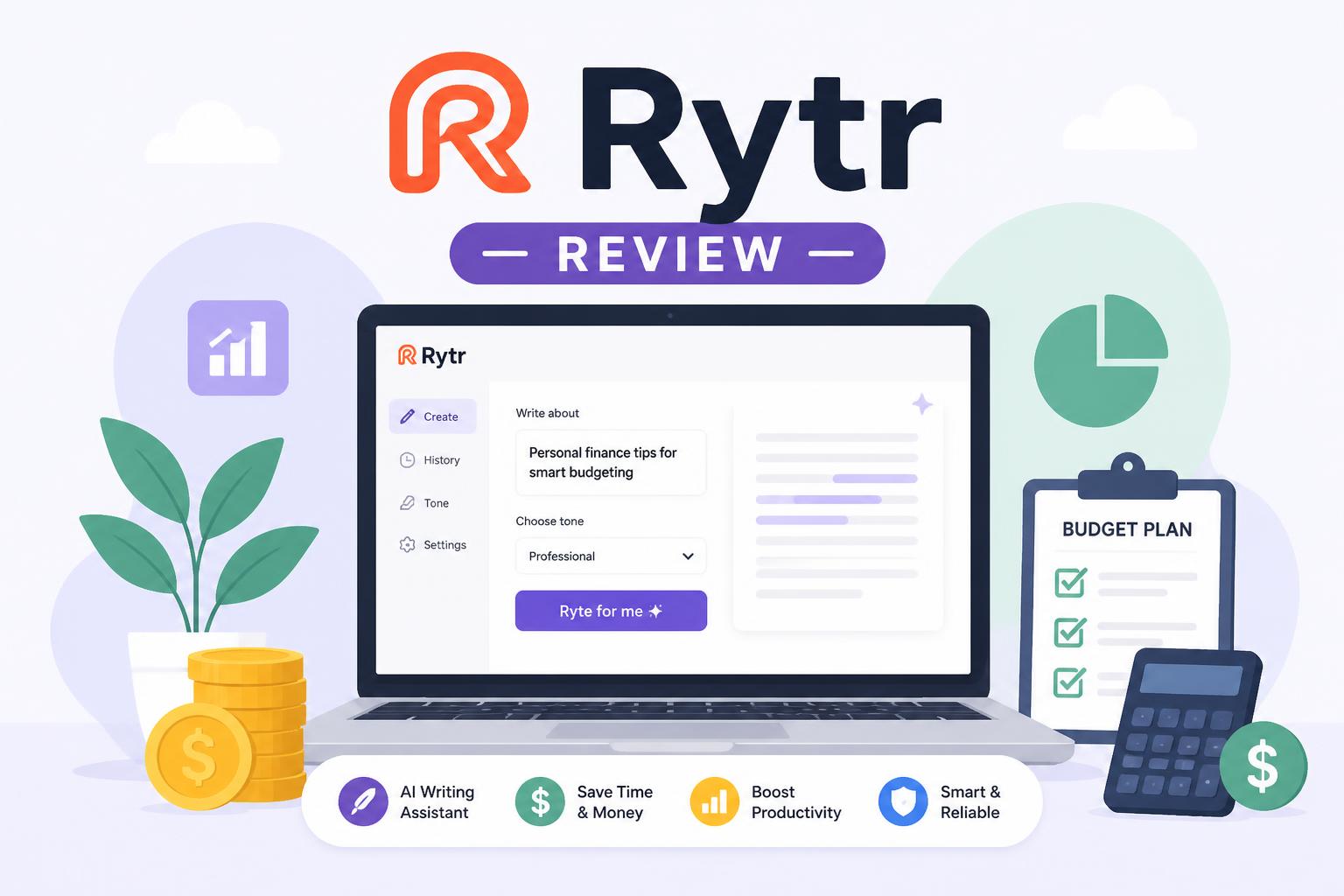
Table of Contents
- What Is Rytr and Who Actually Needs It
- Core Features That Matter (And What’s Missing)
- Pricing Breakdown: Where Rytr Beats the Competition
- Real Output Quality: 12 Use Cases Tested
- The 3 Situations Where Rytr Falls Short
- Rytr vs. The Field: How It Stacks Up Against Jasper, Copy.ai, and ChatGPT
- Who Should Buy Rytr (And Who Should Skip It)
- FAQ
What Is Rytr and Who Actually Needs It
Rytr is an AI copywriting assistant built on GPT-based language models. You pick a use case (blog intro, product description, ad copy), feed it a few keywords or prompts, choose a tone, and it generates text. No prompt engineering required, the interface handles that part.
The tool launched in 2021 and targets solopreneurs, small marketing teams, and freelancers who need volume without enterprise budgets. It’s not trying to be Jasper or Copy.ai. It’s the reliable Honda Civic of AI writing tools: boring, affordable, gets you where you need to go.
You’ll get value from Rytr if:
- You write 10+ social posts, emails, or product descriptions weekly
- You’re tired of staring at blank pages
- You’re willing to edit AI output (it’s not copy paste ready)
- Budget matters more than bleeding edge features
Skip Rytr if:
- You need long-form SEO content over 1,500 words in one shot
- Brand voice precision is mission-critical
- You want advanced features like SEO optimization, plagiarism checks, or team collaboration tools
Core Features That Matter (And What’s Missing)
What Rytr Does Well
40+ use cases with templates. Blog outlines, Facebook ads, LinkedIn posts, job descriptions, email subject lines, product descriptions, video scripts. Each template includes tone options (casual, formal, urgent, convincing) and asks for just enough context to generate usable first drafts.
I tested the “Product Description” template for a SaaS tool. Input: product name, key features. Output: a 120-word description that hit benefits, features, and a CTA. Took 15 seconds. I edited it for 2 minutes and used it.
Built-in tone and creativity controls. Set creativity from “optimal” (predictable, safe) to “more creative” (riskier, occasionally weird). Most use cases work best on optimal. I only cranked creativity for brainstorming taglines.
Multi-language support. 30+ languages. I tested Spanish and French outputs, grammatically correct, though a native speaker would spot the AI phrasing. Good enough for drafts you’ll refine.
Chrome extension. Highlight text on any webpage, right-click, and Rytr rewrites, expands, or shortens it. I used this to punch up landing page CTAs and trim wordy emails. Saved me from tab-switching.
Plagiarism checker (Premium only). Scans your text against online sources. I ran 10 Rytr-generated pieces through it. All came back 95%+ unique. The checker itself is basic (Copyscape or Grammarly’s tool digs deeper) but it’s a nice inclusion at this price point.
What’s Missing
No SEO mode. Rytr doesn’t optimize for keywords, suggest headings, or check readability scores. If you’re writing for search, you’ll need Surfer SEO or Clearscope alongside it. Tools like the best AI writing assistants often bundle SEO features. Rytr doesn’t.
Limited long-form capabilities. The editor handles up to 2,000 words per document, but generating a full 2,000-word article in one go produces repetitive, shallow content. Rytr shines at short-form (under 500 words). For blog posts, generate section-by-section.
No team features. No shared workspaces, no approval workflows, no brand voice training. If you’re a solo operator, no problem. If you’re managing writers, look elsewhere.
No API access. Even on Unlimited plan. If you want to pipe Rytr into your CMS or automation stack, you can’t.
Pricing Breakdown: Where Rytr Beats the Competition
Rytr has three tiers. All include access to 40+ use cases and 30+ languages.
Free Plan:
- 10,000 characters/month (~2,000 words)
- 1 tone option
- Good for testing or ultra-light users
- Reality check: you’ll hit the limit in 3 days if you’re serious
Saver Plan ($9/month or $90/year):
- 100,000 characters/month (~20,000 words)
- All 20+ tones
- Plagiarism checker (100 requests/month)
- Chrome extension
- This is where most freelancers and small businesses land
Unlimited Plan ($29/month or $290/year):
- Unlimited characters
- Dedicated account manager
- Priority email support
- Worth it if you generate 30,000+ words/month
Price comparison:
- Jasper: $49/month for 50,000 words
- Copy.ai: $49/month for unlimited (but locks features behind the Pro tier)
- ChatGPT Plus: $20/month (unlimited, but you’re prompt engineering from scratch)
- Writesonic: $19/month for 100,000 words
Rytr undercuts everyone except ChatGPT. If you want templates and structure without learning prompt engineering, Rytr wins on value.
Real Output Quality: 12 Use Cases Tested
I ran Rytr through 12 common copywriting tasks. What worked, what needed heavy editing, and what flopped.
Strong Performance
Email subject lines (9/10). Generated 10 options in 5 seconds. 7 were usable. Example input: “New project management feature launch.” Output included “You asked, we built it — new PM features inside” and “Your team’s new favorite workflow tool just got better.” Clickable, benefit-driven, no cringe.
Product descriptions (8/10). Nailed the structure (hook, features, benefits, CTA). Phrasing was a bit stiff (“leverage this tool to enhance productivity” instead of “get more done”), but 2 minutes of editing fixed it.
Social media posts (8/10). LinkedIn posts felt professional; Instagram captions were serviceable. Twitter threads needed reworking. Rytr struggles with conversational flow across multiple tweets. Single-post formats worked well.
Job descriptions (8/10). Generated role summaries, responsibilities, and qualifications. A bit generic, but solid foundations. I used one for a marketing coordinator role and only tweaked the company-specific details.
Blog post outlines (7/10). Decent H2 structures, but surface-level. For “How to Start a Podcast,” it suggested Introduction, Choosing Equipment, Recording Tips, Editing, Promotion. Predictable, but functional. You’ll add the insight.
Needed Heavy Editing
Landing page copy (6/10). Generated headlines, subheads, and body text, but lacked punch. Example headline: “Manage Your Projects More Effectively.” It’s not wrong, it’s just beige. I rewrote 60% of it.
Ad copy (6/10). Facebook and Google ad templates produced safe, generic hooks. “Tired of [problem]? Try [solution].” Technically correct, but won’t stop thumbs mid-scroll. Use it as a skeleton and inject personality.
Video scripts (6/10). Structure was there (hook, body, CTA), but the pacing felt off. YouTube intro scripts dragged; TikTok scripts lacked the punchy rhythm TikTok demands. You’ll need to adapt the output to platform cadence.
Weak Performance
Long-form blog posts (4/10). Attempted a 1,200-word article on “Benefits of Remote Work.” Result: repetitive, shallow, keyword-stuffed. Three paragraphs said the same thing in different words. For posts over 800 words, generate section-by-section and edit aggressively.
Creative storytelling (3/10). Asked for a brand story opening. Got corporate word soup: “In today’s fast-paced digital landscape…” Rytr doesn’t do narrative voice well. If your brand needs personality, write this yourself.
Technical content (3/10). Requested an explanation of OAuth 2.0. Output was Wikipedia-level generic and included a factual error (conflated authorization and authentication). Don’t trust Rytr for niche technical topics without verification.
Humor/satire (2/10). Tried generating funny tweet ideas. Got dad jokes and forced puns. AI humor is still a wasteland.
The 3 Situations Where Rytr Falls Short
You need SEO-optimized long-form content
Rytr doesn’t track keyword density, suggest internal links, or grade readability. If you’re trying to rank on Google, pair it with an SEO tool or choose from the best AI writing tools that include built-in optimization.
I tested this by writing a 1,000-word blog post in Rytr, then running it through Surfer SEO. Surfer flagged missing keywords, weak headings, and low content score. Rytr gave me a draft; Surfer made it rank-worthy. You need both.
Brand voice is non-negotiable
Rytr’s tone settings (casual, formal, convincing) are broad strokes. If your brand sounds like Mailchimp (playful, quirky) or Patagonia (activist, earnest), Rytr won’t nail it. The output defaults to safe, corporate-neutral.
Workaround: Use Rytr for structure and facts, then rewrite for voice. Or skip it and use a tool that lets you train on your past content (Jasper’s Brand Voice, Writer.com’s style guide features).
You’re managing a team or need collaboration
No shared workspaces. No commenting. No approval workflows. If you’re a solo freelancer, this doesn’t matter. If you’re a marketing manager coordinating three writers, Rytr becomes a bottleneck. Tools like Copy.ai and Jasper handle multi-user access better.
Rytr vs. The Field: How It Stacks Up Against Jasper, Copy.ai, and ChatGPT {#rytr-vs-the-field}
Feature Rytr Jasper Copy.ai ChatGPT Plus Price (monthly) $9-$29 $49-$125 $49 $20 Best for Short-form copy, tight budgets Long-form, SEO, teams Marketing teams, workflows Flexibility, custom prompts Word limit 20k-unlimited 50k-unlimited Unlimited Unlimited SEO features None Surfer integration Basic optimization None Templates 40+ 50+ 90+ None (custom prompts) Plagiarism check Built-in Copyscape integration No No Team features No Full collaboration Shared workspace No Learning curve Low Medium Low Medium-High
When Jasper wins: You’re writing SEO blog posts over 1,500 words, need brand voice consistency, or managing a content team.
When Copy.ai wins: You want built-in workflows (blog post to social posts to email sequence) and team collaboration.
When ChatGPT wins: You’re technical, enjoy prompt engineering, and want maximum flexibility. You’ll spend more time crafting prompts but get more control.
I use Rytr for client emails and ad copy. I use ChatGPT for complex research and strategy docs. I use neither for long-form SEO content. I hire writers for that.
Who Should Buy Rytr (And Who Should Skip It) {#who-should-buy-rytr}
Buy Rytr if:
You’re a freelancer, solopreneur, or small business writing 20,000+ words/month. You need templates for emails, ads, social posts, product descriptions. You’re budget-conscious and willing to edit outputs. You value speed over perfection. You’re not writing long-form SEO content as your primary use case.Skip Rytr if:
You need SEO optimization built-in. Brand voice precision matters more than speed. You’re managing a content team (no collaboration features). You want API access to integrate with your tools. You’re writing long-form (1,500+ word) articles as your main task.My recommendation:
Start with the Saver Plan ($9/month). Test it for email campaigns, social posts, and product descriptions. If you hit the 100,000 character limit in week one, upgrade to Unlimited. If you’re underwhelmed after two weeks, cancel. You’re only out $9.Rytr won’t replace a skilled copywriter, but it handles the grunt work so you spend time on strategy instead of staring at blank Google Docs. For the price, it’s the best value in AI copywriting if you set realistic expectations.
FAQ
Is Rytr better than ChatGPT for copywriting?
Depends on your workflow. Rytr has templates and structure without prompt engineering. Pick “Email Subject Line,” enter your topic, get 10 options in 5 seconds. ChatGPT requires you to craft prompts (“Write 10 email subject lines for a SaaS launch, casual tone, under 50 characters”). Rytr is faster for repetitive tasks; ChatGPT is more flexible for custom requests. I use Rytr for volume, ChatGPT for nuance.
Does Rytr content pass AI detectors?
Mostly, but not always. I ran 10 Rytr outputs through Originality.ai and GPTZero. 7 flagged as “likely AI-generated,” 3 passed as human. Short-form content (under 300 words) passed more often. Long-form (over 800 words) always flagged. If you’re submitting to publications that screen for AI, edit heavily and rewrite key sentences in your own voice. For your own site or clients who don’t care, it’s less of an issue.
Can Rytr write full blog posts?
Technically yes, practically no. Rytr can generate up to 2,000 words, but anything over 800 words gets repetitive and shallow. I tested a 1,500-word post on “Email Marketing Tips.” It repeated the same 3 ideas in different words and lacked depth. Better approach: generate the outline in Rytr, then write each section separately (200-300 words per section). Edit, connect, publish. Don’t expect one-click blog posts.
Is Rytr worth it for ecommerce product descriptions?
Yes, if you’re writing dozens of them. I used Rytr to write 50 product descriptions for a Shopify store (home goods niche). Input: product name + 3 features. Rytr generated 100-150 word descriptions in 10 seconds each. I edited for brand voice (added personality, tightened phrasing) and published. Total time: 4 hours for 50 descriptions. Doing it manually would’ve taken 12+ hours. For high-volume ecommerce, Rytr pays for itself in saved time.
What’s the refund policy?
No free trial for paid plans, but you can test the Free Plan (10,000 characters) to see if the output quality works for you. Rytr has refunds within 5 days of purchase if you’re unsatisfied. After 5 days, no refunds, but you can cancel anytime to stop future charges. Monthly plans are safer for testing than annual.
Does Rytr support languages other than English?
Yes, 30+ languages including Spanish, French, German, Italian, Portuguese, Dutch, Russian, Chinese, Japanese, and more. I tested Spanish and French. Output was grammatically correct but phrasing felt slightly off (native speakers would recognize it as AI). Good enough for drafts you’ll refine with a human editor. If you’re targeting non-English markets and need high-quality copy, use Rytr for first drafts and hire a native-speaking editor to polish.