Rakuten review 2026: is it still worth it for cashback?
If you shop online a few times a month, Rakuten is probably already on your radar. It routes purchases through partner links and gives you cashback afterward.
The idea sounds straightforward. In practice, it sits in a crowded space now, alongside browser extensions, card rewards, and other cashback tools. So the real question in 2026 is whether it still adds meaningful value or just adds another step before checkout.
This review breaks down how it works, what you can expect to earn, where it fits well, and where it doesn’t.
—
What Rakuten is and how it works
Rakuten is a cashback platform that partners with a large number of online retailers. Instead of applying discounts at checkout, it credits a percentage of your purchase back after you buy through its referral links.
Basic flow:
- Log into Rakuten on web or app
- Search for a store
- Click through to the retailer
- Complete your purchase as usual
- Cashback is tracked and added to your account
Payouts are usually sent quarterly, either via PayPal or check.
The main requirement is simple but easy to miss: the purchase has to start from Rakuten. If it doesn’t, the cashback generally won’t register.
—
How much cashback you can expect
Typical rates fall in a fairly wide range:
- Around 1%–10% on most stores
- Occasionally 20% or more during promotions
- Fixed sign-up or referral bonuses in some cases
For someone spending about $1,000 a month online, a 3% average return works out to roughly $360 a year.
It won’t change spending habits, but it does reduce the effective cost of purchases you were already making.
The higher returns usually come from stacking:
- Promotional cashback periods
- Credit card rewards
- Store coupons
- Browser extension activation
Used together, the difference becomes more noticeable.
—
Key features in 2026
Browser extension
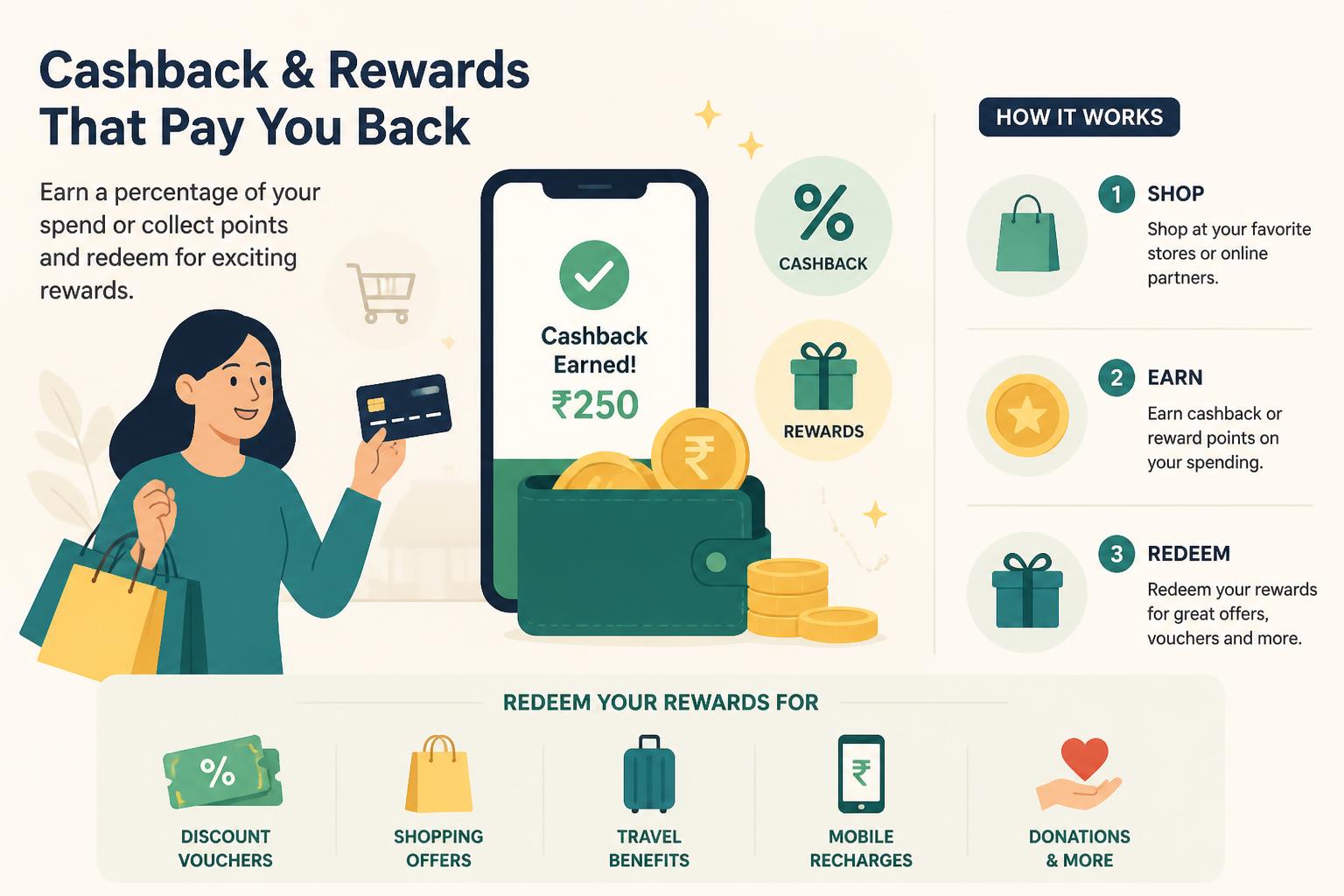
The browser extension reduces the main point of failure: forgetting to activate cashback. It flags eligible stores and activates cashback with a click.
For most users, this is the feature that determines whether Rakuten actually gets used consistently.
—
In-store cashback (limited rollout)
In some regions, Rakuten also supports in-store cashback through linked cards. You earn rewards automatically when shopping at participating retailers.
Coverage is still limited compared to online offers.
—
Promotional events
Rakuten periodically increases cashback rates for selected brands. These events tend to be where most of the meaningful savings happen for active users.
—
Referral system
The referral program offers fixed bonuses when someone signs up and completes a qualifying purchase. It’s one of the more generous referral setups in cashback platforms.
—
Pros and cons
Pros
- Simple cashback system without points or conversions
- Works with many major retailers
- No subscription fee
- Reliable payout system
- Useful browser extension
- Strong referral bonuses
Cons
- Cashback is not immediate (paid quarterly)
- Requires activation before purchase
- Rates change frequently by store
- Some exclusions apply (gift cards, certain items)
- Value depends on consistent online spending
—
Rakuten compared to other tools
Rakuten vs Honey
Rakuten focuses on cashback after purchase. Honey focuses on coupons at checkout. One is delayed savings, the other is immediate discounting.
—
Rakuten vs Capital One Shopping
Capital One Shopping leans toward price comparisons and automatic suggestions. Rakuten is closer to a cashback layer on top of normal shopping.
—
Rakuten vs credit card cashback
Credit cards already return 1%–5% depending on category. Rakuten can stack on top of that, which is where it becomes more useful than either alone.
—
Who it fits
Rakuten tends to work best for people who:
- Shop online regularly
- Buy from larger retail brands
- Don’t mind clicking through before checkout
- Prefer passive, long-term savings
It is less useful for people who rarely shop online or tend to forget activation steps.
—
Getting more out of it
A few habits make a noticeable difference:
- Using the browser extension consistently
- Combining cashback with credit card rewards and coupons
- Waiting for higher-rate promotional periods when possible
- Focusing on higher-value categories like travel or electronics
- Checking exclusions before assuming cashback applies
—
Is Rakuten still worth it?
Rakuten doesn’t change how people shop, and it doesn’t produce dramatic savings. What it does is reduce cost slightly on purchases that were already going to happen.
For moderate to heavy online shoppers, that can add up to a few hundred dollars a year without much effort. For occasional shoppers, the impact is minimal.
It works best as a background tool rather than something you actively think about.
—
Conclusion
Rakuten remains a stable cashback option in 2026. It is simple, fairly reliable, and easy to keep running in the background once set up.
It has limits, especially around timing and activation, but for regular online shopping it still offers consistent small savings over time.