Emergency Funds in 2026: Where People Are Keeping Their Safety Net
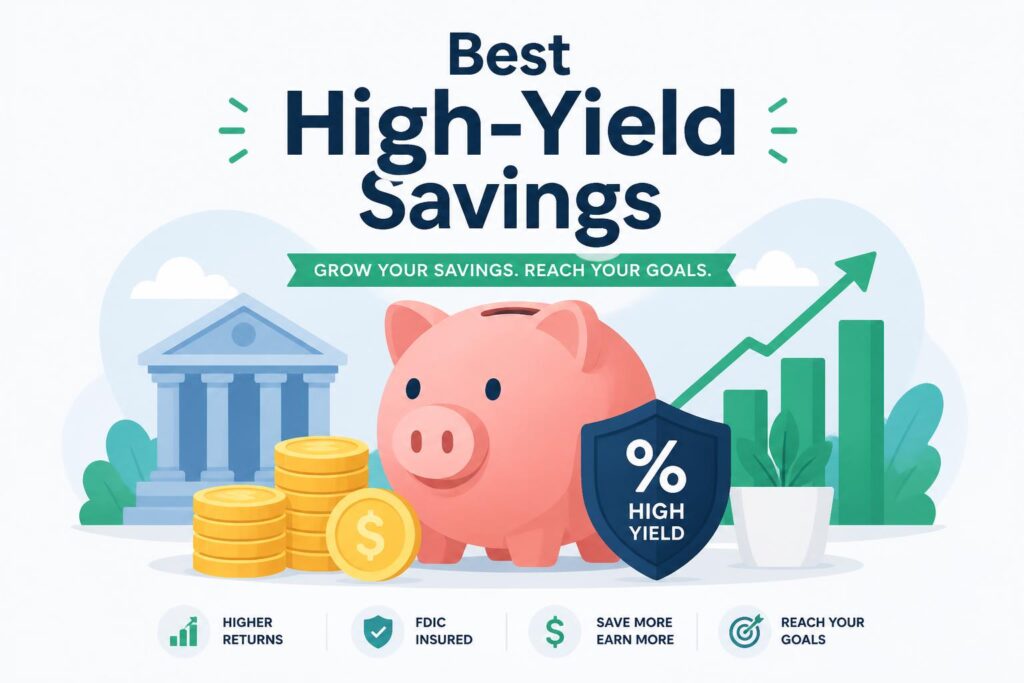
An emergency fund sounds simple on paper. In reality, the harder part is deciding where to keep it so it stays safe, easy to access, and still earns something instead of sitting idle.
Over the past few years, options have expanded quite a bit. Traditional savings accounts are still around, but now there are high-yield online banks, cash management accounts, money market funds, and short-term U.S. government Treasury Bills. Each one sits in a slightly different place between convenience, return, and restrictions.
This overview looks at commonly used options in 2026, including services from Ally Bank, Capital One, and platforms like Wealthfront.
If your savings are still sitting in a low-interest account, this is the basic landscape people are moving toward.
—
At a glance: common places for emergency funds
| Option | What it’s usually used for | Risk | Access speed |
|---|---|---|---|
| Ally Bank Savings | Simple emergency savings | Very low | High |
| Marcus by Goldman Sachs | Higher interest savings | Very low | High |
| Capital One 360 | Everyday + savings combo | Very low | High |
| Discover Online Savings | Traditional online banking | Very low | High |
| SoFi Savings | Automated saving habits | Very low | High |
| Wealthfront Cash Account | Automated cash allocation | Very low | Very high |
| Fidelity Money Market Fund | Parking larger cash amounts | Very low | Medium–high |
| Treasury Bills | Government-backed holding | Very low | Medium |
—
What we looked at
Most people don’t need complex optimization here. The main idea behind an emergency fund is still the same:
- It should be safe
- You should be able to reach it quickly
- It should not lose value
- Any interest is just a bonus
Beyond that, differences mostly come down to convenience and how each platform behaves day to day.
—
Ally Bank Savings
Ally Bank is often used as a straightforward starting point for emergency savings.
There’s not much friction here. No physical branches, no minimum balance pressure, and a clean app that doesn’t get in the way.
What stands out
- Simple online savings setup
- No monthly fees
- Easy transfers and “bucket” style saving tools
- Stable, predictable usage
What people usually don’t like
- No branch access
- Yield sometimes trails newer fintech offerings
Works well for people who just want something that holds cash safely without thinking about it too much.
—
Marcus by Goldman Sachs
Goldman Sachs offers a savings product that keeps things minimal.
It’s mostly just a place to store cash and earn interest without much else layered on top.
What stands out
- Competitive interest rates
- No fees or minimums
- Clean, simple interface
Limitations
- Not much beyond savings itself
- No broader banking tools
This tends to appeal to people who want returns without dealing with extra features.
—
Capital One 360 Performance Savings
Capital One sits in a more “everyday banking” category. Many people use it as both checking and savings in the same ecosystem.
What stands out
- Easy movement between checking and savings
- Solid mobile app
- No monthly fees
Tradeoffs
- Yield isn’t always the highest
- Less automation compared to newer fintech apps
It works well if you prefer having everything in one place.
—
Discover Online Savings
Discover Financial Services is more traditional in feel, even though it’s fully online.
What stands out
- Strong customer support
- Straightforward account structure
- No maintenance fees
Tradeoffs
- Not always the most competitive rate
- Fewer modern automation features
It’s often chosen by people who prioritize reliability over optimization.
—
SoFi Savings
SoFi tries to connect saving, spending, and investing in one place.
What stands out
- Automated saving features
- Easy mobile experience
- Extra perks tied to direct deposit
Tradeoffs
- Benefits are better when fully using the ecosystem
- Can feel like a lot if you only want a simple savings account
—
Wealthfront Cash Account
Wealthfront takes a more automated approach. It spreads deposits across partner banks for FDIC coverage.
What stands out
- Automated allocation of cash
- Competitive interest rates
- Minimal manual management
Tradeoffs
- Not a traditional single-bank setup
- Slight learning curve at first
This tends to attract people who like “set it and forget it” systems.
—
Fidelity Money Market Fund
Fidelity Investments offers money market funds that invest in short-term government securities.
What stands out
- Often higher yield than savings accounts
- Low volatility compared to stocks
- Good for larger cash balances
Tradeoffs
- Not FDIC insured
- Settlement timing is slightly slower than a bank account
This is often used once emergency funds grow larger than what people want sitting in a standard savings account.
—
U.S. Treasury Bills
Treasury Bills are short-term debt issued by the U.S. government.
What stands out
- Backed by the government
- Predictable returns
- Very low default risk
Tradeoffs
- Less flexible access compared to bank accounts
- Requires buying and managing maturities
People usually use these when they want maximum stability and are okay with a bit less convenience.
—
How people usually combine these
Most emergency setups aren’t just one account anymore. A common split looks like:
- Majority in a high-yield savings account
- Smaller portion in money market funds or Treasury Bills
The idea is simple: keep most of it instantly accessible, while letting a smaller portion earn a bit more where it makes sense.
—
Choosing what fits
There isn’t really a single “best” setup. It depends on how you use money day to day:
- If you want something simple: Ally Bank
- If you want slightly higher yield: Marcus or Wealthfront
- If you want everything in one banking app: Capital One 360
- If you want maximum safety: Treasury Bills
- If your emergency fund is large: Fidelity money market funds
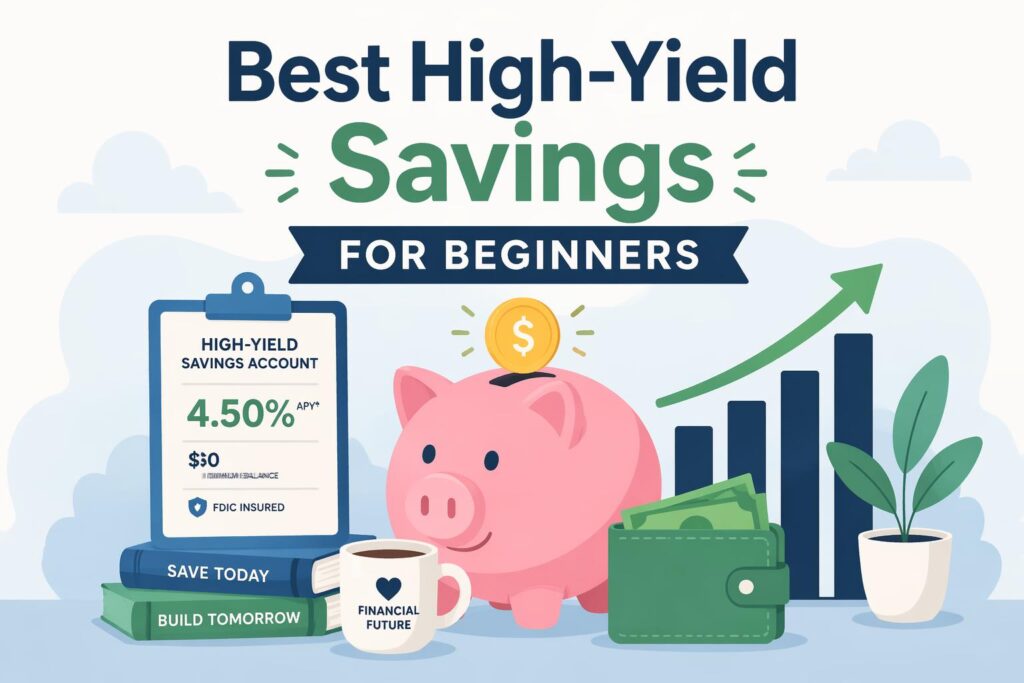
For most people, the simplest approach still wins. A basic high-yield savings account covers the main job without adding complexity.
—
A simple reality check
Emergency funds don’t need to be optimized endlessly. The important part is that the money is there when something unexpected happens.
Everything else—rates, features, platforms—is secondary to that.
—
Common questions
How big should an emergency fund be?
Most people aim for a few months of essential expenses, usually 3–6 months.
Are money market funds risky?
They’re generally stable, but unlike bank accounts, they don’t come with FDIC insurance.
Can you lose money in these options?
In standard savings accounts and Treasury Bills, the risk of loss is extremely low.
—
Closing thought
Most of these options work fine. The differences are more about comfort and convenience than dramatic financial outcomes.
For many people, a simple high-yield savings account like those from Ally Bank or similar banks is enough. More complex setups usually come later, once balances grow and people start fine-tuning where cash sits.