Upstart review 2026: AI loans explained
If you’ve ever applied for a personal loan and felt like the decision came down to a single credit score number, Upstart probably sounds like a welcome change.
It pitches a different approach: using AI to look beyond traditional credit data. In 2026, though, plenty of lenders say something similar, so the real question is whether it actually helps you get a better loan or just repackages the same system with new language.
This review goes through how it works, what it costs, and where it tends to fall short.
—
What Upstart is
Upstart is an online lending platform that connects borrowers with banks and credit unions. It doesn’t lend the money itself. Instead, it runs the approval model and passes the loan to partner institutions for funding.
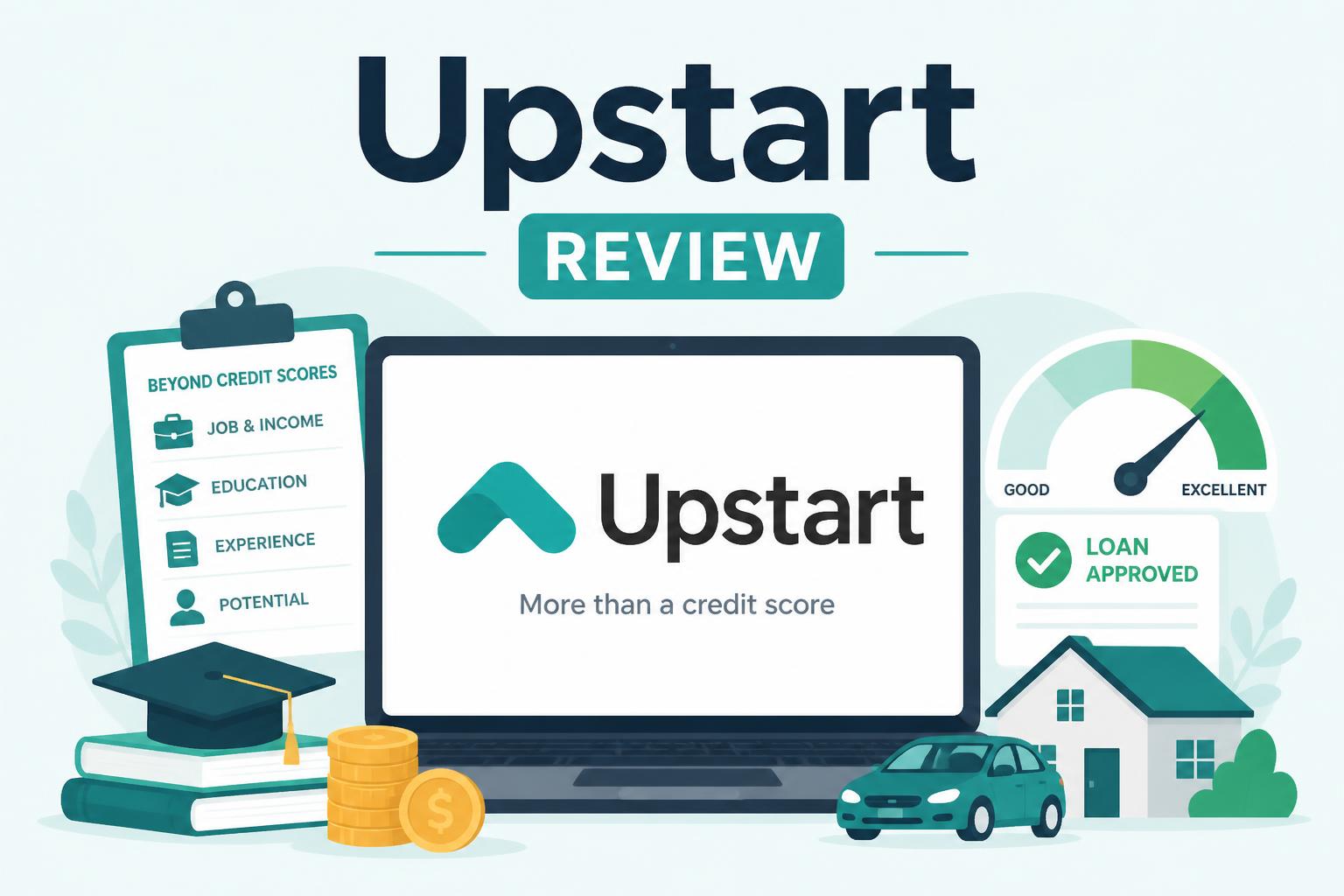
What makes it different is how it evaluates applicants. Credit score still matters, but it also looks at things like:
- education history
- employment background
- income stability
- debt-to-income ratio
The goal is to approve people who might get filtered out by traditional scoring.
—
How it works in 2026

The process is fairly simple and usually quick.
1. Pre-qualification
You enter basic financial details and get a soft credit check. This doesn’t affect your score.2. Evaluation
The system combines credit data with other signals like income and employment history.3. Offers
If approved, you’ll see one or more loan options with different:- interest rates (APR)
- repayment terms, usually 3–5 years
- monthly payment amounts
4. Funding
After you accept, money typically arrives within a few business days.It’s built for speed and relatively low friction compared to a traditional bank.
—
What loans are available
Upstart mostly offers unsecured personal loans. People use them for things like:
- paying off credit cards
- consolidating debt
- medical bills
- larger one-off expenses
- emergency costs
There’s no collateral involved, which makes approval easier but usually pushes interest rates higher than secured loans.
—
interest rates and costs
This is where expectations and reality often diverge.
Rates vary a lot depending on your profile:
- stronger credit profiles: mid-teens APR
- average profiles: high-teens to mid-20s
- weaker profiles: can go above 30%
fees
- origination fee is often taken from the loan amount
- late fees depend on the partner lender
- most loans don’t have early repayment penalties
One thing worth being clear about: this isn’t a low-cost lending option in general. It’s more about access and approval than cheap borrowing.
—
who gets approved
Upstart is more flexible than traditional banks, but it’s not open approval.
You’re more likely to qualify if you have:
- steady income
- manageable debt levels
- some credit history
- no recent major defaults
Approval becomes harder if you have unstable income, high existing debt, or recent serious missed payments.
The model expands the pool, but it doesn’t remove risk checks.
—
upstart vs traditional banks
Feature Upstart Traditional bank Speed Fast Slower Approval flexibility Higher Lower Interest rates Wide range Often lower for strong credit Paperwork Light Heavier Criteria AI + credit data Mostly credit score
—
strengths that don’t get talked about much
A few things that matter in practice but don’t always show up in marketing:
soft credit check
You can see potential offers without impacting your credit score.fast turnaround
Funding in a few days can matter if you’re dealing with credit card cycles or urgent bills.broader approval logic
People with limited credit history sometimes get access earlier than they would at a bank.fixed payments
Everything is structured, which makes it easier to plan compared to revolving credit cards.—
common issues
It’s not perfect, and user feedback tends to cluster around a few points.
higher-than-expected rates
Some borrowers expect near-bank pricing and end up disappointed.origination fees
The actual amount you receive can be lower than the loan amount you agreed to.inconsistent experience
Since loans are issued by partner banks, details can vary slightly.limited flexibility
Once the loan is set, changing terms is usually difficult.—
debt consolidation use case
This is where Upstart is most often used.
It tends to make sense if:
- your new APR is clearly lower than what you’re paying now
- you want fixed monthly payments instead of revolving debt
- you won’t run up credit cards again after consolidating
It doesn’t help much if the rate difference is small or if spending habits don’t change.
Consolidation only works when it actually reduces interest and simplifies repayment in a meaningful way.
—
who it fits
Upstart is usually a decent fit if you:
- need a personal loan quickly
- have fair to good credit but limited history
- want predictable monthly payments
- are consolidating higher-interest debt
It’s less useful if you:
- already qualify for low rates at a credit union or bank
- are sensitive to origination fees
- are only shopping for the absolute lowest APR
—
a simple example
Say someone has:
- $10,000 in credit card debt at 24% APR
- payments that mostly cover interest
If they move that into a loan at 15%:
- payments become fixed
- interest drops noticeably
- payoff becomes more predictable
If the rate is closer to 20%, though, the improvement is small and sometimes not worth it after fees.
—
faq
is Upstart safe?
Yes. Loans are issued through regulated banks and standard security practices apply.does checking rates hurt credit?
No. The initial check is soft. A hard inquiry only happens if you accept a loan.how fast is funding?
Usually 1–3 business days after approval.can you pay early?
Yes, most loans allow early repayment without penalties.is it better than a bank?
Sometimes. It’s usually faster and more flexible, but not always cheaper.—
final take
Upstart in 2026 isn’t really a “cheap loan” platform. It’s more of an access tool.
It helps people get approved when traditional systems are stricter, and it makes borrowing faster and more structured. But the price of that access can be higher interest rates.
If you’re using it for debt consolidation or urgent financing and you’ve checked that the rate actually improves your situation, it can work well enough.
If your main goal is the lowest possible interest rate, it’s still worth comparing against credit unions and banks before locking anything in.