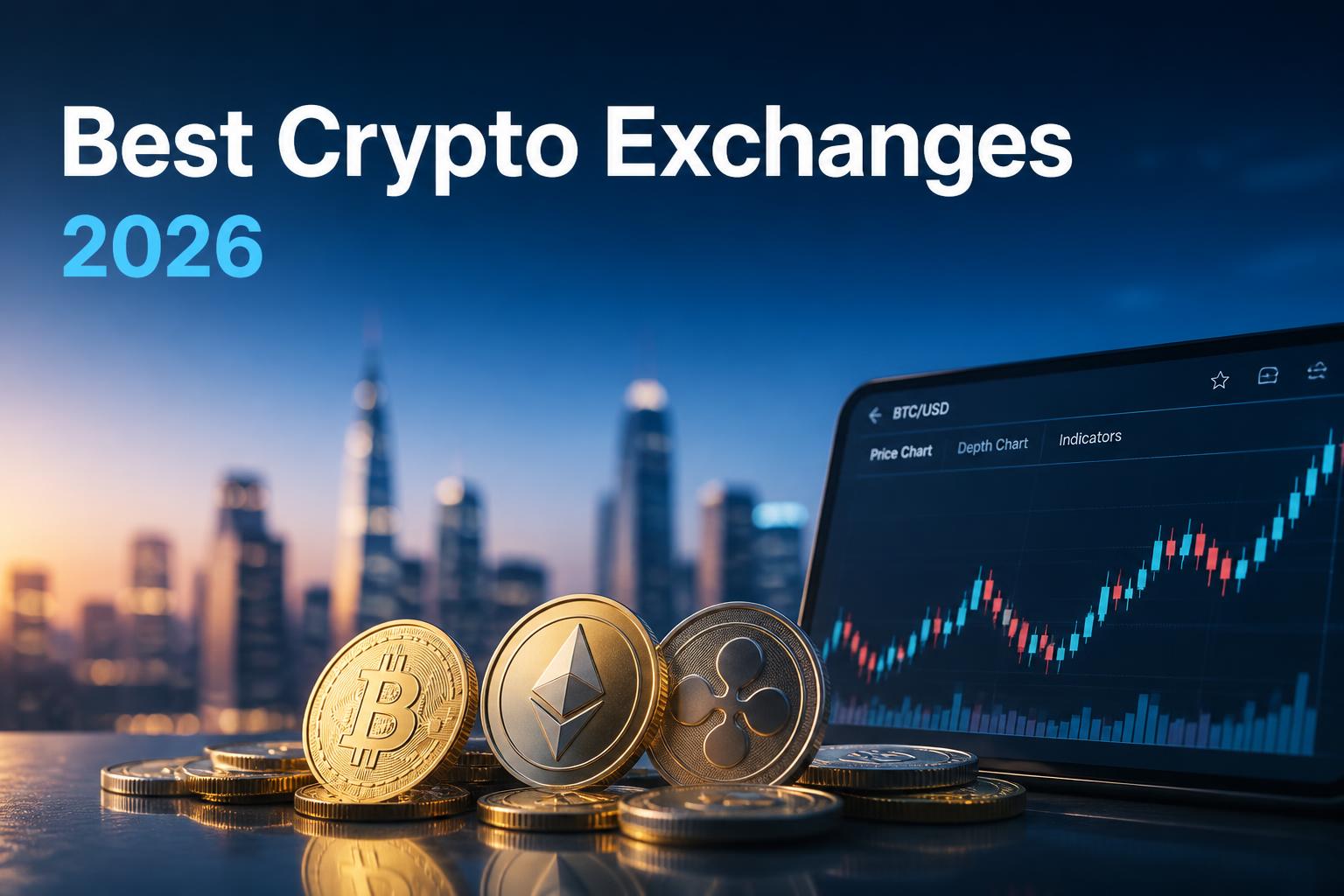
Best crypto exchanges 2026 (ranked and reviewed)
The crypto market in 2026 is crowded. Most major exchanges now offer spot trading, derivatives, staking, and some form of passive yield. The harder part is not finding a platform, but figuring out which one actually fits how you trade.
This guide compares the most used global exchanges based on fees, security, liquidity, supported assets, and overall usability.
Binance, Coinbase, and Kraken still lead in most categories, but they serve different types of users.
—
At a glance
Exchange Best for Starting fees Free plan Binance Low fees and advanced trading ~0.1% Yes Coinbase Simplicity and beginners Higher spreads Yes Kraken Security and reliability ~0.16% Yes Bybit Futures and derivatives Competitive Yes OKX Trading plus Web3 tools Low Yes KuCoin Altcoin variety Low Yes Crypto.com Mobile app and rewards Medium Yes Bitstamp Long-term holding Low Yes
How these exchanges were evaluated
The rankings are based on a mix of practical factors:
- Security and regulatory standing
- Trading fees and hidden costs
- Liquidity and order execution
- Range of supported assets
- Ease of use on mobile and desktop
- Advanced features like futures, staking, and APIs
- Fiat deposits and withdrawals
No single platform leads in everything. The strongest ones are balanced across several areas.
—
1. Binance — low fees and advanced trading tools
Binance remains the most widely used exchange in 2026. It has deep liquidity, low fees, and a large set of products covering spot, margin, futures, staking, and new token listings.
It works well for active traders, though the interface can take time to get used to.
Key features
- Spot, margin, and futures trading
- High liquidity on major pairs
- Staking and earn products
- Advanced charting tools
- API support for automated trading
Fees
- Spot trading around 0.1%
- Lower fees available for futures depending on volume
- Discounts when using the native token
Pros
- Low trading costs
- Large selection of cryptocurrencies
- Strong liquidity and fast execution
- Broad feature set
Cons
- Can feel complex for new users
- Restricted access in some regions
—
2. Coinbase — simple entry point for beginners
Coinbase focuses on ease of use. It is often the first platform people use when entering crypto because of its simple interface and strong compliance setup.
Key features
- Simple buy and sell interface
- Educational rewards system
- Custody and security protections
- Mobile-focused design
Fees
- Higher spreads on basic trades
- Separate advanced trading interface available
Pros
- Very easy to navigate
- Strong regulatory reputation
- Widely trusted brand
- Good security practices
Cons
- Higher fees than most competitors
- Limited advanced tools in the basic app
—
3. Kraken — focus on security and stability
Kraken is known for reliability and a long operating history without major security incidents. It tends to appeal to users who prioritize safety and stable infrastructure.
Key features
- Spot and futures trading
- Staking options
- Institutional services
- Strong fiat support
Fees
- Around 0.16% maker fees at base level
- Lower fees for higher volume users
Pros
- Strong security record
- Transparent operations
- Reliable uptime
- Solid fiat on-ramps
Cons
- Less modern interface
- Smaller token selection than larger competitors
—
4. Bybit — futures-focused trading platform
Bybit is mainly used for derivatives trading. It is popular with traders who rely on leverage and short-term strategies.
Key features
- Perpetual futures contracts
- High leverage options
- Copy trading
- Fast execution system
Fees
- Low maker and taker fees
- Discounts for high-volume users
Pros
- Strong derivatives liquidity
- Fast order execution
- Useful trading tools
- Copy trading options
Cons
- Limited fiat onboarding in some regions
- Not ideal for beginners
—
5. OKX — trading and Web3 combined
OKX mixes traditional exchange services with Web3 tools. It is one of the more feature-rich platforms, though that also makes it more complex.
Key features
- Spot, futures, and options trading
- Built-in Web3 wallet
- NFT access
- DeFi tools
Fees
- Generally low trading fees
- Tiered discounts for active users
Pros
- Broad ecosystem beyond trading
- Advanced tools for experienced users
- Integrated Web3 access
Cons
- Interface can feel dense
- Some features vary by region
—
6. KuCoin — large selection of altcoins
KuCoin is often used for smaller or newer tokens that are not yet listed on major exchanges.

Key features
- Large range of altcoins
- Futures and margin trading
- Staking and lending
Fees
- Around 0.1% for spot trading
Pros
- Wide token selection
- Early access to new projects
- Active trading community
Cons
- Regulatory clarity varies
- Fiat support is limited in some regions
—
7. Crypto.com — mobile-first experience
Crypto.com focuses on mobile users and spending features, including its crypto card and rewards system.
Key features
- Mobile trading app
- Crypto debit card
- Rewards and cashback programs
- Staking options
Fees
- Mid-range fee structure
- Discounts through staking
Pros
- Strong mobile experience
- Useful rewards ecosystem
- Easy fiat onboarding
Cons
- Fee structure can feel unclear
- Desktop tools are more limited
—
8. Bitstamp — simple and stable platform
Bitstamp is one of the oldest exchanges still operating. It is known for consistency rather than feature depth.
Key features
- Simple trading interface
- Fiat deposits and withdrawals
- Institutional custody options
Fees
- Low to moderate fees
Pros
- Long track record
- Stable and reliable
- Easy fiat support
Cons
- Limited advanced features
- Smaller asset selection
—
Comparison overview
Feature Binance Coinbase Kraken Bybit OKX KuCoin Free access Yes Yes Yes Yes Yes Yes Low fees High Low Medium High High High Beginner friendly Low High Medium Low Medium Low Altcoin range High Low Medium Medium High High Futures trading High Low Medium High High Medium
How to choose
Most users end up choosing based on their main goal:
- Beginners usually prefer Coinbase for simplicity
- Active traders often lean toward Binance for fees and liquidity
- Security-focused users tend to choose Kraken
- Futures traders usually go with Bybit
- Users exploring Web3 often prefer OKX
—
FAQ
What is the best crypto exchange in 2026?
Binance is widely used due to its fees and liquidity.Which exchange is safest?
Kraken has one of the strongest reputations for security.What is best for beginners?
Coinbase is the simplest starting point.Which exchange has the lowest fees?
Binance and KuCoin usually rank lowest.Can I use more than one exchange?
Yes. Many users split between long-term holding and active trading platforms.—
Final note
Binance is the most complete option overall if you want one platform that covers most needs.
Coinbase is easier if you are just getting started.
Most traders eventually use more than one exchange depending on what they are doing.