Crypto exchanges for small budgets (2026): low fees and simple starting points
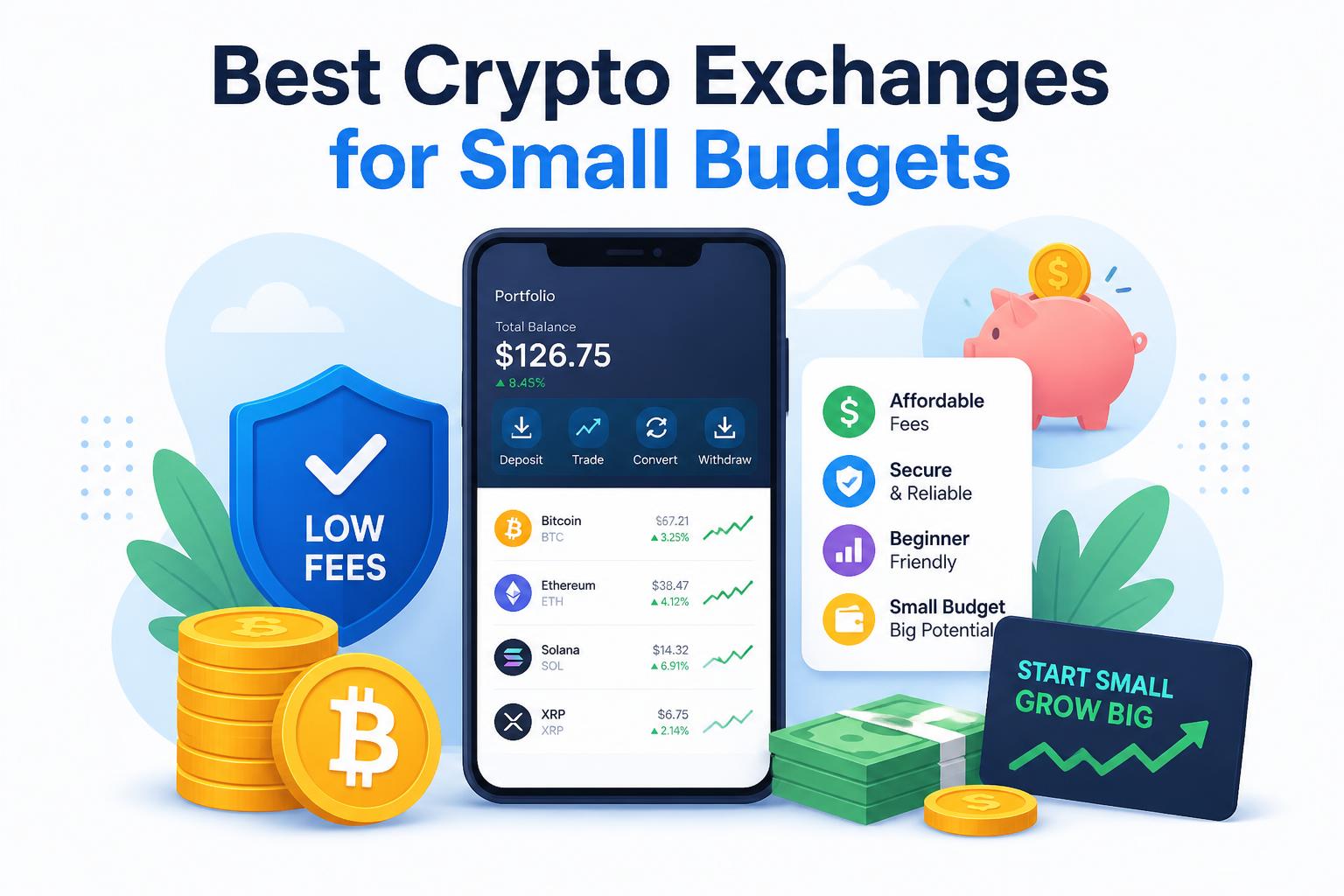
When you start with a small amount of money, the hard part usually isn’t deciding what to buy. It’s figuring out where you can trade without losing too much to fees, spreads, or confusing pricing.
Some platforms take more than it looks like at first glance. Others keep things simpler, with lower trading costs and fewer surprises.
This overview looks at commonly used exchanges in 2026, with a focus on low fees, ease of use, and what actually matters when your account is still small.
—
Quick comparison of low-fee exchanges (2026)
Exchange What it’s often used for Typical fees Free plan MEXC Very low trading fees ~0%–0.05% Yes Binance Liquidity and general use ~0.1% No Kraken Fiat support and stability ~0.16%–0.26% No Bybit Active trading ~0.1% No OKX Tools + lower fees ~0.08%–0.1% No KuCoin Altcoin selection ~0.1% No Coinbase Simple onboarding ~0.5%+ Limited Crypto.com Mobile app experience ~0.075%–0.4% No Bitstamp Fiat deposits ~0.3%–0.4% No Gemini Security-focused users ~0.4%+ No
How these were looked at
For small accounts, the difference between platforms isn’t just the fee percentage. A few other things tend to matter just as much:
- trading fees (maker/taker setup)
- deposit and withdrawal costs
- minimum trade size
- how clear pricing feels
- ease of use
- liquidity (how easily trades execute at expected prices)
- security and general reputation
Hidden costs and execution quality can matter more than headline fees when the balance is small.
—
MEXC — very low-cost trading
MEXC is often chosen by people who want to keep trading costs close to zero, especially for smaller or more frequent trades.
It supports a wide range of tokens and tends to focus on keeping fees low.
What stands out
- very low trading fees (often near zero for makers)
- large selection of coins
- spot and futures trading
- straightforward account setup
Fees
- spot: ~0% maker / ~0.05% taker
- futures: varies by volume
Downsides
- interface can feel crowded at first
- liquidity is uneven on smaller pairs
- regulatory perception varies by region
Best suited for users focused mainly on minimizing trading costs.
https://www.mexc.com
—
Binance — strong liquidity and steady pricing
Binance is widely used because trades usually execute at stable prices, especially for major coins.
The fee rate isn’t the lowest on paper, but execution quality often makes up for it.
What stands out
- deep liquidity
- consistent pricing in active markets
- large asset selection
- fee discounts if using BNB
Fees
- around ~0.1% spot trading
Downsides
- interface can feel complex
- many features that beginners may not use
https://www.binance.com
—
Kraken — simple and stable
Kraken is often chosen by people who prefer a straightforward setup and fiat support.
It doesn’t aim for the lowest fees, but it tends to be consistent and easy to trust.
What stands out
- strong security history
- easy fiat deposits
- clear fee structure
- regulated operations in multiple regions
Fees
- ~0.16% maker / ~0.26% taker (varies)
Downsides
- higher fees than low-cost competitors
- fewer altcoins
https://www.kraken.com
—
Bybit — active trading setup
Bybit is more oriented toward users who trade regularly and want fast execution.
What stands out
- fast order execution
- spot and derivatives markets
- copy trading features
- clean mobile app
Fees
- ~0.1% spot trading
Downsides
- can feel advanced for beginners
- more trading-focused than simple buy/sell platforms
https://www.bybit.com
—
OKX — trading tools with lower fees
OKX sits somewhere between beginner platforms and advanced trading tools.
What stands out
- relatively low fees
- advanced order types
- Web3 wallet integration
- wide product range
Fees
- ~0.08%–0.1% spot
Downsides
- learning curve
- interface can feel dense
https://www.okx.com
—
KuCoin — wide altcoin access
KuCoin is known for listing smaller coins earlier than many competitors.
What stands out
- large selection of altcoins
- trading bots available
- spot and futures support
Fees
- around ~0.1%
Downsides
- risk varies with smaller tokens
- regulatory coverage depends on region
https://www.kucoin.com
—
Coinbase — easiest starting point
Coinbase is usually chosen for its simplicity rather than cost.
What stands out
- simple interface
- easy fiat deposits
- strong compliance focus
Fees
- ~0.5%+ on basic usage
Downsides
- higher costs than most competitors
- fewer advanced tools in simple mode
https://www.coinbase.com
—
Crypto.com — mobile-focused ecosystem
Crypto.com is built around mobile usage and bundled services.
What stands out
- mobile-first app
- integrated ecosystem (card, rewards, etc.)
- beginner-friendly onboarding
Fees
- ~0.075%–0.4% depending on tier
Downsides
- fee structure depends on usage level
- product range can feel scattered
https://www.crypto.com
—
Bitstamp — simple fiat access
Bitstamp is one of the older exchanges and stays focused on basic trading and fiat deposits.
What stands out
- simple interface
- stable fiat onboarding
- long operational history
Fees
- ~0.3%–0.4%
Downsides
- higher fees than newer competitors
- limited features
https://www.bitstamp.net
—
Gemini — security-focused platform
Gemini prioritizes compliance and security over low fees.
What stands out
- strong regulatory approach
- secure custody systems
- simple onboarding
Fees
- ~0.4%+
Downsides
- higher cost structure
- fewer trading options
https://www.gemini.com
—
Side-by-side view
Feature MEXC Binance Kraken OKX KuCoin Coinbase Fees Very low Low Medium Low Low High Ease of use Medium Medium High Medium Medium Very high Liquidity Medium High High High Medium High Altcoins High High Medium High High Low Security Medium High High High Medium High
Choosing one
There isn’t a single “best” option for everyone. It depends more on how you plan to use it:
- lowest fees: MEXC or OKX
- balance of liquidity and cost: Binance or Kraken
- first-time use: Coinbase
- altcoin access: KuCoin
- mobile-first experience: Crypto.com
With small balances, differences in fees are usually small in absolute terms. Mistakes, spreads, and poor timing often cost more than the fee itself.
—
A few common questions
Which exchange is cheapest? MEXC and OKX usually have the lowest trading fees.
Is Binance beginner-friendly? It works fine for beginners, but it takes a bit of time to get used to.
Do fees matter for small accounts? Yes, but execution quality and avoiding mistakes often matter more.
Is Coinbase too expensive? It’s more expensive, but many people use it for simplicity.
—
Final note
For most people starting small, Binance or MEXC are common starting points. Binance for stability and liquidity, MEXC for lower fees.
If simplicity matters most, Coinbase is usually the easiest entry.
Start simple, keep risk small, and don’t over-focus on tiny fee differences.
—
Extra notes
- screenshots of trading apps help more than theory
- fee structures change often, so they’re worth checking before trading
- small accounts benefit most from avoiding unnecessary trades rather than chasing perfect platforms