Best Crypto Exchanges Compared (2026): Fees, Security, and Ease of Use
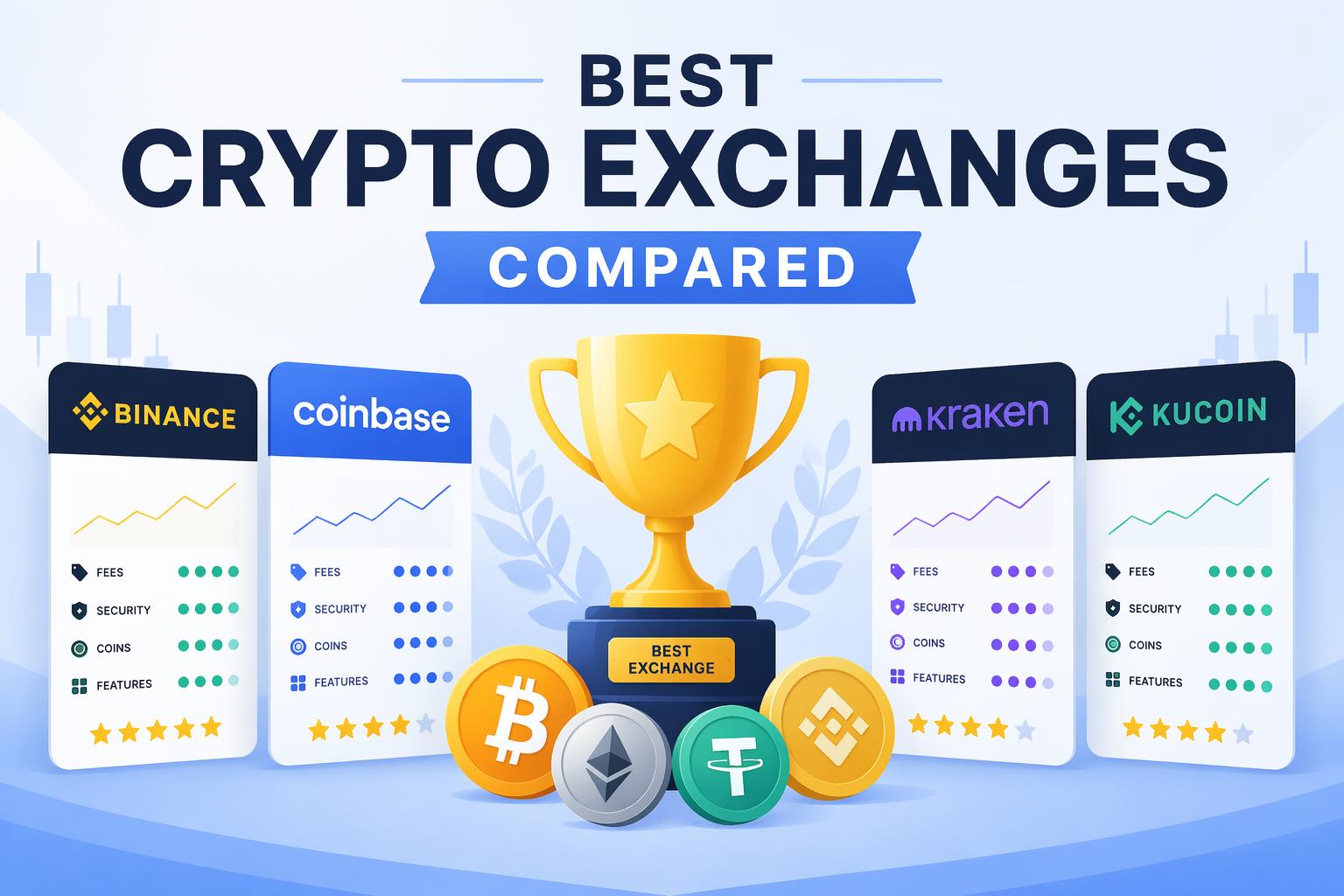
Picking a crypto exchange isn’t just about fees. It affects how safe your funds are, how quickly trades go through, and how frustrating (or smooth) your day-to-day experience feels. With so many platforms out there, the differences can feel small until you actually start using them.
This overview looks at major exchanges in 2026 based on security, fees, liquidity, supported assets, and general usability. Binance, Coinbase, and Kraken are still major players, but several newer platforms have carved out strong niches.
If you’re trying to decide where to start or whether to switch, this breakdown should help narrow things down.
—
At a glance: major exchanges
Exchange Main strength Typical fees Binance Low fees, deep liquidity ~0.1% Coinbase Simple for beginners ~0.5%–1% Kraken Security focus ~0.16% OKX Derivatives and Web3 tools ~0.08%–0.1% Bybit Futures trading ~0.1% KuCoin Wide altcoin selection ~0.1% Bitget Copy trading tools ~0.1% Crypto.com Mobile app experience ~0.1%–0.4% Gemini Compliance and security ~0.2%
How these platforms were compared
Each exchange was looked at through a few practical lenses:
- How funds are stored and protected
- Trading fees and spreads
- Liquidity and order execution
- Number of supported assets
- Ease of use on mobile and desktop
- Availability of advanced tools like futures or staking
- Regulatory standing in different regions
- Extra features such as cards, earn programs, or Web3 tools
—
Binance
Binance is still one of the largest global exchanges. The main draw is liquidity and low fees, especially for frequent traders. You’ll find spot trading, futures, staking, launchpads, and a fairly large ecosystem around it.
It can feel overwhelming at first, but that flexibility is also why experienced traders stick with it.
What stands out
- Very low trading fees
- Large selection of coins
- Strong liquidity on major pairs
- Wide set of trading tools
Trade-offs
- Not very beginner-friendly
- Access varies by country
—
Coinbase
Coinbase is usually where people start. The interface is clean, and buying crypto doesn’t require much learning. It’s built more for simplicity than advanced trading.
Fees are higher unless you switch to its advanced trading interface, but many users accept that trade-off for ease of use.
What stands out
- Very easy to use
- Strong regulatory reputation
- Simple fiat deposits
Trade-offs
- Higher fees on basic interface
- Limited advanced tools unless upgraded
—
Kraken
Kraken tends to attract users who care more about safety and consistency than features. It has a long track record and is often mentioned in discussions about security.
The interface is more traditional and less flashy, but it gets the job done.
What stands out
- Strong security reputation
- Reliable uptime
- Transparent operations
Trade-offs
- Fewer features than larger competitors
- Interface feels conservative
—
OKX
OKX sits somewhere between a trading platform and a broader Web3 ecosystem. It’s strong in derivatives and also offers wallet and DeFi access.
It’s powerful, but not always the easiest platform for beginners to navigate.
What stands out
- Competitive trading fees
- Web3 and DeFi integration
- Strong derivatives offering
Trade-offs
- Interface can feel dense
- Learning curve for new users
—
Bybit
Bybit focuses heavily on derivatives. The platform is built for speed and execution, which appeals to futures traders.
Spot trading exists, but it’s not the main focus.
What stands out
- Strong futures trading tools
- Fast execution
- Copy trading features
Trade-offs
- Limited focus on spot investing
- Not ideal for beginners
—
KuCoin
KuCoin is known for listing a large number of smaller or newer tokens. It’s often used by people looking for early exposure to less established coins.
That also comes with more risk and less regulatory clarity in some regions.
What stands out
- Very large altcoin selection
- Early listings of new tokens
- Staking and lending options
Trade-offs
- Regulatory uncertainty in some countries
- Interface less polished than top-tier platforms
—
Bitget
Bitget has built its identity around copy trading. Users can follow and replicate strategies from other traders, which lowers the barrier to entry for active trading.
It’s especially popular with newer traders who want some automation.
What stands out
- Copy trading system
- Futures tools
- Simple trading automation
Trade-offs
- Smaller ecosystem
- Less established reputation
—
Crypto.com
Crypto.com leans heavily into mobile usage and lifestyle features. Alongside trading, it offers a card system and rewards programs tied to crypto spending.
It’s more of an all-in-one app than a pure trading platform.
What stands out
- Strong mobile app
- Crypto Visa card and rewards
- Staking and earn features
Trade-offs
- Fee structure can be confusing
- Some features depend on tier levels
—
Gemini
Gemini focuses on compliance and security. It’s often chosen by users who prefer stricter regulatory environments and simpler trading tools.
Fees are generally higher, but the platform positions itself as conservative and secure.
What stands out
- Strong regulatory focus
- Cold storage approach
- Clean interface
Trade-offs
- Higher fees
- Fewer advanced features
—
General comparison
Some clear patterns show up across platforms:
- Binance and OKX tend to lead on fees and trading depth
- Coinbase is still the easiest entry point
- Kraken and Gemini lean more toward security and compliance
- Bybit and OKX dominate derivatives trading
- KuCoin is where many people go for smaller altcoins
- Bitget focuses on copy trading rather than manual strategy
—
Choosing a platform
There isn’t really a single “best” exchange for everyone. It depends on what you care about:
- If you’re new, Coinbase is usually the simplest place to start
- If you care about cost and features, Binance or OKX are common picks
- If safety is your main concern, Kraken or Gemini feel more conservative
- If you want derivatives, Bybit or OKX are more specialized
- If you’re exploring smaller tokens, KuCoin tends to have more variety
- If you prefer following others, Bitget is built around that idea
—
Final note
Most active traders end up using more than one exchange. Each platform has strengths and gaps, and it’s common to split use between a main account and a secondary one for specific needs.
Binance still covers the widest range for most people, but it’s not the only reasonable option anymore.