Robinhood vs Interactive Brokers: Which Trading Platform Actually Fits Your Strategy in 2026?
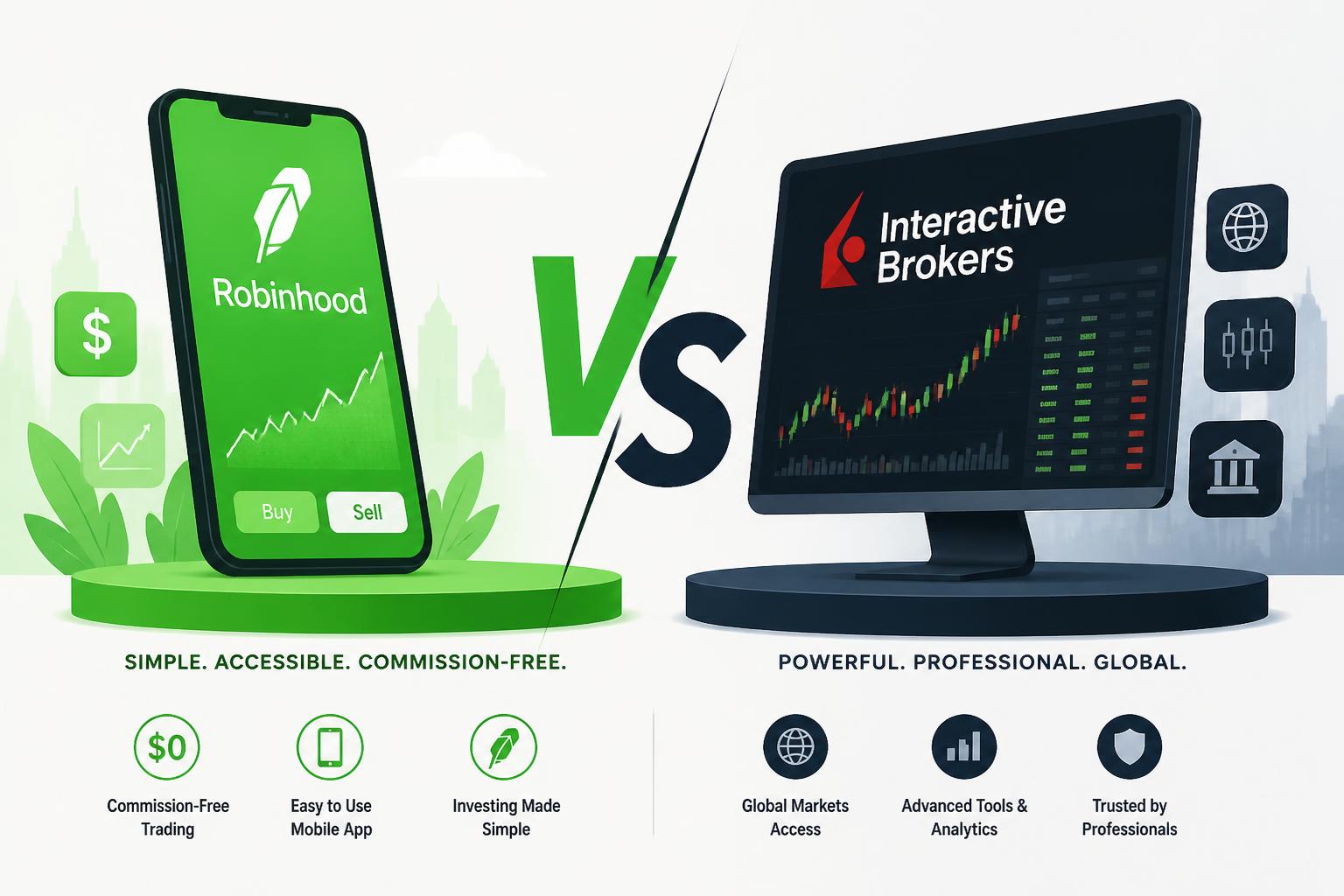
Choosing between Robinhood and Interactive Brokers isn’t about picking the “better” platform. It’s about matching the right tool to your trading style. One is built for simplicity and zero commissions. The other offers 150+ global markets and institutional grade tools. Both work. Neither is universal.
If you’re stuck comparing feature lists and still unsure which fits, you’re asking the wrong question. The decision comes down to what you trade, how often, and whether you need access beyond U.S. markets.
Here’s what separates them in 2026, with current data and real trading scenarios.
Table of Contents
- The Core Difference: Beginner Friendly vs Professional Grade
- Fee Structure Breakdown: Where You Actually Save Money
- Platform Features: What You Get (and What You Don’t)
- Account Setup and Usability
- Market Access and Product Range
- Who Should Pick Robinhood
- Who Should Pick Interactive Brokers
- The Data: 2026 Performance and Scale
- Common Mistakes When Choosing Between Them
- FAQ
The Core Difference: Beginner Friendly vs Professional Grade
Robinhood built its platform around one idea: make investing as simple as ordering food. No jargon, no clutter, no learning curve. Interactive Brokers went the opposite direction. They built infrastructure for traders who need precision, global reach, and advanced order types.
In 2026, Robinhood has 24 million funded accounts, most of them retail investors who want straightforward access to U.S. stocks, ETFs, options, and crypto. The interface hides complexity. You won’t find multi leg options strategies or algorithmic trading tools. That’s intentional.
Interactive Brokers handles 2.7 million trades per day across 150+ global markets. Their users expect direct market access, margin rates under 6%, and the ability to trade everything from Japanese equities to currency futures. The platform assumes you know what you’re doing.
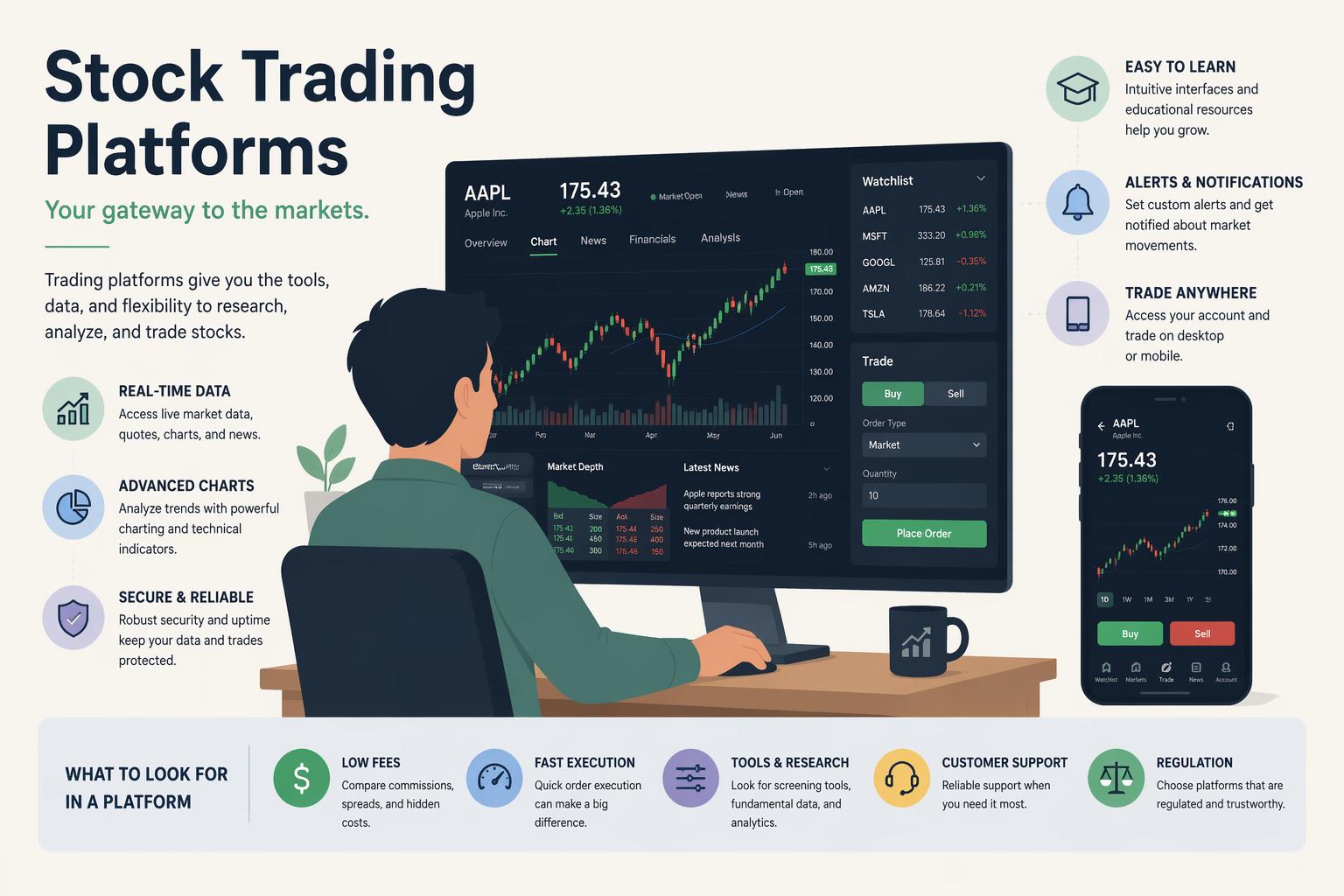
Think of it this way: Robinhood is the platform you open when you want to buy 10 shares of a stock you heard about. Interactive Brokers is what you use when you’re running a multi asset portfolio and need to hedge positions in three different countries.
Neither approach is wrong. They serve different traders at different stages.
Fee Structure Breakdown: Where You Actually Save Money
Both platforms charge $0 minimum deposit and $0 withdrawal fees in 2026. But the cost structure splits fast once you start trading.
Robinhood’s zero commission model
Robinhood charges $0 commission on U.S. stocks, ETFs, and options. No per contract fees. No hidden platform charges. They make money through payment for order flow (PFOF), crypto spreads, and their Robinhood Gold subscription (4.3 million members as of 2026, offering margin access and a 3.35% APY on uninvested cash).
For basic buy and hold investors or casual traders making a few trades per month, this is the cheapest option. You pay nothing to enter or exit a position.
Where it gets expensive:
- Cryptocurrency spreads (not disclosed, but typically 0.5–1% on popular coins)
- Margin rates higher than Interactive Brokers if you’re borrowing to trade
- No access to international markets (if you want non-U.S. stocks, you’re locked out)
Interactive Brokers’ low fee, high access model
Interactive Brokers charges $1.00 per U.S. stock trade according to 2026 data, but that’s misleading. For active traders, they offer tiered pricing that drops commissions to near zero on volume. More importantly, their margin rates are among the lowest in the industry, a massive cost advantage if you trade on leverage.
The value shows up when you leave U.S. markets. Want to buy shares on the London Stock Exchange? Trade Hong Kong equities? Short European bonds? All accessible, often for less than $5 per trade.
Cost comparison example:
- 10 U.S. stock trades per month, no margin: Robinhood wins ($0 vs $10)
- 100 trades per month across global markets with $50k margin: Interactive Brokers wins (lower margin interest + access to markets Robinhood doesn’t offer)
The break even point depends on your trading frequency and whether you need international access. For most beginners, Robinhood’s zero commission structure is unbeatable. For active traders or anyone investing globally, Interactive Brokers’ fees are negligible compared to the margin savings and product access.
Platform Features: What You Get (and What You Don’t)
Robinhood: built for speed, not depth
Robinhood’s interface prioritizes ease of use. You can place a trade in three taps. The app shows price charts, basic news, and a simple portfolio view. No customizable dashboards, no advanced charting tools, no hotkeys.
What you get:
- Commission free stocks, ETFs, options, and crypto
- Cash management account (3.35% APY in 2026)
- Fractional shares (buy $10 of any stock)
- Basic options trading (single leg strategies, limited multi leg)
- Push notifications for price movements and news
What you don’t get:
- International stocks
- Bonds or futures
- Advanced order types (conditional orders, bracket orders, algorithmic execution)
- In-depth research tools or analyst reports
- Paper trading (practice mode)
Robinhood scores 2.7/5 on markets and products and 3.3/5 on research in 2026 broker evaluations, reflecting its narrow but polished offering.
If your strategy is “buy index funds and hold” or “trade a few popular stocks,” Robinhood has everything you need and nothing to confuse you. If you want to build a hedged options strategy or diversify into Asian equities, it’s the wrong tool.
Interactive Brokers: built for precision and reach
Interactive Brokers assumes you want control. Their Trader Workstation (TWS) platform offers customizable layouts, real time Level II data, algorithmic order types, and direct routing to exchanges. The learning curve is steep, but the ceiling is higher.
What you get:
- Access to 150+ global markets (stocks, bonds, futures, forex, commodities)
- Advanced order types (bracket, trailing stop, conditional)
- Portfolio analytics and risk assessment tools
- Integrated research (third party reports, earnings estimates, financial data)
- Paper trading account (test strategies without risking capital)
- Margin rates under 6% (among the industry’s lowest)
What you don’t get:
- A beginner friendly mobile experience (the app is functional but dense)
- Free trades on U.S. stocks (unless you hit volume tiers)
Interactive Brokers scores 5.0/5 on both markets/products and research in 2026 evaluations, reflecting its institutional grade depth.
The platform shines when you need precision. Want to set a stop loss that only triggers if volume exceeds a threshold? Done. Want to trade options on European indices? Available. Want to backtest a strategy before deploying capital? Built in.
But if you just want to buy 5 shares of Apple, the interface feels like using a Formula 1 car to drive to the grocery store.
Account Setup and Usability
Robinhood: open in minutes
Robinhood’s account opening takes under 10 minutes. Provide your name, SSN, address, and link a bank account. Instant verification for most users. You can fund your account and start trading the same day.
The app is intuitive. If you’ve used any modern mobile app, you’ll figure out Robinhood without a tutorial.
Customer service is email based, with slower response times compared to Interactive Brokers. Not ideal if you run into a time sensitive issue, but sufficient for most retail users.
Interactive Brokers: more effort, more support
Interactive Brokers’ account opening is more involved. Expect 15–30 minutes. They require detailed financial information (net worth, income, trading experience) to comply with global regulations. The process feels formal because it is.
Deposit and withdrawal are somewhat easier at Interactive Brokers according to 2026 evaluations, with more funding options (ACH, wire, check, multiple currencies).
Customer service quality is better at Interactive Brokers: phone support, live chat, and regional offices. If you’re managing a six figure portfolio or trading complex instruments, the support quality gap matters.
Usability? Interactive Brokers offers multiple platforms (TWS desktop, web trader, mobile app), each with different interfaces. The mobile app works, but it’s not elegant. You’re trading functionality for power.
Market Access and Product Range
This is where the platforms diverge most sharply.
Robinhood: U.S. markets only
Robinhood offers:
- U.S. stocks and ETFs
- U.S. listed options
- Cryptocurrencies (limited selection)
- Fractional shares
If you want international equities, bonds, futures, or forex, Robinhood doesn’t offer access. For investors focused entirely on U.S. markets, this isn’t a limitation. For anyone building a globally diversified portfolio, it’s a dealbreaker.
Interactive Brokers: 150+ global markets
Interactive Brokers offers:
- Stocks on 150+ exchanges (U.S., Europe, Asia, Australia, Latin America)
- Bonds (government, corporate, municipal)
- Options (equity, index, futures options)
- Futures and commodities
- Forex (80+ currency pairs)
- Mutual funds and ETFs (thousands of options)
The markets and products score reflects this: Interactive Brokers at 5.0/5, Robinhood at 2.7/5.
If your strategy involves hedging with currency futures, buying Japanese dividend stocks, or trading European bonds, Interactive Brokers is the only choice on this list. If you’re investing in U.S. index funds and a handful of individual stocks, the global access adds complexity without value.
Who Should Pick Robinhood
Robinhood is the right choice if:
You’re new to investing and want a platform that won’t overwhelm you. The interface hides complexity and guides you through basic trades without jargon.
You trade U.S. stocks, ETFs, and crypto casually. A few trades per month, buy and hold strategies, or dollar cost averaging into index funds.
You want zero commissions and don’t need advanced tools. For small accounts (under $10k), saving $1–5 per trade matters.
You value mobile first design. Robinhood’s app is polished and fast. If you trade from your phone more than desktop, it’s the smoother experience.
You don’t trade on margin or need international access. If your strategy is simple and U.S. focused, Robinhood has everything you need.
Real scenario: You’re 25, earning $60k/year, and want to start investing. You plan to put $500/month into a mix of index funds and a few individual tech stocks. You’ll check your portfolio once a week, not once an hour. Robinhood fits.
Who Should Pick Interactive Brokers
Interactive Brokers is the right choice if:
You’re an active trader making dozens of trades per month, especially if you use margin. The lower margin rates (under 6%) quickly offset the $1/trade commission.
You need global market access. Want to buy European stocks? Trade Asian equities? Diversify into emerging markets? Interactive Brokers is one of the few retail platforms offering true global reach.
You trade beyond stocks: options strategies (multi leg spreads, iron condors), futures, bonds, or forex. Robinhood supports basic options, but Interactive Brokers handles advanced strategies cleanly.
You want in-depth research and analytics. Portfolio risk tools, third party analyst reports, and financial data are built in. Robinhood offers headlines; Interactive Brokers offers analysis.
You’re managing a six figure portfolio and need precision execution, direct market access, and institutional grade infrastructure.
Real scenario: You’re 40, with $200k invested, and you run a diversified portfolio: U.S. stocks, European bonds, currency hedges, and options strategies. You trade weekly, use margin occasionally, and need precise order control. Interactive Brokers fits.
The Data: 2026 Performance and Scale
Comparing the platforms as businesses, based on 2025 fiscal year data:
Robinhood Markets (2025 FY)
- Revenue: $4.5 billion
- Funded accounts: 24 million
- Stock price (May 2026): down ~30% year to date
Robinhood is highly profitable, driven by payment for order flow, crypto trading revenue, and Gold subscriptions. Their business model scales efficiently: more users mean more order flow revenue without proportional cost increases.
Interactive Brokers Group (2025 FY)
- Revenue: $6.2 billion
- Trades per day: 2.7 million
- Free cash flow: substantial
- Stock price (May 2026): up ~35% year to date
Interactive Brokers generates more revenue than Robinhood ($6.2B vs $4.5B) but runs a leaner margin. That’s because their business model relies on high volume and global infrastructure, not high margin payment for order flow.
Interactive Brokers runs with zero debt, signaling conservative financial management. Their business reflects a mature, cash generative model.
What this tells you
Robinhood is a high growth, high margin company betting on retail adoption and product expansion (crypto, banking, credit cards). Interactive Brokers is a mature, infrastructure heavy company serving sophisticated traders globally.
As investments, they represent different strategies. As platforms, these financials confirm their user bases: Robinhood targets millions of small accounts (24M funded); Interactive Brokers serves fewer, higher volume traders (2.7M trades/day).
Common Mistakes When Choosing Between Them
Picking based on brand recognition instead of fit
Robinhood has flashier marketing and mainstream buzz. That doesn’t make it the right choice for an active trader who needs options strategies and global access. Don’t pick the platform you’ve heard of. Pick the one that matches your strategy.
Ignoring margin costs
If you trade on margin, Interactive Brokers’ lower rates (under 6%) save hundreds or thousands per year compared to Robinhood. A $50k margin balance costs roughly $3,000/year at 6% vs $4,000+ at 8%. That gap dwarfs the $1/trade commission difference.
Choosing simplicity when you need depth (or vice versa)
Beginners who open an Interactive Brokers account often get overwhelmed and quit. Active traders who start with Robinhood hit limits fast (no conditional orders, no international stocks). Match the platform to your current skill level and strategy, not where you think you’ll be in five years.
Assuming zero commissions mean zero costs
Robinhood’s zero commission model sounds free, but you pay through wider spreads (especially on crypto) and payment for order flow, which may result in slightly worse execution prices. For small trades, this doesn’t matter. For large positions, it adds up.
Interactive Brokers’ $1/trade commission is transparent. You know exactly what you’re paying.
Overlooking customer service quality
If you’re managing $10k, slow email support is annoying but survivable. If you’re managing $200k and run into a time sensitive issue (a margin call, a failed wire transfer, a complex order that didn’t execute), Interactive Brokers’ better customer service (phone, chat, faster response) matters significantly.
FAQ
Which platform is better for beginners?
Robinhood. The interface is simpler, the account opens faster, and zero commissions remove the psychological barrier of “paying to learn.” If you’re making your first trades and want to learn without complexity, Robinhood is designed for you.
Interactive Brokers is better once you outgrow basic strategies or need global access.
Can I trade internationally with Robinhood?
No. Robinhood only offers U.S. stocks, ETFs, options, and a limited selection of cryptocurrencies. If you want to buy international stocks (European, Asian, emerging markets), you need a different broker. Interactive Brokers supports 150+ global markets.
Which platform has lower fees?
For casual U.S. stock trading: Robinhood ($0 commissions vs Interactive Brokers’ $1/trade).
For active trading, margin use, or international access: Interactive Brokers (lower margin rates, access to global markets, tiered pricing for high volume).
The answer depends on what you trade and how often.
Is Interactive Brokers or Robinhood better for options trading?
Interactive Brokers. Robinhood supports basic options (calls, puts, simple spreads), but Interactive Brokers offers advanced multi leg strategies, better order types, and deeper analytics. If you’re running iron condors, butterfly spreads, or calendar spreads, Interactive Brokers gives you the tools Robinhood doesn’t.
How do the two platforms compare on mobile?
Robinhood wins on mobile design: clean, fast, intuitive. Interactive Brokers’ mobile app is functional but dense. It prioritizes information over elegance. If you trade primarily from your phone and want a polished experience, Robinhood is smoother. If you need full platform features on mobile, Interactive Brokers delivers them (but with a steeper learning curve).
Which platform is safer?
Both are regulated U.S. brokers with SIPC insurance (up to $500k per account, including $250k cash). Interactive Brokers carries additional insurance beyond SIPC. From a safety standpoint, both are secure. The difference is operational: Interactive Brokers has been operating since 1978; Robinhood since 2013. Interactive Brokers’ longer track record and conservative financials (zero debt) signal stability, but Robinhood is not unsafe, just newer.
—
No brokerage wins universally. Robinhood wins for beginners and casual U.S. investors who want simplicity and zero commissions. Interactive Brokers wins for active traders, global investors, and anyone using margin or advanced strategies.
Pick based on what you trade, how often, and whether you need access beyond U.S. markets. The wrong platform won’t stop you from investing, but the right one removes friction.