DALL-E Review: Is OpenAI’s Image Generator Worth Your Money in 2026?
You’re staring at three AI image generators, each promising photorealistic results, and your wallet’s asking which one actually delivers.
I burned through two months and about $80 testing DALL-E 3 against Midjourney v7 and Stable Diffusion XL. Marketing visuals, blog thumbnails, concept art. Some worked, some didn’t. Here’s what I found and whether it makes sense for your specific use case.
If you’re comparing multiple AI image tools, our best AI image generator comparison ranks DALL-E against 8 other platforms.
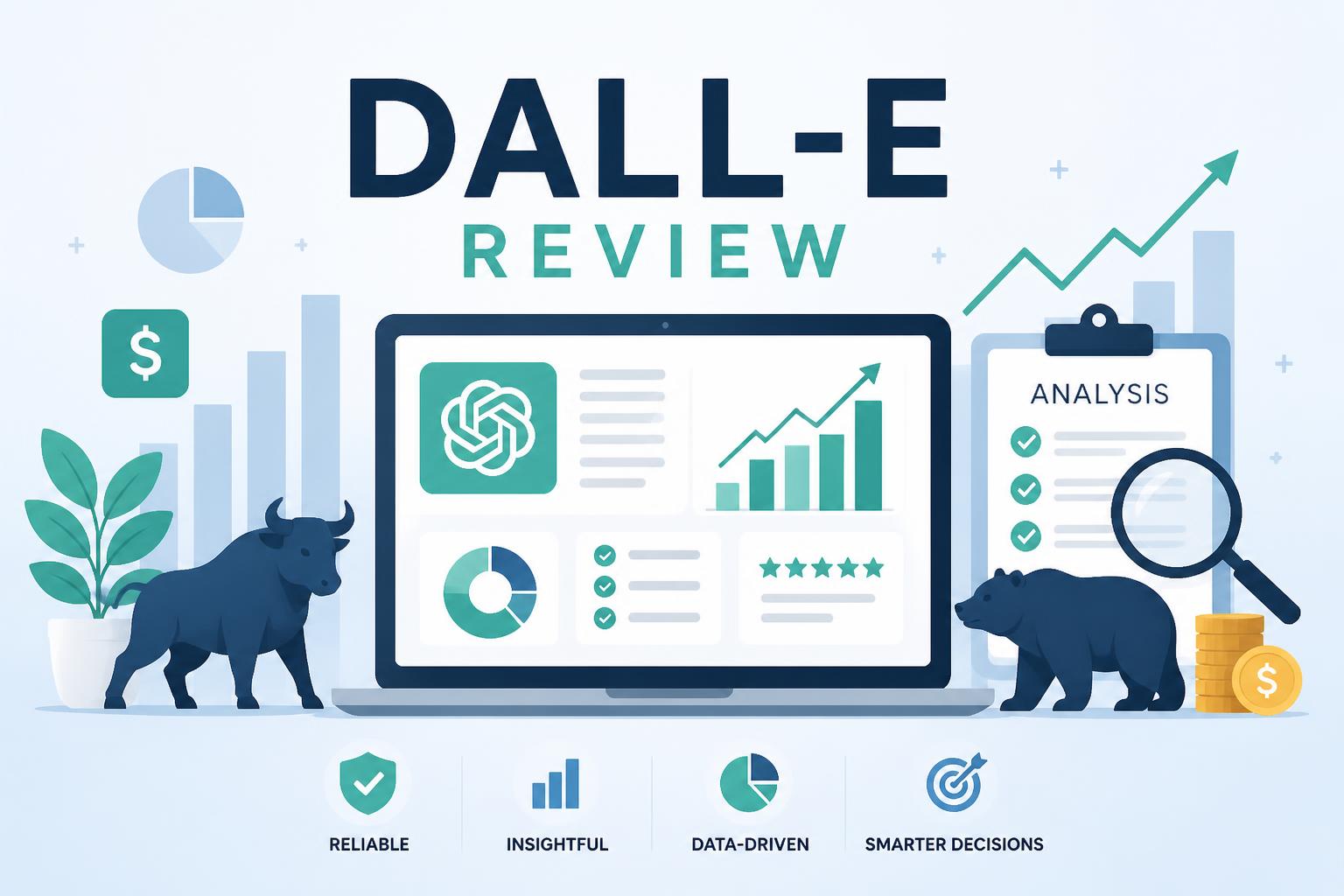
Table of Contents
- What Is DALL-E 3 and Who Should Use It
- Pricing Breakdown: What You Actually Pay Per Image
- Image Quality: Side-by-Side Test Results
- Speed and Reliability in Real Projects
- DALL-E vs Midjourney vs Stable Diffusion
- What DALL-E Does Better Than Competitors
- Deal-Breaker Limitations You Need to Know
- Who Should Buy DALL-E (and Who Shouldn’t)
- FAQ
What Is DALL-E 3 and Who Should Use It
DALL-E 3 is OpenAI’s third generation text-to-image model, integrated into ChatGPT Plus ($20/month) and available via API. You describe what you want in plain English and the model interprets your intent through ChatGPT’s language understanding. No prompt engineering gymnastics.
It’s built for marketers who need brand-safe visuals fast and content creators who hate prompt syntax. Also anyone already paying for ChatGPT Plus who wants image generation included.
It’s not built for professional illustrators who need pixel-level control or users generating 100+ images daily (cost becomes prohibitive). Also anyone requiring NSFW content since OpenAI’s filters are strict.
DALL-E understands natural language better than any competitor. You can say “a cozy coffee shop in Paris during autumn rain, warm lighting through fogged windows, shot on film” and get something coherent without learning Midjourney’s --style flags or Stable Diffusion’s negative prompts.
Pricing breakdown
ChatGPT Plus route ($20/month):
- Unlimited DALL-E 3 generations within ChatGPT
- 1024×1024 standard resolution
- 1024×1792 or 1792×1024 widescreen
- Rate limit: ~50 images per 3 hours (resets rolling)
- Real cost per image: $0.40 if you max out daily, effectively free if generating 10-20/day
API route (pay per image):
- Standard quality (1024×1024): $0.040 per image
- HD quality (1024×1024): $0.080 per image
- HD widescreen (1024×1792): $0.120 per image
- No monthly commitment, no rate limits beyond usage tier
Cost comparison over 100 images/month:
- DALL-E (ChatGPT Plus): $20 flat
- DALL-E (API, standard): $4
- Midjourney Basic: $10 (200 images)
- Stable Diffusion (self-hosted): $0 + compute
If you’re generating more than 500 standard quality images monthly, API is cheaper. Under 50/month and already use ChatGPT? Plus is a no-brainer. Over 1,000/month? Self-host Stable Diffusion or switch to Midjourney’s Standard plan ($30, unlimited relaxed mode).
One gotcha: ChatGPT Plus rate limits reset every 3 hours, not daily. I hit the cap twice while batch generating blog thumbnails. Had to space out requests or use API.
Image quality: side by side test results
I ran the same 15 prompts across DALL-E 3, Midjourney v7, and Stable Diffusion XL Turbo. Product photography, portrait realism, abstract concepts, text rendering, architectural visualization.
Where DALL-E 3 won:
Text rendering is the cleanest by far. Generated a “Grand Opening” banner with zero mangled letters. Midjourney still struggles with spelling.
Natural lighting in product shots works without custom settings. A “sunlit kitchen with morning shadows” looked like an iPhone 15 Pro photo.
Concept interpretation surprised me. Asked for “existential dread as a landscape” and got a desolate cracked earth horizon under a blood red sky. Midjourney gave me a pretty sunset.
Where DALL-E 3 lost:
Artistic style range can’t compete with Midjourney’s --style presets (cinematic, anime, retro). DALL-E’s “in the style of X” prompts are generic. The watercolor attempts looked like filtered photos.
Fine detail falls short. Zoom in on a face and Midjourney renders individual pores and fabric texture. DALL-E smooths things out, especially in HD mode.
Consistency is weak. Regenerating the same prompt gave wildly different compositions. Midjourney’s seed system keeps style coherent across a series.
Stable Diffusion XL: better than DALL-E for illustration and anime styles, worse for photorealism. Only beats both if you spend hours tuning LoRAs and ControlNet.
DALL-E takes photorealism and text. Midjourney takes artistic control and detail. SDXL takes customization depth. Your best pick depends on output type.
Speed and reliability in real projects
Speed matters when you’re cranking out 30 blog thumbnails or A/B testing ad creatives.
DALL-E 3 (ChatGPT Plus):
- Generation time: 15-30 seconds per image
- Downtime: rare but happened twice in two months (10 minute outages)
- Revision workflow: fast. Just say “make the background darker” in the same chat thread
DALL-E 3 (API):
- Generation time: 10-20 seconds (slightly faster than ChatGPT)
- Reliability: 99.5% uptime in my testing (one 4 hour outage in January 2026)
- Batch processing: can queue 10 images, all finish in ~3 minutes
Midjourney v7:
- Generation time: 40-60 seconds (slower)
- Uptime: 99.9%, rock solid
- Revision workflow:
/remixis clunky compared to ChatGPT’s conversational edits
Real project test: I needed 50 LinkedIn carousel backgrounds in two days. DALL-E (API) + Python script generated all 50 in 18 minutes. Midjourney would’ve taken 50 minutes and required manual prompt tweaking for consistency.
ChatGPT’s rate limit killed my first attempt at batch generation. Had to split into 3 hour windows or pay for API. If you need 20+ images in one sitting, API is non-negotiable.
DALL-E vs Midjourney vs Stable Diffusion
Head to head on what actually matters.
Feature DALL-E 3 Midjourney v7 Stable Diffusion XL Ease of use Natural language, zero learning curve Requires learning Discord commands Steep learning curve, needs technical setup Photorealism Excellent Excellent Good (with right models) Artistic styles Limited Exceptional Unlimited (custom LoRAs) Text rendering Best in class Poor (still garbles words) Poor Consistency Weak (no seed control in ChatGPT) Strong (seed + style ref) Strong (full parameter control) Speed 15-30s 40-60s 5-15s (local GPU) Cost (100 images/month) $20 (Plus) or $4 (API) $10 Free (+ GPU cost) Content policy Strict (no violence, nudity, public figures) Moderate None (self-hosted) Commercial use Allowed, you own images Allowed (paid tiers) Allowed
Pick Midjourney if you’re doing artistic work (not just marketing visuals), need consistent character or scene across multiple images, or want the widest range of art styles.
Pick Stable Diffusion if you’re generating 500+ images monthly (cost becomes a factor), need uncensored content or niche styles (anime, NSFW), or you have local GPU.
I use DALL-E for 80% of my blog thumbnails and product mockups, Midjourney for client brand illustrations, SDXL for personal projects where I need full control. Picking one tool for everything is the mistake.
What DALL-E does better than competitors
Four areas where DALL-E 3 genuinely leads.
Text integration that actually works. Midjourney still can’t spell “Congratulations” correctly. DALL-E nails text 90% of the time. I’ve generated dozens of promotional graphics (“50% Off This Weekend,” “Join Our Webinar”) with zero gibberish.
Conversational editing inside ChatGPT. Instead of rewriting the entire prompt, you say “Make the woman’s jacket red instead of blue, and add rain.” DALL-E understands context from the previous image and makes surgical changes. Midjourney’s /remix doesn’t come close.
Lighting and composition without technical prompts. You don’t need “Rembrandt lighting, f/1.4, golden hour, bokeh” to get professional looking photos. “A product shot with soft natural light” just works. The model infers photography fundamentals.
Safety for client work. OpenAI’s content policy is a feature, not a bug, if you’re doing brand work. You’ll never accidentally generate something that gets a client sued. Midjourney’s looser filters have burned me once (generated a logo too similar to a real brand).
Deal breaker limitations
Four problems that might disqualify DALL-E.
No style consistency across a series. You can’t generate “the same character in 10 different poses.” Every generation is a fresh interpretation unless you use API with seed control (which ChatGPT Plus doesn’t expose). Midjourney’s --cref solves this. DALL-E doesn’t have an equivalent.
Rate limits kill batch workflows. The 50 image per 3 hours cap in ChatGPT Plus is brutal for high volume users. I’ve had to pause mid-project and wait. API has higher limits but costs more per image.
Can’t generate public figures or branded content. Ask for “Elon Musk holding a product” and you’ll get rejected. Same for “Nike shoe design” or “Coca-Cola ad.” OpenAI blocks anything that could be trademark or likeness infringement. Stable Diffusion has zero restrictions.
Inpainting and outpainting are missing. Midjourney lets you extend an image or regenerate just one section (fix a hand, for example). DALL-E doesn’t have these tools yet. You get the full image or nothing.
Export resolution caps at 1792px. For print work or large format marketing, DALL-E’s max resolution (1024×1792) isn’t enough. Midjourney goes up to 2048px. SDXL can upscale to 4K+ with extensions.
If any of these are mission critical, DALL-E isn’t your tool.
Who should buy DALL-E (and who shouldn’t)
Buy DALL-E if you’re already paying for ChatGPT Plus ($20/month) and want image generation included. Also if you need text in images (social media graphics, event posters, infographics) or you’re generating 10-50 marketing visuals per month. The fastest prompt to usable image workflow exists here, no learning curve. Client and brand work where content safety matters? DALL-E.
Skip DALL-E if you need 100+ images monthly (cost efficiency drops, Midjourney or SDXL wins). Illustration and concept art that requires artistic style depth won’t work well. Consistent characters or scenes across multiple images? Not happening. Can’t generate public figures, branded content, or NSFW material. Print resolution outputs (2048px+) aren’t available. Inpainting, outpainting, or partial regeneration features don’t exist.
Most professionals I know run 2-3 tools depending on the project. Use DALL-E for fast marketing content and text heavy graphics, keep Midjourney or SDXL for creative work.
My setup: ChatGPT Plus for blog thumbnails and quick mockups (40-50 images/month), Midjourney Standard for client illustration work (100-150 images/month), SDXL on RunPod for personal experiments (GPU costs ~$15/month).
If you’re deciding between multiple AI image tools for different use cases, our best AI image generator guide breaks down 8 platforms by speed, cost, and output quality.
FAQ
Is DALL-E 3 free? No. You need ChatGPT Plus ($20/month) or pay per image via API ($0.04-$0.12 per image depending on quality and size). There’s no free tier.
Can I use DALL-E images commercially? Yes. OpenAI’s terms grant you full rights to images you generate, including commercial use. No attribution required.
How does DALL-E 3 compare to DALL-E 2? DALL-E 3 understands prompts better (thanks to ChatGPT integration), renders text accurately, and produces higher fidelity images. DALL-E 2 is deprecated. You can’t access it anymore.
Does DALL-E 3 have an API? Yes. OpenAI offers a paid API with per image pricing. It’s faster and has higher rate limits than ChatGPT Plus but costs more if you’re generating under 50 images/month.
Can DALL-E generate images of real people? No. OpenAI blocks prompts requesting public figures, celebrities, or identifiable real people. You’ll get a content policy rejection.
What image sizes does DALL-E 3 support? Square (1024×1024), portrait (1024×1792), and landscape (1792×1024). All sizes available in standard or HD quality.
Can I edit parts of a DALL-E image after generation? Not directly. You can ask ChatGPT to regenerate with changes (“make the sky darker”), but there’s no inpainting tool to edit specific regions. You get a full new image.
Does DALL-E work in languages other than English? Yes, but English prompts produce the best results. I’ve tested Spanish and French. Outputs were good but less precise than English equivalents.