Robinhood Review 2026: Is It Still Worth It for Investors?
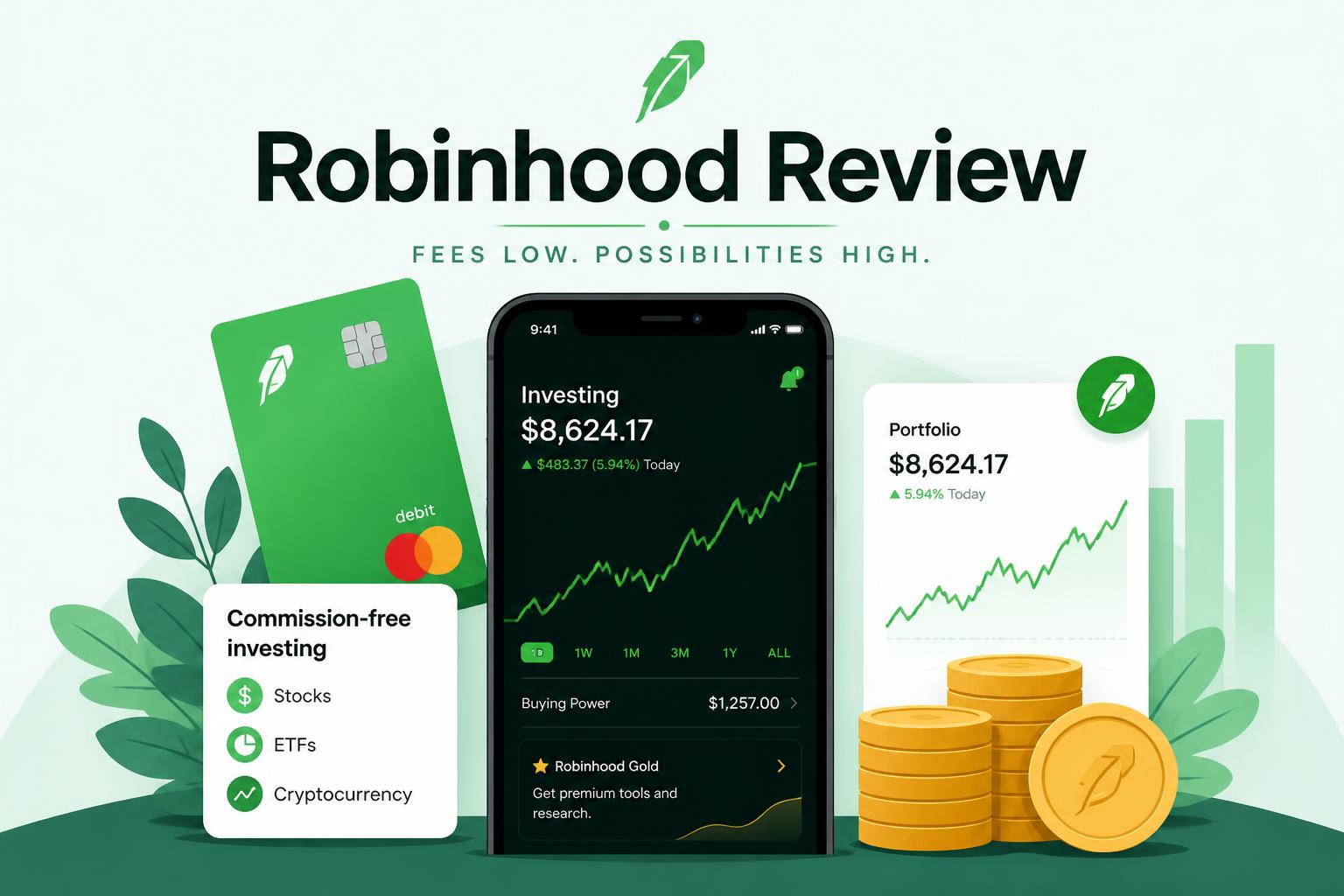
Robinhood is still one of the most recognizable investing apps in 2026. It helped push commission-free trading into the mainstream, especially for beginners who just wanted a simple way to buy stocks without dealing with complicated brokerage platforms.
But things have changed. Almost every major broker now offers zero-commission trades, and many of them come with stronger research tools and more complete investing features. So the real question today isn’t whether Robinhood is popular—it’s whether it still makes sense for how you invest your money.
—
What Robinhood is and how it works
Robinhood is a mobile-first brokerage app where you can buy and sell:
- Stocks
- ETFs
- Options
- Cryptocurrency
The experience is built around simplicity. You open the app, search for an asset, tap a few buttons, and place a trade. There’s no heavy dashboard or complicated layout in the way.
It’s designed for accessibility. You don’t need a large starting balance, and fractional shares let you invest small amounts in expensive companies like Apple or Microsoft.
—
Main features
Commission-free trading
You don’t pay standard trading commissions when buying or selling stocks and ETFs. That’s still one of Robinhood’s core selling points.
Fractional shares
You can buy a portion of a stock instead of a full share, which makes investing more flexible if you’re starting small.
Crypto trading
You can trade popular cryptocurrencies, although the selection is narrower than what you’d find on dedicated crypto platforms.
Options trading
Advanced users can trade options, but this comes with significantly higher risk and requires approval before you can start.
Cash management
Uninvested cash can earn interest, and there’s a debit card tied to your account for everyday spending.
—
What it actually costs in 2026
Robinhood still markets itself as commission-free, and for basic stock and ETF trades, that’s mostly true. But there are still indirect costs depending on what you do.
Free:
- Stock and ETF trades
- Account setup
- Fractional investing
Possible costs:
- Small regulatory fees
- Options contract fees
- Crypto spreads (difference between buy and sell price)
- Margin interest if you borrow money
It’s still a low-cost platform, but not completely free in every situation.
—
Pros and cons
What works well
- Very easy to use, especially for beginners
- Fast account setup
- Clean, simple interface
- No commissions on basic trades
- Fractional investing available
Where it falls short
- Limited research tools
- Not much educational depth
- Past concerns about business practices
- Not ideal for long-term portfolio planning
- Smaller crypto selection compared to competitors
—
Is Robinhood safe?
Robinhood is a regulated brokerage in the United States and a member of SIPC, which protects securities if the company were to fail within certain limits.
There are two sides to “safety” here:
Regulation-wise, your investments are protected under standard brokerage rules.
Platform-wise, like any online trading app, there can still be risks such as outages during volatile markets or limited advanced safeguards for inexperienced traders.
For everyday investing, it’s generally considered safe. It’s just not built for professional-grade trading environments.
—
How the app feels to use
Robinhood is still one of the smoothest investing apps on mobile.
What stands out:
- Fast order execution
- Very simple navigation
- Minimal learning curve
- Clean charts for basic use
What you’ll notice missing:
- Deeper technical analysis tools
- Advanced portfolio customization
- More detailed charting features
If you want something simple and fast, it works well. If you want more control and depth, it starts to feel limited.
—
Who it’s for (and who it isn’t)
Robinhood tends to work best for:
- First-time investors
- People starting with small amounts
- Mobile-first users
- Long-term, simple buy-and-hold investing
It’s probably not a great fit if you:
- Rely on advanced trading tools or analytics
- Want serious portfolio tax optimization features
- Do frequent day trading with complex strategies
—
Getting started
Getting set up is straightforward:
- Download the app
- Create an account and verify your identity
- Link your bank account
- Deposit funds
- Search for a stock, ETF, or crypto asset
- Place your first trade
- Track your investments
The onboarding process is intentionally simple, which is part of its appeal.
—
How it compares to other platforms
In 2026, Robinhood isn’t the only simple investing app anymore.
- Robinhood: Best for simplicity and speed
- Fidelity: Strong for long-term investing and research
- Webull: Better for charting and technical analysis
- Charles Schwab: Well-rounded with deeper tools and support
Each platform has its strengths, but Robinhood’s main advantage is still ease of use.
—
Mistakes new investors run into
Most losses don’t come from the app itself, but from behavior.
Common issues:
- Trading too often based on emotion
- Underestimating the risk of options
- Buying hype-driven stocks without research
- Not paying attention to spreads in crypto trades
The platform makes trading easy, which is helpful—but also makes impulsive decisions easier too.
—
Final thoughts
Robinhood still holds up in 2026 as a simple entry point into investing. It’s clean, fast, and easy to understand, especially if you’re just starting out.
But it’s no longer the only option like it once was. Other brokers now match its pricing and often beat it on tools and research.
In practice, Robinhood works best as a starting platform. It’s great for learning the basics and getting comfortable with investing. As your needs grow, you may eventually look for something with more depth.
—
FAQ
Is Robinhood good for beginners?
Yes. It’s still one of the easiest ways to start investing.
Does Robinhood charge fees?
Basic stock and ETF trading is free, but some fees and spreads still apply.
Can you actually make money with Robinhood?
Yes, but results depend on your investing decisions, not the platform.
Is Robinhood safe in 2026?
It’s regulated and generally safe for standard investing use.
What are good alternatives?
Fidelity, Webull, and Charles Schwab are common alternatives depending on your goals.