How to Use Emergency Funds: A Step-by-Step Guide (2026)
This article contains affiliate links. If you click through and make a purchase or sign up for a service, we may receive a commission at no additional cost to you. This helps support our work.
Three weeks into the year, your car breaks down. The bill is $1,700. That’s the average emergency expense Americans dealt with in 2026. The question isn’t whether something unexpected will hit you—it’s whether you’ll be ready.
53% of Americans couldn’t cover a $1,000 emergency in 2026. If that’s you, you’re not alone. But you don’t have to stay there.
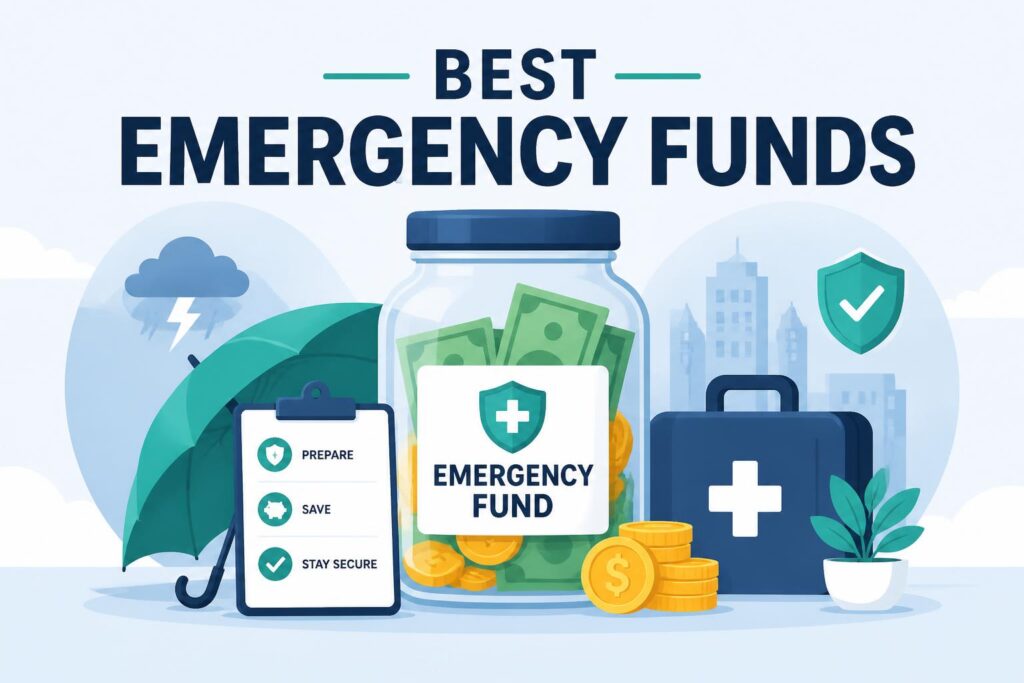
An emergency fund is the difference between a temporary setback and a financial crisis that follows you for years.
This guide walks through how to calculate exactly how much you need, where to keep it, how to automate saving, and when to actually use it.
Before you start:
- Know your monthly essential expenses
- Have a separate savings account (not your checking)
- 15 minutes to set up automation
- Total setup time: 30 minutes
What an Emergency Fund Actually Does
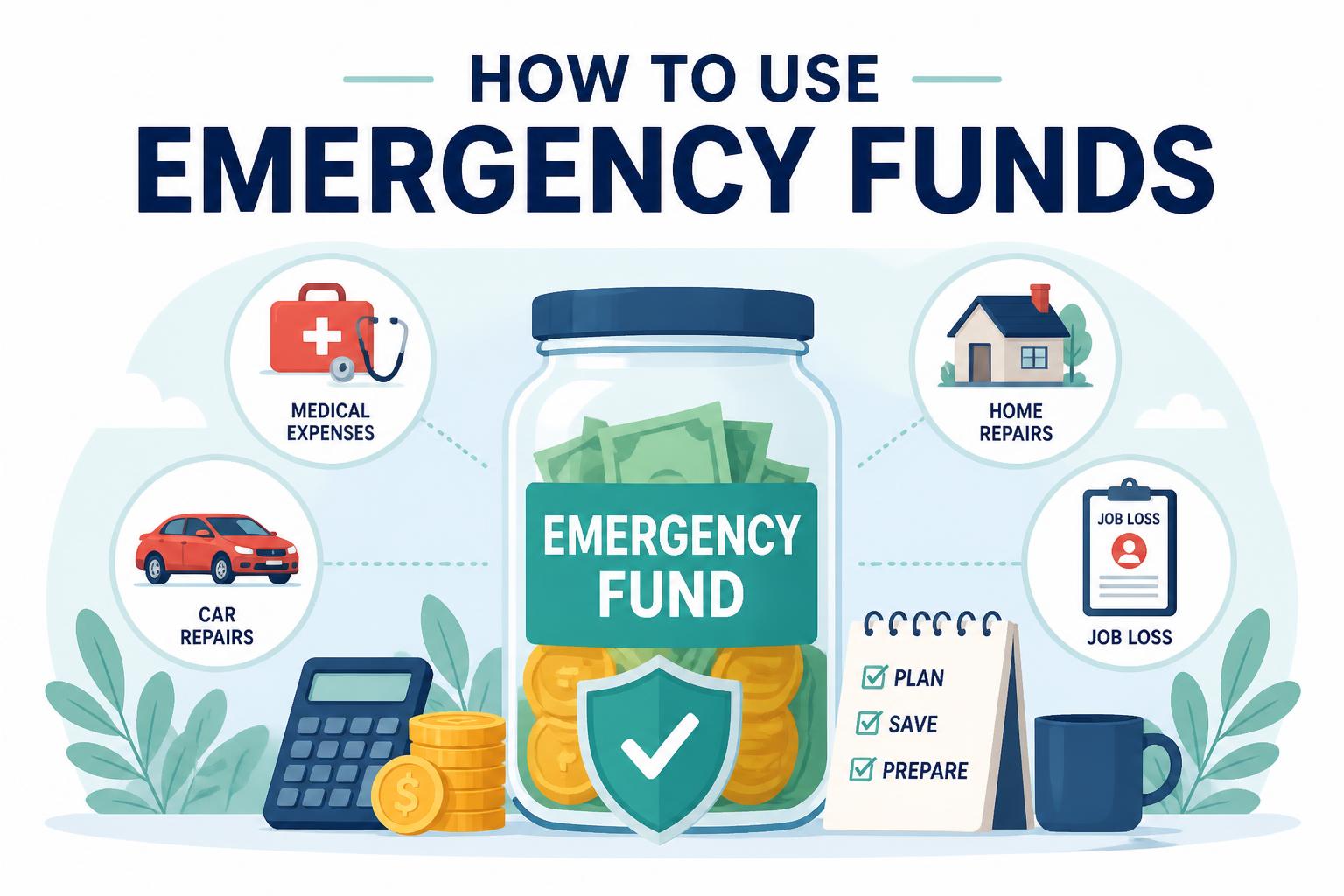
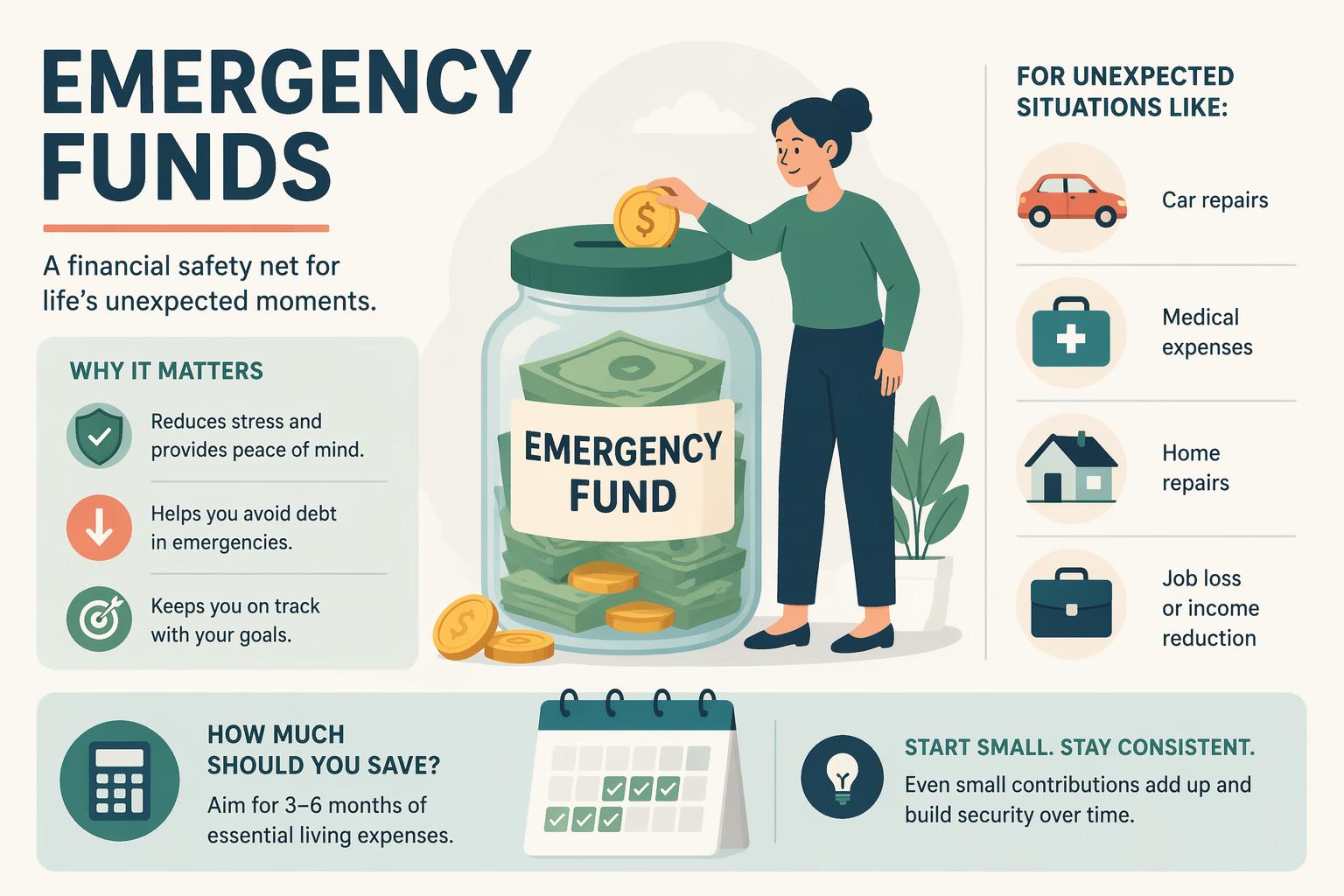
An emergency fund is cash set aside for unexpected expenses. Job loss, medical bills, urgent home repairs, car breakdowns. Not vacations. Not holiday shopping.
29% of Americans now have more credit card debt than emergency savings. When something breaks, they borrow at 20%+ interest. That $1,700 car repair becomes $2,400 after interest piles up.
An emergency fund prevents debt during stressful moments. It reduces financial anxiety. And it creates decision-making space instead of forcing you into the first available option.
Most financial experts recommend three to six months of essential expenses. Not your entire lifestyle—just the non-negotiable costs. Rent, utilities, minimum debt payments, groceries, insurance.
Calculate Your Target
List your monthly essential expenses: rent or mortgage, utilities, groceries, insurance, minimum debt payments, transportation. Add them up. Multiply by 3 (minimum) or 6 (recommended).
Example:
- Rent: $1,200
- Utilities: $150
- Groceries: $400
- Car insurance: $120
- Minimum debt payments: $200
- Gas: $180
- Monthly total: $2,250
- 3-month target: $6,750
- 6-month target: $13,500
If that number makes you want to give up, start with $1,000. Then build.
Use actual spending data, not what you think you spend. Check your last three months of bank statements.
Gen Z (18-29) has a median of $400 in emergency savings. Boomers average $2,000. Higher income consistently means higher balances, but the principle applies everywhere. Start where you are.
Where to Keep It
Your emergency fund needs accessibility and safety. Not stocks. Not a CD you can’t touch.
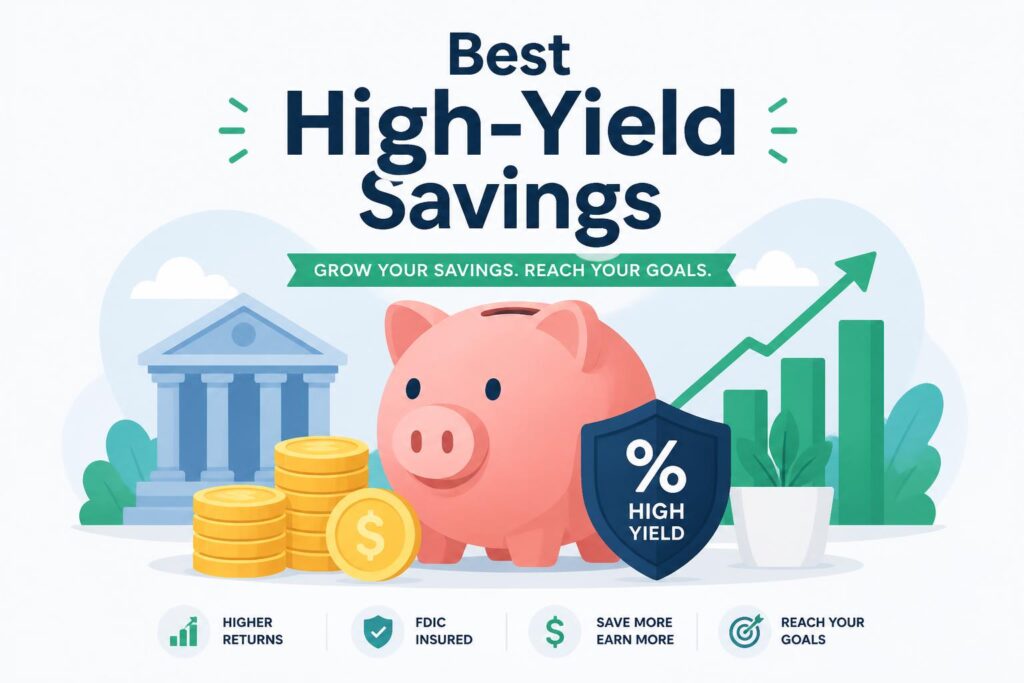
High-yield savings account (recommended)
- FDIC-insured up to $250,000
- Competitive interest rates
- Instant access
- No withdrawal penalties
Origin’s High-Yield Cash Account offers FDIC insurance, competitive yields, and immediate access.
→ Open a High-Yield Cash Account with Origin
Money market account
- Similar to high-yield savings
- May offer check-writing or debit card access
- FDIC-insured
- Slightly higher minimum balance requirements
Traditional savings account
- Available at any bank
- Lower interest rates
- Easiest if you already bank there
Where not to keep it:
- Checking (too easy to spend)
- Stocks or crypto (value can drop 30% when you need it)
- CDs with early withdrawal penalties
- Retirement accounts (penalties and taxes)
Keep it in a separate account connected to your checking for transfers, but not merged with daily spending.
Automate It
The hardest part isn’t knowing you need an emergency fund. It’s actually saving when rent is due, subscriptions auto-renew, and every month brings a new “just this once” expense.
Automation removes willpower.
Calculate how much you can save each paycheck. Even $50 makes a difference. Log into your bank. Set up an automatic transfer from checking to your emergency fund. Schedule it for the day after your paycheck deposits.
Start small. You can always increase it later.
Pick bi-weekly (aligns with most paychecks), monthly (easier if income is irregular), or weekly (builds the habit faster).
Transfers should happen automatically. The money leaves before you can spend it on something else.
If your income is irregular—freelance, gig work, commission—save 10-20% of every payment that comes in, regardless of size. Origin’s AI Advisor can help track variable income and recommend optimal saving rates.
Make Your First Deposit
Once your account is open and automation is set, deposit something. Even $50.
Starting matters more than the amount.
If you’re starting from $0, your first goal isn’t the full 3-6 months. It’s $1,000. That covers 59% of emergency expenses Americans faced in 2026.
Timeline based on monthly contributions:Monthly Amount Time to $1,000 Time to $6,000 $50 20 months 10 years $100 10 months 5 years $200 5 months 2.5 years $500 2 months 1 year
Know What Counts as an Emergency
An emergency fund only works if you use it for actual emergencies.
Real emergencies:
- Job loss
- Medical expenses not covered by insurance
- Urgent home repairs (burst pipe, broken furnace in winter)
- Car repairs needed to get to work
- Emergency travel (family crisis)
Not emergencies:
- Holidays and gifts
- Vacations
- New phone because yours is “old”
- Sale items
- Non-urgent wants
The line between need and want gets blurry when you’re stressed. Good test: will delaying this purchase for 48 hours cause measurable harm? If no, not an emergency.
Protect It from Yourself
The biggest threat to your emergency fund isn’t unexpected expenses. It’s expected excuses.
“Just this once” becomes a pattern.
Rename the account to “Emergency Fund ONLY” or “Do Not Touch.” Remove easy access—no debit card, transfer-only. Track it separately in a budgeting tool. Set alerts so you’re notified whenever money leaves.
Origin’s real-time cash position view shows exactly where every dollar sits, making it harder to accidentally dip into emergency savings when you meant to pull from spending.
There should be friction between you and this account.
Rebuild After You Use It
When you use your emergency fund—and eventually you will—the work isn’t over. Replenish it as soon as possible.
Pause other savings goals temporarily. Redirect windfalls (tax refunds, bonuses, gifts) to the emergency fund first. Increase your automatic transfer if your income allows. Set a target date for full replenishment.
If you used $2,000 for a car repair and normally save $200/month, increase to $400/month until you’ve replaced it. Then drop back to $200.
Get your balance back to target within 3-6 months.
If you’re using your emergency fund more than twice a year, your budget has gaps. Track where the “emergencies” are coming from and build those costs into your regular budget instead.
Adjust as Life Changes
Your emergency fund isn’t static.
Recalculate when your income increases or decreases significantly, you add dependents, housing costs change, you switch from employee to freelance (freelancers need 6-12 months, not 3-6), you pay off major debts, or you take on new debt.
Only 37% of adults aged 18-29 have enough savings to cover three months of expenses. 71% of adults aged 60+ can cover a $400 unexpected expense. Your target will grow as your responsibilities and income increase.
Review your target at least once a year during the same month so you don’t forget.
Where People Go Wrong
Waiting for “extra” money You’ll never have extra money. There will always be something else. Automation forces you to save first, spend what’s left.
Setting an unrealistic target If your target is so high you’ll never reach it, you won’t try. Start with $1,000. Then $3,000. Then your full amount.
Keeping it in checking Money in checking will get spent. The separation is psychological and necessary.
Investing it for “higher returns” The point isn’t maximizing returns. It’s guaranteed access. A 30% stock drop when you lose your job defeats the entire purpose.
Using it for predictable expenses Christmas happens every year. Not an emergency. If you know it’s coming, budget for it separately.
Not rebuilding after use Using your fund once and never refilling it leaves you exposed next time.
What to Do After You’re Fully Funded
Once you hit your 3-6 month target, your priorities shift.
Start or increase retirement contributions (401(k), IRA, tax-advantaged accounts). Pay down high-interest debt faster—anything above 7-8% APR. Invest in low-risk growth accounts (CDs, brokerage accounts, index funds). Build sinking funds for known future expenses (car replacement, home down payment).
Your emergency fund is the foundation. Once it’s solid, you can build wealth on top without risking everything when life throws a curveball.
Origin helps you manage emergency savings, retirement contributions, debt payoff tracking, and investment growth in one place.
Troubleshooting
“I can’t save anything—I’m living paycheck to paycheck” Start with $10/week. That’s $520/year. Won’t cover a full emergency, but it’s better than $0 and builds the habit. Then look for one expense to cut or one income stream to add.
“I used my emergency fund and now I feel like a failure” That’s what it’s for. You succeeded—you had money available instead of going into debt. Rebuild it and move on.
“My income is too irregular to automate” Switch to percentage-based saving. Every time money comes in, immediately transfer 10-20% to your emergency fund before paying bills or spending anything.
“I hit my target but I still feel anxious” Financial anxiety isn’t always rational. If 6 months feels too thin, save 9-12 months. The right amount is whatever lets you sleep at night—but be honest about whether you’re saving out of caution or avoiding other goals out of fear.
“Interest rates are low—should I invest my emergency fund?” No. The 2-4% you might gain isn’t worth the risk of losing 20-30% in a downturn when you need the money. Emergency funds are insurance, not investments.
Common Questions
How much should I have in 2026? 3-6 months of essential expenses. Self-employed or irregular income? 6-12 months. Median emergency savings varies widely by age—Gen Z averages $400, Boomers $2,000.
Where should I store it? High-yield savings or money market account that’s FDIC-insured, accessible within 24 hours, and separate from checking. Avoid stocks, crypto, or anything with withdrawal penalties.
Can I start with just $100? Yes. Starting matters more than the amount. Build to $1,000 first, then $3,000, then your full target.
What if my income is irregular? Save a percentage of every payment instead of a fixed amount. Aim for 10-20% of each deposit. On high-income months, save extra to cover lower ones.
How fast can I build it? Depends on your savings rate. At $100/month, you’ll hit $1,000 in 10 months. At $500/month, $6,000 in a year. Automate transfers and redirect windfalls to speed it up.
Should I pay off debt or build an emergency fund first? Both, but prioritize the fund to at least $1,000 first. Without it, any emergency creates more debt. After that, split extra money between debt payoff and building your full fund.
—
Start Now
You don’t need perfect circumstances. You need a target number, a separate account, and an automatic transfer.
The difference between the 47% of Americans who can cover a $1,000 emergency and the 53% who can’t isn’t income. It’s intentionality.
Your next 30 minutes:
- Calculate your 3-month essential expenses
- Open a high-yield savings account (Origin’s High-Yield Cash Account makes this fast)
- Set up your first automatic transfer
- Make your first deposit, even if it’s $20
The best time to build an emergency fund was a year ago. The second-best time is now—before the next $1,700 surprise lands in your lap.
Origin gives you the full financial picture: real-time cash tracking, AI-powered advice, automated budgeting, and high-yield savings in one place.