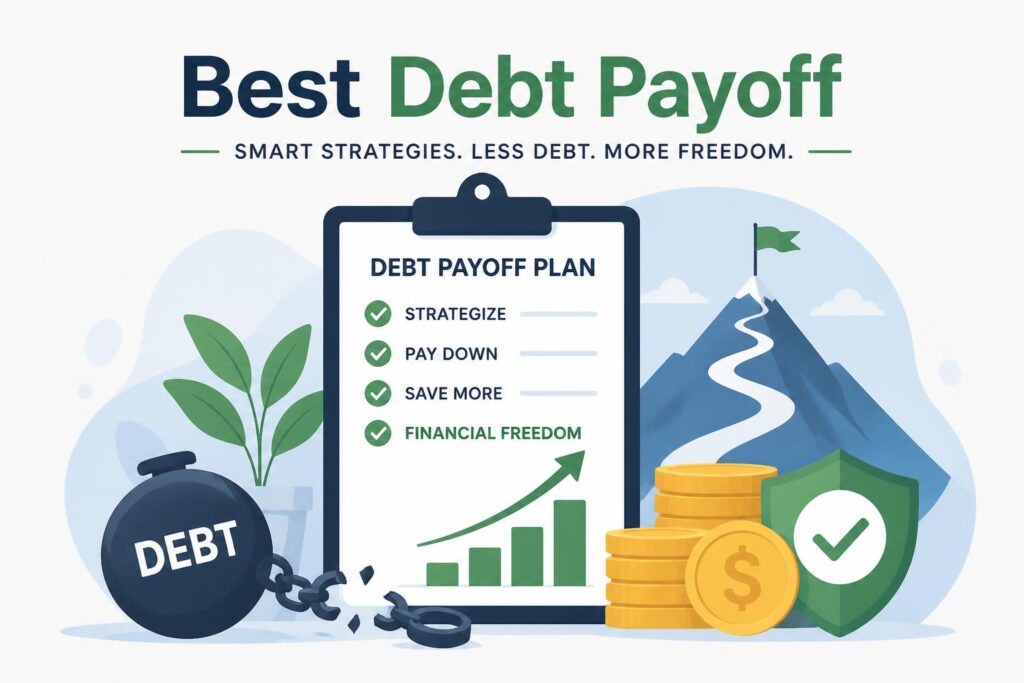
How to Save Money on Debt Payoff: A Step-by-Step Guide (2026)

The average American carries around $104,215 of debt in 2026. If you’re looking at credit card statements, student loans, and personal debt wondering how to tackle it all without throwing money away on interest, this guide walks through the strategies that actually save money.
Paying off debt isn’t just about making payments. The difference between a smart payoff plan and a generic one can save you thousands of dollars and years of payments.
What you’ll get from this guide: A debt payoff strategy that matches your situation, tools to track progress, and tactics to reduce what you pay in interest.
What you need before starting:
- A complete list of your debts (balances, interest rates, minimum payments)
- Your monthly take-home income
- 30 minutes to work through the steps
- Estimated time: 30 minutes
Affiliate Disclosure: This article contains affiliate links. If you sign up for a product through our links, we may earn a commission at no extra cost to you. We only recommend products we’ve researched and think will help.
—
Step 1: List Every Debt You Owe
Grab your most recent statements and create a master list.
For each debt, write down:
- The creditor name
- Current balance
- Interest rate (APR)
- Minimum monthly payment
- Payment due date
Use a spreadsheet or a notes app. Add up all the balances to get your total debt number. Add up all minimum payments to see what you’re committed to paying each month.
If you’re missing interest rate information, call your creditor or log into your online account. You need this number for the next steps.
—
Step 2: Calculate Your Debt-to-Income Ratio
Your debt load determines which strategy will work best.
- Add up all your monthly minimum debt payments
- Divide that number by your monthly take-home income
- Multiply by 100 to get your percentage
Your result tells you which path to take:
- Under 36%: A DIY approach with the debt snowball or avalanche method makes sense
- 36% to 42%: Try a DIY method but consider seeking additional help from a credit counselor
- 43% or more: Consider debt relief options like settlement or bankruptcy consultation
For this guide, we’ll focus on debt loads under 42%—where strategic payoff methods can save you the most money.
—
Step 3: Choose Your Debt Payoff Strategy
There are two proven methods. Both work. The best one depends on what drives you.
Debt Avalanche Method
How it works: Pay minimums on everything, then throw all extra money at the debt with the highest interest rate first.
Best for: People motivated by numbers and maximum savings. This method mathematically saves you the most money on interest.
Example: If you have a credit card at 24% APR and a car loan at 6% APR, you attack the credit card first regardless of balance size.
Debt Snowball Method
How it works: Pay minimums on everything, then throw all extra money at the smallest balance first.
Best for: People who need quick wins to stay motivated. You eliminate entire debts faster, which creates psychological momentum.
Example: If you have a $500 medical bill and a $5,000 credit card, you eliminate the medical bill first to feel progress quickly.
There’s no wrong choice. Pick the one you’ll actually stick with.

—
Step 4: Set Up a Debt Tracking Tool
Apps and calculators show you exactly how much interest you’ll save and keep you accountable.
Free options that work:
Debt Payoff Planner (4.8 out of 5 stars)
- Supports avalanche, snowball, and custom strategies
- Available as app (Apple/Android) or webpage
- Free version available, or $2/month for premium features
Unbury.me (3.3 out of 5 stars)
- Completely free web-based calculator
- Supports avalanche and snowball methods
- Shows visual payoff timeline
Undebt.it (4.1 out of 5 stars)
- Free with premium upgrades available
- Tracks multiple debt strategies
- Includes progress charts
Choose one tool, input all your debts from Step 1, select your chosen strategy, and enter any extra monthly amount you can put toward debt.
You’ll see a complete payoff timeline showing your debt-free date and total interest paid. Compare this to your current path—that difference is what you’re about to save.
—
Step 5: Create a Bare-Bones Budget
You can’t put extra money toward debt if you don’t know where your money goes.
Track these categories for one month:
- Housing (rent/mortgage, utilities)
- Food (groceries only—dining out goes in discretionary)
- Transportation (car payment, gas, insurance)
- Minimum debt payments
- Everything else (this is where you’ll find extra payoff money)
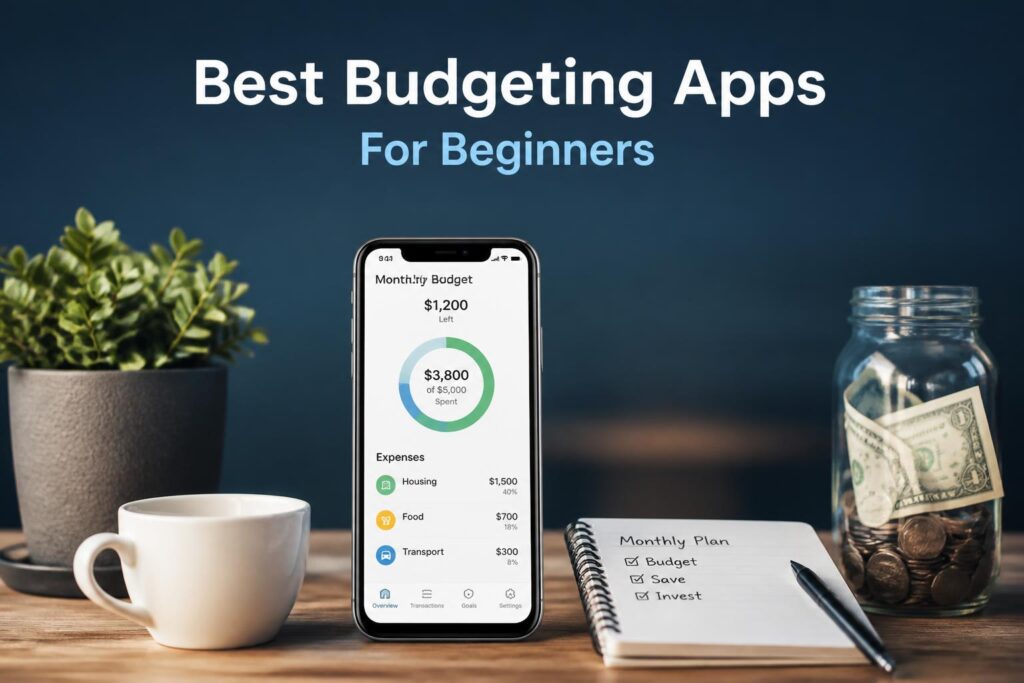
Use a budgeting worksheet or app to monitor where every dollar goes for 30 days.
At the end of the month:
- Identify your true essential spending
- Look at the “everything else” category
- Find $50-$200 you can redirect to debt payoff
Most people find $100-$300 per month they can redirect by tracking honestly.
—
Step 6: Consider Debt Consolidation (If It Makes Sense)
Consolidation combines multiple debts into one payment, potentially at a lower interest rate. This saves money on interest and simplifies your life—but only if you qualify for a better rate than what you’re currently paying.
Two main consolidation options:
Balance Transfer Credit Cards
- How they work: Transfer high-interest credit card debt to a card with 0% APR for a promotional period (usually 15-21 months)
- Best for: People with good or excellent credit who can pay off the balance before the promotional period ends
- Cost: Usually a 3-5% transfer fee
- Saves money if: Your current interest rate is above 15% and you can pay off the transferred balance within the promotional window
Debt Consolidation Loans
- How they work: Take out one personal loan to pay off multiple debts, leaving you with a single monthly payment
- Interest rates: Range from 7% to 36% depending on your credit
- Best for: People with multiple high-interest debts who want a fixed repayment timeline
- Saves money if: The loan rate is lower than your average current interest rate
To decide if consolidation makes sense:
- Use a free debt consolidation calculator
- Input your current debts and the consolidation offer you’re considering
- Compare total interest paid under both scenarios
Only consolidate if it reduces your total interest paid.
Consolidation only works if you stop adding new debt. If you consolidate credit cards but keep using them, you’ll end up with both the consolidation loan and new credit card debt.
—
Step 7: Increase Your Payments (Even Slightly)
Paying more than the minimum saves money on interest—often dramatically. Even small increases compound over time.
The math behind it: When you only pay minimums, most of your payment goes to interest, not principal. Any extra amount attacks the principal directly, which reduces the interest calculated on your next statement.
How to find extra payment money:
- Round up minimum payments to the nearest $50 or $100
- Apply any windfall money (tax refunds, bonuses, gifts) directly to debt
- Redirect one regular expense (like a subscription service) to debt payoff
- Take on temporary side income with a clear end goal
Example calculation:
- $5,000 credit card debt at 18% APR
- Minimum payment: $100/month → Takes 94 months, costs $4,311 in interest
- Paying $150/month instead → Takes 45 months, costs $1,731 in interest
- Savings: $2,580 by adding $50/month
Use your tracking tool from Step 4 to model different payment amounts and see exactly how much time and money you save.
—
Step 8: Use the Avalanche or Snowball Method Correctly
Now that you have extra money to throw at debt, implement your chosen strategy.
For Debt Avalanche:
- Make minimum payments on all debts
- Put all extra money toward the highest-interest-rate debt
- When that debt is eliminated, roll its full payment amount to the next-highest-rate debt
- Repeat until debt-free
For Debt Snowball:
- Make minimum payments on all debts
- Put all extra money toward the smallest balance
- When that debt is eliminated, roll its full payment amount to the next-smallest balance
- Repeat until debt-free
The rolling payment is crucial: When you eliminate a debt, you don’t reduce your total monthly debt payment—you redirect that freed-up payment to the next target debt. This creates momentum that accelerates as you go.
Each debt will disappear faster than the last as your payments snowball. Your tracking tool will show this acceleration visually.
—
Step 9: Automate Your Payments
Automation prevents missed payments (which trigger fees and interest rate increases) and removes the temptation to skip a month.
- Log into each creditor’s website or app
- Set up automatic payments for at least the minimum due
- Schedule payments for 2-3 days before the due date (to account for processing time)
- Set calendar reminders to check that payments processed correctly
For your extra payments (the amount beyond minimums):
- Set up a separate automatic transfer from checking to savings on payday
- Once per month, manually send that accumulated amount to your target debt
- This prevents you from spending money earmarked for debt payoff
Consistent on-time payments every month without manual intervention. Your credit report will show perfect payment history, which actually improves your credit score while you pay down debt.
—
Step 10: Review and Adjust Quarterly
Your financial situation changes. Review your debt payoff plan every three months to make sure you’re still on the most efficient path.
During each quarterly review:
- Check your progress in your tracking tool—are you on schedule?
- Look for new opportunities to increase payments (raise, reduced expenses)
- Evaluate if you should switch strategies (avalanche to snowball or vice versa if motivation is waning)
- Check if you now qualify for better consolidation rates (as your credit score improves from consistent payments)
Red flags that require immediate adjustment:
- You’re only making minimum payments again
- You’ve added new debt
- You’ve missed payments
- Your income has decreased
If you’re not seeing progress, use this checkpoint to identify what’s broken and fix it.
—
Your Debt Payoff Plan Is Ready
You now have a strategy to pay off debt while saving as much money as possible on interest. Here’s what you’ve built:
- A complete debt inventory with all the numbers you need
- A strategy (avalanche or snowball) matched to your personality
- A tracking system that shows your progress
- A bare-bones budget that found extra payoff money
- Automation that keeps you on track without daily effort
Next steps:
- Explore additional features in your chosen debt tracking tool
- Consider increasing your income temporarily to accelerate payoff (side gigs, freelancing, selling unused items)
- Once you eliminate your first debt, celebrate the win—then immediately redirect that payment to the next debt
- Research emergency fund strategies so you don’t create new debt while paying off old debt
The path to debt freedom isn’t about perfection. It’s about having a system and sticking with it. The strategies in this guide work whether you have $5,000 or $50,000 in debt, as long as you implement them consistently.
—
Troubleshooting Common Issues
“I can’t find any extra money in my budget to put toward debt”
This usually means you need to track spending more carefully for another month—most people discover discretionary spending they forgot about. If you’re truly at bare-bones already, focus on the income side: even a temporary $200/month side income makes a massive difference over 2-3 years.
“My tracking app shows I won’t be debt-free for 8 years”
That timeline assumes you only make minimum payments and never increase them. The strategies in this guide—extra payments, consolidation, and the snowball/avalanche method—can cut that timeline in half or more. Run the numbers with even $50/month extra to see the difference.
“Should I save money or pay off debt first?”
The answer depends on your interest rates. If debt interest rates are above 7-8%, prioritize debt payoff. But keep at least $1,000 in emergency savings to avoid creating new debt when unexpected expenses hit.
“I started the avalanche method but I’m losing motivation”
Switch to the snowball method. Eliminating entire debts—even small ones—creates psychological wins that keep you going. The difference in total interest paid is usually small compared to the risk of giving up entirely.
“Can I do this without any paid tools?”
Yes. Unbury.me and basic debt consolidation calculators are completely free. You can even track progress in a spreadsheet. Paid tools offer convenience and extra features, but they’re not required for success.
—
FAQ
Do I need a paid app to track debt payoff?
No. Free options like Unbury.me (3.3 out of 5 stars) and the free version of Debt Payoff Planner (4.8 out of 5 stars) provide everything you need to implement avalanche or snowball strategies and track progress. Paid versions offer convenience features but aren’t necessary for results.
How long does debt payoff typically take?
It depends on your debt load, interest rates, and how much extra you can pay beyond minimums. Most people using the strategies in this guide pay off debt 2-5 years faster than if they only made minimum payments. Your tracking tool will give you a personalized timeline.
Should I use the debt avalanche or snowball method?
The avalanche method (highest interest rate first) saves the most money mathematically. The snowball method (smallest balance first) provides faster psychological wins. Choose the one you’ll stick with.
Is debt consolidation always a good idea?
No. Consolidation only saves money if you get a lower interest rate than your current average rate and you don’t add new debt afterward. Use a debt consolidation calculator to model the numbers before deciding. Consolidation loans range from 7% to 36% interest, so you must qualify for a competitive rate.
What should I do if my debt load is over 43% of my income?
Consider professional debt relief options rather than DIY payoff strategies. Debt loads at 43% of income or higher may benefit from debt settlement, credit counseling, or other intervention beyond standard payoff methods.
How do balance transfer cards save money?
Balance transfer cards offer 0% APR for a promotional period (usually 15-21 months). If you transfer high-interest credit card debt and pay it off during the promotional period, you pay no interest—saving hundreds or thousands of dollars. This works best for people with good or excellent credit who can commit to aggressive payoff during the promotional window.
—
Pick one tool from Step 4, spend 30 minutes inputting your debts, and you’ll see exactly how much money and time you can save with a strategic approach. The difference between paying minimum payments for a decade and using these strategies is often $10,000+ in interest savings—and years of your life back.