How to Choose Emergency Funds in 2026: A Step-by-Step Guide
Disclosure: This article contains affiliate links. If you click through and make a purchase or sign up for a service, I may receive a commission at no additional cost to you.
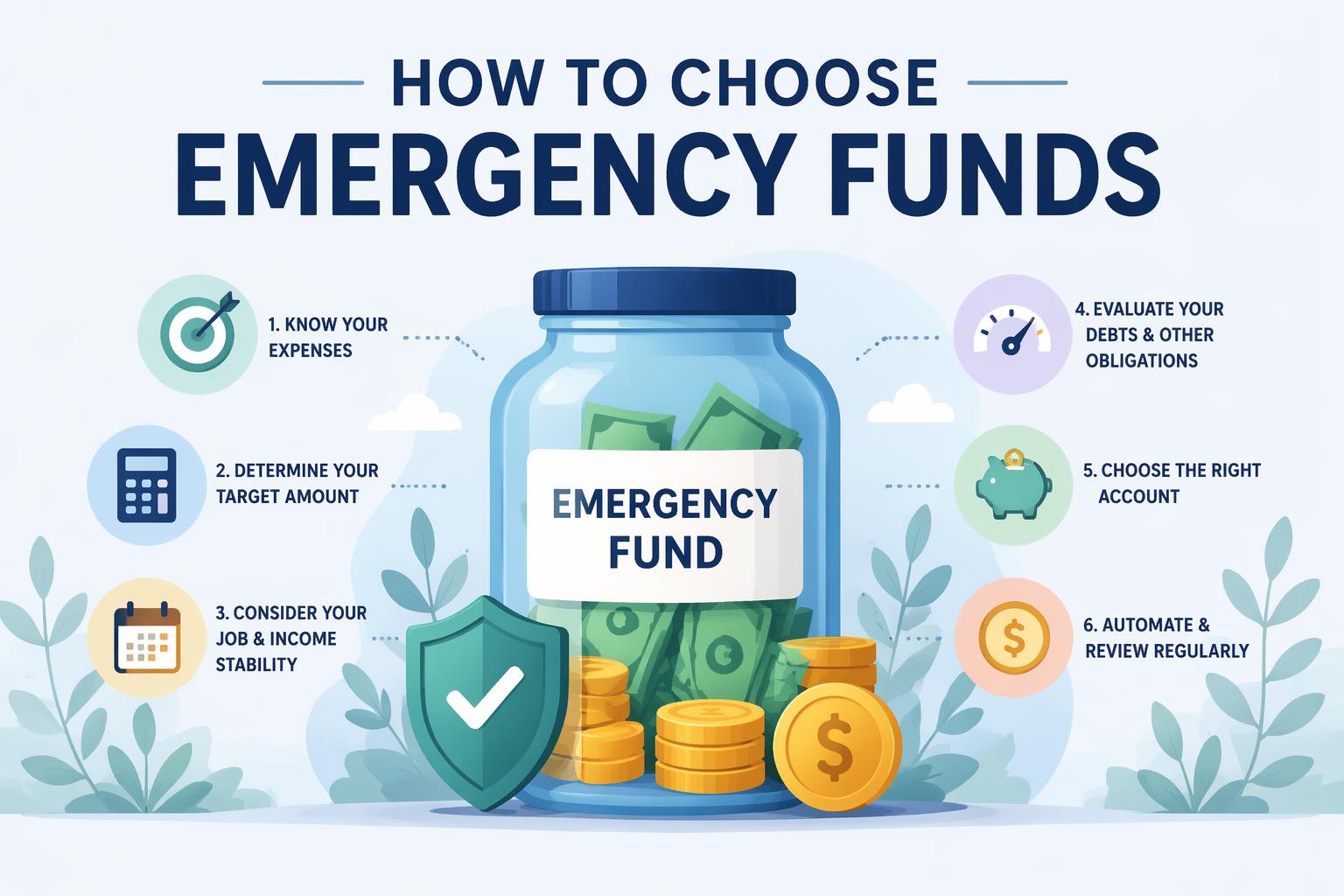
You just got hit with a $1,700 car repair—the average emergency expense in 2026—and you’re scrambling to figure out how to pay for it without maxing out a credit card. You’re not alone. According to Bankrate’s 2026 Annual Emergency Savings Report, only 47% of Americans have sufficient funds to cover a $1,000 emergency, and 29% have more credit card debt than emergency savings.
The problem isn’t that you don’t want to save. It’s that choosing the right emergency fund feels overwhelming—high-yield savings accounts, money market accounts, CDs, even checking accounts all claim to be the “best” option. Meanwhile, you’re stuck wondering: How much should I actually save? Where should I keep it? And how do I make sure I don’t touch it unless it’s a real emergency?
By the end of this guide, you’ll know exactly how to calculate your emergency fund target, choose the right account type for your situation, and set up automation so you never have to think about it again. You’ll have a concrete plan—not just vague advice to “save more.”
Let’s fix this once and for all.
—
What You Need Before Starting
- A clear picture of your monthly expenses — You’ll need to know your rent/mortgage, utilities, groceries, insurance, and debt payments. If you don’t have this yet, grab a free budget worksheet from Zogo or use Origin’s automated budgeting tool to track it automatically.
- Access to your current bank statements — You’ll review where your money is currently sitting and whether it’s working for you.
- 15-20 minutes of focused time — This isn’t a quick skim. You’re making a decision that could save you from financial stress for years.
Estimated time: 20 minutes to calculate and choose your account. 10 minutes to set up automation.
—
Step 1: Calculate Your Emergency Fund Target
The standard advice is “save three to six months of expenses,” but that’s too vague. Here’s how to get a real number.
- List your essential monthly expenses — Include only what you absolutely cannot skip: rent/mortgage, utilities, groceries, insurance premiums, minimum debt payments, and transportation costs. Skip subscriptions, dining out, and entertainment.
- Multiply by your target number of months — If your job is stable and you have a dual-income household, three months is fine. If you’re self-employed, a contractor, or have irregular income, aim for six months. According to the Fed’s 2026 SHED data, 71% of adults aged 60 and older have three months saved, but only 37% of adults aged 18-29 do—so if you’re younger, you’re playing catch-up.
- Add a buffer for the average emergency — The average emergency expense in 2026 is $1,700. If your calculated target is below $5,000, add $2,000 to cover unexpected costs that fall outside your monthly burn rate.
You should see: A specific dollar amount—something like “$12,500 for four months of expenses plus buffer.” Write this number down. It’s your target.
> Note: If your number feels impossibly high, don’t panic. You’re not building this overnight. The goal right now is to know where you’re headed, not to have it all saved by next week.
—
Step 2: Decide How Much You Can Save Each Month
Now that you know your target, let’s figure out how fast you can get there.
- Calculate your monthly discretionary income — Take your total monthly income and subtract all essential expenses (the ones you listed in Step 1) plus current debt payments. What’s left is what you have to work with.
- Apply the 20% rule as a starting point — Financial planners recommend saving 20% of your income, but if that’s not realistic, start with 10% or even 5%. According to Bankrate’s 2026 report, 58% of Americans have the same amount of emergency savings or less than a year ago—which means most people aren’t saving enough. Don’t be part of that statistic.
- Set a realistic monthly savings goal — If you can save $300/month toward a $12,500 target, you’ll hit your goal in about 42 months. If that timeline feels too long, look for one expense you can cut—subscriptions, dining out, or a service you’re not using.
You should see: A monthly dollar amount that feels tight but doable. If it feels comfortable, you’re probably not pushing hard enough.
—
Step 3: Choose Where to Keep Your Emergency Fund
This is where most people get stuck. Here’s how to decide.
Your emergency fund needs to be:
- Liquid — Accessible within 24-48 hours without penalties
- Separate from your checking account — So you’re not tempted to spend it
- Low-risk — Not invested in stocks or crypto
- Earning something — Even a small yield beats zero
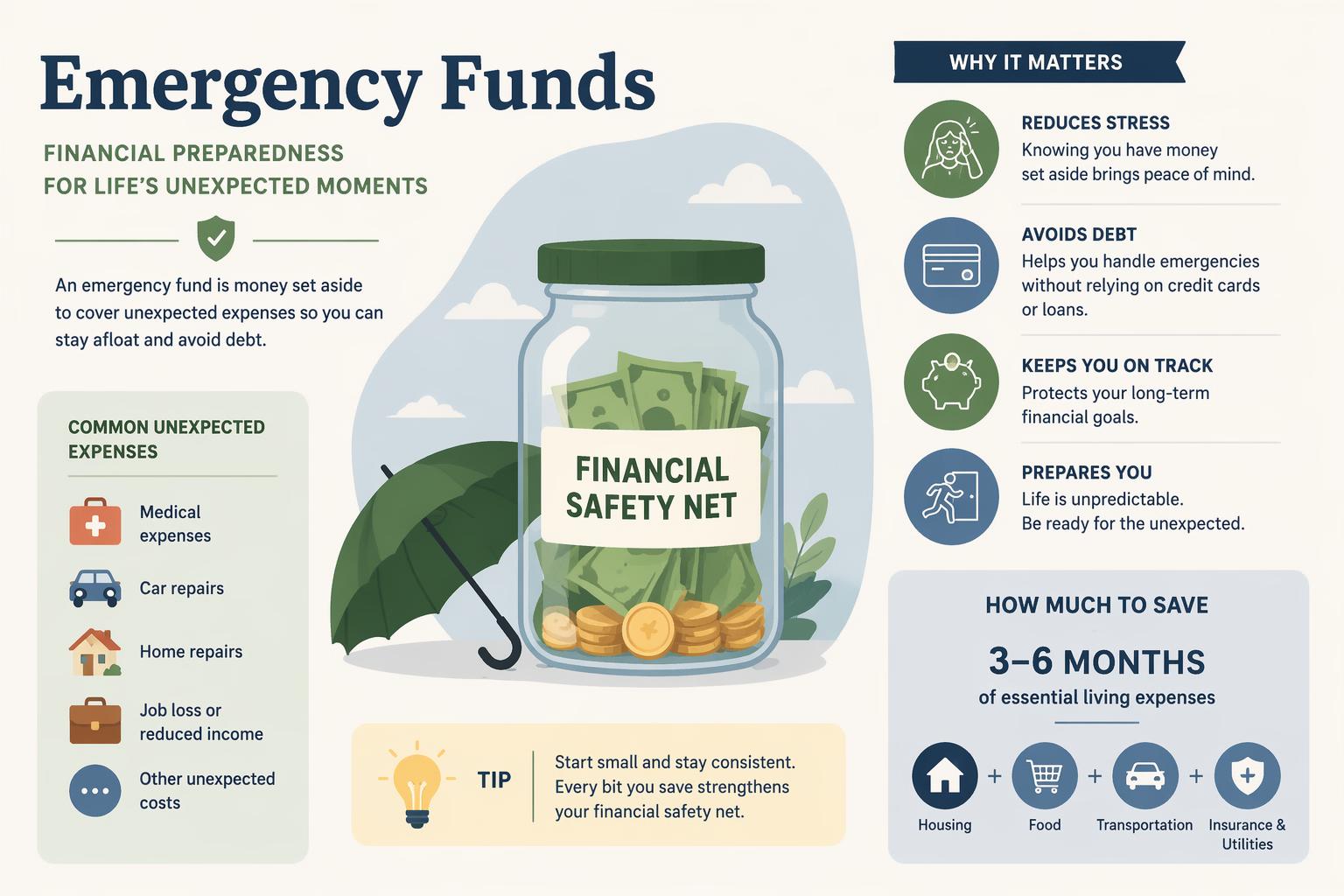
Option 1: High-Yield Savings Account (HYSA)
Best for: Most people. This is the default choice.
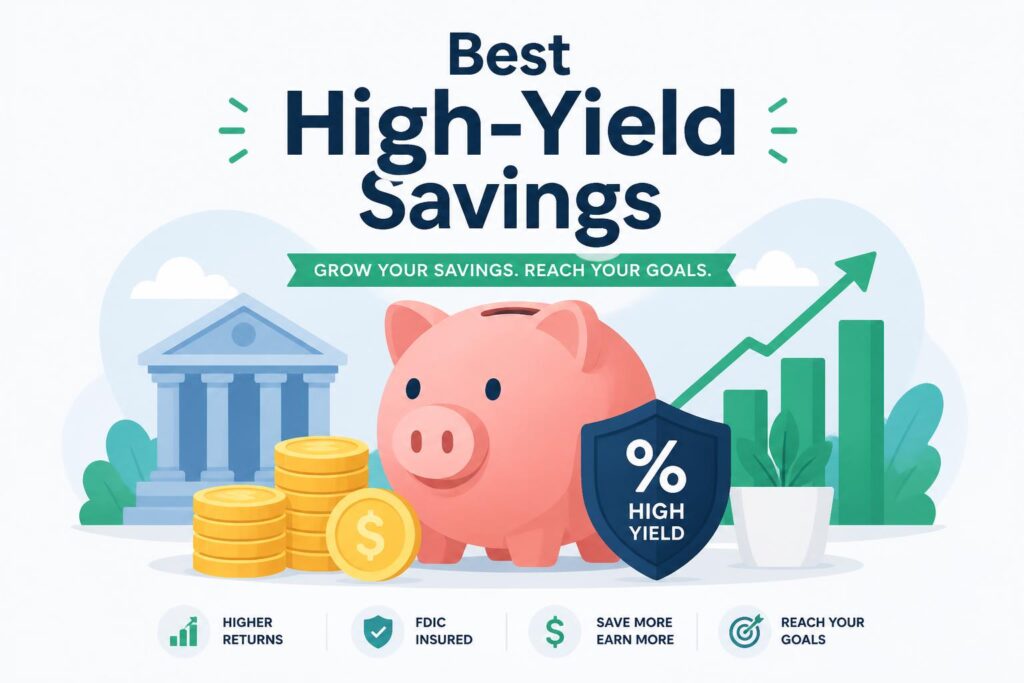
A high-yield savings account offers competitive interest rates (typically 4-5% APY in 2026), FDIC insurance up to $250,000, and easy access to your money. Origin’s High-Yield Cash Account is a solid option—it’s FDIC-insured, offers competitive yields, and integrates with their AI Advisor so you can get personalized guidance on how much to save.
When to choose this: If you want simplicity, liquidity, and a decent return without locking your money away.
→ Open a High-Yield Cash Account with Origin
Option 2: Money Market Account
Best for: People who want check-writing privileges or a debit card tied to their emergency fund.
Money market accounts function like a hybrid between checking and savings—they earn interest (usually competitive with HYSAs) but also let you write checks or use a debit card. The tradeoff: slightly lower yields than top-tier HYSAs and sometimes higher minimum balance requirements.
When to choose this: If you want the psychological comfort of being able to access your emergency fund immediately via debit card, but you’re disciplined enough not to use it for non-emergencies.
Option 3: Certificate of Deposit (CD)
Best for: People who have already built a base emergency fund and want to lock away a portion for a higher yield.
CDs offer fixed APYs in exchange for locking your money up for a set term (3 months, 6 months, 12 months, etc.). You’ll pay a penalty if you withdraw early. Texas Bay Credit Union offers CDs with competitive rates—great for the portion of your emergency fund you’re confident you won’t need immediately.
When to choose this: If you’ve already saved 3-6 months of expenses in a HYSA and want to earn more on the excess by laddering CDs (staggered maturity dates).
→ Explore CD options at Texas Bay Credit Union
Option 4: Emergency Savings Account (Credit Union)
Best for: People who struggle with savings discipline and want a dedicated “emergency-only” account with withdrawal restrictions.
Some credit unions offer emergency savings accounts that limit withdrawals to genuine emergencies—you can’t just transfer money out on a whim. Texas Bay Credit Union’s Emergency Savings Account requires just a $1 deposit to open and includes fraud prevention measures.
When to choose this: If you know yourself well enough to admit you’ll dip into savings for non-emergencies unless there’s friction.
→ Open an Emergency Savings Account at Texas Bay Credit Union
Decision rule: If you’re starting from zero, open a high-yield savings account. If you already have a base fund, consider laddering CDs or splitting between a HYSA and money market account.
—
Step 4: Open Your Chosen Account
Once you’ve decided on an account type, here’s how to open it without getting bogged down in paperwork.
- Gather your documents — You’ll need your Social Security number, government-issued ID, and proof of address (utility bill or bank statement).
- Choose your funding method — Most accounts let you link an external checking account for transfers. If you’re opening an Origin account, you can connect it directly to your existing bank.
- Make your first deposit — Even if it’s just $50 or $100, get the account funded so it’s real. According to Bankrate, 30% of people would use their savings for an emergency expense—but only if they actually have savings to use.
- Set your account nickname — Call it “Do Not Touch” or “Emergency Only” so you’re reminded every time you log in.
You should see: A confirmed account opening with a balance greater than zero. If you opened a HYSA, you should also see your APY listed clearly.
—
Step 5: Automate Your Savings
Manual savings fail. Automation works. Here’s how to set it up so you never have to think about it again.
- Set up a recurring transfer from checking to your emergency fund — Schedule it for the day after your paycheck hits. If you’re paid biweekly, split your monthly savings goal in half and automate two transfers per month.
- Use direct deposit splitting if your employer offers it — Some employers let you split your paycheck across multiple accounts. Send a fixed dollar amount or percentage directly to your emergency fund before it hits your checking account.
- Enable round-up savings if your bank offers it — Some accounts (like Origin) round up purchases to the nearest dollar and transfer the difference to savings. It’s a slow build, but it adds up without you noticing.
You should see: A confirmed recurring transfer schedule. Check your transaction history after the first transfer to make sure it went through.
> Note: If your income is irregular (freelance, gig work, commission-based), set up a manual reminder to transfer a percentage of each payment as soon as it arrives. Irregular income doesn’t mean you can’t save—it just means you need a different system.
—
Step 6: Protect Your Fund from Yourself
You’ve built the fund. Now you need to keep yourself from raiding it for non-emergencies.
- Define what counts as an emergency — Write down your personal definition. Examples: medical bills, car repairs, job loss, home repairs. Not examples: concert tickets, impulse purchases, vacations.
- Make your emergency fund slightly inconvenient to access — Don’t link it to your debit card. Don’t add it to your mobile banking app home screen. You want 24-48 hour access, not instant access.
- Set up a separate “sinking fund” for predictable irregular expenses — Things like annual insurance premiums, car registration, or holiday spending aren’t emergencies—they’re predictable. Save for them separately so you’re not tempted to raid your emergency fund.
You should see: A clear mental boundary between “this is an emergency” and “this is something I want but didn’t plan for.”
—
Step 7: Review and Adjust Quarterly
Your life changes. Your emergency fund target should change with it.
- Set a calendar reminder for quarterly reviews — Every three months, check your progress: How much have you saved? Has your income or essential expenses changed? Do you need to adjust your monthly savings goal?
- Recalculate your target if major life events happen — Got a raise? Increase your target. Had a kid? Increase your target. Paid off a car loan? Redirect that payment to your emergency fund until you hit your new target.
- Celebrate milestones — Hit your first $1,000? Acknowledge it. Reached three months of expenses? You’re in the minority—according to the Fed’s 2026 data, only 49% of adults aged 30-44 have three months saved. That’s an achievement.
You should see: A steady upward trend in your emergency fund balance over time. If your balance is stagnant or declining, something in your plan needs to change.
—
What You’ve Built
You now have a fully-funded (or actively funding) emergency fund that’s:
- Stored in the right account type for your situation
- Earning competitive interest
- Automatically growing every month
- Protected from impulsive spending
More importantly, you’ve eliminated the #1 source of financial stress for most Americans—the fear of a surprise expense derailing your entire life. You’re now in the 47% of Americans who can handle a $1,000 emergency without panic.
If you used Origin’s High-Yield Cash Account, you also have access to their AI Advisor, which can help you optimize your savings strategy as your life changes. If you chose a credit union like Texas Bay, you’ve locked in a dedicated emergency-only account with fraud protection.
Next step: Once you hit your emergency fund target, redirect that monthly savings toward other goals—like paying off high-interest debt, contributing to a 401(k) or IRA, or building a house down payment fund.
—
Troubleshooting Common Issues
“I keep dipping into my emergency fund for non-emergencies”
Fix: Move your emergency fund to a bank that’s different from your primary checking account. The extra friction of logging into a separate institution makes impulsive transfers harder. Also, redefine your emergency criteria—write them down and tape them to your debit card.
“My savings account interest rate dropped”
Fix: HYSA rates fluctuate with the Fed’s interest rate decisions. If your rate dropped significantly, shop around—use comparison sites to find the current top-yielding accounts and transfer your balance. Don’t let inertia cost you hundreds of dollars a year.
“I can’t afford to save anything right now”
Fix: Start with $10/month. Seriously. According to Bankrate’s 2026 report, the median emergency savings for Gen Z is just $400—which means many people started small and built up over time. Once saving becomes a habit, you can increase the amount.
“I hit my target—now what?”
Fix: Congratulations. Now stop contributing to your emergency fund and redirect that money elsewhere. Common next steps: max out your employer’s 401(k) match, pay off high-interest debt, or open a taxable brokerage account for long-term investing.
—
FAQ
Do I need a paid account to earn competitive interest on my emergency fund?
No. Most high-yield savings accounts (including Origin’s High-Yield Cash Account) don’t charge monthly fees and don’t require minimum balances to earn the advertised APY. Always read the fine print, but free HYSAs are the norm in 2026.
How long does it take to build a fully-funded emergency fund?
It depends on your target and monthly savings rate. If you’re saving $300/month toward a $10,000 target, it’ll take about 33 months. If that feels too long, increase your monthly savings or start with a smaller target (like $3,000) and build up from there.
Can I use a regular checking account as my emergency fund?
Technically, yes—but it’s a bad idea. Checking accounts earn little to no interest, and having your emergency money mixed with your everyday spending money makes it too easy to accidentally spend it. Keep them separate.
Should I save for emergencies or pay off debt first?
Build a small emergency fund first ($1,000-$2,000), then aggressively pay off high-interest debt (anything above 7% APR). Once the high-interest debt is gone, finish funding your full 3-6 month emergency fund. This prevents you from going deeper into debt when an emergency hits mid-debt-payoff.
What’s the difference between a savings account and an emergency fund?
An emergency fund is a purpose-specific savings account—it’s money you’ve earmarked exclusively for emergencies. A savings account is just the vehicle you use to hold it (along with other savings goals like vacations, down payments, etc.). Keep your emergency fund separate so you don’t accidentally spend it on non-emergencies.
Can I invest my emergency fund to earn higher returns?
No. Emergency funds must be liquid and low-risk. Stocks, bonds, and crypto are too volatile—if the market crashes the same week you lose your job, you’re stuck selling at a loss to cover expenses. Keep your emergency fund in cash-equivalent accounts (HYSA, money market, short-term CDs).
—
Sources & Data
- Forbes: Median Emergency Savings by Age (2026)
- Origin: How to Build an Emergency Fund in 2026
- Bankrate: 2026 Annual Emergency Savings Report
- Texas Bay Credit Union: Budget, Save, Eliminate Debt & Invest in 2026
—
Word count: 2,487 words