Best Debt Payoff for Beginners: A Complete Guide to Becoming Debt-Free

Debt feels overwhelming when you start. Multiple strategies, conflicting advice, fear of picking wrong. Most beginners freeze instead of acting. The reality? Choosing a payoff strategy is simpler than you think, and you don’t need expertise to start.
This guide covers proven methods, helps you pick one that fits, and shows you mistakes that waste time and money.
Understanding Your Debt Landscape
Before picking a strategy, map what you owe. Most people struggle because they skip this step.
Types of Debt You Might Have
High-Interest Debt: Credit cards, payday loans, personal loans (15-30% rates). These cost you the most, so they’re usually the priority.
Medium-Interest Debt: Auto loans, private student loans (6-15% range). Still significant, but they don’t drain you as fast.
Low-Interest Debt: Federal student loans, mortgages, home equity loans (below 6%). These can often wait while you tackle higher-rate stuff.
Calculating Your Debt Total
Make a list:
- Creditor name
- Current balance
- Interest rate
- Minimum monthly payment
- Due date
This becomes your roadmap. Skip it and you’ll stay confused about where to start.
The Two Most Effective Debt Payoff Methods
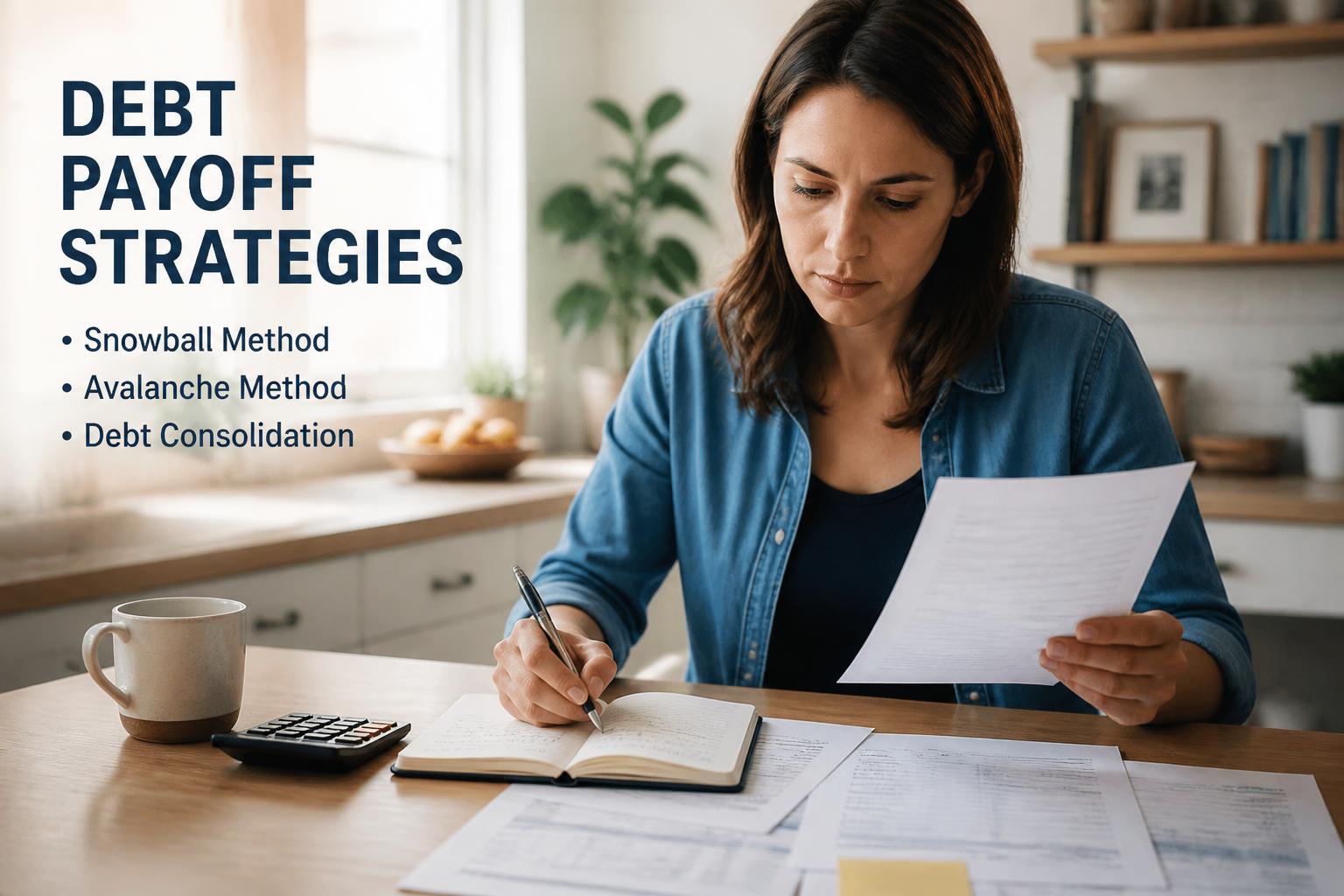
Two strategies consistently work for beginners: the Debt Avalanche and the Debt Snowball.
The Debt Avalanche Method: Maximum Savings
Pay off the highest interest rate first while making minimums on everything else.
How it works:
- List debts from highest to lowest interest rate
- Pay minimums on all debts
- Put every extra dollar toward the highest-rate debt
- Once that’s gone, roll that payment to the next highest rate
- Repeat until debt-free
Best for: People motivated by numbers who want to minimize interest. If saving money matters more than quick wins, use this.
Example: Sarah has three debts:
- Credit Card A: $5,000 at 22% APR
- Credit Card B: $3,000 at 18% APR
- Personal Loan: $8,000 at 9% APR
She targets Credit Card A first (highest rate, not highest balance). This saves her the most money.
The Debt Snowball Method: Psychological Wins
Pay off the smallest balance first to build momentum through quick victories.
How it works:
- List debts from smallest to largest balance
- Pay minimums on all debts
- Attack the smallest balance with all extra money
- When it’s gone, roll that payment to the next smallest
- Watch your snowball grow as accounts disappear
Best for: People who need motivation. If you’ve failed at financial plans before, the quick wins often provide enough encouragement to keep going.
Example: Using Sarah’s debts, she’d target Credit Card B first ($3,000), then Credit Card A ($5,000), then the loan ($8,000). She might pay slightly more in interest, but eliminating Credit Card B fast could keep her motivated for the long haul.
Choosing Your Strategy
The “best” method depends on your personality, not just math.
When to Use the Avalanche Method
Choose avalanche if:
- Delayed gratification doesn’t bother you
- Saving money on interest motivates you
- You can stick with a plan without quick wins
- Your highest-interest debt isn’t massive
- You have decent financial discipline
When to Use the Snowball Method
Choose snowball if:
- You need quick wins to stay motivated
- You’ve failed at debt payoff before
- Closing accounts gives you energy
- You have several small debts
- You’re more emotional than analytical about money
The Hybrid Approach
Many people who succeed use a modified strategy:
- Start with snowball to build confidence
- After eliminating 2-3 small debts, switch to avalanche
- Or tackle anything over 20% interest first, then switch to snowball
No rule says you must stick to one method. The best strategy is the one you’ll actually finish.
Creating Your Debt Payoff Plan
Time to build your plan.
Step 1: Set Your Extra Payment Amount
Look at your budget. How much extra can you realistically put toward debt? Start conservative. Better to exceed a modest goal than fail an aggressive one.
Even $50-100 per month makes a difference. If you can’t find extra money, consider:
- Selling unused items
- Taking on a side gig temporarily
- Redirecting windfalls (tax refunds, bonuses) entirely to debt
- Cutting one discretionary expense
Step 2: Choose Your Method
Based on your personality, commit to avalanche or snowball. Write down which you’re using and why. This clarity helps when motivation drops.
Step 3: Automate Your Payments
Set up automatic payments for minimums on all debts. This prevents late fees and credit damage. Then manually make extra payments toward your target debt.
Some automate everything, including extra payments. This works if your income is stable and you won’t touch that money elsewhere.
Step 4: Track Your Progress
Create a visual tracker—a chart, thermometer, or spreadsheet showing your declining balance. Many people print trackers and color in progress. This makes abstract numbers feel concrete.
Update monthly when you make payments. Celebrate milestones like 25%, 50%, or eliminating specific debts.
Step 5: Build a Small Emergency Buffer
This seems backward when focused on debt, but it’s crucial. Without $500-1,000 saved, unexpected expenses force you back to credit cards.
Save this buffer first, then attack debt. Once debt-free, build your emergency fund to 3-6 months of expenses.
Common Mistakes That Waste Time and Money
Mistake 1: Trying to Pay Off Everything at Once
Splitting extra money across multiple debts feels productive but slows you down. Focus intensely on one debt while maintaining minimums on others.
Mistake 2: Ignoring Minimum Payments
Some get so focused on their target debt they miss minimums on others, triggering late fees and credit damage. Always pay minimums first, then apply extra to your target.
Mistake 3: Not Addressing the Root Cause
Debt payoff fails if you’re still overspending. Track expenses for one month before starting. Identify where money disappears and make realistic cuts. Your plan means nothing if you’re accumulating new debt.
Mistake 4: Refusing to Negotiate
Many don’t realize creditors sometimes negotiate lower interest rates, especially with decent payment history. One phone call requesting a rate reduction can save hundreds. Worst they say is no.
Mistake 5: Pausing for “Important” Purchases
Life happens, but frequent exceptions derail progress. Unless it’s a true emergency, stick to your plan. That “good deal” can wait until you’re debt-free.
Advanced Strategies for Faster Payoff
Once you’ve got the basics down, these tactics can speed things up.
Balance Transfer Cards
If you have good credit (670+), transferring high-interest credit card debt to a 0% APR balance transfer card saves interest. You’ll pay a 3-5% transfer fee but avoid 12-21 months of interest charges.
Important: Only do this if you won’t use the cards for new purchases and can pay off the balance before the promotional period ends.
Debt Consolidation Loans
A personal loan at a lower rate can simplify multiple debts into one payment. This works best when:
- Your credit has improved since the original debt
- You have multiple high-interest debts
- You can secure a rate at least 3-5 percentage points lower
- You commit to not accumulating new debt
The Debt Snowflake Method
While following your main strategy, throw unexpected small amounts at your target debt immediately. Found $20? Made $30 from a return? Send it straight to debt.
These seem insignificant but add up to hundreds or thousands annually. They also keep you engaged with your goal.
Increasing Payments Over Time
Start with your realistic extra payment, but increase it every 2-3 months. As you pay off debts, freed-up minimums automatically grow your snowball. Also look for ways to add $25-50 more from your income every few months.
Staying Motivated for the Long Haul
Most people take 2-5 years to eliminate significant debt, so motivation strategies matter.
Celebrate Milestones
Don’t wait until you’re debt-free. Acknowledge every $1,000 paid off, every account closed, every month of on-time payments. Small celebrations (favorite meal, movie night) keep your spirits up without derailing progress.
Find Your Community
Join online debt payoff communities, follow debt-free journey accounts, or find a friend with similar goals. Sharing struggles and wins with others provides accountability and encouragement.
Visualize Your Freedom
Picture life without debt payments. What will you do with that money? How will you feel? Write this down and review it monthly, especially when motivation dips.
Track Secondary Wins
Beyond the shrinking balance, notice improvements in your credit score, reduced financial stress, increased financial literacy. These often appear before you’re debt-free and prove your efforts are working.
When to Seek Professional Help
Most beginners can pay off debt independently using these strategies. Some situations warrant professional help:
- Your debt exceeds your annual income
- You’re facing lawsuits or wage garnishment
- You’re behind on multiple payments with no clear path forward
- You’re considering bankruptcy
- You have complex debt (business debt, tax liens, etc.)
Non-profit credit counseling agencies offer free or low-cost advice and can sometimes negotiate with creditors. Be wary of for-profit debt settlement companies that charge high fees and may damage your credit.
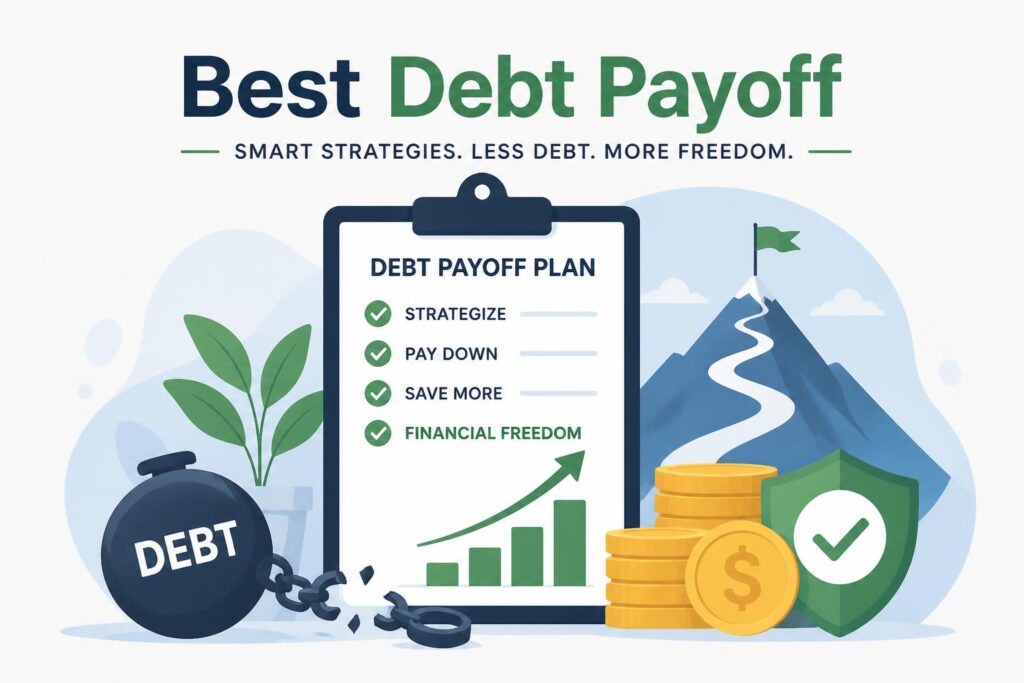
Your Next Steps
The best strategy is the one you start today. Here’s your action plan:
- Today: List all debts with balances, rates, and minimums
- This week: Choose your method (avalanche or snowball) and calculate your extra payment
- This month: Make your first strategic debt payment and set up your tracking system
- Ongoing: Stick to your plan, adjust as needed, celebrate progress
Thousands of people just like you have eliminated overwhelming debt using these strategies. The difference between those who succeed and those who don’t isn’t intelligence, income, or luck—it’s starting and persisting.
Conclusion
Finding the best debt payoff method doesn’t require complicated financial knowledge or perfect circumstances. It requires understanding your options, choosing a strategy that fits your personality, and committing to consistent action.
Whether you choose the mathematically optimal avalanche or the psychologically powerful snowball, you’re making a choice that will transform your financial future. The worst strategy is no strategy—waiting for debt to resolve itself or for your situation to become “easier.”
Your journey to becoming debt-free starts with a single payment. The road may be long, but every dollar paid brings you closer to financial freedom. Stop overthinking, choose your method, and take that first step today.
For more strategies and tools, visit our guide at best debt payoff.