Best AI SEO for Beginners: Choosing the Right Tool Without Breaking the Bank
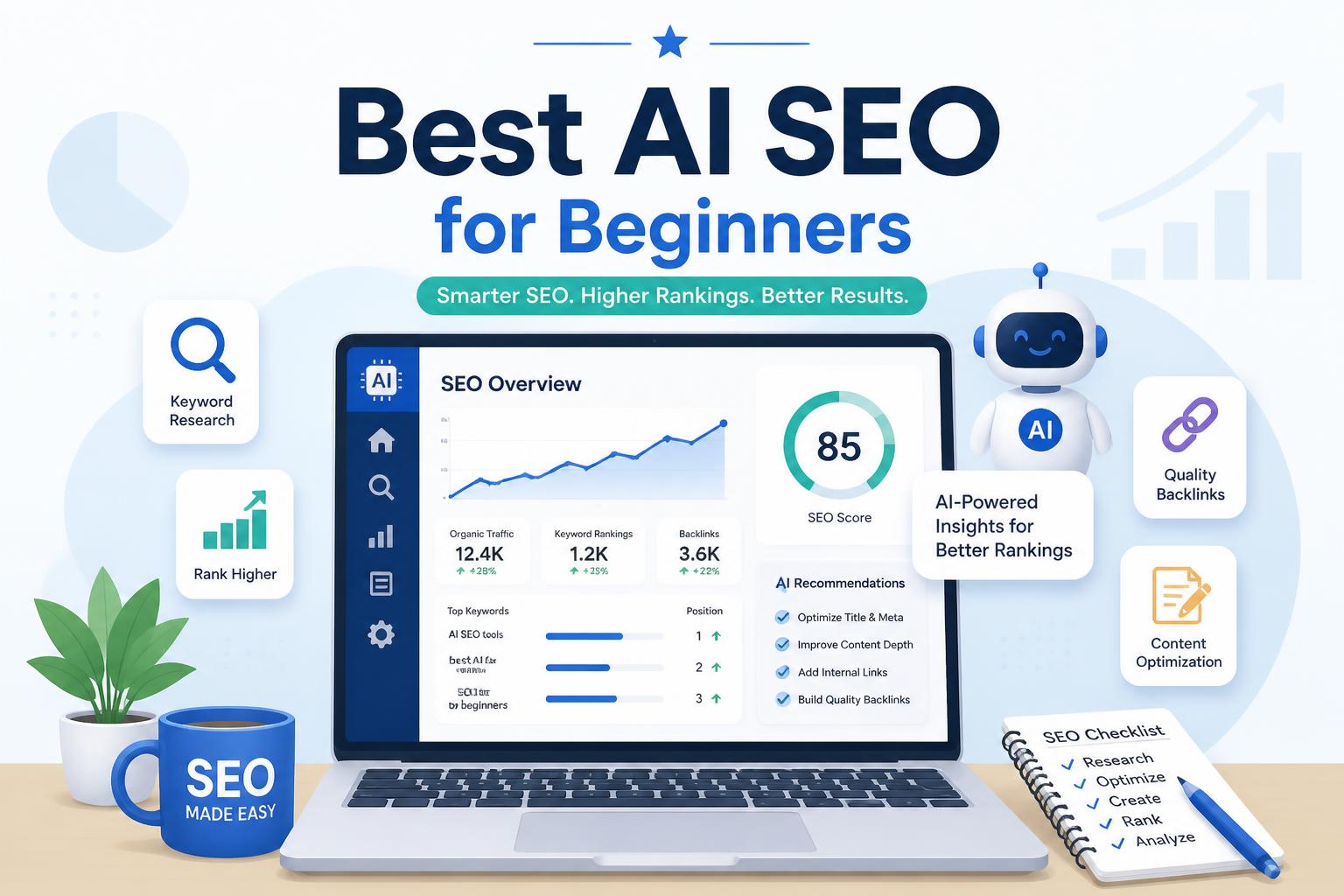
Choosing the right AI SEO tool feels overwhelming when you’re starting out. Dozens of platforms promise to skyrocket your rankings. How do you know which one delivers without draining your wallet? This guide cuts through the noise.
Understanding AI SEO
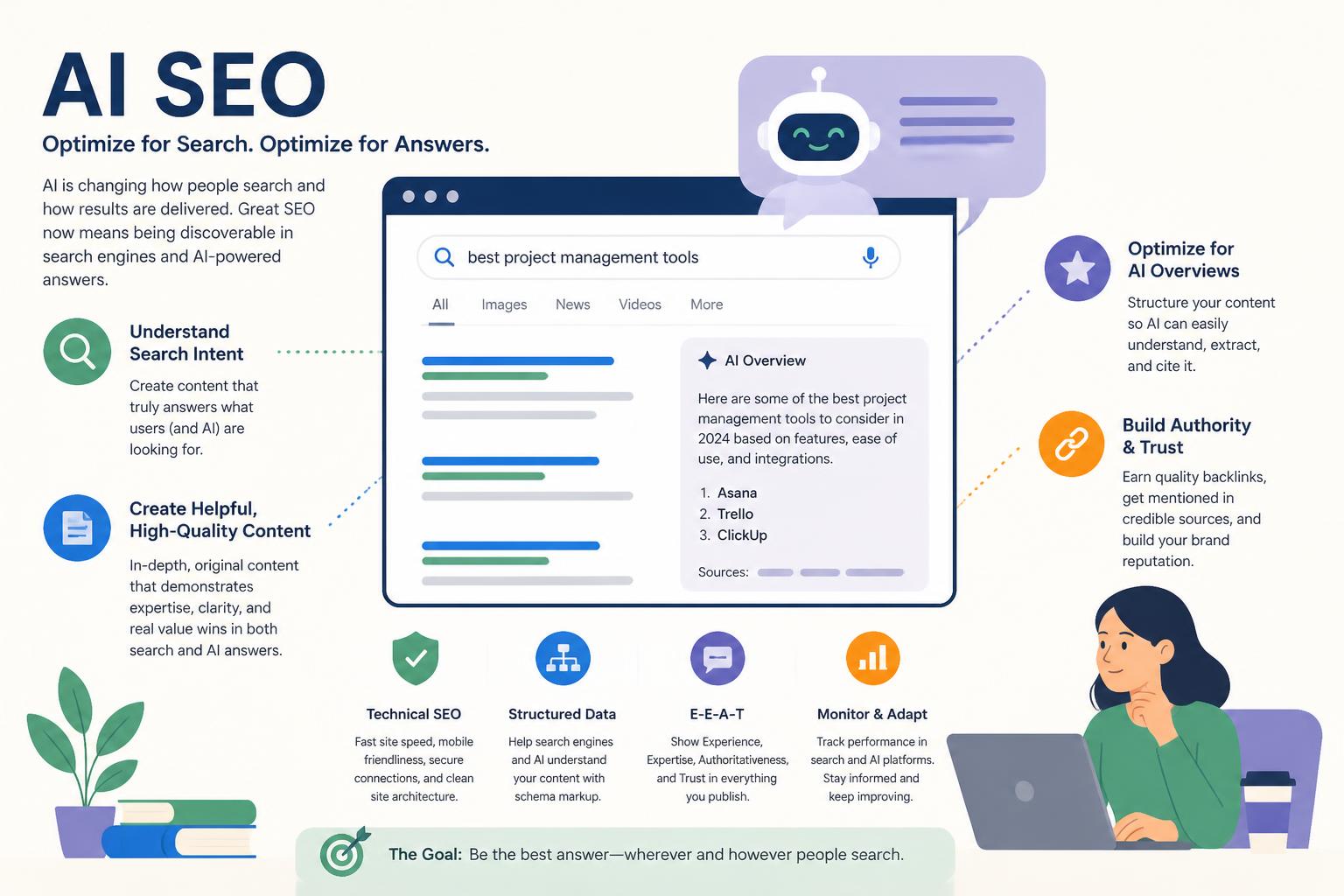
AI SEO tools use artificial intelligence and machine learning to automate SEO tasks. Instead of manually researching keywords or analyzing competitors, these tools process massive amounts of data in seconds and tell you what to do next.
For beginners, this is useful. Tasks that used to require years of experience can now be done with smart automation. But not all AI SEO tools are the same, and knowing what you need comes first.
Why Traditional SEO Is Hard for Beginners
Traditional SEO methods are tough for newcomers:
Time-intensive research: Manual keyword research takes hours or days. You analyze search volumes, competition levels, user intent, and seasonal trends before writing anything.
Steep learning curve: Technical SEO concepts like schema markup, canonical tags, and site architecture take significant study.
Constant algorithm updates: Google makes thousands of algorithm changes annually. Keeping up requires continuous education.
Resource limitations: Hiring SEO experts costs thousands per month. Most beginners don’t have that budget.
Data overload: Raw SEO data means nothing without expertise to interpret it.
AI SEO tools address these problems by automating complex processes and making professional optimization accessible.
Key Features to Look for in AI SEO Tools
When evaluating AI SEO platforms, prioritize these features:
Intelligent Keyword Research
Targeting the right keywords is the foundation. Top AI SEO tools should:
- Generate keyword suggestions based on seed terms or topics
- Provide accurate search volume and difficulty scores
- Identify long-tail keyword opportunities with lower competition
- Analyze keyword intent (informational, commercial, transactional, navigational)
- Show keyword trends and seasonality patterns
Content Optimization Capabilities
Creating SEO-friendly content requires more than keyword stuffing. Look for tools that offer:
- Real-time content scoring and suggestions as you write
- Semantic keyword recommendations to improve topical relevance
- Readability analysis and improvement suggestions
- Competitive content gap analysis
- Title and meta description optimization
- Internal linking recommendations
Competitive Intelligence
Understanding what competitors do right gives you an advantage:
- Identify which keywords competitors rank for
- Analyze their top-performing content
- Discover their backlink profiles
- Monitor their content publishing frequency and topics
- Track ranking changes over time
Technical SEO Auditing
Beginners need to ensure their website’s technical foundation is solid:
- Automated site crawling to identify technical issues
- Page speed analysis and improvement suggestions
- Mobile-friendliness testing
- Structured data validation
- Duplicate content detection
- XML sitemap and robots.txt analysis
User-Friendly Interface
The most powerful tool is worthless if you can’t figure out how to use it. Prioritize platforms with:
- Clean, intuitive dashboards
- Clear explanations of recommendations
- Guided workflows for common tasks
- Video tutorials and documentation
- Responsive customer support
Top AI SEO Tools for Beginners
Surfer SEO: Best for Content Optimization
Surfer SEO helps beginners create content that ranks. Its Content Editor analyzes top-ranking pages for your target keyword and provides real-time optimization suggestions.
Strengths:
- Simple, visual interface
- Real-time content scoring shows exactly how to improve
- Good keyword research with clear difficulty ratings
- Built-in outline generator saves research time
- Affordable pricing starting at $89/month
Best for: Bloggers, content creators, and small business owners focused on creating rankable content.
Semrush: Best All-in-One Platform
Semrush offers a comprehensive suite of SEO tools, making it a one-stop solution for beginners who want to grow into advanced strategies.
Strengths:
- Massive keyword database covering 140+ countries
- Powerful competitive analysis features
- Content marketing tools including topic research and SEO writing assistant
- Technical SEO auditing with clear prioritization
- Position tracking and ranking alerts
Considerations:
- Can feel overwhelming due to the number of features
- Higher price point starting at $129.95/month
- Steeper learning curve than specialized tools
Best for: Serious beginners willing to invest time learning a professional platform they won’t outgrow.
Frase: Best for Question-Based Content
Frase uses AI to help you create content that directly answers user questions—a critical ranking factor.
Strengths:
- Automatically generates content briefs based on top-ranking pages
- Identifies questions people ask about your topic
- AI writing assistant helps generate sections of content
- Visual content outlining makes planning easy
- Competitive analysis shows exactly what to include
Best for: Beginners creating FAQ pages, how-to guides, and informational content targeting featured snippets.
Jasper (with Surfer SEO Integration): Best for AI Writing
Jasper combines AI writing with SEO optimization through its Surfer SEO integration.
Strengths:
- Generate long-form content quickly with AI assistance
- Native Surfer SEO integration ensures content is optimized
- Multiple content templates for different formats
- Maintains consistent brand voice
- Helps overcome writer’s block
Considerations:
- Requires fact-checking and editing of AI-generated content
- More expensive at $49-$125/month
- Best results require learning effective prompting techniques
Best for: Beginners who need to produce high volumes of content and want AI assistance with the writing process.
Ahrefs: Best for Backlink Analysis
Ahrefs has evolved into a comprehensive AI-powered SEO platform for beginners serious about link building.
Strengths:
- Industry-leading backlink database
- Good keyword research with click-through rate predictions
- Content Explorer helps find link-building opportunities
- Site audit identifies technical issues
- Rank tracking with SERP feature monitoring
Considerations:
- Premium pricing starting at $129/month
- Some features may be overkill for absolute beginners
- Focus on backlinks may not align with all beginner strategies
Best for: Beginners focused on building domain authority through strategic link acquisition.
Clearscope: Best for Content Relevance
Clearscope uses AI to ensure your content comprehensively covers topics.
Strengths:
- Identifies semantically related terms to include
- Simple grading system makes optimization straightforward
- Google Docs integration for seamless writing
- Competitive reports show coverage gaps
- Clean interface with minimal distractions
Considerations:
- Higher price point at $170/month minimum
- Limited keyword research capabilities
- Best used alongside other tools for a complete strategy
Best for: Beginners who prioritize content quality and topical authority over technical SEO.
MarketMuse: Best for Content Strategy
MarketMuse helps beginners develop comprehensive content strategies using AI.
Strengths:
- Identifies content gaps across your entire site
- Prioritizes which topics to create content about
- Provides detailed content briefs with competitive analysis
- Helps build topical clusters for authority
- Offers a free plan to get started
Considerations:
- Paid plans are expensive ($149/month+)
- Can be complex for absolute beginners
- Best suited for larger content operations
Best for: Beginners planning to build significant content libraries and establish topical authority.
How to Choose the Right Tool
Selecting the right tool requires understanding your priorities, budget, and goals.
Define Your Primary SEO Goals
Start by identifying what you want to accomplish:
Goal: Rank blog content faster
Best fit: Surfer SEO or Frase
Goal: Understand what competitors are doing
Best fit: Semrush or Ahrefs
Goal: Build website authority with backlinks
Best fit: Ahrefs
Goal: Create content at scale
Best fit: Jasper with Surfer SEO integration
Goal: Fix technical SEO issues
Best fit: Semrush or Ahrefs
Consider Your Budget
AI SEO tools range from free plans to $500+ monthly subscriptions. Be honest about what you can sustain:
$0-50/month: Free tools with paid add-ons (MarketMuse free plan, Google Search Console, Ubersuggest)
$50-100/month: Entry-level plans from Surfer SEO, Frase, or Jasper
$100-150/month: Professional plans from Semrush, Ahrefs, or comprehensive Surfer SEO packages
$150+/month: Advanced plans with higher usage limits
The most expensive tool isn’t always the best for beginners. Start with what you can afford and upgrade as you see results.
Evaluate Your Technical Comfort Level
Be realistic about your willingness to learn new platforms:
Low technical comfort: Choose tools with guided workflows like Surfer SEO or Frase
Moderate technical comfort: Consider comprehensive platforms like Semrush
High technical comfort: Advanced tools like Ahrefs or MarketMuse
Assess Your Time Availability
How much time can you dedicate to SEO?
Limited time (1-5 hours/week): Prioritize tools with automation and clear action items like Surfer SEO
Moderate time (5-15 hours/week): Use comprehensive platforms like Semrush
Significant time (15+ hours/week): Invest in learning advanced tools like Ahrefs
Think About Growth
Will your needs evolve over time?
Single website/blog: Specialized tools like Frase or Clearscope may work
Multiple websites or client work: Choose scalable platforms like Semrush or Ahrefs
Growing content team: Look for collaboration features in tools like MarketMuse or Semrush
Common Mistakes Beginners Make
Avoid these pitfalls:
Choosing Based on Features Rather Than Needs
Just because a tool has 50 features doesn’t mean you need them. Beginners often pay for advanced capabilities they never use. Focus on tools that do what you need right now.
Expecting Instant Results
AI SEO tools provide data and recommendations, but they don’t magically produce rankings overnight. SEO takes 3-6 months to show significant results.
Ignoring the Learning Curve
Powerful tools require time to master. Choosing the most advanced platform without considering the learning investment leads to underutilization and frustration.
Not Testing Before Committing
Most AI SEO tools offer free trials or money-back guarantees. Skipping the testing phase means potentially committing to a platform that doesn’t fit your workflow.
Overlooking Integration Capabilities
Your AI SEO tool should work with your existing tech stack. Check for integrations with your content management system, analytics platforms, and other marketing tools.
Focusing Only on Price
The cheapest option isn’t always the most cost-effective. A $170/month tool that saves you 20 hours monthly is a better investment than a $50/month tool that wastes your time.
Getting Started: A Step-by-Step Action Plan
Week 1: Research and Testing Phase
Day 1-2: Define your primary SEO goals and rank them by priority. List your top three objectives.
Day 3-4: Based on this guide, shortlist 2-3 tools that align with your goals and budget. Sign up for free trials of each.
Day 5-7: Test each tool with a real project. Try to complete one full workflow (keyword research through content creation) with each platform.
Week 2: Decision and Setup
Day 8-10: Compare your experiences. Which tool felt most intuitive? Which provided the most actionable insights? Which saved you the most time?
Day 11-12: Subscribe to your chosen tool. Start with the most affordable plan that meets your needs. You can always upgrade.
Day 13-14: Complete the platform’s onboarding tutorials and documentation. Invest time in learning proper usage.
Week 3-4: Implementation
Week 3: Use your chosen tool to audit your existing content and identify quick wins—pages that could rank with minor optimization.
Week 4: Create one new piece of content using your AI SEO tool’s recommendations. Document your process for future reference.
Month 2 and Beyond: Optimization and Scaling
- Track your results weekly. Monitor keyword rankings, organic traffic, and conversions.
- Refine your tool usage based on what works. Focus on features that deliver measurable results.
- Gradually expand your strategy as you become more comfortable with the platform.
- Consider upgrading your plan or adding complementary tools as your needs evolve.
Maximizing ROI from Your AI SEO Investment
Simply subscribing to an AI SEO tool isn’t enough. You need to use it strategically:
Create a Consistent Workflow
Establish regular patterns:
Weekly: Check ranking changes, identify new keyword opportunities, monitor competitor movements
When creating content: Use optimization features from outline through final edit
Monthly: Run comprehensive site audits, review overall strategy, identify content gaps
Focus on High-Impact Activities First
AI tools can do many things. Prioritize actions with the biggest impact:
- Fix critical technical SEO issues flagged in audits
- Optimize existing content ranking on page 2 (positions 11-20)
- Target long-tail keywords with clear search intent and lower competition
- Create content clusters around your core topics
- Build internal linking between related pages
Combine AI Insights with Human Judgment
AI provides data and suggestions, but you make final strategic decisions:
- Verify AI keyword suggestions align with your business goals
- Ensure AI-generated or AI-optimized content maintains your brand voice
- Use competitive intelligence to differentiate, not just copy
- Apply context and nuance that AI might miss
Measure What Matters
Track metrics that indicate real business impact:
- Organic traffic growth to key pages
- Keyword ranking improvements for target terms
- Time saved on SEO tasks vs. manual methods
- Conversion rates from organic traffic
- Content ROI (traffic and conversions per piece)
Alternative and Complementary Free Tools
While premium AI SEO tools offer significant advantages, beginners can supplement them with free resources:
Google Search Console: Monitor search performance, identify technical issues, and understand which queries drive traffic.
Google Analytics: Track user behavior, identify high-performing content, and measure conversion paths from organic search.
Ubersuggest: Neil Patel’s freemium tool offers basic keyword research, site auditing, and competitive analysis.
Answer the Public: Generates question-based keyword ideas for content planning.
Google Keyword Planner: Free keyword data directly from Google, though designed for paid advertising.
MozBar: Browser extension providing instant SEO metrics while browsing.
These free tools work best alongside a primary AI SEO platform, filling gaps and providing additional data points.
The Future of AI SEO
Understanding where AI SEO technology is heading helps you make future-proof tool choices:
More Natural Language Processing: Tools will better understand user intent and semantic relationships, moving beyond exact keyword matching.
Predictive Analytics: AI will forecast ranking potential and suggest proactive optimizations before competitors catch up.
Automated Implementation: Future tools may directly implement technical fixes rather than just identifying them.
Voice and Visual Search Optimization: As search diversifies, AI tools will optimize for voice queries and image search.
Hyper-Personalization: AI will tailor SEO strategies based on your specific site, industry, and audience characteristics.
The best AI SEO tools for beginners are those that evolve with these trends while maintaining user-friendly interfaces and clear guidance.
Making Your Final Decision
Choosing the best AI SEO tool comes down to matching capabilities with your situation:
Choose Surfer SEO if: You’re focused on creating and optimizing blog content, want clear step-by-step guidance, and have a moderate budget.
Choose Semrush if: You want a comprehensive platform you can grow into, plan to handle multiple SEO tasks beyond just content, and can invest time in learning.
Choose Frase if: You create question-focused content, want quick content briefs, and need AI writing assistance for certain sections.
Choose Ahrefs if: Backlinks and competitive research are priorities, you’re comfortable with data analysis, and you have a higher budget.
Choose Jasper with Surfer if: You need to produce high volumes of content quickly and want AI writing assistance with SEO optimization.
Choose Clearscope if: Content quality and topical relevance are paramount, you have Google Docs-based workflows, and you’re willing to pay premium pricing.
Choose MarketMuse if: You’re planning a large content operation, need strategic content planning, and want to start with a free plan before committing.
The “best” AI SEO tool is the one you’ll actually use consistently. Start with a single platform, master its core features, and scale your toolkit as your expertise and needs grow.
Taking Action Today
The biggest mistake beginners make isn’t choosing the wrong AI SEO tool. It’s choosing nothing at all due to analysis paralysis. SEO becomes more effective over time, meaning every day you delay is a day your competitors get further ahead.
Start simple:
- Pick one tool from this guide that aligns with your primary goal
- Sign up for the free trial today
- Complete one real project using the tool this week
- Track your results over the next 90 days
- Adjust your approach based on what the data tells you
For more detailed comparisons and updated recommendations, visit our comprehensive guide at https://moneysavingway.com/best-ai-seo/.
The best AI SEO tool for beginners is the one that removes barriers between your content and your audience. Choose wisely, commit to consistent action, and watch your organic visibility grow.