Best AI Writing Tools for Beginners: Your Complete Guide to Getting Started
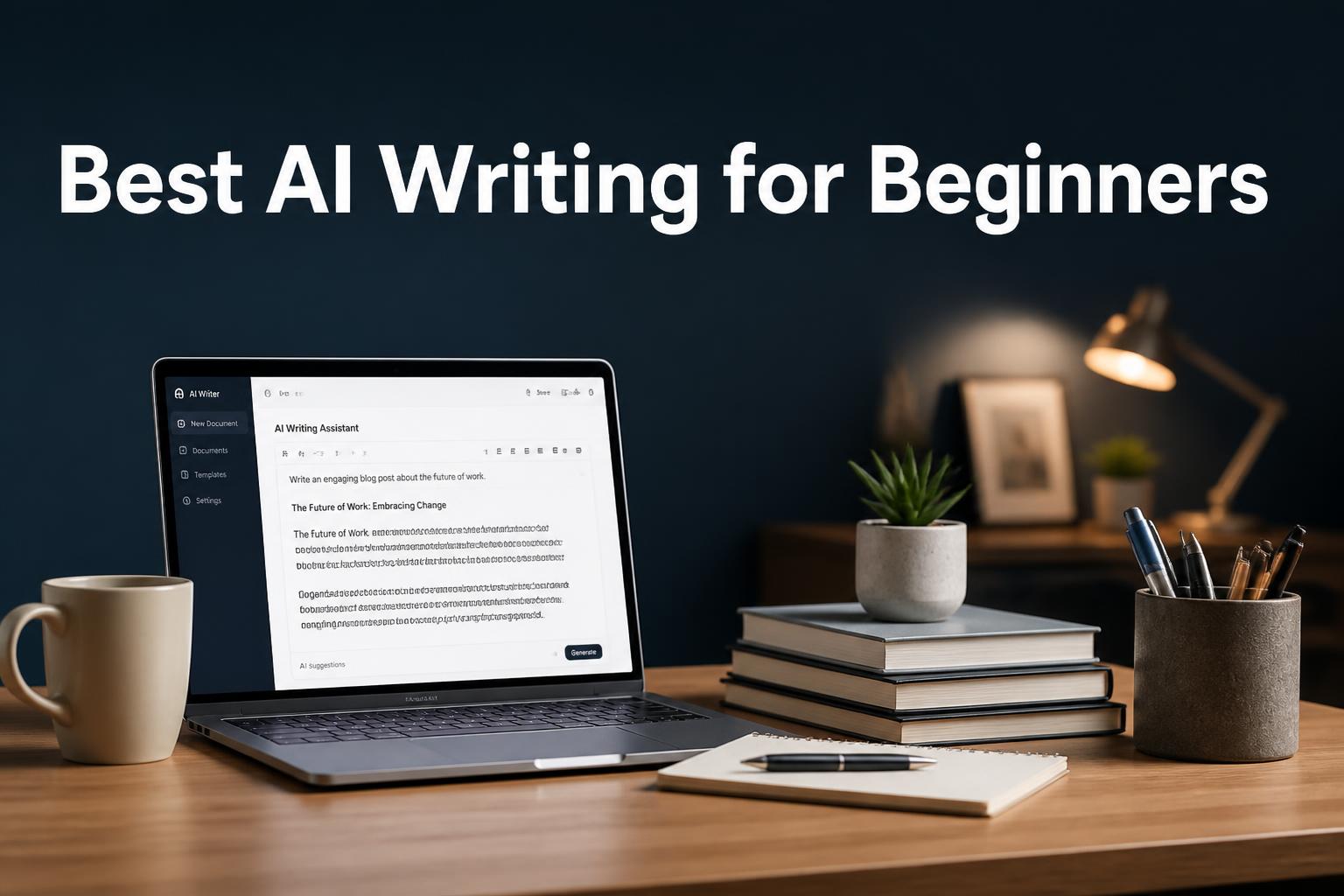
Choosing your first AI writing tool shouldn’t feel like gambling. If you’re staring at a dozen options, wondering which one actually works without emptying your wallet, this guide will help.
The AI writing space has exploded. For beginners, that creates paralysis. Most people overpay for features they never use or pick tools that sound impressive but fall short when you need help. Here’s what works, what doesn’t, and how to match your needs with the right tool.
Understanding AI Writing Tools: What They Actually Do
AI writing tools use language models to help you create content faster. They’re assistants that help you draft, edit, and overcome blocks. Not magic robots that write perfect articles.
Here’s what they can do:
- Generate first drafts from your prompts and outlines
- Rewrite content in different tones
- Expand short ideas into paragraphs
- Summarize long documents
- Check grammar and suggest improvements
- Create social media captions, email subject lines, and ad copy
What they can’t do is replace your judgment, fact-check perfectly, or capture your voice without guidance. Best results come from treating AI as a partner, not a replacement.
Why Beginners Struggle to Choose
The problem isn’t lack of options. It’s too many options with overlapping claims. Every tool promises to “transform your writing” and “save hours,” but reality depends on what you’re writing and how you work.
Common mistakes:
- Choosing based on brand recognition rather than features
- Paying for annual subscriptions before testing workflows
- Picking tools with steep learning curves
- Ignoring integration needs with platforms you already use
- Falling for “unlimited” plans that throttle quality at scale
The cost isn’t just money. It’s time spent learning a tool that doesn’t fit, frustration with bad outputs, and delays in your content pipeline.
What to Look for in Your First Tool
Ease of Use
Can you start writing within five minutes of signing up? The interface should feel intuitive. Look for clean dashboards, clear prompts, and minimal jargon.
Output Quality
Does the content sound natural or robotic? Run the same prompt through multiple tools during trials. The differences become obvious.
Template Library
Pre-built templates for blog posts, product descriptions, social media, and emails speed up your learning. They show you how to structure prompts.
Pricing Transparency
Hidden limits on words, projects, or quality tiers are red flags. Good beginner tools offer clear free tiers or affordable monthly plans with straightforward limits.
Learning Resources
Video tutorials, documentation, and active communities matter. You’ll have questions, and responsive support saves hours.

The Best AI Writing Tools for Beginners in 2025
ChatGPT (OpenAI)
Best for: General-purpose writing across any format
Starting price: Free with limitations, $20/month for Plus
Learning curve: Low
ChatGPT is the Swiss Army knife of AI writing. It doesn’t specialize but handles everything competently. For beginners, this versatility means you can test different content types without switching tools.
The conversational interface makes it approachable. You ask questions, refine outputs through dialogue, and build understanding of how AI responds. The free tier gives you GPT-3.5, which works well for most beginner needs. Upgrading to Plus unlocks GPT-4, which produces noticeably better long-form content and handles complex instructions more reliably.
Strengths:
- No learning curve—just start chatting
- Handles research, outlining, and writing in one place
- Memory feature learns your preferences
- Works in multiple languages
Limitations:
- No built-in SEO tools or content templates
- Requires clear prompting skills for best results
- Can hallucinate facts if not prompted carefully
- No team collaboration features
Jasper AI
Best for: Marketing copy and business content
Starting price: $39/month
Learning curve: Low to moderate
Jasper targets marketers and business writers with templates designed for conversion-focused content. The “Boss Mode” gives you a long-form document editor that feels like working in Google Docs with an AI assistant nearby.
What sets Jasper apart for beginners is the recipe system. Choose a content type (blog post, Facebook ad, email sequence), fill in the blanks, and Jasper generates structured output. This guided approach helps you understand what information AI needs.
Strengths:
- 50+ templates for specific use cases
- Integrated SEO mode with keyword optimization
- Brand voice customization improves consistency
- Chrome extension works across web apps
Limitations:
- No free tier (7-day money-back guarantee only)
- Higher price point than alternatives
- Some templates feel restrictive for creative projects
- Word count limits on lower plans can be tight
Copy.ai
Best for: Short-form content and social media
Starting price: Free (2,000 words/month), $36/month for unlimited
Learning curve: Very low
Copy.ai excels at generating quick bursts of content: headlines, captions, product descriptions, email subject lines. The interface is clean and focused, with less feature bloat than comprehensive platforms.
For beginners testing whether AI writing fits their workflow, the free tier provides enough words to experiment without commitment. The workflow builder feature lets you chain multiple AI steps together, though this is more advanced functionality you’ll grow into.
Strengths:
- Generous free tier for testing
- Fast generation speeds
- Clean, distraction-free interface
- 90+ languages supported
Limitations:
- Less effective for long-form articles
- Limited editing features within the platform
- Output quality varies more than premium tools
- Fewer customization options for tone and style
Writesonic
Best for: Balanced mix of features and affordability
Starting price: Free (10,000 words/month), $16/month for more
Learning curve: Low
Writesonic positions itself as the budget-friendly alternative to Jasper, offering similar features at lower prices. The AI Article Writer 5.0 can generate 1,500+ word articles from a single prompt, including research and fact-checking steps.
The Sonic Editor provides a Google Docs-like experience with AI commands embedded throughout. Type a prompt anywhere in your document, and the AI continues from that point. This inline approach feels natural for writers who prefer to maintain control while letting AI handle specific sections.
Strengths:
- Competitive pricing with substantial free tier
- AI article writer includes automatic research
- Photosonic generates images to accompany text
- Chatbot creation for customer service
Limitations:
- Free tier limited to GPT-3.5 quality
- Some features feel scattered across the interface
- Output occasionally requires heavy editing
- Less polished than premium alternatives
Rytr
Best for: Extreme budget consciousness
Starting price: Free (10,000 characters/month), $9/month for 100,000
Learning curve: Very low
Rytr strips AI writing down to essentials and prices accordingly. For beginners testing waters or working on tight budgets, it delivers surprising value. The use case selector walks you through choosing tone, use case, and format before generating content.
The browser extension lets you invoke Rytr on any website, which is useful for writing emails, social media comments, or filling out forms. The built-in plagiarism checker adds value that many competitors charge extra for.
Strengths:
- Lowest paid tier in the market
- Built-in plagiarism detection
- 40+ use cases and templates
- Simple interface requires no training
Limitations:
- Character limits feel restrictive quickly
- Output quality lags premium tools
- Limited customization options
- No advanced features like SEO optimization
How to Choose Based on What You’re Writing
Writing blog posts and articles? ChatGPT Plus or Writesonic give you the length and quality needed for long-form content. Look for tools that maintain context across multiple paragraphs.
Creating marketing copy? Jasper or Copy.ai specialize in conversion-focused writing. Their templates understand marketing frameworks like AIDA and PAS.
Experimenting across formats? ChatGPT’s flexibility lets you test everything from poetry to technical documentation without switching tools.
Budget is your primary constraint? Start with free tiers of Writesonic or Rytr, then upgrade once you’ve proven the ROI.
Need team collaboration? Jasper and Writesonic offer team plans with shared workspaces and brand guidelines.
Getting Started: Your First Week
Day 1-2: Setup and Exploration
Sign up for free trials of 2-3 tools. Configure basic settings and run identical prompts through each tool to compare outputs side-by-side.
Day 3-4: Learn Effective Prompting
Specific prompts produce better results than vague ones. Instead of “write about marketing,” try “write a 500-word blog post explaining email marketing benefits for small business owners, using a conversational tone with actionable tips.”
Watch how each tool responds to:
- Detailed instructions vs. brief ones
- Different tones (professional, casual, humorous)
- Requests for lists, narratives, or persuasive copy
Day 5-6: Build Your Workflow
Identify your most frequent writing tasks. Create saved prompts or templates for repetitive content. Test how quickly you can move from idea to publishable draft.
Day 7: Evaluate and Decide
Which tool felt most natural? Which produced content requiring the least editing? Which pricing tier matches your volume needs? Make your choice based on practical experience, not feature lists.
Common Mistakes to Avoid
Expecting perfection from first drafts. AI generates starting points, not finished products. Budget time for editing and personalizing outputs.
Ignoring fact-checking. AI confidently states incorrect information. Verify claims, especially statistics, dates, and quotes.
Using the same prompt repeatedly. Vary your approach. If outputs feel generic, your prompts might be too generic.
Choosing the most expensive tool first. Premium features matter only if you use them. Start with good-enough tools and upgrade when you hit their limits.
Neglecting your own voice. AI mimics patterns from training data. Add personal experiences, opinions, and examples to make content yours.
Advanced Tips for Better Results
Prompt engineering matters more than tool choice. A skilled prompter gets excellent results from mid-tier tools, while beginners struggle with premium ones. Invest time learning to communicate clearly with AI.
Use AI for idea generation and outlining. Some of the highest-value use cases happen before you start drafting. Ask AI to suggest angles, create outlines, or identify gaps in your argument.
Chain multiple AI steps. Generate a draft, then ask AI to improve specific aspects: “Make this more concise,” “Add a compelling hook,” “Include a metaphor explaining this concept.”
Customize tone with examples. Show the AI what you want: “Write in the style of this example paragraph” produces better results than describing tone abstractly.
Build a prompt library. Save prompts that work well. Refine them over time. Your prompt collection becomes as valuable as the tool itself.
Making the Investment Worth It
AI writing tools save time, but only if you use them consistently. Calculate your ROI:
Time saved per article: Track how long writing took before and after. Most beginners save 30-50% on first drafts.
Content volume increase: Can you publish twice as often? Three times? Increased output compounds.
Quality of life improvement: Less writer’s block and deadline stress has value beyond dollars.
If a tool saves you three hours per week at $16/month, that’s $1.33 per hour.
Your Next Steps
Pick one tool from this list based on your content type and budget. Sign up. Write one piece of content using AI assistance. The learning happens through doing.
Most beginners waste weeks comparing options when they could spend that time mastering one tool. Start with best ai writing fundamentals, then expand your toolkit as needs evolve.