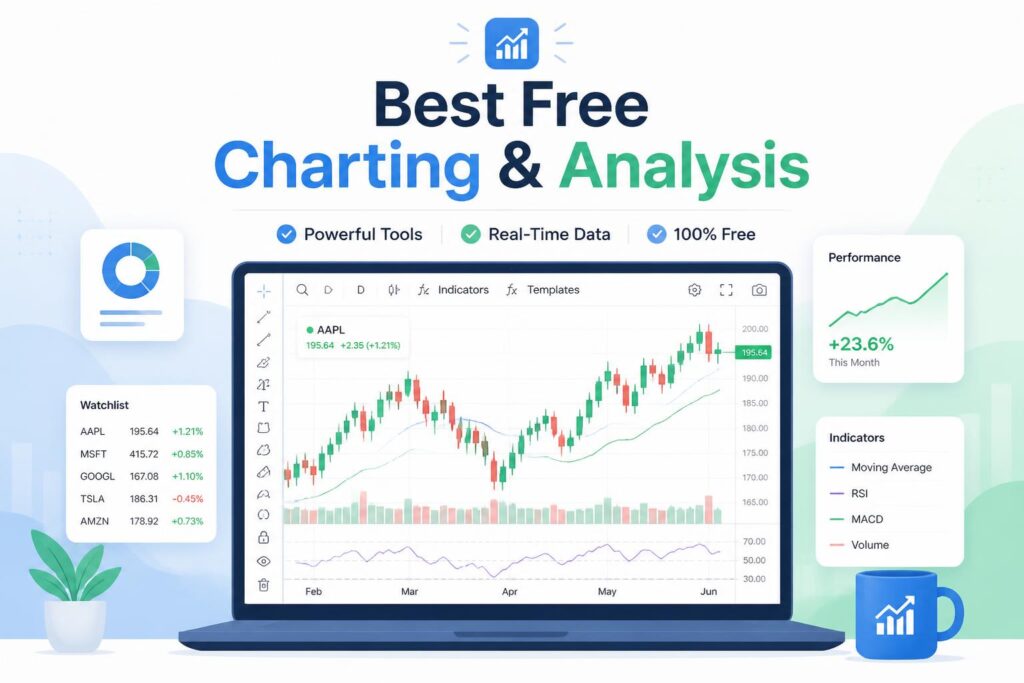
Best charting and analysis platforms (2026)
There are more charting tools available now than most traders can realistically use. Some are packed with features you may never touch, others are simple but limited once you go beyond basic analysis. The challenge in 2026 is less about finding a tool and more about finding one that actually fits how you trade.
This comparison looks at widely used platforms and how they perform in practice, including charting tools, automation options, ease of use, and pricing.
We looked at platforms like TradingView, MetaTrader 5, and Thinkorswim, along with several alternatives used in active trading environments.
If you’ve been switching between tools or unsure what actually matters, this breakdown should help narrow things down.
Reference: https://moneysavingway.com/best-charting-analysis/
—
At a glance: charting tools (2026)
| Tool | Best for | Starting price | Free plan |
|---|---|---|---|
| TradingView | General charting + ideas | $0–$14.95/mo | Yes |
| MetaTrader 5 | Forex and automation | Free | Yes |
| Thinkorswim | US stocks and options | Free (brokerage) | Yes |
| NinjaTrader | Futures trading | $0–$99/mo | Yes (limited) |
| TrendSpider | Automated technical analysis | $39/mo | No |
| MetaStock | Advanced analysis | $69/mo | No |
| eToro | Copy trading | Free (spread fees) | Yes |
| Investing.com Charts | Quick chart checks | Free | Yes |
—
How we looked at these tools
The comparison is based on a few practical points:
- how deep the charting tools go (indicators, drawing, timeframes)
- how fast and stable the platform feels during use
- whether automation or scripting is supported
- how easy it is to learn and use daily
- what markets it actually covers
- cost versus what you get
—
1. TradingView — most balanced option
TradingView is still the most commonly used charting platform for a reason. It covers a wide range of markets, runs in the browser, and doesn’t require setup.
A lot of traders also use it because ideas and scripts are shared publicly, which can speed up learning.
What it offers
- indicators and drawing tools built in
- Pine Script for custom studies
- alerts for price and indicator conditions
- multi-device sync
- community published strategies
Pricing
| Plan | Price |
|---|---|
| Basic | Free |
| Pro | $14.95/mo |
| Pro+ | $29.95/mo |
| Premium | $59.95/mo |
Pros
- easy to start with
- strong free version
- large community and shared ideas
- works across devices
Cons
- advanced features require paid plans
- free data can be limited depending on market
Best fit: traders who want a general-purpose charting tool without much setup
—
2. MetaTrader 5 — forex and automation focus
MetaTrader 5 is still widely used in forex trading and algorithmic strategies. It supports automated systems through Expert Advisors.
Key points
- supports algorithmic trading (EAs)
- fast execution through brokers
- custom indicators via MQL5
- multi-asset support
Pricing
| Plan | Price |
|---|---|
| Platform | Free |
Pros
- strong automation support
- lightweight and fast
- widely supported by forex brokers
Cons
- interface feels dated
- learning curve for scripting and setup
Best fit: forex traders and users focused on automation
—
3. Thinkorswim — advanced US stock tools
Thinkorswim is designed for active US stock, options, and futures traders. It includes a wide set of analysis and scanning tools.
Key points
- advanced options analysis
- paper trading environment
- custom scans and studies
- real-time data tools
- risk and probability analysis
Pricing
| Plan | Price |
|---|---|
| Platform | Free (Schwab account) |
Pros
- very detailed analytics
- strong options tools
- no separate platform fee
Cons
- can feel heavy to use
- steep learning curve
Best fit: active stock and options traders who need deeper analysis tools
—
4. NinjaTrader — futures trading platform
NinjaTrader is mainly used in futures markets. It focuses on execution, order flow, and strategy testing.
Key points
- order flow and market depth tools
- strategy backtesting
- automated trading support
- market replay for practice
Pricing
| Plan | Price |
|---|---|
| Free | Limited |
| Pro | $99/mo |
Pros
- strong futures execution tools
- good automation features
- performance-focused design
Cons
- mostly futures-focused
- not very beginner friendly
Best fit: active futures traders
—
5. TrendSpider — automated technical analysis
TrendSpider focuses on reducing manual chart work through automation.
Key points
- automated trendline detection
- multi-timeframe analysis
- alert system based on conditions
- strategy testing tools
Pricing
| Plan | Price |
|---|---|
| Basic | $39/mo |
| Pro | $79/mo |
Pros
- saves time on chart work
- useful for systematic strategies
- strong alert system
Cons
- no free plan
- smaller user community
Best fit: traders who prefer automation over manual drawing
—
6. MetaStock — long-standing analysis tool
MetaStock is used in more traditional and institutional-style trading environments.
Key points
- forecasting and scanning tools
- end-of-day and real-time data options
- system testing features
Pricing
| Plan | Price |
|---|---|
| Subscription | $69+/mo |
Pros
- deep analysis tools
- strong historical testing
Cons
- dated interface
- relatively expensive
Best fit: experienced analysts and professional users
—
7. eToro — copy trading approach
eToro is built more around social trading than technical charting.
Key points
- copy trading system
- simple charts
- multi-asset access
- social feed of traders
Pricing
| Plan | Price |
|---|---|
| Platform | Free (spread fees apply) |
Pros
- easy to start
- copy trading feature
- simple interface
Cons
- limited chart depth
- trading costs embedded in spreads
Best fit: beginners or passive investors
—
8. Investing.com Charts — quick free option
Investing.com is mainly used for fast market checks rather than detailed analysis.
Key points
- basic indicators
- global market coverage
- economic calendar integration
- browser-based access
Pricing
| Plan | Price |
|---|---|
| Free | $0 |
Pros
- free and fast
- easy to use
- broad market coverage
Cons
- limited customization
- not built for advanced trading
Best fit: quick checks and casual use
—
Simple comparison
Feature TradingView MT5 Thinkorswim NinjaTrader TrendSpider Free access Yes Yes Yes Limited No Automation Medium High Medium High AI-based Ease of use High Low Medium Low Medium Main market All Forex Stocks Futures All
—
Choosing a platform
A simple way to narrow it down:
- general use → TradingView
- forex and automation → MetaTrader 5
- US stocks and options → Thinkorswim
- futures → NinjaTrader
- automation-first approach → TrendSpider
—
FAQ
Which platform is most versatile?
TradingView is the most flexible across markets and use cases.
What’s the cheapest option?
MetaTrader 5 and Investing.com Charts are free.
What do beginners usually start with?
TradingView or eToro because they are easier to learn.
Is paid TradingView worth it?
It depends on how many charts and alerts you need.
What do advanced traders use most?
Thinkorswim, NinjaTrader, and MetaStock are common in professional setups.
—
Final note
For most traders, TradingView is usually enough on its own. It covers most markets and doesn’t require much setup.
If you need deeper stock analysis, Thinkorswim is often the next step up.
Start simple, then move to specialized tools only when you actually need them.