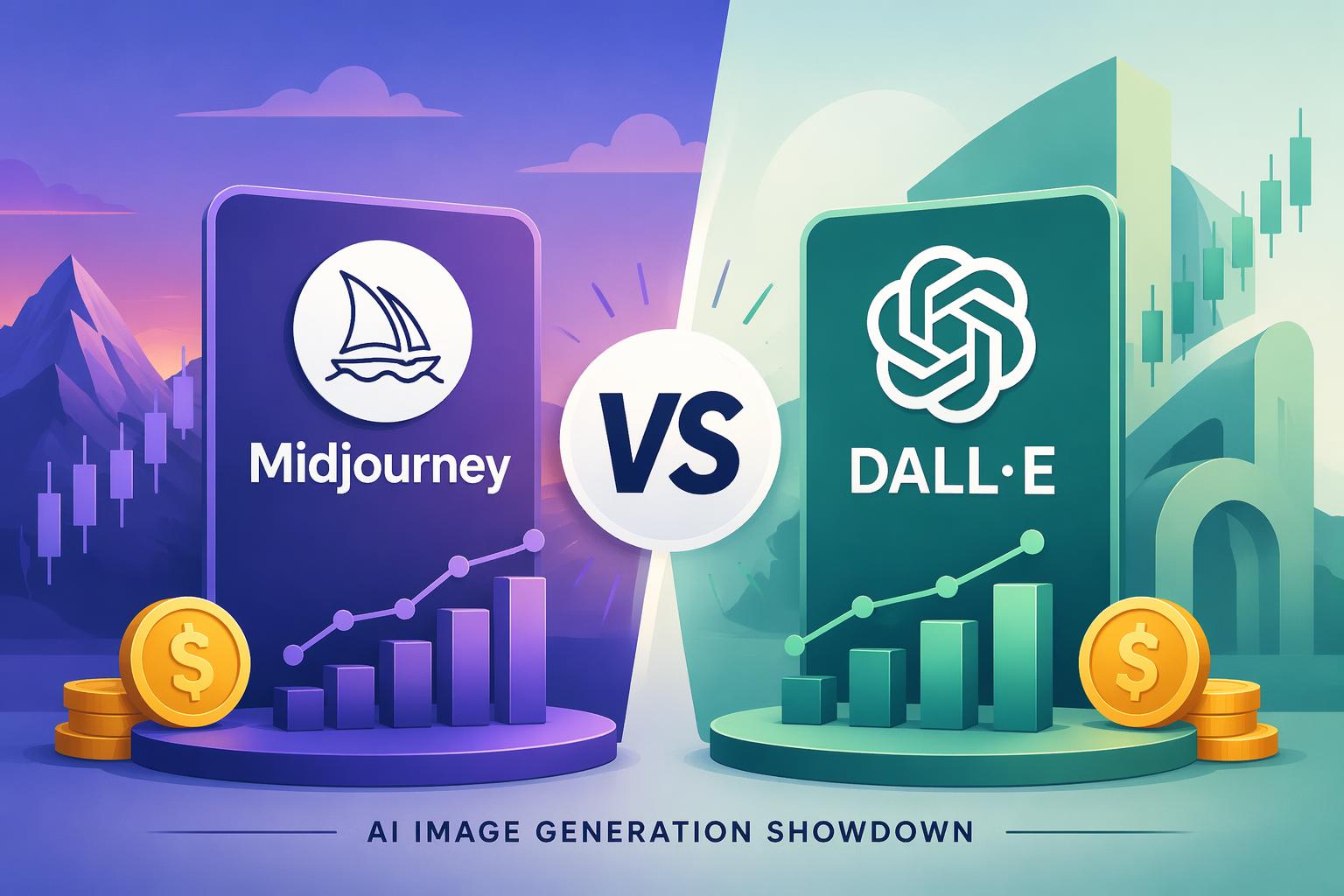
Midjourney vs DALL·E 2026: Which AI Fits Your Work Better?
Meta description: A practical comparison of Midjourney and DALL·E in 2026 covering image quality, speed, pricing, and real use cases to help you choose the right tool.
URL slug: /midjourney-vs-dall-e-2026
Target keyword: midjourney vs dall-e
Secondary keywords: Midjourney AI, DALL·E 4, AI image generator comparison, text-to-image tools 2026
—
Table of Contents
- Why this comparison still matters in 2026
- Image quality: realism and style differences
- Prompt control and usability
- Speed, pricing, and workflow fit
- Where each tool works best
- Practical examples
- Mistakes people keep making
- FAQ
—
Why this comparison still matters in 2026
AI image tools aren’t new anymore. Most teams already rely on them in some form.
Designers use them for ad concepts. Marketers use them to fill campaign visuals. Solo creators lean on them to avoid stock libraries entirely.
The issue now isn’t access. It’s choice.
Midjourney and DALL·E both sit at the top, but they don’t behave the same way in practice. Picking one without thinking about workflow often leads to frustration later on.
So the real question isn’t which one looks better.
It’s which one actually fits how you work day to day.
—
Image quality: realism and style differences
Both tools can produce strong results in 2026. The difference shows up in direction, not raw capability.
Midjourney: more stylistic and cinematic
Midjourney tends to produce images with a strong visual identity:
- Cinematic lighting and contrast
- Highly detailed compositions
- Painterly or stylized realism
It often feels like the image already went through a design pass.
The trade-off is control. It can drift away from exact instructions, especially when precision matters.
DALL·E: more literal and predictable
DALL·E behaves differently. It usually sticks closer to what you describe:
- More consistent prompt interpretation
- Better predictability across variations
- Clearer structure in scenes
It may look less “art-directed” at times, but it’s easier to rely on when accuracy matters, like product visuals or interface mockups.
—
Prompt control and usability
This is where working style becomes obvious.
Midjourney: built for iteration
Midjourney works best when you experiment:
- Refining prompts step by step
- Adjusting styles and variations
- Treating the process like creative direction
It feels closer to art direction than simple generation. That also means beginners may need time to get comfortable with it.
DALL·E: straightforward input
DALL·E keeps things simpler:
- Natural language prompts
- Faster usable outputs
- Less focus on technical parameters
You describe what you want and get something workable quickly, even without much tuning.
—
Speed, pricing, and workflow fit
Speed
DALL·E usually produces results faster for single images. It’s more direct.
Midjourney often involves more iteration. You generate, compare, refine, then generate again.
Pricing approach
- Midjourney is built around subscriptions for heavy creative use
- DALL·E pricing depends more on platform or usage structure
How people actually use them
In real workflows, it’s rarely one or the other.
A common setup looks like:
- DALL·E for early drafts and structured visuals
- Midjourney for final hero images or standout creative pieces
—
Where each tool works best
Midjourney is usually better for:
- Hero visuals for landing pages
- Concept art and moodboards
- Social media creatives
- Editorial-style illustrations
- Fantasy or cinematic scenes
DALL·E is usually better for:
- Product mockups
- UI and interface visuals
- Blog illustrations
- Quick marketing variations
- Fast ideation work
—
Practical examples
A startup building a landing page might use DALL·E to draft UI visuals and feature graphics, then switch to Midjourney for a strong hero banner that sets the tone.
An e-commerce brand often uses DALL·E for product variations and Midjourney for lifestyle campaign imagery.
For solo creators, DALL·E helps with speed, while Midjourney is useful when a visual needs to stand out more, especially on platforms like Pinterest.
The pattern is pretty consistent: structure versus style.
—
Mistakes people keep making
A few patterns show up repeatedly.
Relying on screenshots online
Most examples online are cherry-picked. Both tools can look great or average depending on how prompts are written.
Ignoring iteration cost
A slightly better image isn’t always worth slower workflows. Time matters more than people expect.
Sticking to one tool only
This is probably the most common mistake. In practice, combining both tools usually works better than committing to one.
—
FAQ
Is Midjourney better than DALL·E?
Not in every case. Midjourney is stronger for stylized visuals, while DALL·E is more reliable for structured outputs.
Which one is easier for beginners?
DALL·E is generally easier to start with because it behaves more predictably.
Can they be used together?
Yes, and many people do exactly that depending on the task.
Which is better for business use?
It depends on what you’re creating. Many teams end up using both in different parts of the workflow.
—
Final takeaway
There isn’t a clear winner anymore.
Midjourney and DALL·E solve different problems. One leans into creative direction. The other focuses on structure and predictability.
The better choice is not about the tool itself.
It’s about what you’re trying to produce, and how fast you need to move.