How to use frugal living: a step-by-step guide for 2026
Frugal living in 2026 isn’t what it used to be. Cheap doesn’t exist the way it once did. The focus has shifted from saving money to avoiding spending traps altogether.
If you’re struggling to pick the right frugal strategies without overpaying or wasting time, you’re not alone. Decision fatigue is constant, and everything feels temporary.
By the end of this guide, you’ll have a framework for living frugally in 2026 that gets you more value from every dollar. You’ll learn which expenses are no longer worth it, how to make high-impact changes, and how to build habits that actually stick in today’s economic environment.
What makes 2026 different? Frugality is no longer about finding the cheapest option. It’s about developing restraint in a world designed to exhaust your wallet. This tutorial will show you how.
Takes 30-45 minutes to read and implement your first changes. No prior frugal living experience required.
—
What you need before starting
Before diving in, set yourself up:
- A clear picture of your current spending. Review your last 3 months of bank and credit card statements.
- A spending tracking method. Budgeting app, spreadsheet, pen and paper—pick one.
- Your monthly income number. Know your take-home pay so you can calculate percentages.
- 30 minutes of uninterrupted time to work through the exercises.
- Willingness to shift your mindset. Frugal living in 2026 requires thinking differently about value.
—
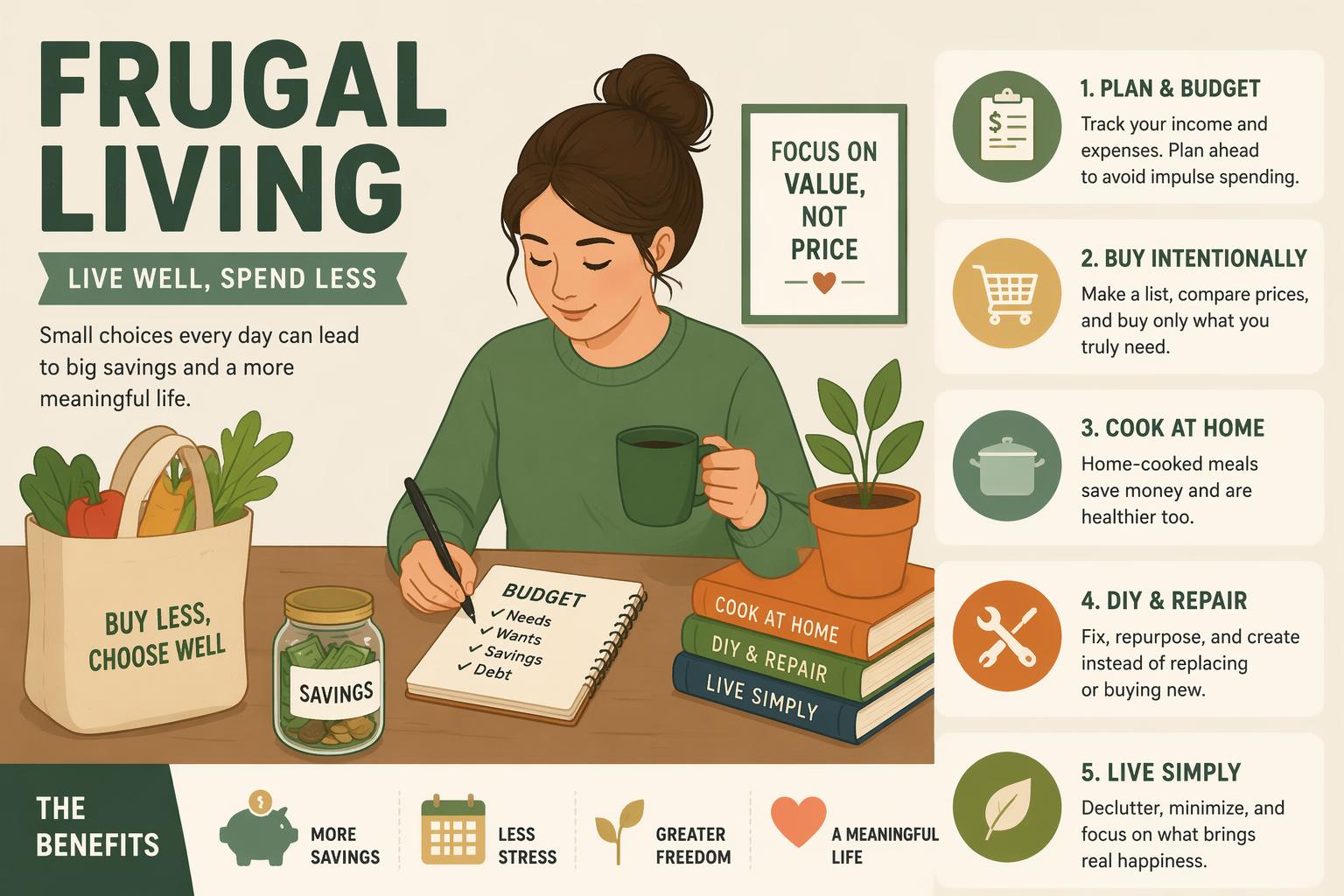
Step 1: Understand the frugal mindset shift for 2026
Before making any spending changes, you need to reframe what frugal living actually means in 2026.
The old frugal approach: buy the cheapest version of everything, cut every possible expense, deprive yourself to save money.
The 2026 frugal approach: get maximum value from every dollar spent, eliminate trap purchases, and protect your time as carefully as your money.
Time is becoming the real cost, not just money.
Write down your “why” for living frugally. Are you paying off debt? Building an emergency fund? Saving for a specific goal? Your motivation will guide every decision in this tutorial.
What this looks like: a clear statement like “I’m living frugally to save $10,000 for a down payment by December 2026” or “I want to eliminate my credit card debt within 18 months.”
—
Step 2: Identify your high-impact spending categories
Not all frugal changes are created equal. Some save you hundreds per month. Others save pennies.
Review your spending from the past 3 months and categorize every expense:
- Housing (typically 25-35% of income)
- Transportation
- Food (groceries and eating out)
- Subscriptions and digital services
- Shopping and entertainment
- Everything else
Calculate the percentage of your income each category consumes.
What you’re looking for: a clear breakdown showing which 2-3 categories consume the most money. These are your high-impact zones—where small changes create big savings.
If housing is above 35% of your income, this is your highest-leverage opportunity. If transportation is above 20%, that’s your second priority.
—
Step 3: Cut the 2026 expenses that no longer make sense
Certain expenses have become poor value propositions. Review these categories and eliminate what doesn’t serve you:
Streaming bundles and duplicate services
The average household pays for 8+ subscriptions. Many people have overlapping streaming services or “bundled” packages that include content they never use.
List every subscription you pay for. Cancel anything you haven’t used in the past 30 days. Choose one primary streaming service instead of maintaining multiple.
Fast or fast-casual food
Fast casual food is no longer affordable for regular consumption in 2026. What used to be a budget-friendly convenience now costs as much as sit-down dining.
Set a monthly limit on restaurant spending. Track every purchase. For most households, meal planning can cut food spending 20-30%.
Digital products at full price
Digital products have unpredictable pricing in 2026. Software, courses, ebooks, and apps often go on sale or have free alternatives.
Before buying any digital product at full price, search for: existing alternatives you already own, free trials, discount codes, or bundles that include what you need.
Going to the movies
Going to the movies is becoming too expensive for regular outings. Between tickets, concessions, and parking, a family movie night can exceed $100.
Replace monthly movie outings with at-home movie nights or matinee showings with outside snacks.
Most new technology
Most new technology offers little innovation for the price. The upgrade cycle has shortened, but actual improvements have slowed.
Before buying new tech, ask: “Does this solve a problem I currently have, or am I buying an incremental improvement?” Wait one generation before upgrading phones, laptops, or gadgets.
Implementing these cuts typically produces immediate monthly savings of $100-$400 depending on how many categories applied to you.
—
Step 4: Make your first high-impact frugal move
Now that you’ve eliminated waste, tackle your biggest spending category with a strategic change.
If housing is your biggest expense (25-35% of income):
Negotiate rent renewal with your landlord 60 days before lease end. Consider a roommate or house-hacking strategy. Refinance your mortgage if rates have improved. Switch to a lower-cost utility provider or bundle services.
If transportation is your biggest expense:
Becoming a one-car household can save $5,000-10,000 annually when you factor in insurance, maintenance, registration, and depreciation.
Track how often you actually use your second vehicle for 2 weeks. Calculate the total annual cost of that vehicle (payment, insurance, gas, maintenance). Test going without it for one month. If it works, sell the vehicle and redirect savings to your financial goal.
If food is your biggest expense:
Meal planning is the highest-impact frugal food strategy.
Plan 7 dinners every Sunday (or your preferred planning day). Shop with a list—buy only what’s on it. Cook in batches and freeze portions. Set a “use what you have” week once per month where you don’t buy groceries.
Monthly savings of $200-$800 depending on which high-impact area you targeted.
—
Step 5: Set up a daily spending limit system
One of the most effective frugal strategies is knowing your daily spending limit and staying within it.
Calculate your daily limit:
- Take your monthly take-home income
- Subtract fixed expenses (rent, insurance, subscriptions you’re keeping)
- Divide the remaining amount by 30
Example: $4,000 monthly income – $2,500 fixed expenses = $1,500 ÷ 30 days = $50/day for variable spending (food, gas, entertainment, shopping)
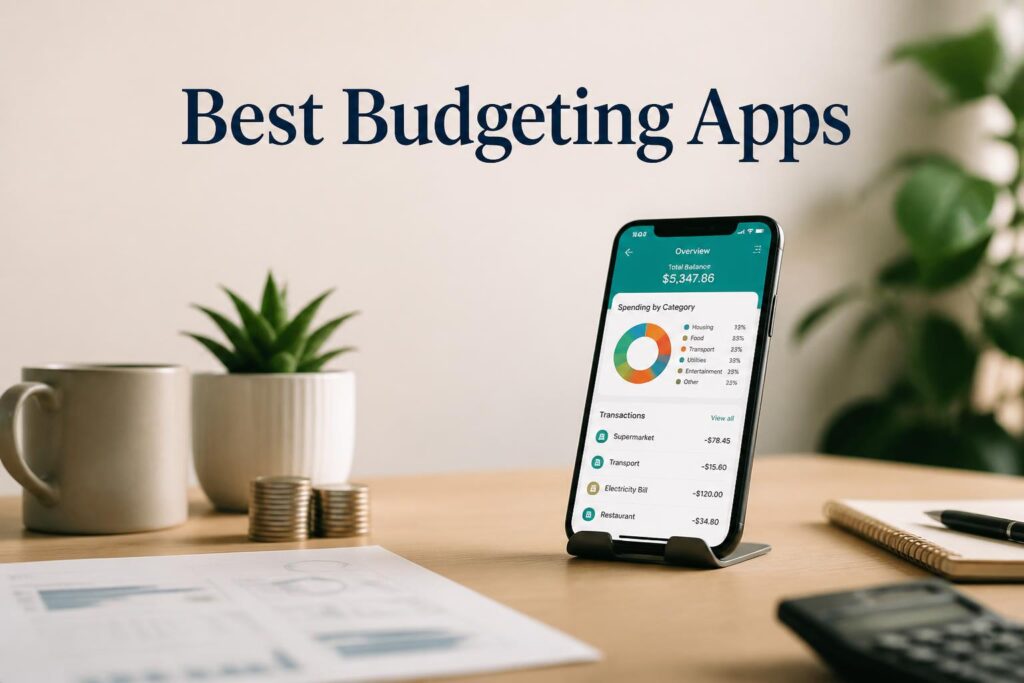
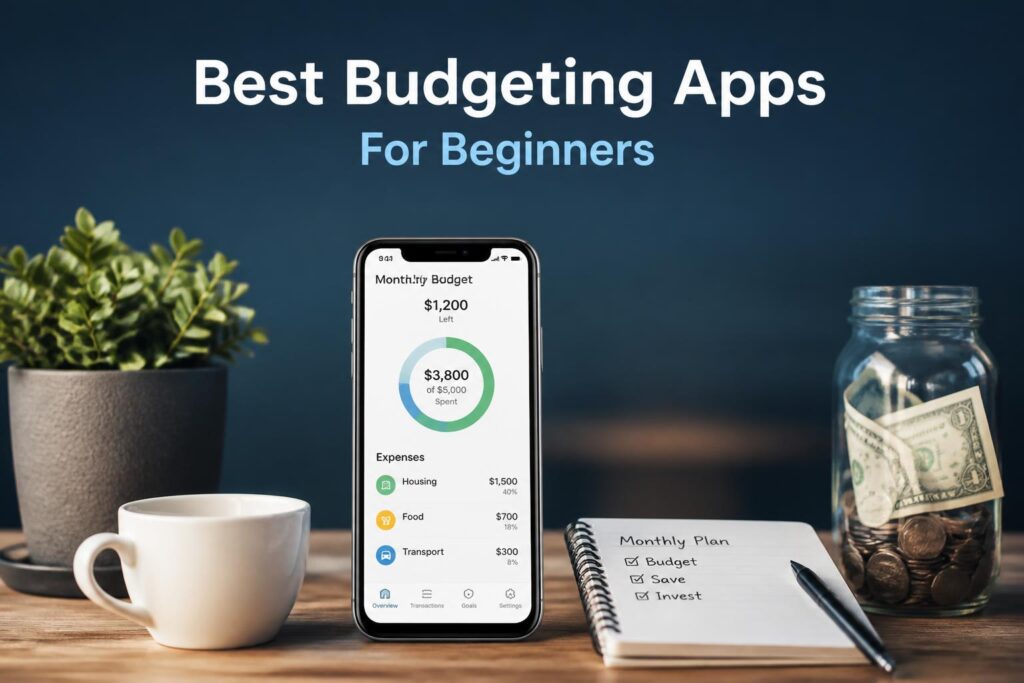
Use a spending tracker like BUDGT (free, available on iOS and Android) that shows real-time spending indicators against your daily limit. Or manually track in a notes app.
What this gives you: a clear daily number that guides every purchase decision. When you’re about to spend $40 on takeout and you’ve already spent $30 that day, you’ll know you’re $20 over budget.
Your daily limit “rolls over”—if you spend $30 on Monday and your limit is $50, you have $70 available on Tuesday.
—
Step 6: Implement strategic coupon and discount use
Using coupons and discounts can save money if done strategically—but only if you follow one rule: never buy something just because it’s on sale.
Strategic discount framework:
Before buying anything over $50, search for discount codes. Use browser extensions like Honey or manually search “[retailer name] promo code 2026.”
For regular purchases, use cashback apps only for things already on your list.
For major purchases, wait for seasonal sales (Memorial Day, Black Friday, end-of-season clearance).
Create a “planned purchases” list for items you need but don’t need immediately. When these items go on sale, you’ll be ready to buy—but you won’t impulse-buy things you don’t need just because they’re discounted.
Expected savings: 10-25% on planned purchases without increasing your overall spending.
—
Step 7: Track your progress weekly
Frugal living only works if you can see the results. Weekly tracking keeps you motivated and reveals patterns.
Every Sunday (or your chosen day), spend 10 minutes reviewing:
Monthly savings rate: how much you saved this month vs. spent.
Cost per category: did you stay within targets for housing, food, transportation?
Net worth progress: has your net worth increased since last month?
Frugal wins log: what worked this week? What felt difficult?
Set up a simple tracking spreadsheet or note with these four categories. Update it weekly.
What you’re after: tangible proof that your frugal choices are creating real financial progress. This visibility is what sustains long-term behavior change.
—
Step 8: Navigate social pressure to spend more
One of the biggest challenges in frugal living is maintaining your commitment when friends, family, or social situations pressure you to spend more than your budget allows.
Common scenarios and responses:
Friends invite you to an expensive restaurant.
Say: “I’m focusing on my financial goals right now—can we do a potluck at my place instead?” or suggest a less expensive alternative.
Family expects expensive gifts during holidays.
Propose a spending limit or “secret Santa” style gift exchange. Offer homemade gifts or experiences instead of purchased items.
Coworkers regularly get expensive coffee or lunch.
Join occasionally (budget for it), but bring your own coffee and lunch most days. No explanation needed.
Prepare 2-3 scripted responses for common spending pressure situations you face. Practice saying them out loud so they feel natural.
What this does: reduces anxiety around social spending situations and gives you more confidence in maintaining your frugal boundaries.
—
Step 9: Embrace “buy it for life” strategically
The “buy it for life” philosophy is harder in 2026. Products aren’t built the same way, and planned obsolescence is real. But strategic quality purchases still make sense for certain categories.
When to buy quality (even if it costs more upfront):
Items you use daily (shoes, mattress, cookware). Items with high replacement costs (winter coat, work bag). Items where failure creates emergency expenses (tires, home maintenance tools).
When to buy budget versions:
Trendy items you won’t use long-term. Technology that will be obsolete in 2-3 years anyway. Things you’re trying for the first time and may not like.
Before any purchase over $100, ask: “Will buying the quality version save me money over 5 years compared to replacing budget versions multiple times?”
Outcome: fewer total purchases over time, and less frustration from cheap items breaking and needing replacement.
—
Step 10: Build your frugal emergency fund
Frugal living without an emergency fund is like driving without insurance. One unexpected expense can derail everything.
Target: save $1,000 as fast as possible (starter emergency fund), then build to 3-6 months of expenses.
Open a separate high-yield savings account for emergencies only. Automate a transfer of at least $50 per paycheck (or whatever you can manage). Direct all “found money” here (tax refunds, rebates, side income, money saved from canceled subscriptions). Do not touch this money unless it’s a true emergency (not a sale, not a want).
Your emergency fund should grow by $100-$500+ per month depending on your income and frugal success. Track the balance weekly for motivation.
—
Step 11: Optimize without obsessing
The final skill in sustainable frugal living is knowing when to stop. There’s a point where the time and mental energy spent saving an extra $5 isn’t worth it.
Frugal fatigue warning signs:
You spend hours researching to save $10. You feel deprived or resentful. You avoid all enjoyable spending. You fight with family members over small expenses. You think about money constantly.
Set “good enough” thresholds for different categories:
Groceries: within $X of target? Good enough—don’t second-guess every item.
Utilities: if you’re within 10% of last year? Good enough—don’t obsess over every light left on.
Entertainment: budgeted $X for fun? Spend it guilt-free.
What sustainable frugal living looks like: manageable, not exhausting. The new frugal skill is restraint—including restraint from over-optimizing.
—
Your frugal living results
If you’ve followed all 11 steps, you now have:
A clear understanding of the 2026 frugal mindset (value over cheapness). Eliminated wasteful spending in outdated categories. Implemented at least one high-impact frugal change. A daily spending limit system that guides decisions. Weekly tracking that shows real progress. Strategies for handling social pressure. An emergency fund that’s growing. Sustainable habits that don’t lead to burnout.
Most people who follow this complete framework save $300-$800 in their first month and $3,000-$10,000 in their first year, depending on income level and starting spending patterns.
—
Troubleshooting common frugal living challenges
“I tried frugal living but don’t see results”
Most common cause: you’re focusing on low-impact changes (clipping coupons for groceries) instead of high-impact ones (reducing housing or transportation costs).
Go back to Step 2 and identify your top 2 spending categories. Focus exclusively on those for 30 days.
“My partner or family isn’t on board”
Most common cause: they don’t understand your “why” or feel like frugality means deprivation.
Share your specific financial goal and timeline. Frame frugal choices as “choosing X so we can afford Y” rather than “we can’t afford this.”
“I keep falling off the frugal wagon”
Most common cause: your system is too restrictive or too complicated.
Simplify to just three rules: (1) know your daily limit, (2) track weekly, (3) allow one guilt-free fun purchase per week within your budget.
“Frugal living feels impossible in 2026”
There are real reasons why frugal living feels harder in 2026—but it can still work toward reaching financial goals. Frugal living in 2026 looks different than it did even 5 years ago.
Lower your savings expectations if needed (saving 10% of income is better than saving 0%), and focus on avoiding spending traps rather than achieving the perfect frugal lifestyle.
—
Next steps: sustaining frugal living long-term
Now that you have the foundation, here’s how to sustain frugal living beyond the first month:
Month 2-3: add one more high-impact change from Step 4 that you didn’t tackle in Month 1.
Month 4-6: review your progress. Adjust your daily spending limit if needed. Celebrate wins—maybe you’ve paid off a credit card or saved your first $1,000.
Month 7-12: focus on the psychological side. Practice saying no to social spending pressure. Build your “enough” muscle—knowing when you have enough and don’t need more.
Related financial moves to consider:
Once you have $1,000 emergency fund, start paying extra on highest-interest debt. Once you’re debt-free, increase emergency fund to 3-6 months expenses. Once emergency fund is full, start investing for long-term wealth building.
Want to go deeper? Consider tracking additional metrics like cost-per-use for major purchases, monthly spending trends by category, and your personal “spending triggers” (situations where you tend to overspend).
—
Frequently asked questions
Is frugal living worth the time and effort in 2026?
Yes, but with the caveat that frugal living in 2026 is more about avoiding traps than finding deals. If you focus on high-impact changes (housing, transportation, food), you can save thousands per year with just 1-2 hours of active effort per week. Don’t obsess over every small purchase.
Can you live frugally and still enjoy life?
Absolutely. Frugal living gets you maximum value rather than minimum spending. This means you can still spend money on things you truly value—you’re just eliminating the waste on things you don’t. Budget for guilt-free fun money every month.
What are the easiest frugal changes to start with?
The three easiest high-impact changes: (1) cancel unused subscriptions (5 minutes, saves $10-$50/month), (2) set up a daily spending limit system (30 minutes, saves $100-$300/month by raising awareness), (3) plan meals for one week (1 hour, saves $50-$150/month on food waste and takeout).
How much money can frugal living actually save?
Based on the strategies in this guide: eliminating streaming bundles can save $20-$60/month. Reducing restaurant spending through meal planning can cut food spending 20-30% (saving $100-$300/month for a typical household). Becoming a one-car household can save $5,000-10,000 annually. Total potential: $3,000-$15,000+ per year depending on your starting point.
Can frugal living help with debt payoff?
Yes. Frugal living creates the margin needed to pay extra on debt. Every $100 you save through frugal choices can be redirected to debt payoff. Many people find that implementing the strategies in Steps 3-4 alone frees up $200-$400 per month for aggressive debt payoff.
How do I stay motivated to live frugally?
Track your progress weekly (Step 7) and tie your frugal living to a specific goal with a deadline. “I’m saving money” is abstract and hard to sustain. “I’m saving $10,000 for a house down payment by December 2026” gives you something concrete to work toward and makes it easier to say no to spending temptations.
What frugal tips actually don’t work or aren’t worth it?
In 2026, many traditional frugal tips are no longer effective: extreme couponing (too time-intensive for minimal savings), driving across town to save $0.10/gallon on gas (you spend more in time and fuel), buying in bulk if you don’t have storage space (leads to waste), and “DIY everything” (your time has value—some things are worth paying for).
—
Disclosure: This article may contain affiliate links. If you click through and make a purchase, we may earn a commission at no additional cost to you.