How to Choose Frugal Living in 2026: A Guide to Smart Spending
Disclosure: This article contains affiliate links. If you make a purchase through these links, I may earn a commission at no additional cost to you.
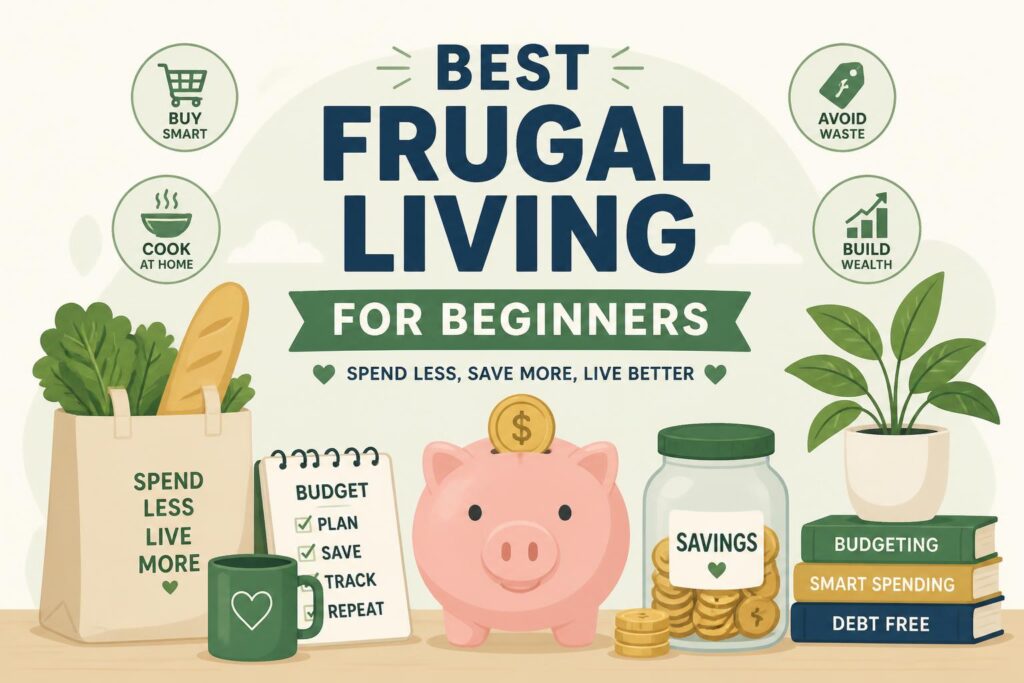
Frugal living in 2026 looks different than it did a few years ago. Cheap doesn’t exist the way it used to. Digital products follow unpredictable pricing models. Fast casual food costs $12-15 for what used to be a $7 meal. Streaming bundles silently drain bank accounts.
The challenge isn’t just cutting costs. It’s navigating a landscape where everything feels temporary, decision fatigue is constant, and buying something that lasts has become nearly impossible. The new frugal skill isn’t extreme couponing or deprivation. It’s restraint.
This guide shows you how to build a frugal strategy that works in 2026’s economy. You’ll learn which spending categories matter, which “frugal” tactics waste time, and how to shift from reacting to prices to controlling your financial future.
What you need before starting:
- Bank statements from the past 3 months
- Willingness to track spending daily for at least 30 days
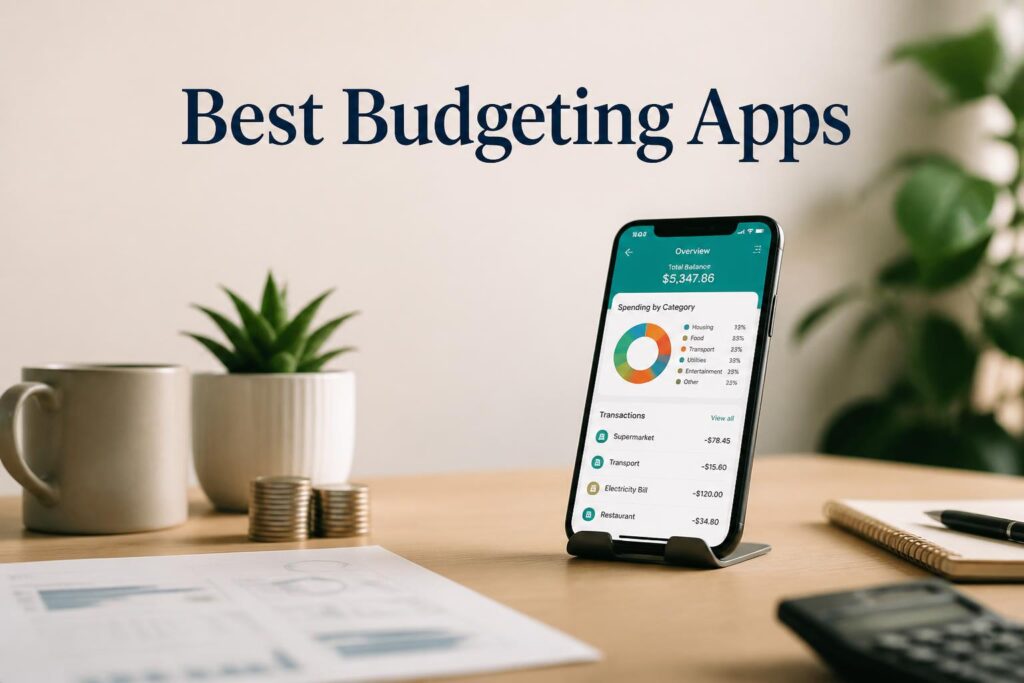
- A spending tracking tool (BUDGT offers free daily spending limit tracking with real-time indicators, available on iOS and Android)
- Estimated time to implement: 2-4 weeks
—
Step 1: Understand What Frugal Living Actually Means in 2026
Before you make a single change, reframe what “frugal” means today.
Frugal living maximizes value rather than minimizing spending. This isn’t about being cheap. It’s about being intentional. In 2026, frugality has shifted from “how do I save money?” to “how do I avoid traps?”
The distinction:
- Cheap: Buying the lowest-price option regardless of long-term cost
- Frugal: Choosing based on value per dollar over time
The difference matters because time is becoming the real cost. Every spending decision carries hidden time costs: researching products that fail quickly, managing subscriptions you forgot about, dealing with returns.
Look for a mental shift away from “I need to cut everything” toward “I need to cut the right things.”
—
Step 2: Identify Your High-Impact Categories
Not all spending cuts create equal savings. Focus on the categories that actually move the needle.
The highest-impact areas for 2026:
- Housing (25-35% of income): Your single biggest lever
- Transportation: One-car households save $5,000-10,000 annually
- Food: Meal planning cuts spending 20-30%
- Subscriptions: The average household now pays for 8+ subscriptions
Open your bank statements from the past three months and calculate what percentage of your income goes to each category. Don’t estimate. Use actual numbers.
Action steps:
- Download three months of transactions from your bank
- Categorize each expense (housing, food, transport, subscriptions, discretionary)
- Calculate the percentage of income for each category
- Circle any category above these benchmarks: housing 35%+, food 15%+, transport 15%+
You’ll see clear evidence of where your money actually goes, not where you think it goes.
> If housing exceeds 35% of your income, this should be your primary focus, but it’s also the hardest to change quickly. Start with wins in other categories while you plan housing changes.
—
Step 3: Eliminate Spending Traps That Didn’t Exist Five Years Ago
2026 has introduced spending traps that older frugal advice doesn’t address. Cut these first.
Digital products at full price are no longer worth buying in 2026. Pricing has become unpredictable, with sudden increases and forced upgrades. Instead:
- Wait for sales (most digital products discount 30-50% quarterly)
- Check for educational discounts even if you’re not a student
- Consider open-source alternatives first
Streaming bundles and duplicate services are silently costing you hundreds annually. The average household now has 8+ subscriptions, many with overlapping content.
Action: Open your bank statement right now and highlight every recurring charge. Cancel anything you didn’t use in the past 30 days.
Fast casual food is no longer affordable for regular outings. What used to be $7 now costs $12-15 for the same items.
Most new technology offers little innovation for the price. The upgrade cycle has slowed. Your 2023 device likely does everything you need.
Within a week, you should have 3-5 subscriptions canceled, a commitment to wait 72 hours before any digital purchase, and a meal prep plan that eliminates 75% of food delivery.

—
Step 4: Implement the Daily Spending Limit System
This is the most effective frugal tactic for 2026: knowing your daily limit and tracking it in real time.
Monthly budgets fail because they don’t give you feedback until it’s too late. Daily limits give you immediate data to adjust behavior.
How to calculate your daily limit:
- Take your monthly after-tax income
- Subtract fixed costs (rent, insurance, minimum debt payments)
- Divide the remaining amount by 30
- That’s your daily discretionary spending limit
Example: $4,000 income – $2,400 fixed costs = $1,600 ÷ 30 = $53.33 per day
Use a tool like BUDGT to track this automatically. It shows real-time spending indicators so you know if you’re on track each day.
Action steps:
- Calculate your daily limit using the formula above
- Set up daily tracking (BUDGT is free for iOS and Android)
- Review your balance each evening
- Roll unused amounts forward to build buffer days
Within one week, you’ll naturally start asking “is this worth my daily budget?” before purchases. This question alone prevents 60-70% of impulse spending.
—
Step 5: Master High-Impact Frugal Moves That Scale
These changes require effort upfront but create permanent savings.
Meal planning with strategic shopping cuts food spending 20-30%. But the key is strategic shopping, not just planning.
- Plan 5 dinners per week (leave 2 flex days)
- Build a master grocery list of 20 staple items you always need
- Shop once per week at the same store (decision fatigue is real)
- Use coupons and discounts strategically, only for items already on your list
Housing optimization matters because housing consumes 25-35% of income. Even small improvements compound:
- Negotiate rent renewal (10-15% of landlords accept lower offers)
- Add a roommate if space allows (cuts housing costs 40-50%)
- Refinance or challenge property tax assessments if you own
Transportation reduction saves money. Moving to a one-car household saves $5,000-10,000 annually. If that’s not possible:
- Combine errands into single trips
- Work from home 2+ days per week if allowed
- Use public transit for commutes, car for everything else
Within 30 days, grocery bills drop 20-25%, and transportation costs decrease 15-20%.
—
Step 6: Adopt the Minimalist Wardrobe Approach
Clothing is where “buy it for life” is harder in 2026. The solution isn’t buying more. It’s buying better, less often.
The minimalist approach:
- Count how many items you actually wore in the past 30 days (not what’s in your closet, what you wore)
- Build a capsule wardrobe around those core pieces
- Replace only when items wear out, not when trends change
- Invest in classic styles that work for 5+ years
Clothing purchases drop to 1-2 per quarter instead of per month. Annual clothing spending decreases 60-70%.
> This takes 6-12 months to fully implement as you wait for current items to wear out naturally.
—
Step 7: Build Your Frugal Wins Log
Motivation dies without visible progress. Combat this by tracking wins, not just spending.
Create a simple log with three columns:
- Date: When you made a frugal choice
- Action: What you did differently
- Savings: How much you saved (estimate if needed)
Examples:
- “Cancelled Netflix duplicate account: $15.99/mo = $191.88/year”
- “Meal prepped Sunday: Saved 4 lunches @ $12 each = $48”
- “Waited 72 hours on tech impulse buy: Decided I didn’t need it = $89”
Review this log monthly. Calculate your total savings rate and track your net worth progress.
You’ll have tangible proof that frugal living works, which sustains motivation through difficult months.
—
Step 8: Navigate Social Pressure Without Becoming “That Person”
One of the most common questions in 2026: “How do I be frugal without affecting my family?” or “How do I deal with social pressure to spend more?”
The framework:
- Communicate values, not restrictions: “We’re saving for [specific goal]” works better than “we can’t afford that”
- Suggest alternate activities: Instead of declining invitations, propose free or low-cost alternatives
- Budget for social spending: Allocate a specific monthly amount for social activities so you can say “yes” strategically
- Find frugal-minded friends: Join online communities where frugal living is celebrated, not judged
Maintained relationships without sacrificing financial goals. Social spending decreases 30-40% while social activity stays constant or increases.
—
Step 9: Distinguish Between Frugal Tactics That Work and Waste Time
Not every frugal tip is worth your time in 2026.
Frugal tactics that waste time:
- Driving to multiple stores for the lowest price on each item (gas and time cost more than savings)
- Extreme couponing when it requires buying items you don’t need
- DIY projects that require expensive tools you’ll use once
- Generic “side hustles” that pay less than minimum wage per hour
Frugal tactics that do work:
- Negotiating bills you already pay (internet, insurance, rent)
- Meal planning with strategic grocery shopping
- Daily spending limit tracking
- Waiting 72 hours on purchases over $50
- Using coupons and discounts only for items already on your shopping list
Rule of thumb: If a frugal tactic takes more than 15 minutes and saves less than $20, skip it.
—
Step 10: Create Your Emergency Fund Safety Net
Housing typically consumes 25-35% of income, but unexpected expenses derail even perfect budgets. Your frugal living strategy isn’t complete without an emergency fund.
The 2026 approach to emergency funds:
- Start with $1,000 (covers 80% of emergencies)
- Build to one month of expenses
- Eventually reach 3-6 months of expenses
How to fund it using your frugal wins:
- Redirect 50% of all savings from canceled subscriptions
- Bank any amount under your daily spending limit each day
- Automatically transfer $5-10 per week (feels painless, compounds quickly)
Use a high-yield savings account that’s separate from your checking (reduces temptation to raid it).
Emergency fund reaching $1,000 within 60-90 days of implementing daily spending limits and subscription cuts is realistic.
—
Step 11: Track Progress with the Right Metrics
You can’t manage what you don’t measure. But 2026 requires different metrics than traditional budgeting.
Track these four numbers monthly:
- Monthly savings rate: Percentage of income saved (target: 20%+)
- Cost per category: Housing %, food %, transport %, discretionary %
- Net worth progress: Total assets minus total debts (direction matters more than absolute number)
- Frugal wins log total: Sum of all documented savings
Tools that help:
- BUDGT for daily spending limits and real-time indicators
- Spreadsheet or notes app for frugal wins log
- Bank’s built-in categorization for monthly spending review
Review these numbers the first Sunday of each month. Adjust your daily spending limit if your fixed costs change.
Clear upward trend in savings rate and net worth, even if progress feels slow day-to-day.
—
What You’ve Just Built
You now have a complete frugal living system designed for 2026:
- A daily spending limit that provides real-time feedback
- Eliminated spending traps that older advice doesn’t address
- High-impact changes in housing, food, and transportation
- A frugal wins log that sustains motivation
- Emergency fund safety net that protects your progress
Frugal living isn’t about deprivation. It’s about restraint. It’s choosing value over volume, quality over quantity, and intentionality over impulse.
BUDGT’s free daily spending tracker gives you the real-time feedback system that makes frugal living sustainable long-term. Available now on iOS and Android.
—
Troubleshooting Common Frugal Living Challenges
“I started strong but fell off after two weeks”
This usually means your daily spending limit was too restrictive. Recalculate using the formula in Step 4, but add 10% buffer. Sustainability beats perfection.
“My family isn’t on board with frugal changes”
Start with changes that don’t affect them: your personal subscriptions, your lunch spending, your clothing purchases. Once they see results, propose shared changes like meal planning or subscription audits.
“I don’t see significant savings yet”
Check your frugal wins log. Small wins compound slowly but add up to 15-25% of income over 6-12 months. If your log shows fewer than 10 entries, you haven’t implemented enough changes yet.
“Frugal living feels restrictive and joyless”
You’re likely confusing frugal with cheap. Review Step 1. Frugality is about maximizing value. Spend freely on things that genuinely matter to you, cut ruthlessly on things that don’t.
“I tried meal planning but groceries still cost too much”
You’re probably not shopping strategically. Use coupons and discounts only for items already on your list (from Step 5). Shop the perimeter of the store first (produce, meat, dairy) before buying packaged goods.
—
Frequently Asked Questions
Do I need paid tools to live frugally in 2026?
No. BUDGT offers free daily spending tracking with real-time indicators. Most frugal tactics require only discipline and a basic notes app.
How long does it take to see results from frugal living?
Most people see 10-15% spending reduction within 30 days from subscription cuts and daily limit tracking. Housing and transportation changes take 3-6 months to implement but create larger savings.
Can I live frugally and still enjoy life?
Yes. That’s the entire point. Frugal living in 2026 means spending freely on what brings value and cutting ruthlessly on what doesn’t. The goal is maximizing life quality per dollar, not minimizing dollars spent.
Is frugal living worth the time and effort?
If you implement the daily spending limit system (15 minutes to set up, 2 minutes per day to maintain) and cut subscriptions (30 minutes once), you’ll save 15-25% of your income with minimal ongoing effort.
What frugal tips actually don’t work in 2026?
Extreme couponing that requires buying items you don’t need, driving to multiple stores for small savings, and most “side hustles” that pay below minimum wage per hour. Focus on high-impact moves instead (Steps 5 and 9).
How do I stay motivated to live frugally long-term?
Keep a frugal wins log (Step 7) and review it monthly. Track your net worth progress and savings rate. Celebrate milestones: $1,000 emergency fund, 20% savings rate, net worth increasing for 3 consecutive months.
Can frugal living help with debt payoff?
Yes. The 15-25% spending reduction from frugal living can be redirected to debt. Use the avalanche method (highest interest rate first) or snowball method (smallest balance first) depending on your psychology.
What are the easiest frugal changes to start with?
Cancel unused subscriptions (Step 3), set up daily spending limit tracking (Step 4), and implement the 72-hour rule for purchases over $50. These three changes require minimal effort but create immediate results.