What Is Emergency Funds? The $20,000 Reality No One Talks About
Most personal finance advice tells you to save 3-6 months of expenses in an emergency fund. But in 2026, that number has shifted, and it’s higher than you think.
Financial planners now recommend $20,000 as a starting point for most households. Not three months. Not six months. Twenty thousand dollars, sitting in an account you hope you’ll never need to touch.
If that sounds impossible, you’re in good company. But understanding what emergency funds actually are (and why the target keeps climbing) is the first step to building one that works.
Table of Contents
- What Is an Emergency Fund (and What It’s Not)
- How Much Should You Actually Save?
- Where to Keep Your Emergency Fund
- How to Build Your Emergency Fund Without Going Broke
- Common Emergency Fund Mistakes
- FAQ
What Is an Emergency Fund (and What It’s Not)
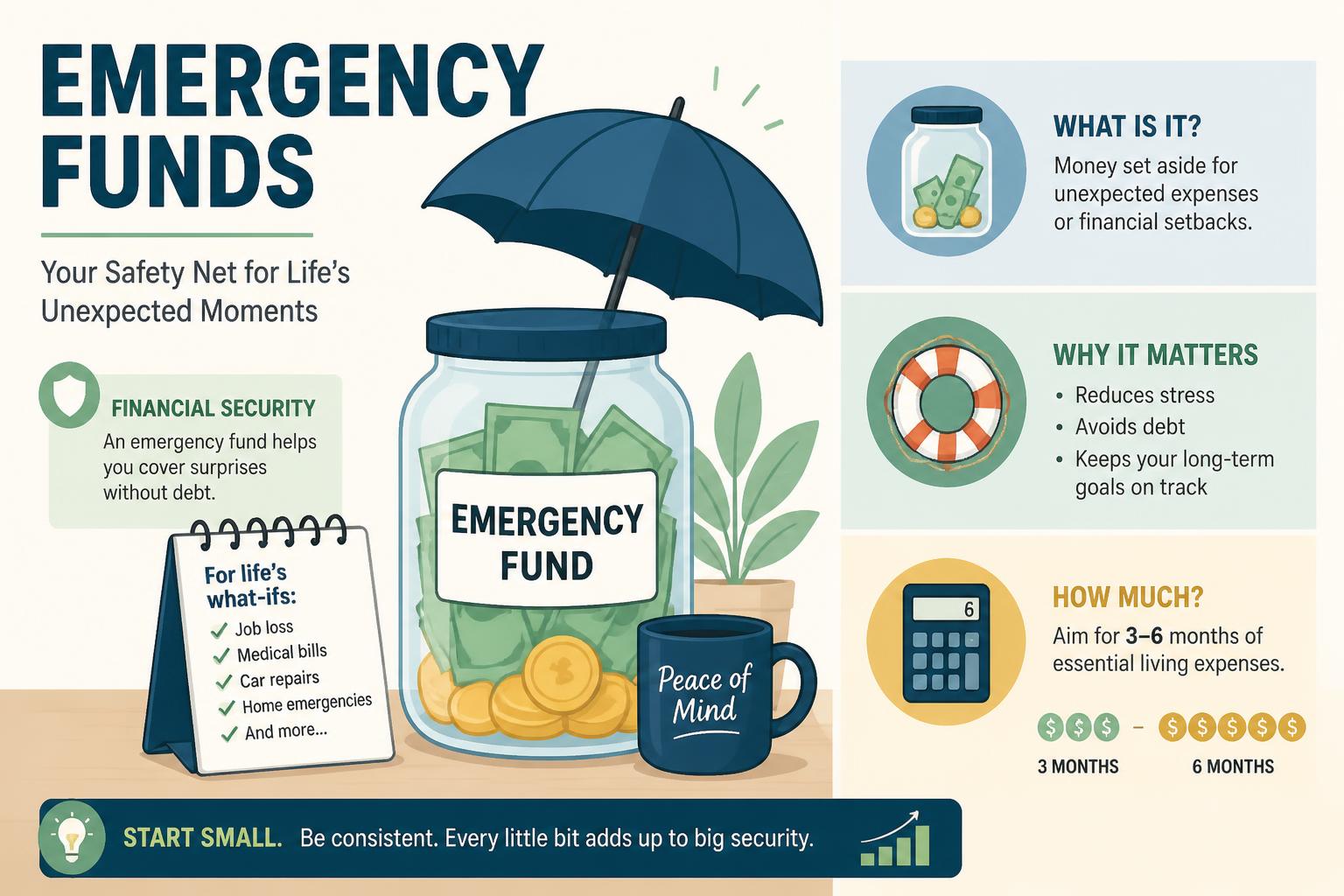
An emergency fund is cash you set aside for unexpected expenses that disrupt your ability to pay bills or maintain stability. It’s not a vacation fund. It’s not a down payment fund. It’s financial insurance.
What qualifies as an emergency:
- Job loss. You’re laid off and need to cover rent, groceries, and utilities while job hunting.
- Medical bills. An uncovered procedure, ER visit, or prescription that insurance won’t pay.
- Car or home repairs. Your transmission fails, your roof leaks, your furnace dies in January.
- Family emergencies. You need to fly across the country on short notice or help a relative in crisis.
What doesn’t count:
- A sale on something you’ve wanted for months
- Tickets to a concert or trip you can’t pass up
- Buying a new phone because yours feels slow
- Covering overspending in other budget categories
The fund exists to prevent you from going into debt when something breaks. If you can plan for it, budget for it, or delay it by a month, it’s not an emergency.
How Much Should You Actually Save?
The old rule was simple: save 3-6 months of essential expenses. In 2026, financial advisors are revising that number upward.
The New Baseline: $20,000
According to Igor Aronov, a financial planner quoted in Morningstar’s 2026 analysis, “$20,000 is probably a good place to start for most people.” That’s not hyperbole. It reflects the rising cost of everything from rent to healthcare to car repairs.
Why the increase?
- Inflation has compounded. What cost $15,000 in 2020 now costs over $20,000.
- Job searches take longer. The average time between jobs has stretched to 5-6 months in many industries.
- Healthcare gaps are wider. High deductible plans mean you’re covering more out of pocket before insurance kicks in.
- Housing costs dominate budgets. Rent and mortgage payments have grown faster than incomes, increasing the monthly burn rate.
The Formula That Actually Works
Forget the vague “3-6 months” advice. Calculate your real target:
Step 1: List your essential monthly expenses
- Rent or mortgage
- Utilities (electric, gas, water, internet)
- Groceries
- Insurance (health, car, home/renters)
- Minimum debt payments (student loans, car loan, credit cards)
- Transportation (gas, public transit, car payment)
- Phone bill
- Childcare or dependent care
Step 2: Multiply by your risk factor
- Single income household, freelance, or volatile industry: 6-9 months
- Dual income household, stable jobs: 3-6 months
- Government or tenured position, low expenses: 3 months
Step 3: Add a buffer for high cost risks
- Own a home? Add $5,000-$10,000 for major repairs (HVAC, roof, plumbing)
- Own a car? Add $2,000-$5,000 for transmission, engine, or collision repairs
- Have dependents? Add $3,000-$5,000 per person for medical or care disruptions
Real World Targets by Life Stage
Single, renting, no dependents: $10,000-$15,000
Your burn rate is lower, but you have no financial safety net from a partner. Lean toward the higher end if you’re in a volatile field.
Married or partnered, dual income, renting: $15,000-$20,000
Two incomes reduce your risk, but two people mean two sets of potential emergencies.
Homeowner with dependents: $25,000-$40,000
You’re covering housing repairs, multiple people’s medical needs, and likely higher monthly expenses.
Self employed or freelance: Start at $30,000
Income volatility is your baseline. You’re not just covering emergencies, you’re covering slow months.
Where to Keep Your Emergency Fund
Your emergency fund needs to be safe, liquid, and separate from your spending accounts. That rules out most “investment” options.
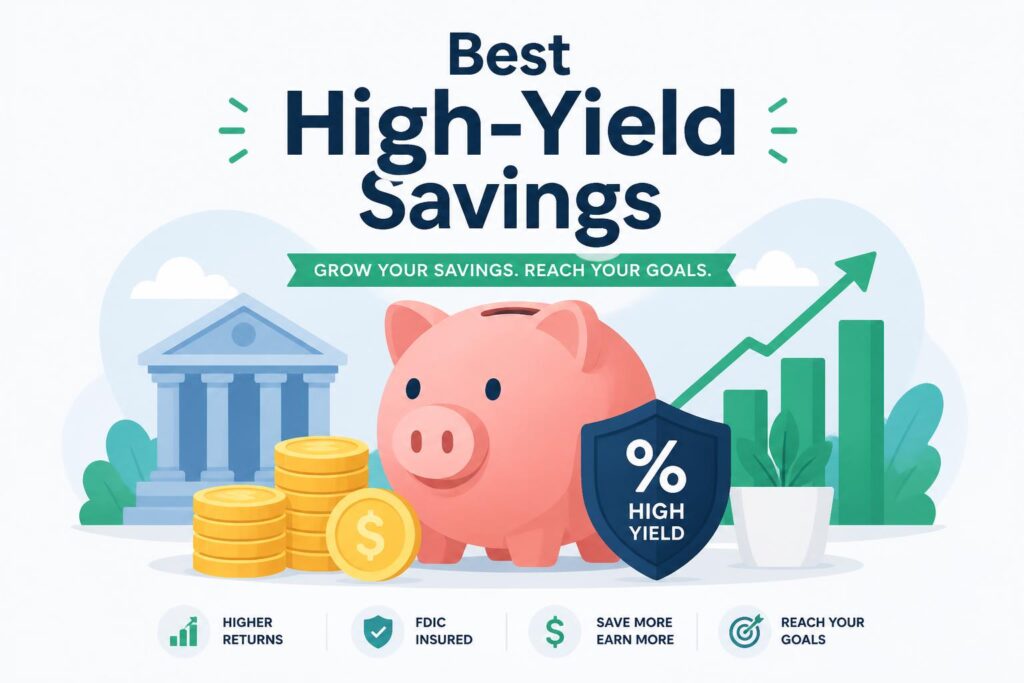
Best Option: High Yield Savings Account (HYSA)
This is where most emergency funds should live. As of March 2026, high yield savings accounts pay around 4.00%-4.50% APY, dramatically higher than the 0.07% national average for traditional checking or the 0.39% average for standard savings.
Why it works:
FDIC insured. Your money is protected up to $250,000 per account.
Instant access. You can transfer funds to checking within 1-2 business days.
Earns interest. A $20,000 fund at 4.25% APY earns roughly $850 per year, not $14.
Where to open one:
Online banks consistently offer the highest rates: Marcus by Goldman Sachs, Ally Bank, American Express Personal Savings, Capital One 360, Discover Bank. Avoid brick and mortar banks. They pay almost nothing.
Alternative: Money Market Account
Money market accounts blend checking features (debit card, check writing) with savings level interest rates. They’re a solid choice if you want slightly faster access than an HYSA but still want to earn meaningful interest.
Similar interest rates to HYSAs (3.75%-4.50% APY). FDIC insured. Can write checks or use a debit card in a true emergency.
Trade off: Some money market accounts have minimum balance requirements ($1,000-$10,000) or limit transactions per month.
What NOT to Use
Checking account. Pays almost nothing in interest. A $20,000 fund earning 0.07% APY makes $14 per year. That’s $836 left on the table compared to an HYSA.
Investment account (stocks, ETFs, index funds). Too volatile. If the market drops 20% the week you lose your job, your $20,000 fund is now $16,000. Emergency funds must be stable.
Certificates of Deposit (CDs). Locks your money for a fixed term (6 months, 1 year, 5 years). Early withdrawal penalties defeat the purpose of instant access.
Crypto. Not insured, wildly volatile, and can take days to convert to cash. This is speculation, not an emergency fund.
How to Build Your Emergency Fund Without Going Broke
Saving $20,000 feels insurmountable when you’re living paycheck to paycheck. The key is to start small, automate everything, and treat it like a bill you can’t skip.
Start with $1,000
This is your starter emergency fund. It won’t cover job loss, but it will handle a flat tire, a broken phone, or an urgent vet bill without forcing you onto a credit card.
How to get there:
- Save $250 per month for 4 months
- Save $125 per month for 8 months
- Cut one discretionary expense (streaming service, daily coffee, dining out twice a month) and redirect it
Build to One Month of Expenses
Once you hit $1,000, calculate one month of essential expenses (rent, utilities, groceries, insurance, debt payments). This becomes your next milestone.
For most people, that’s $2,500-$4,000. At $200 per month, you’ll reach it in 12-20 months.
Automate the Savings
Set up an automatic transfer from checking to your HYSA on payday. Treat it like rent. It leaves before you see it.
Manual saving relies on willpower. Automatic saving relies on a system. Systems win.
Use Windfalls Strategically
Tax refund? Bonus? Gift? Put 50%-100% toward your emergency fund until you hit your target. You weren’t counting on the money anyway.
Scale to Your Full Target
Once you’re covering one month of expenses, keep going. Add $200-$500 per month until you hit your 3-6 month goal or your $20,000 baseline.
Timeline reality:
- Saving $200 per month: 100 months (8.3 years) to hit $20,000
- Saving $500 per month: 40 months (3.3 years) to hit $20,000
- Saving $1,000 per month: 20 months (1.7 years) to hit $20,000
This isn’t fast. That’s why you start now.
Common Emergency Fund Mistakes
Keeping It in Checking
You’re losing hundreds of dollars per year in interest, and it’s too easy to spend. Move it to an HYSA or money market account immediately.
Investing It
Your emergency fund is not your investment portfolio. If you need the money during a market crash, you’re forced to sell at a loss. Safety and liquidity beat returns here.
Using It for Non Emergencies
A sale is not an emergency. A vacation is not an emergency. If you raid the fund for discretionary spending, you won’t have it when the car breaks down.
Stopping Too Early
Hitting $5,000 feels like a milestone, and it is, but if your true target is $20,000, you’re only 25% there. Keep going.
Not Separating It from Other Savings
Your emergency fund should be in a separate account from your house down payment fund, vacation fund, or new car fund. If it’s all mixed together, you’ll spend it.
Waiting Until You “Have Extra Money”
There’s no such thing. You build an emergency fund by deciding it’s a priority, cutting something else, and automating the transfer. Waiting for extra money means waiting forever.
FAQ
How quickly should I build my emergency fund?
As fast as you can without sacrificing necessities. If you’re carrying high interest credit card debt (18%+), pause at $1,000 and focus on the debt first. Once that’s cleared, finish building the full emergency fund.
Can I use my emergency fund to invest if the market dips?
No. The moment you treat your emergency fund as investment capital, it stops being an emergency fund. Keep them separate.
What if I need more than my emergency fund covers?
That’s what the fund prevents: going into debt. If your fund runs out, you’ll need to use credit, but you’ve delayed that as long as possible. The fund isn’t infinite. It’s a buffer.
Should I keep adding to my emergency fund after I hit my target?
Not indefinitely. Once you hit your target (whether that’s $20,000 or 6 months of expenses), redirect new savings to retirement accounts, debt payoff, or other goals. Revisit your target once a year. If your expenses have grown, your fund should too.
Is $20,000 really necessary, or is that overkill?
For a single person with low expenses and a stable job, $20,000 might be conservative. For a homeowner with dependents and variable income, it might not be enough. The $20,000 figure is a starting baseline for the median American household in 2026, not a universal rule. Run the calculation for your situation.
Can I keep part of my emergency fund in a CD for higher interest?
Yes, but only after you’ve built a liquid base. A “CD ladder” strategy lets you split your fund: $5,000-$10,000 in an HYSA for instant access, and the rest in staggered 6 month or 1 year CDs earning slightly higher rates. You sacrifice some liquidity for a small yield boost, but it only works if you’re already above your minimum target.
What if I’m self employed—do I need more?
Yes. Self employed income is inherently volatile. Aim for 9-12 months of expenses, or at minimum $30,000. You’re not just covering emergencies. You’re covering slow months, late client payments, and gaps between contracts.