Is High-Yield Savings Worth It? (2026 Reality Check)
Your savings account is probably earning you pennies while inflation chips away at your balance. The national average savings rate sits at 0.38% APY as of July 2026, according to NerdWallet’s survey of around 100 financial institutions. High-yield savings accounts are offering up to 4.15% APY—nearly 11 times more.
Not every high-yield account works the same way. Some have balance caps. Others bury fees in the fine print. A few trap your cash with withdrawal limits that make them less liquid than advertised.
This guide covers what high-yield savings actually means in 2026, who benefits most, and whether you should make the switch or stick with what you have.
Table of Contents
- What Is a High-Yield Savings Account?
- How Much More Do You Actually Earn?
- Top High-Yield Savings Accounts in July 2026
- Who Should Use High-Yield Savings (and Who Shouldn’t)
- How to Pick the Right High-Yield Account
- Common Mistakes People Make
- High-Yield Savings vs. CDs: Which One Wins?
- FAQ
What Is a High-Yield Savings Account?
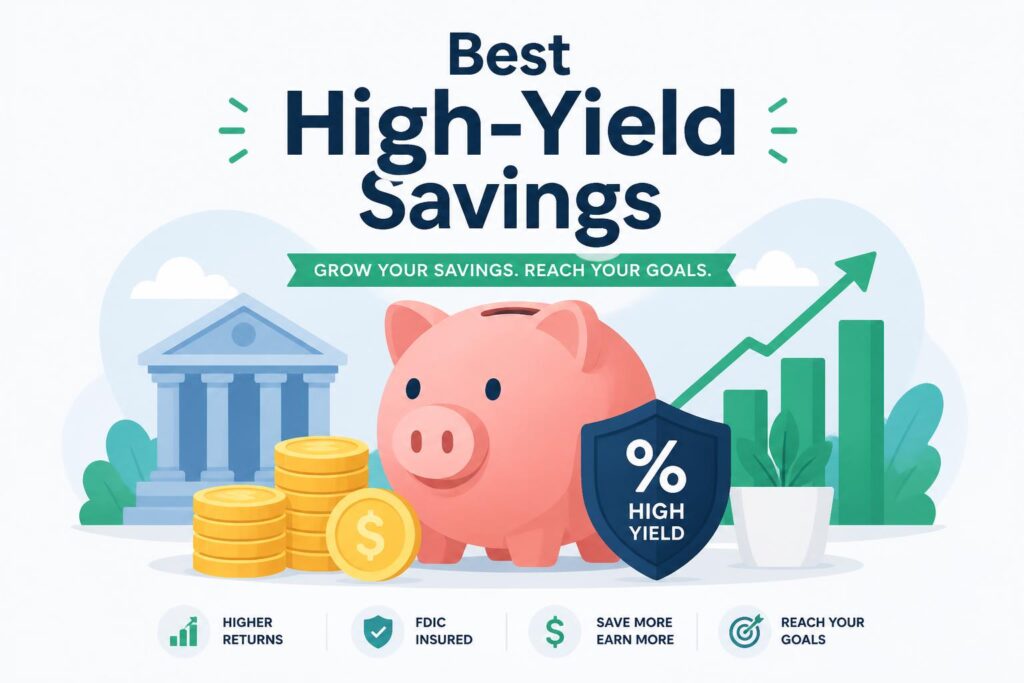
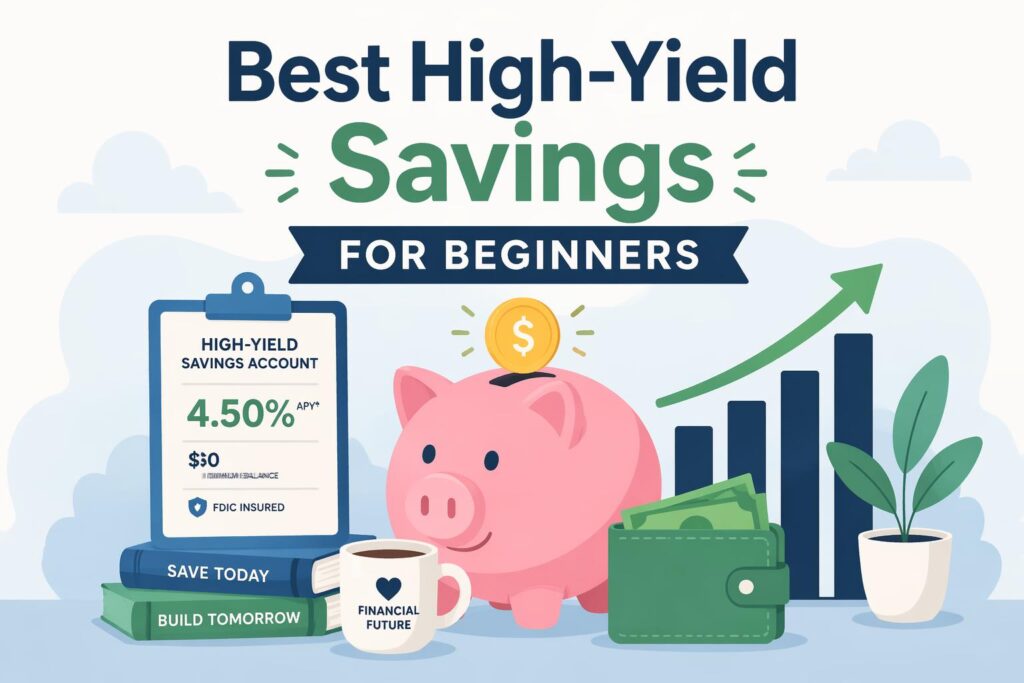
A high-yield savings account is a federally insured deposit account that pays significantly more interest than traditional savings accounts. As of July 2026, Bankrate’s survey of 850+ institutions shows the national average sitting at 0.6% APY. High-yield accounts offer rates between 3.80% and 4.15% APY.
These accounts are almost always offered by online banks—institutions without physical branches. That’s how they keep costs low and pass the savings to you in the form of higher interest rates.
Most have no monthly fees. FDIC insurance covers up to $250,000 per depositor, per ownership category (Synchrony Bank confirms this). Minimum opening deposits range from $0 to $250 depending on the institution. APY changes based on Federal Reserve rate decisions.
The term “high-yield” isn’t regulated, so banks set their own thresholds. Any account offering 10x the national average qualifies in practice.
How Much More Do You Actually Earn?
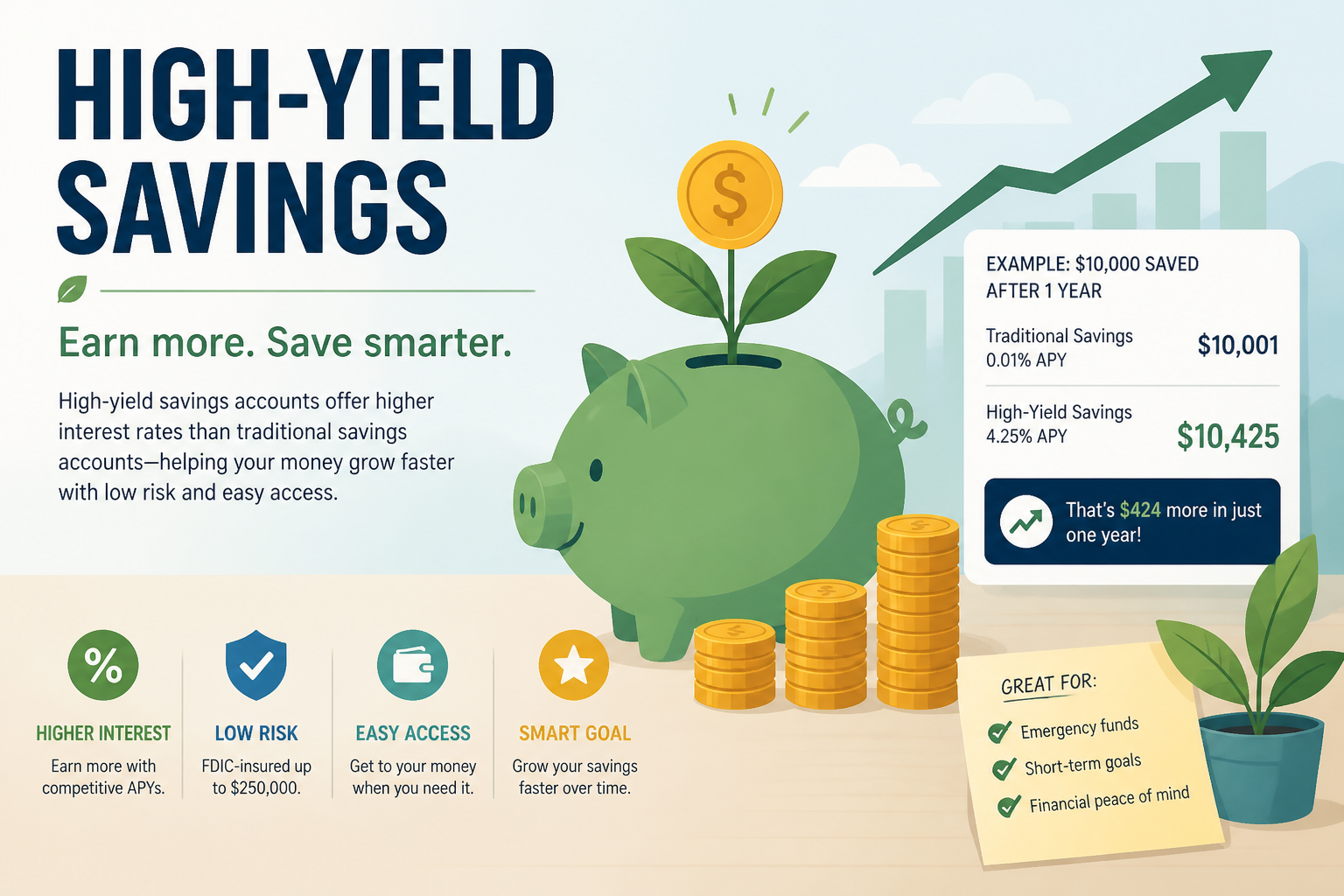
Say you keep $10,000 in savings for one year.
Traditional savings at 0.38% APY (national average): $38
High-yield savings at 4.15% APY (top rate in July 2026): $415
That’s $377 more per year, just for moving your money to a different account.
Over five years, that’s $1,885 in additional interest. Rates will move, probably down at some point, but even if they drop you’re still ahead.
This isn’t about getting rich. If you’re holding an emergency fund or saving for a short-term goal, parking it in a 0.38% account is functionally the same as losing value to inflation.
Top High-Yield Savings Accounts in July 2026
Bankrate evaluated 850+ institutions and NerdWallet surveyed around 100 financial institutions to surface the best rates and terms. Here’s what’s available right now:
Bank APY Minimum Deposit Monthly Fee Forbright Bank 4.15% $0 $0 CIT Bank 4.10% $100 $0 Vio Bank 4.01% $100 $0 Happen Bank 4.00% $0 (but $250 to earn APY) $0 Bread Savings 3.95% $100 $0 EverBank 3.90% $0 $0 Live Oak Bank 3.80% $0 $0 SoFi 3.80% $0 $0
FDIC insurance covers up to $250,000 per depositor, per ownership category. If you have $300,000 in savings, open accounts at two different banks to stay fully insured. Synchrony Bank details the coverage on their site.
Who Should Use High-Yield Savings (and Who Shouldn’t)
You’re a good fit if you’re building or maintaining an emergency fund (3-6 months of expenses), saving for a short-term goal (down payment, wedding, car) within 1-3 years, or want liquid access to your money without penalties. Also if you’re tired of earning functionally zero interest in a traditional savings account.
You’re not a good fit if you’re investing for long-term growth. Stocks and bonds historically outperform savings accounts over 10+ years. High-yield savings won’t keep up. Federal regulations allow six convenient withdrawals per month—go over and some banks charge fees or convert your account. And APYs fluctuate with the Fed’s rate decisions. Today’s 4.15% could be 3.5% next quarter.
High-yield savings is a parking spot for cash you’ll need soon, not a wealth-building vehicle.
How to Pick the Right High-Yield Account
NerdWallet’s evaluation framework considers APY, monthly fees, savings tools, and customer service hours.
APY isn’t everything. A 4.15% APY sounds better than 4.01%, but if the 4.01% account has better customer service, mobile app, and no balance caps, the extra 0.14% won’t matter much on a $10,000 balance. It’s a $14 per year difference.
Check the minimums. Some accounts require $100 to open. Others require $250 to earn the stated APY, so you could open with $50 but earn nothing until you hit the threshold. Happen Bank is an example.
Watch for balance caps. GO2bank’s 4.50% APY only applies to the first $5,000. If you have $20,000 in savings, you’d earn 4.50% on $5,000 and a lower rate (or nothing) on the remaining $15,000. Read the terms.
Verify FDIC insurance. Every account in the table above is FDIC insured, but if you’re exploring smaller institutions, confirm coverage. Look for “Member FDIC” in the footer or account disclosures.
Test the deposit and withdrawal process. How do you move money in and out? Most online banks link to your existing checking account via ACH transfer, which takes 1-3 business days. If you need same-day access, keep a buffer in checking or choose an account with instant transfer options.
Digital banking features matter. Can you set savings goals? Does the app let you automate transfers? Synchrony Bank highlights no minimum balance and no monthly fees, but the mobile experience varies by bank. If you’re managing your savings actively, the interface quality matters.
Common Mistakes People Make
Chasing the highest APY without reading the fine print. A 5% APY sounds incredible until you realize it’s promotional for the first three months, then drops to 2%. Or it applies only to balances under $1,000. Always read the account terms and check whether the rate is variable (it almost always is).
Keeping all savings in one account past FDIC limits. If you have $300,000 in one high-yield account and the bank fails, you’re only covered for $250,000. Split funds across institutions if you’re above the threshold.
Treating high-yield savings like an investment. A 4% return is good for cash, but it’s not keeping pace with historical stock market returns (around 10% annually). High-yield savings is for money you’ll need in the next 1-3 years, not your retirement fund.
Ignoring monthly withdrawal limits. Federal Regulation D used to cap savings withdrawals at six per month. It was suspended during COVID, but some banks still enforce it or charge fees after six. If you dip into savings often, structure your accounts differently. Keep more in checking.
Leaving money in a 0.38% account because switching feels like a hassle. Opening a high-yield account takes 10 minutes. Linking your checking account takes another 5. The difference on a $10,000 balance is $377 per year. That’s $31.42 per month you’re losing by not switching.
High-Yield Savings vs. CDs: Which One Wins?
Certificates of Deposit (CDs) often offer slightly higher rates than high-yield savings, but you lock your money for a set term (6 months, 1 year, 5 years). Withdraw early and you pay a penalty—often several months of interest.
Choose high-yield savings if you need flexibility and can’t predict when you’ll need the money, you’re building an emergency fund (by definition, unpredictable), or interest rates are rising. Variable APYs in savings accounts adjust upward with the Fed.
Choose a CD if you know you won’t touch the money for the full term, you want to lock in a rate before the Fed cuts rates, or you’re okay sacrificing liquidity for a slightly higher return.
If you’re saving for a house down payment in two years and you’re certain you won’t need that cash earlier, a 2-year CD might pay 4.5% vs. 4.15% in savings. But if there’s any chance you’ll need the money sooner, the penalty wipes out the extra yield.
For most people in 2026, high-yield savings is the better default. CDs work for a specific slice of your savings—money you’re sure you won’t touch.
FAQ
Is my money safe in a high-yield savings account?
Yes, as long as the account is FDIC insured. Every account listed in this article carries FDIC insurance up to $250,000 per depositor, per ownership category. Synchrony Bank confirms this coverage, and it’s a standard feature across U.S. banks. If the bank fails, the FDIC reimburses you within a few business days.
What should I do if I can’t open a high-yield savings account?
Some banks deny applications due to credit history or ChexSystems reports (a consumer reporting agency for bank accounts). If that happens, check your ChexSystems report for errors and dispute them. Try a different bank—each has its own approval criteria. Consider a second-chance bank account or a credit union, which may have more flexible requirements.
Should I get a CD instead of a high-yield savings account?
Only if you’re certain you won’t need the money before the CD matures. CDs lock your funds for a set term and charge early withdrawal penalties. High-yield savings keeps your money liquid. For emergency funds or short-term goals with any uncertainty, stick with high-yield savings.
Are online banks better for high-yield savings?
In 2026, yes. Almost all the top rates come from online banks. NerdWallet’s survey shows online institutions consistently outperform brick-and-mortar banks because they don’t have branch overhead. The tradeoff: no in-person service. If you need face-to-face help, you’ll rely on phone support or chat.
How are APYs calculated?
APY (Annual Percentage Yield) reflects how much you’ll earn in a year, including compound interest. Banks typically compound interest daily or monthly. A 4.15% APY means if you deposit $10,000 and don’t touch it, you’ll have $10,415 after one year. That assumes the rate stays constant, which it won’t. APYs fluctuate with Federal Reserve decisions.
What are the fees associated with a high-yield savings account?
Most high-yield accounts have no monthly fees, no minimum balance requirements, and no maintenance charges. Synchrony Bank explicitly lists no monthly fees and no minimum balance. Watch for excess withdrawal fees if you go over six withdrawals per month (some banks still enforce this), wire transfer fees if you need to move money that way, and paper statement fees (usually avoidable by going paperless).
How can I access my money?
You’ll link your high-yield savings account to an external checking account (usually via ACH transfer). Transfers typically take 1-3 business days. Some banks offer instant transfers, but most don’t. If you need same-day access to cash, keep a buffer in your checking account.
How do I make deposits into my bank account?
Most online banks support ACH transfers from a linked checking account, direct deposit from your employer, mobile check deposit via the bank’s app, and wire transfers (may incur fees).
Physical cash deposits are tricky with online banks. Some partner with ATM networks, but it’s not universal. If you regularly deposit cash, consider keeping a local bank account for that and transferring funds to your high-yield account.
How do I choose the best high-yield savings account?
Start with APY, but don’t stop there. NerdWallet evaluates APY, monthly fees, savings tools, and customer service hours. Compare the top 3-5 APYs. Within 0.15% of each other, the difference is negligible. Check minimum deposit and balance requirements. Test the mobile app if you’ll manage savings from your phone. Read reviews about customer service—when something goes wrong, responsive support matters. Verify FDIC insurance.
Climate First Bank offers 4.01% APY and was recognized as NerdWallet’s Best Savings Account in 2026. Margarette Burnette, a savings account expert who has been writing about bank accounts since before the Great Recession, points out that high-yield savings accounts are federally insured and offer better rates than traditional accounts. The right choice depends on your liquidity needs and how actively you manage your savings.
—
High-yield savings is worth it if you’re keeping cash you’ll need in the next 1-3 years and you’re currently earning less than 1% APY. The switch takes 15 minutes, costs nothing, and earns you hundreds more per year. The only reason not to do it is if you’re already using one, or if your money should be invested instead of sitting in savings at all.