Cashback & Rewards Pros and Cons: What You Actually Get (and What You Don’t)
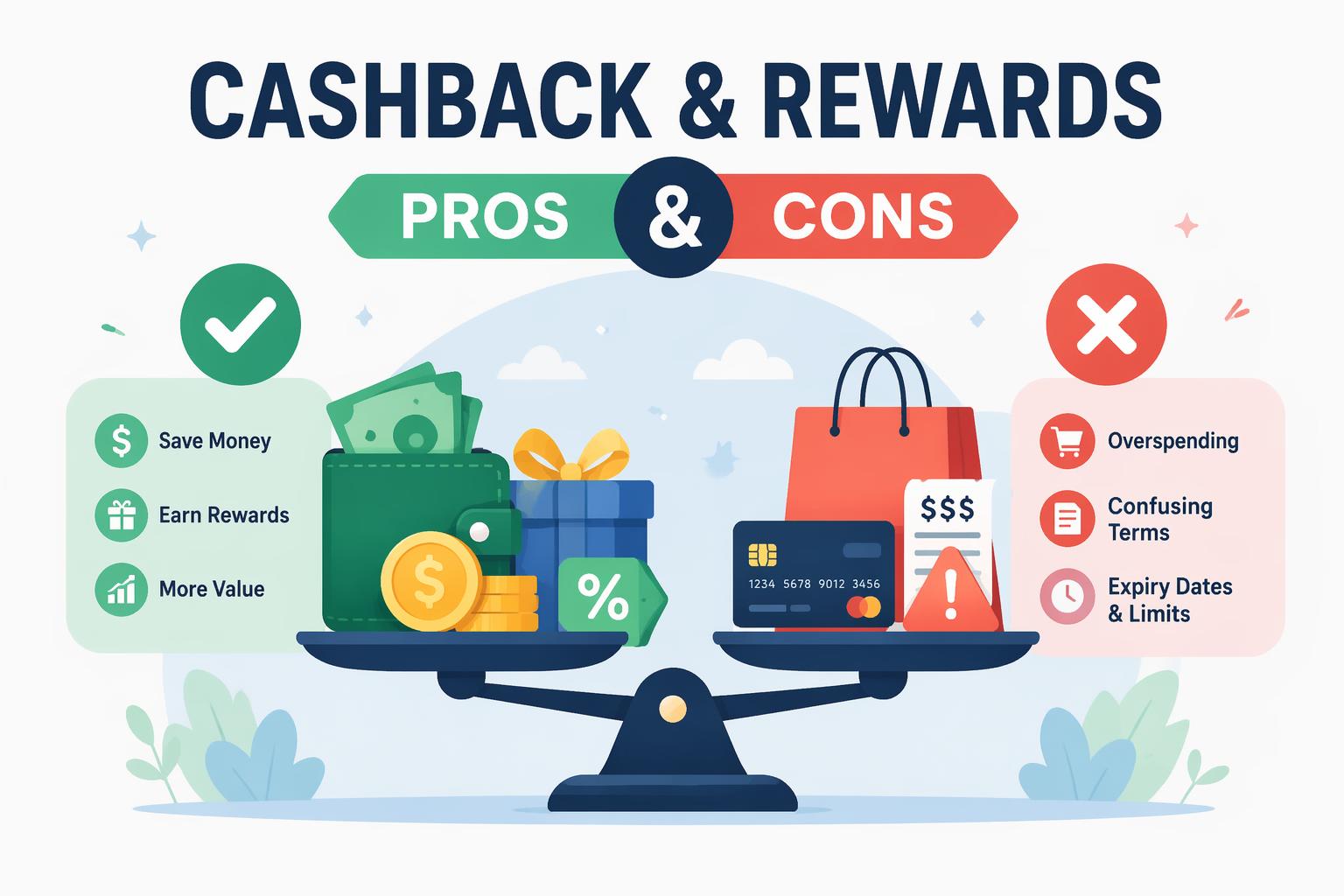
You swipe a card. The card company gives you money back. Sounds like free money, right?
Not quite. Cashback and rewards programs are one of the most misunderstood parts of personal finance in 2026. Some people rack up hundreds of dollars a year. Others end up paying more in fees than they earn. The difference isn’t luck—it’s understanding what these programs actually are, how they work, and whether they match your spending.
This guide walks through the real pros and cons of cashback and rewards cards, cuts through the marketing speak, and shows you who actually benefits from these programs.
Table of Contents
- What Is Cashback & Rewards, Really?
- How Cashback Cards Actually Work in 2026
- The Real Pros of Cashback & Rewards
- The Hidden Cons Nobody Mentions
- Flat-Rate vs. Rotating Categories: Which Wins?
- Who Should Skip Cashback Cards Entirely
- How to Pick the Right Cashback Card for Your Spending
- FAQ
—
What Is Cashback & Rewards, Really?
Cashback is a rebate on purchases. You buy something, and the card issuer returns a percentage of what you spent—usually between 1% and 10%, depending on the card and category.
Cashback credit cards reward you based on spending categories. Some cards offer a flat rate on everything. Others rotate categories quarterly or tier rewards by merchant type—groceries, gas, dining, online shopping.
There’s no magic here. Card issuers make money from merchant fees (interchange) every time you swipe. They share a portion of that revenue with you to keep you using their card instead of a competitor’s. Cash-back cards are often easier to manage than travel rewards cards because the value is straightforward: 2% back means $2 for every $100 spent.
The fundamental trade: you get cash back, the issuer gets your transaction volume and (often) interest if you carry a balance.
—
How Cashback Cards Actually Work in 2026
Most cashback cards in 2026 fall into three structures:
1. Flat-Rate Cards
You earn the same percentage on every purchase. No activation, no tracking, no category limits.
Example: The Citi Double Cash® Card pays 2% on every purchase—1% when you buy, 1% when you pay it off. No cap on cash back, no annual fee.
The Citi Double Cash represents the simplest approach: predictable, automatic, and no mental overhead.
2. Tiered Cashback Cards
Different rates for different merchant categories—usually 3% to 6% on select categories, 1% to 1.5% on everything else.
Example: The Chase Freedom Unlimited® offers 5% cash back on travel bookings through Chase Travel, 3% back at restaurants and drugstores, 1.5% on all other purchases. No annual fee.
Tiered cards reward you for spending in specific areas. If you know where you spend the most, they can beat flat-rate cards.
3. Rotating Category Cards
The highest rates—often 5%—but categories change every quarter, and you must activate each quarter to earn the bonus.
Example: The Discover it® Cash Back offers 5% cash back on rotating categories (up to $1,500 per quarter, then 1%), plus unlimited 1% on all other purchases. In Q1 2026, the 5% applied to grocery stores, wholesale clubs, and select streaming services. Q2 switched to restaurants and home improvement stores. Q3 covers gas stations, transportation, and drug stores.
If you activate and spend $1,500 in the 5% category each quarter, you earn up to $75 cash back per quarter—$300 annually from the bonus categories alone.
Rotating cards require attention. Miss the activation window or forget which category is live, and you’re stuck at 1%.
—
The Real Pros of Cashback & Rewards
You Earn Money on Purchases You’d Make Anyway
If you’re already buying groceries, gas, and paying bills, a cashback card turns routine spending into rebates. The average American household spent $28,210 annually in 2026 (excluding housing, vehicle, and healthcare costs). At a conservative 1.5% flat rate, that’s $423 back. At optimized rates across categories, some cardholders clear $500 to $600 annually.
Real example from 2026 data: A household using the Blue Cash Preferred® Card from American Express (6% back at U.S. supermarkets, 3% at gas stations, $95 annual fee after the first year) could earn $590.65 annually if their spending aligned with the card’s bonus categories.
Simpler Than Travel Rewards
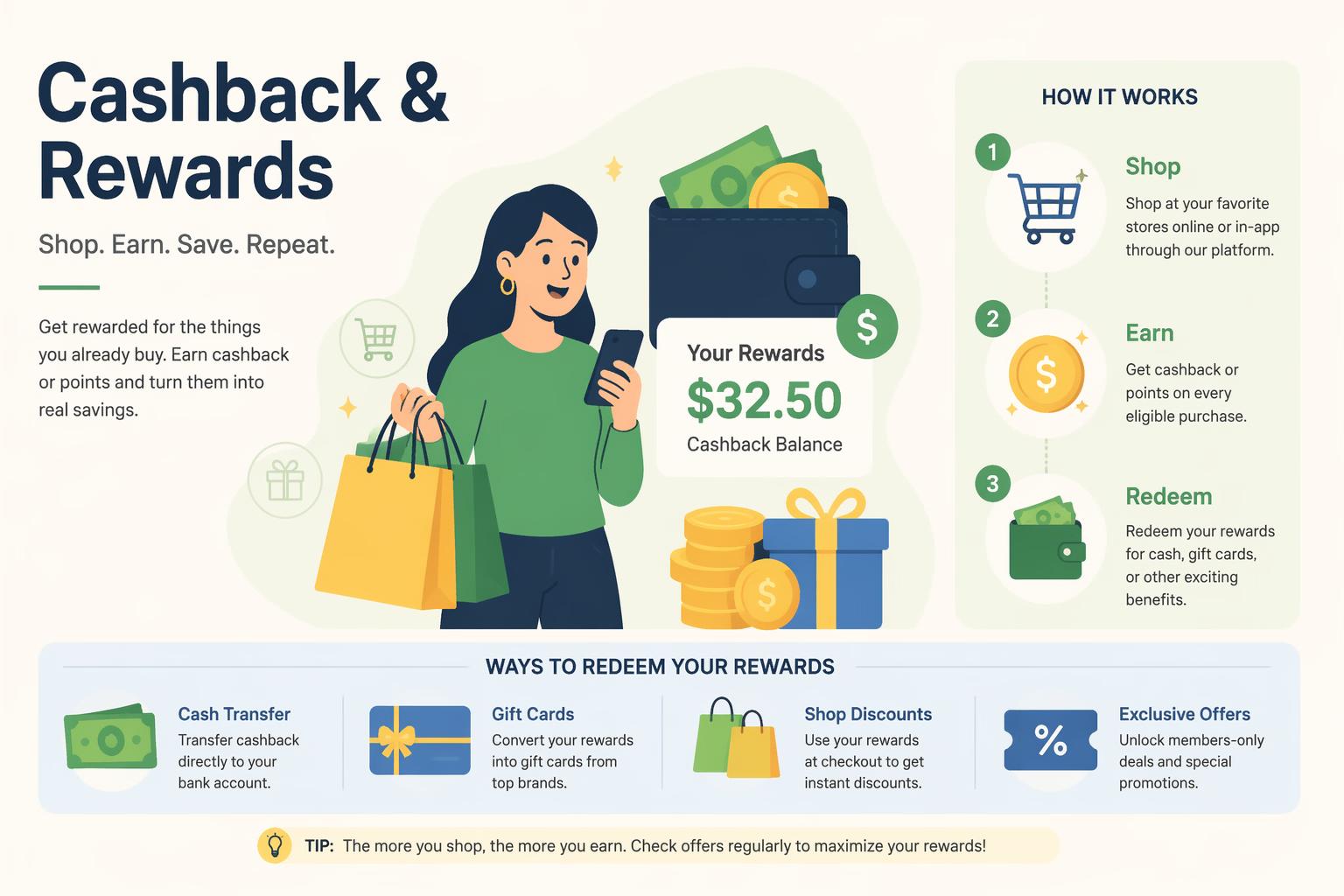
Travel points come with blackout dates, transfer partners, redemption quirks, and expiration windows. Cashback is cash. Redeem it as a statement credit, direct deposit, or check. No booking portals, no devaluation risk.
No Expiration (Usually)
Most cashback doesn’t expire as long as your account stays open and in good standing. You’re not racing a clock or losing value if you don’t travel for a year.
Sign-Up Bonuses Add Up Fast
Many cards offer intro bonuses: spend $500 in three months, get $200 cash back. The Capital One Savor Cash Rewards Credit Card offered a $200 sign-up bonus in 2026 with no annual fee, plus 3% back on dining and entertainment.
If you’re opening a card anyway, that bonus is real money—but only if you don’t overspend to hit the threshold.
Stacks With Other Discounts
Cashback is a rebate, not a coupon. You can combine it with sales, promo codes, and retailer loyalty programs. Buy something on sale, use a coupon code, pay with a cashback card—every layer stacks.
—
The Hidden Cons Nobody Mentions
Annual Fees Can Wipe Out Your Rewards
The Blue Cash Preferred® Card charges $95 after the first year. If you’re not spending enough in the 6% and 3% categories, you’re paying for rewards you’re not earning.
Math check: To break even on a $95 fee with 6% grocery rewards, you need to spend $1,583 annually at supermarkets. If you’re a light grocery shopper or prefer Costco (which counts as wholesale, not grocery), you lose.
Flat-rate cards with no annual fee—like Citi Double Cash or Chase Freedom Unlimited—avoid this trap entirely.
Rotating Categories Punish Forgetfulness
Discover it® Cash Back and Chase Freedom Flex® require quarterly activation. Forget to activate, and your 5% drops to 1%. Miss the calendar, and you’re earning base rates on spending you thought was bonus-eligible.
Categories change every quarter. Gas stations are 5% in Q3 2026, but if you filled up in Q2 expecting the bonus, you earned 1%. This isn’t a scam, but it’s friction—and friction costs money if you’re not paying attention.
Spending Caps Limit High Earners
Discover’s 5% categories cap at $1,500 per quarter. Spend $2,000 in that category, and $500 of it earns just 1%. If you’re a heavy spender in bonus categories, you hit the ceiling fast and the card becomes a flat 1% card for the rest of the quarter.
Temptation to Overspend
“I’m earning 5% back” is a psychological trick. Spending $100 to earn $5 is still spending $100. Cashback cards are profitable when you’re buying things you already budgeted for. They’re a loss when you justify purchases because of the rebate.
Credit Karma’s 2026 research noted that cash-back cards are often easier to manage than travel rewards cards—but ease of use doesn’t mean ease of discipline.
Interest Rates Destroy Cashback Value Instantly
Carry a balance, and interest wipes out every dollar of cashback. Most cards carry APRs between 18% and 25%. If you’re earning 2% back and paying 20% interest, you’re losing 18% on every dollar.
Cashback cards are tools for people who pay in full every month. If you carry a balance, a low-APR card or balance transfer offer is more valuable than any rewards rate.
Credit Score Requirements Lock Out Some Users
Most cashback cards require a credit score of 670 or higher. If your score is below that, you’re either denied or funneled into subprime cards with low rewards and high fees (like Capital One QuicksilverOne, which charges a $39 annual fee for 1.5% back).
Cashback cards reward people who already have good credit. If you’re rebuilding, you’re playing a different game.
—
Flat-Rate vs. Rotating Categories: Which Wins?
Flat-rate wins for:
- People who don’t want to think about categories
- Varied spending across many merchants
- Travelers who don’t want to track quarterly calendars
The Citi Double Cash® Card is the flat-rate benchmark: 2% on everything, no cap, no fee. Set it and forget it.
Rotating categories win for:
- People who can activate every quarter
- Households with concentrated spending in predictable categories (groceries, gas, dining)
- Anyone willing to track a calendar for an extra 3% to 4% on $1,500 per quarter
The Discover it® Cash Back is the rotating leader in 2026: 5% on quarters you activate, plus Cashback Match at the end of the first year (Discover doubles all cash back earned in year one).
Tiered cards win for:
- People with heavy spending in 2-3 specific categories
- Anyone who wants better-than-flat rewards without quarterly babysitting
Chase Freedom Unlimited® hits 5% on Chase Travel bookings, 3% at restaurants and drugstores, 1.5% everywhere else—no activation needed.
Real numbers from 2026:
- Best flat-rate card potential: $564.20 annually
- Best rotating category card potential: $476.88 annually
- Best tiered card (groceries): $590.65 annually
- Best tiered card (dining): $513.90 annually
Your mileage depends entirely on where you spend. A flat-rate card beats a rotating card if you forget to activate. A grocery-focused card beats both if you’re spending $300/month at supermarkets.
—
Who Should Skip Cashback Cards Entirely
1. Anyone Who Carries a Balance
If you’re paying interest, cashback is a net loss. A 0% intro APR card or balance transfer offer saves you more than any rewards rate.
2. People With Credit Scores Below 670
You won’t qualify for the best cards, and the ones you do qualify for often come with annual fees that cancel out the rewards. Focus on building credit first.
3. Anyone Who Overspends for Rewards
If you’re buying things you wouldn’t otherwise buy just to hit a category bonus or sign-up threshold, the card is costing you money. Cashback is a rebate on necessary spending, not a reason to spend more.
4. People Who Want Premium Travel Perks
If you value lounge access, travel insurance, and flexible points more than cash, a travel rewards card is a better fit. Cashback cards are transactional—you get money back, but no perks.
—
How to Pick the Right Cashback Card for Your Spending
Step 1: Track Your Spending for One Month
Pull up your last 30 days of transactions. Group them by category: groceries, gas, dining, online shopping, everything else. Note the dollar amounts.
If 40% of your spending is groceries, a grocery-focused card (Blue Cash Preferred) wins. If spending is spread evenly, a flat-rate card (Citi Double Cash) wins.
Step 2: Check Annual Fees Against Bonus Earning
Calculate breakeven: how much do you need to spend in bonus categories to cover the fee?
- $95 annual fee ÷ 6% grocery rewards = $1,583 annual grocery spend to break even
- Below $1,583? The fee costs more than the rewards.
No annual fee is the safer default unless you’re certain your spending justifies the cost.
Step 3: Decide If You’ll Activate Quarterly
Be honest. If you’ll forget, rotating cards are a bad deal. If you’ll set calendar reminders and activate every quarter, they’re the highest earners for disciplined users.
Step 4: Read the Cap Limits
Check the maximum bonus earning per quarter or per year. If you’re a heavy spender, a no-cap flat-rate card might outperform a capped bonus card.
Discover it® caps 5% categories at $1,500/quarter. Citi Double Cash has no cap.
Step 5: Confirm the Credit Score Requirement
Most top-tier cashback cards want 670+. Check your score before applying. Applying and getting denied costs you a hard inquiry with no benefit.
Step 6: Ignore the Hype
Cards with big sign-up bonuses, flashy ads, or influencer partnerships aren’t automatically better. The best card is the one that matches your actual spending and requires the least behavior change.
—
FAQ
Do cash back cards actually give you cash?
Yes, but usually as a statement credit, direct deposit, or check—not literal bills handed to you. Some cards let you redeem for gift cards or merchandise, but cash-equivalent redemptions (statement credits, bank deposits) are the most straightforward.
Is cash back from a credit card taxable?
No. The IRS treats credit card rewards as rebates, not income. You’re not taxed on cashback, sign-up bonuses, or points.
Does cash back expire?
Not usually, as long as your account is open and in good standing. Close the account or let it go delinquent, and you lose unredeemed rewards. Some cards have specific expiration rules—read the terms.
What credit score do you need for a cash-back credit card?
Most require 670 or higher. Cards marketed to people with “fair” credit (like Capital One QuicksilverOne) accept lower scores but often charge annual fees and offer lower rewards rates.
How do you get 5% cash back on everything?
You don’t, consistently. The highest flat-rate cards top out at 2%. Cards offering 5% restrict it to rotating quarterly categories (Discover it, Chase Freedom Flex) or specific merchants (Chase Freedom Unlimited’s 5% is only on travel booked through Chase). You can stack multiple cards to maximize category coverage, but no single card pays 5% on all spending.
Are cash-back credit cards worth it?
Yes, if you:
- Pay your balance in full every month
- Spend in categories that match the card’s bonus structure
- Don’t overspend to chase rewards
- Avoid cards with annual fees unless your spending justifies them
No, if you:
- Carry a balance (interest cancels out rewards)
- Forget to activate rotating categories
- Have a credit score below 670
- Use cashback as an excuse to spend more
What purchases qualify for cashback?
Almost all purchases qualify for at least the base rate (1% to 1.5%). Bonus categories (groceries, gas, dining, etc.) depend on how the merchant codes their transactions. A grocery store might code as “supermarket” (eligible) or “wholesale club” (not eligible), depending on the card’s terms. Cash advances, balance transfers, and fees don’t earn cashback.
What happens if I exceed the purchase limit on rotating categories?
You earn the base rate (usually 1%) on spending above the cap. Discover it® pays 5% on the first $1,500 per quarter in activated categories, then drops to 1% for the rest of the quarter. Plan accordingly if you’re a heavy spender in bonus categories.
Which credit card gives the most cash back?
It depends on your spending. As of mid-2026:
- Flat-rate leader: Citi Double Cash® Card (2% on everything, no cap, no fee)
- Rotating categories leader: Discover it® Cash Back (5% on activated categories up to $1,500/quarter, plus Cashback Match in year one)
- Grocery leader: Blue Cash Preferred® from American Express (6% at U.S. supermarkets up to $6,000/year, but $95 annual fee after year one)
- Dining leader: Capital One Savor Cash Rewards (3% on dining and entertainment, no annual fee)
The highest earner is the card that matches where you actually spend. A 6% grocery card is worthless if you spend $50/month on groceries.
Should I get a cash back card or a travel card?
Cash back if:
- You value simplicity and liquidity
- You don’t travel often enough to use points
- You want rewards you can redeem anytime, anywhere
Travel card if:
- You travel frequently and can use points for flights or hotels
- You value perks like lounge access, travel insurance, or checked bag credits
- You’re willing to learn transfer partners and redemption strategies
Cash-back cards are often easier to manage than travel rewards cards, but travel cards can deliver higher value per dollar if you’re strategic about redemptions.
—
Final Take
Cashback and rewards cards in 2026 are powerful tools—if you’re already disciplined with credit and spending. The math is straightforward: spend where the card pays the most, pay your balance in full, and the rebates add up. Hundreds of dollars a year, no gimmicks.
But the cons are real. Annual fees, spending caps, rotating categories that punish forgetfulness, and the psychological nudge to overspend all eat into the value. And if you carry a balance, the interest you pay will outweigh every dollar of cashback you earn.
The best cashback card is the one you’ll actually use correctly. That might be a simple flat-rate card with no mental overhead, or a rotating-category card that rewards your attention. It’s never the card with the flashiest sign-up bonus or the most aggressive marketing.
Track your spending. Do the breakeven math on annual fees. Be honest about whether you’ll activate quarterly categories. And remember: cashback is a rebate on money you’re already spending, not a reason to spend more.