What Is Frugal Living? The Beginner’s Guide to Keeping More Money Without Feeling Broke
You’re tired of living paycheck to paycheck. You want to save more, stress less, and stop wondering where your money went. But cutting expenses sounds miserable—like eating ramen forever and never having fun.
Frugal living isn’t about deprivation. It’s about spending on what matters and cutting the rest without guilt. And it’s one of the fastest ways to build savings and pay off debt without earning more.
This guide breaks down what frugal living actually is, how it differs from being cheap, and the specific strategies that work. By the end, you’ll have a clear action plan to start today.
Table of Contents
- What Is Frugal Living? (And What It’s Not)
- Why Frugal Living Works Better Than Earning More
- The Core Principles of Frugal Living
- 10 Frugal Living Strategies That Work
- Common Frugal Living Mistakes
- How to Start Living Frugally Today
- FAQ
What Is Frugal Living? (And What It’s Not)
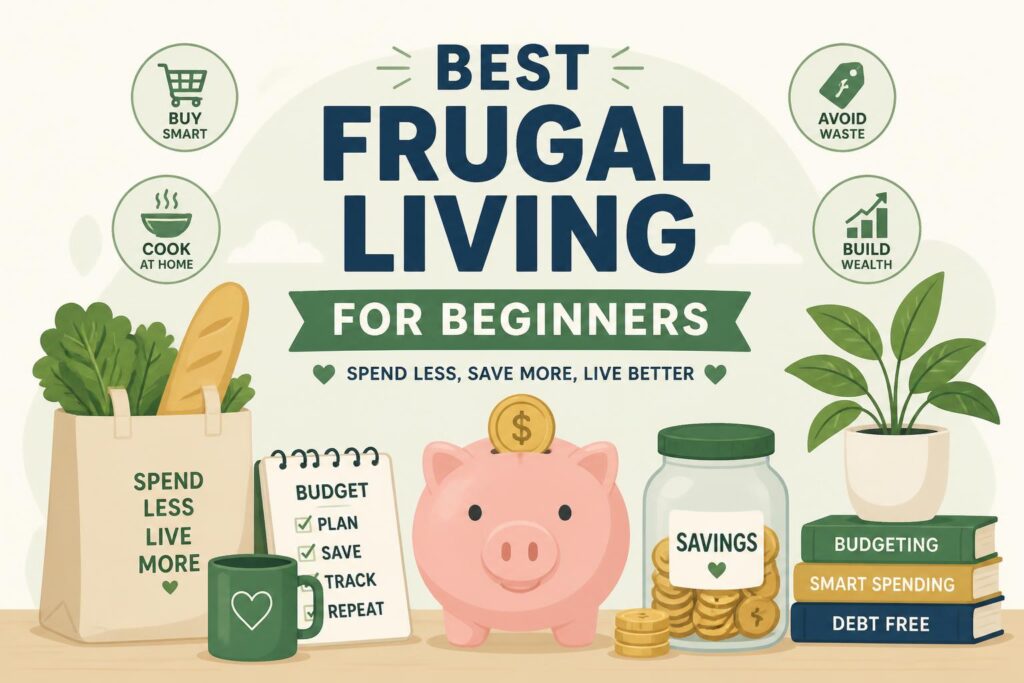
Frugal living means spending intentionally on what brings value and cutting what doesn’t. It’s not about denying yourself everything. It’s asking, “Does this purchase move me closer to my goals or just drain my bank account?”
The difference between frugal and cheap:
Frugal Living Being Cheap Buys quality items that last longer Buys the cheapest option and replaces it constantly Spends freely on priorities (travel, hobbies, health) Refuses to spend even on important things Plans purchases to maximize value Makes impulsive decisions to save a few cents Invests in experiences and relationships Avoids spending on others entirely
Frugal living is also not the same as minimalism. Minimalists focus on owning less. Frugal people focus on spending less. You can be frugal and own 200 books if reading is your priority. You can be a minimalist and still overspend on the few things you own.
Frugality is about alignment. Your spending reflects your values, not society’s expectations or Instagram’s highlight reel.

Why Frugal Living Works Better Than Earning More
Most personal finance advice tells you to earn more. Get a side hustle. Negotiate a raise. Launch a business.
That’s fine advice, but it’s incomplete. Frugal living is often the faster path because:
You control your expenses immediately. You can cut $500 from your budget this month. You can’t guarantee a $500 raise by next week.
Every dollar saved is worth more than a dollar earned. When you earn an extra $100, you lose 20-30% to taxes. When you save $100 by cutting expenses, you keep the full amount. A $500 monthly expense cut is equivalent to a $7,000+ annual raise after taxes.
Lifestyle inflation eats income gains. When people earn more, they tend to spend more. The new salary gets absorbed by a bigger apartment, fancier dinners, and subscription creep. Frugal habits compound. Earning more without spending discipline doesn’t.
In 2024, a couple earning $75,000 cut their expenses by $1,200/month through meal prepping, canceling unused subscriptions, and switching car insurance. They saved $14,400 in one year, more than most side hustles generate after taxes.
The fastest financial progress happens when you cut expenses and increase income at the same time. But if you only have bandwidth for one, frugal living delivers results today.
The Core Principles of Frugal Living
Frugal living isn’t random money hacks. It’s a mindset built on these principles:
Spend on what you value, cut everything else. Identify your top financial priorities. Maybe it’s travel, fitness, or early retirement. Spend freely on those. Slash spending everywhere else without guilt.
Sarah loves concerts and spends $200/month on live music. But she meal preps every week, drives a 10 year old car, and buys clothes secondhand. Her spending reflects her values, not someone else’s idea of normal.
Question every recurring expense. Subscriptions, memberships, and autopay bills are silent budget killers. Pull up your last three bank statements. Highlight every recurring charge. Cancel anything you haven’t used in 30 days.
Focus on housing, transportation, food. These three categories eat 50-70% of most budgets. A 10% cut here saves more than eliminating coffee runs.
Housing: rent a smaller place, get a roommate, or move to a lower cost area. Transportation: drive a reliable used car, bike when possible, or use public transit. Food: meal prep on Sundays, buy generic brands, and cook at home most of the time.
Use the 30 day rule for non-essentials. Impulse purchases destroy budgets. When you want something non-essential, wait 30 days. If you still want it after a month, buy it. Most of the time, the urge fades.
The 30 day rule breaks the dopamine cycle. Online shopping is designed to trigger instant gratification. Waiting interrupts that loop.
Track every dollar for at least 90 days. You can’t change what you don’t measure. For three months, track every expense—coffee, rent, Uber, everything. Use an app like Mint, YNAB, or EveryDollar, or a simple spreadsheet.
You’re probably spending 20-40% more than you think in categories like eating out, convenience purchases, and forgotten subscriptions.
10 Frugal Living Strategies That Work
Automate savings first. Instead of saving what’s left at the end of the month, save first. Set up an automatic transfer on payday: 10-20% of your paycheck goes straight to savings. Live on the rest.
You can’t spend what you don’t see. Most people spend everything in their checking account. Automating makes saving the default.
Meal prep. The average American spends $250+/month eating out. Meal prepping cuts that by 70%.
Cook 3-4 meals in bulk on Sunday—chili, stir fry, pasta, tacos. Portion into containers for the week. Pack lunch every day.
If you currently spend $15/day on lunch and coffee, meal prepping saves $300/month. That’s $3,600/year.
Buy used for depreciating assets. Cars, furniture, electronics, and clothes lose value the second you buy them new. Buy them used and let someone else eat the depreciation.
A 3 year old Honda Civic costs $10,000 less than a new one. Same reliability, massive savings.
Cancel forgotten subscriptions. The average household pays for 12 subscriptions but actively uses only 4-5. Gym memberships, streaming services, app subscriptions, meal kits—they add up.
Use an app like Truebill or Rocket Money to identify and cancel forgotten subscriptions in 10 minutes.
Negotiate everything. Most bills are negotiable: internet, phone, insurance, medical bills, even rent. Companies have retention departments whose job is to keep you from leaving.
Try this: “I’ve been a customer for X years. I’m looking at competitor offers that are $X cheaper. Can you match or beat that rate?”
60-70% of people who ask get a discount. Most people never ask.
Use the library for entertainment. Your local library isn’t just books. Most libraries offer free ebooks and audiobooks via Libby or OverDrive, streaming movies and music, free classes and workshops, and museum passes.
That’s $20-50/month saved versus buying books and paying for Audible.
Switch to generic brands. Store brand products are often made in the same factories as name brands, just without the marketing markup.
Where it matters most: medicine, pantry staples, cleaning supplies, paper products. You’ll save 20-40% per item.
Implement a “one in, one out” rule. Before buying anything new, get rid of something old. This prevents clutter and forces you to question whether you really need the new item. It adds friction to impulse purchases.
Use cash back and rewards strategically. If you pay off your credit card in full every month, use rewards cards for expenses you already have. Don’t spend more just to earn points.
Use a 2% cash back card for all spending. That’s $400 back on $20,000 in annual expenses—free money for behavior you’d do anyway.
DIY the easy stuff. You don’t need to hire out everything. Change your own oil and save $40 per oil change. Brew coffee at home and save $5/day, which is $1,800/year. Cut your own hair or use a barber school and save $30-50/month. Do basic home repairs—YouTube is free.
If it takes less than 30 minutes to learn and saves more than $20, DIY it.
Common Frugal Living Mistakes
Being frugal with time, not just money. Driving 20 minutes to save $2 on groceries is a bad trade. Your time has value. Calculate your effective hourly rate. If a task saves less than your hourly rate, skip it.
Ignoring quality for price. Buying the cheapest option often costs more long term. Cheap shoes wear out. Cheap tools break. Cheap appliances need constant replacement.
Use the cost per use formula. A $200 jacket worn 500 times costs $0.40/wear. A $50 jacket worn 20 times costs $2.50/wear. The expensive jacket is the frugal choice.
Cutting joy to save pennies. Frugal living shouldn’t make you miserable. If skipping your weekly coffee date with a friend saves $5 but costs your mental health, it’s not worth it. Build a “guilt free spending” category into your budget for things that genuinely make you happy.
Not investing your savings. Saving money in a checking account is step one. Investing it is step two. A high yield savings account or index fund turns your frugality into wealth.
$500/month saved and invested at 8% annual return becomes $370,000 in 20 years. The same $500 sitting in a checking account becomes $120,000. Frugality without investing is leaving money on the table.
Judging others for not being frugal. Frugal living is a personal choice. Don’t shame others for spending differently. You’ll lose friends and come off as self-righteous. Lead by example. Share your wins when asked, but don’t preach.
How to Start Living Frugally Today
You don’t need to overhaul your life overnight.
Track your spending for 7 days. Use an app or a notebook. Write down every purchase—coffee, lunch, gas, subscriptions. No judgment, just data. You can’t change what you don’t see.
Identify your top budget leaks. After 7 days, review your spending. Where did money disappear without adding value? Common leaks: eating out from laziness (not enjoyment), forgotten subscriptions, convenience purchases like gas station snacks and last minute Amazon orders.
Pick one leak and cut it this week.
Automate one savings win. Set up an automatic transfer: $50, $100, or $500 per paycheck—whatever fits your budget—goes straight to a savings account. Start small. You can always increase it later.
Automation removes willpower from the equation. Saving becomes a system, not a decision.
FAQ
What is frugal living in simple terms?
Frugal living means spending intentionally on what matters to you and cutting expenses that don’t add value. It’s about getting the most from every dollar, not depriving yourself.
Is frugal living the same as being cheap?
No. Frugal living prioritizes value and long term savings. Being cheap means avoiding spending even when it hurts quality or relationships. Frugal people invest in quality. Cheap people just buy the lowest price.
How much money can you save with frugal living?
Most people save 20-40% of their income through frugal living, often $500 to $1,500 per month depending on starting expenses. The biggest wins come from cutting housing, transportation, and food costs.
Can you live frugally and still enjoy life?
Yes. Frugal living is about spending freely on your priorities and cutting everything else. If you value travel, you spend on travel. If you value dining out, you budget for it. Frugality isn’t deprivation. It’s intentionality.
What are the best frugal living tips for beginners?
Start with housing, transportation, and food. Move to a cheaper place or get a roommate. Drive a used car. Meal prep. These changes save more than any coffee cutting hack. Then automate savings and track every expense for 90 days to find hidden leaks.
How do I start living frugally with no money?
Start by tracking spending to identify waste. Cancel unused subscriptions. Switch to generic brands. Sell items you don’t use. These steps cost nothing and create immediate cash flow. Once you have a small buffer, automate savings and build from there.
—
Ready to take control of your money? Start by tracking your expenses for 7 days. No apps required, just a notes app and honesty. You’ll be surprised where your money actually goes.