CIT bank review 2026: is it worth it for your savings?
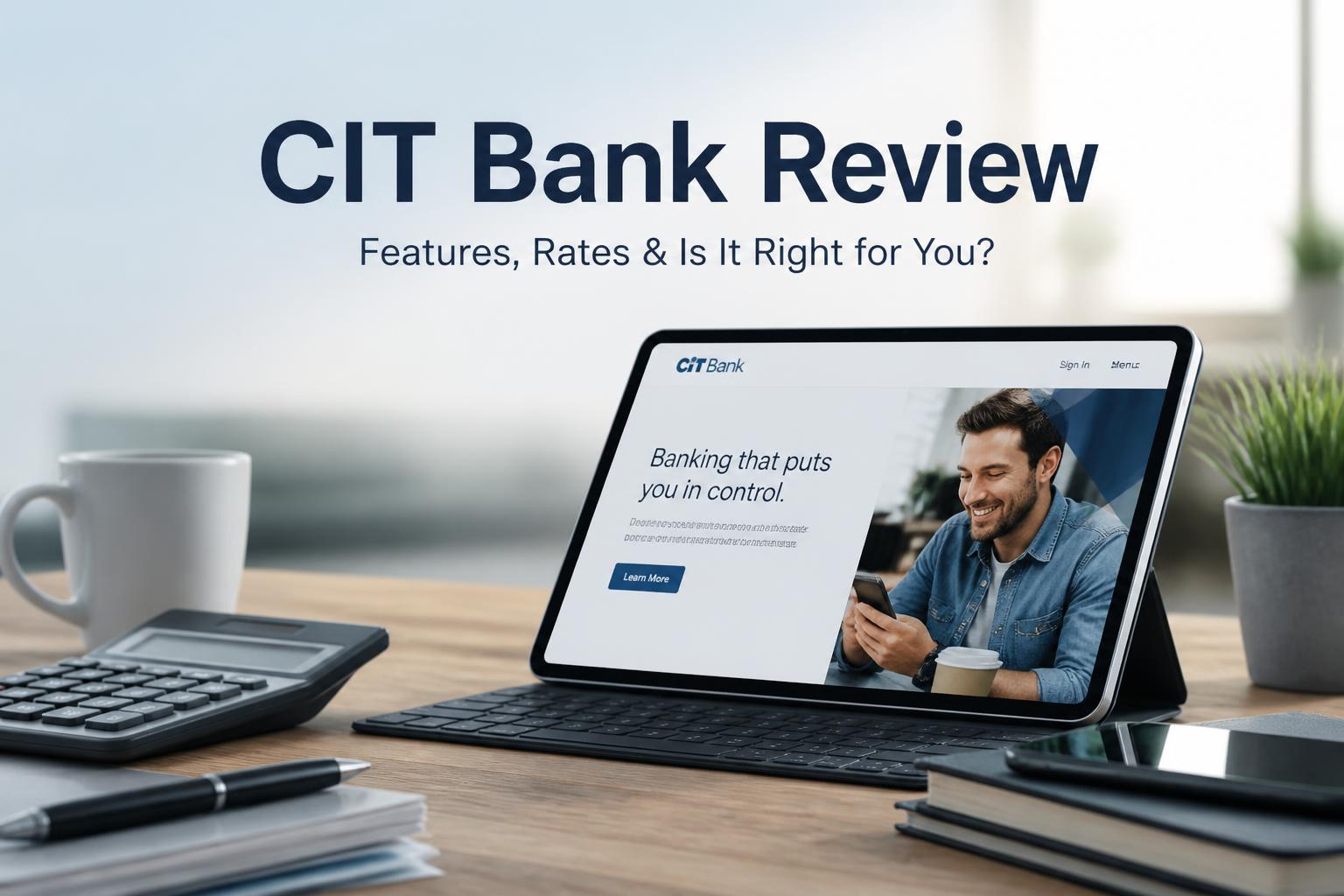
If you’ve been looking at high-yield savings accounts in 2026, CIT Bank probably came up early. It shows up a lot because the rates are solid, fees are usually low, and the setup is mostly straightforward.
The real question is simpler: does it actually help your savings grow in a way that makes sense for you, or does the structure get in the way?
This review walks through how it works so you can decide if it fits your setup or if another option makes more sense.
—
Table of contents
- What CIT Bank is
- Savings products
- Interest rates
- Fees
- Features in 2026
- Pros and cons
- Who it suits
- How to open an account
- Real-world use
- Alternatives
- Final thoughts
- FAQ
—
What CIT bank is
CIT Bank is an online-only bank owned by First Citizens Bank. It mainly focuses on savings products rather than offering a full range of banking services.
Because it doesn’t run physical branches, its costs are lower. That’s part of why it can offer higher interest rates than many traditional banks.
In 2026, it sits in the same general space as other online banks competing on interest rates and simple digital access rather than extra features.
—
CIT bank savings products
CIT doesn’t really use a one-size-fits-all account. It splits savings into a few options.
Platinum savings
This is the main high-yield account.
- Tiered interest rates
- Better returns with higher balances
- Designed for larger savers
Savings connect
A simpler option for everyday savers.
- Lower minimum requirements
- Slightly lower rates than Platinum
- Easier starting point
Money market accounts
These sit somewhere between checking and savings.
- Flexible withdrawals
- Different rate structure
- Limited transaction features

The main thing to understand is that your balance affects what you actually earn. Higher balances tend to unlock better rates.
—
Interest rates
Interest rates are where CIT Bank gets most of its attention.
It usually lands in the upper range compared to traditional banks, but the actual return depends on which product you use and how much you keep in the account.
In 2026, a few patterns stand out:
- Rates are generally competitive, but not always the highest available
- Larger balances tend to earn more
- Smaller accounts may not see standout returns compared to some fintech savings apps
Compared to brick-and-mortar banks, it’s still clearly better. Compared to aggressive promotional offers from newer apps, it’s more moderate and steady.
—
Fees
Fees are fairly simple, which is one of the more practical parts of the platform.
Monthly fees
Most savings accounts don’t charge monthly maintenance fees, though some require minimum balances depending on the product.
Transfers
Standard transfers are usually free. Limits on withdrawals can apply depending on account type.
What to watch
There isn’t a long list of surprise charges, but the account rules matter. Picking the wrong tier for your balance can reduce your returns more than any fee would.
—
Features in 2026
CIT Bank keeps things focused rather than trying to be an all-in-one financial app.
What it offers:
- Online account management
- Mobile access
- Automated transfers
- Tier-based savings structure
What it doesn’t focus on:
- Budgeting tools
- Investing features
- Full financial dashboard ecosystem
So it’s mainly a place to store cash and earn interest, not manage your entire financial life.
—
Pros and cons
Pros
- Good interest potential for higher balances
- Simple product structure
- Low fee environment
- Backed by a large, established bank
- Works well for passive savings
Cons
- Tiered rates can feel confusing at first
- Not always the top APY in every situation
- Limited features outside savings
- Smaller balances may not benefit as much
—
Who it suits
CIT Bank tends to work best for people who:
- Keep a meaningful amount in savings
- Want steady interest without active management
- Prefer a simple setup over feature-heavy apps
- Don’t need investing or budgeting tools in the same place
It’s less useful if you:
- Keep small balances only
- Chase the highest promotional rates constantly
- Prefer an all-in-one financial app experience
It feels more like a stable storage account than a growth-optimized app.
—
How to open an account
Opening an account is fairly quick.
- Pick an account type
- Enter personal information
- Link another bank account
- Add your first deposit
- Set up automatic transfers if needed
Most people can finish in a short session. The main decision is choosing the right account based on your balance.
—
Real-world use
Here’s how people typically use CIT Bank in practice.
Emergency savings
A common use. Money stays accessible and still earns interest.
Short-term goals
Useful for things like travel, car savings, or planned purchases.
Larger cash reserves
This is where tiered rates can start to matter more.
Where it’s less helpful:
- Day-to-day spending
- Active money movement
- Investment-focused strategies
—
Alternatives
CIT Bank isn’t the only option. Depending on what you want, you might compare it with:
- High-yield fintech apps with promotional rates
- Online banks with flat-rate savings accounts
- Cash management accounts tied to investing platforms
The main trade-off usually comes down to simplicity versus chasing higher short-term yields.
—
Final thoughts
CIT Bank in 2026 is steady and structured. It’s not trying to compete on flash or constant promotions.
It works best when you match your balance to the right account type and leave savings alone to grow over time.
For people who want something simple and reliable, it fits well. For people who want to constantly optimize every percentage point, it may feel a bit limited.
—
FAQ
Is CIT Bank safe?
Yes. Deposits are covered by FDIC insurance up to standard limits.
Does it charge monthly fees?
Most savings accounts do not have monthly fees, depending on conditions and account type.
Is it better than other high-yield savings accounts?
It depends on your balance and what you want. Some apps offer higher promotional rates, but CIT focuses more on consistency.
Can I withdraw money anytime?
Yes, but transfer timing depends on the external bank and standard processing rules.
What’s the main advantage?
The tiered structure, which can reward higher balances more than flat-rate accounts.
—
Structured data (JSON-LD)
“`json
{
“@context”: “https://schema.org”,
“@type”: “BlogPosting”,
“headline”: “CIT Bank Review 2026: Is It Worth It?”,
“description”: “Full CIT Bank review covering APY, fees, features, pros, cons, and whether it’s the right high-yield savings option in 2026.”,
“image”: [
“images/featured.png”,
“images/image_2.png”
],
“author”: {
“@type”: “Organization”,
“name”: “MoneySavingWay”
},
“datePublished”: “2026-06-21”
}
—
Internal linking plan
- Link this page from:
– High-yield savings comparisons
– Emergency fund guides
– Cash savings strategy articles
- This page links out to:
– Other bank reviews (Ally, SoFi, Capital One)
– Savings strategy content
– APY comparison pages
—
Publishing checklist
- [ ] Title and meta description set
- [ ] URL slug configured
- [ ] Structured data added
- [ ] Featured image set
- [ ] Images checked with alt text
- [ ] Table of contents links working
- [ ] Internal links added
- [ ] Mobile layout checked
- [ ] Rates updated for accuracy