Emergency Funds in 2026 (Ranked Overview)

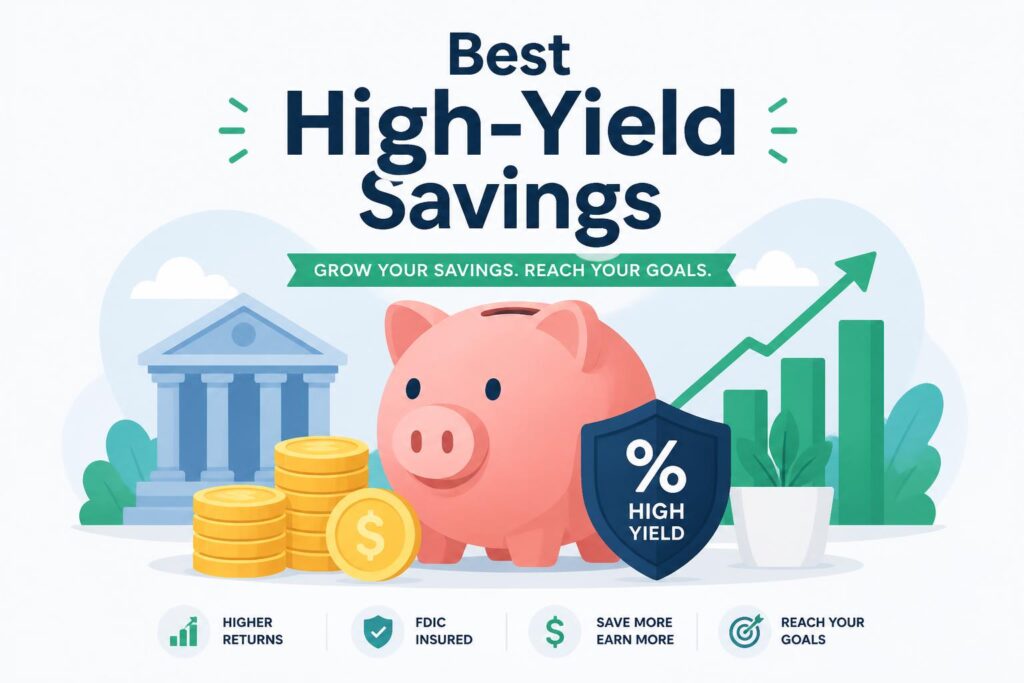
An emergency fund is simply money set aside for unexpected costs like job loss, medical bills, repairs, or urgent travel. The real question in 2026 isn’t whether you need one, but where to keep it so it stays safe, easy to access, and still earns some interest.
We looked at common places people store emergency savings today, focusing on safety, access, yield, fees, and overall usability. That includes high-yield savings accounts and cash management platforms such as Wealthfront and Ally.
Below is a breakdown of the main options.
—
Overview: Emergency Fund Options in 2026
Tool Main Strength Yield Insurance Wealthfront Cash Account Automated cash management Variable FDIC (partner banks) Ally High-Yield Savings Simple online banking Variable FDIC Marcus by Goldman Sachs Stable savings option Variable FDIC SoFi Savings Banking + financial tools Variable FDIC Betterment Cash Reserve Works well with investing Variable FDIC Fidelity Cash Management Investor-focused cash account Variable FDIC / SIPC Vanguard Cash Plus Conservative structure Variable FDIC
How these options were compared
The focus was on:
- Whether deposits are insured (FDIC or SIPC where applicable)
- How quickly you can withdraw money
- How stable the interest rates tend to be
- Fees or minimum balance requirements
- Ease of everyday use
- Whether the account fits into a wider financial setup
—
1. Wealthfront Cash Account
Wealthfront is designed for people who want their cash handled automatically. It spreads deposits across partner banks to increase FDIC coverage while keeping the money accessible.
What it offers
- Automatic allocation across insured banks
- Daily interest on balances
- Fast transfers to external accounts
- No account fees or minimum balance
- Basic financial planning tools
Cost
| Plan | Fee |
|---|---|
| Personal account | Free |
| Optional advisory features | 0.25% |
What stands out
- Little day-to-day management required
- Easy access to funds when needed
- Fits well if you prefer automation
Drawbacks
- Not a traditional single-bank account
- Interest rate changes with market conditions
—
2. Ally High-Yield Savings
Ally is one of the most straightforward online savings options. It focuses on simplicity rather than extra features.
What it offers
- 24/7 online access
- Goal “buckets” for organizing savings
- No monthly fees
- Competitive savings rates
- Functional mobile app
Cost
| Plan | Fee |
|---|---|
| Savings account | Free |
Strengths
- Easy to understand and use
- No fees or minimums
- Long-standing reputation in online banking
Limitations
- No physical branches
- Rates are good but not always the highest
—
3. Marcus by Goldman Sachs
Marcus is Goldman Sachs’ retail savings product. It’s built around simplicity and institutional backing.
What it offers
- High-yield savings account
- No fees or minimums
- Simple transfers
- Backed by a large global bank
Strengths
- Strong institutional trust
- Straightforward account structure
- Consistent product focus
Limitations
- Few additional features
- No automation tools
—
4. SoFi Savings
SoFi combines banking, saving, and investing in one platform.
What it offers
- Savings and checking in one app
- Early direct deposit access
- Automated savings tools
- Investment features
Strengths
- All-in-one setup
- Fast transfers and mobile experience
- Useful automation features
Limitations
- Some benefits depend on using multiple SoFi services
- Rates may vary based on eligibility
—
5. Betterment Cash Reserve
Betterment is aimed at users already comfortable with automated investing.
What it offers
- Automated cash allocation
- Integration with investment accounts
- Goal-based saving setup
Strengths
- Works smoothly with investing portfolios
- Useful automation features
- Good for structured financial planning
Limitations
- Less intuitive if you only want a simple savings account
- Best features tied to investing usage
—
6. Fidelity Cash Management
This is a hybrid account that blends brokerage and cash functions.
What it offers
- FDIC-insured sweep structure
- Debit card access
- Integration with investment accounts
- ATM fee reimbursements
Strengths
- Strong for existing Fidelity users
- Flexible access to cash
- Trusted brokerage infrastructure
Limitations
- More complex than a basic savings account
- Built primarily for investors
—
7. Vanguard Cash Plus
Vanguard keeps things very conservative and minimal.
What it offers
- Cash swept into insured banks
- Simple account structure
- Low-cost approach
Strengths
- Focus on safety and capital preservation
- Very simple setup
- Backed by a well-known investment firm
Limitations
- Few features
- Not designed for flexibility or automation
—
Side-by-side comparison
Feature Wealthfront Ally Marcus SoFi Betterment Fidelity Vanguard Fees None None None None None None None Automation High Low Low Medium High Medium Low Investing link Yes No No Yes Yes Yes Limited Ease of use High Very high High High Medium Medium Medium Yield potential Market-based Market-based Market-based Market-based Market-based Market-based Market-based
Choosing a place for your emergency fund
A simple way to think about it:
- Want something hands-off → Wealthfront
- Want simple banking with no friction → Ally
- Want a large-bank feel → Marcus
- Want everything in one app → SoFi
- Already investing actively → Betterment or Fidelity
- Want maximum simplicity and caution → Vanguard
Across all options, the priority stays the same: your emergency fund should be easy to access and protected. Return matters, but it comes after safety and liquidity.
—
FAQ
What is a common emergency fund size? Most people aim for 3–6 months of essential expenses.
Are these accounts safe? Yes, as long as deposits are within FDIC or SIPC insurance limits.
Can I lose money in a high-yield savings account? Not under normal conditions if it’s properly insured.
Where should I avoid keeping emergency money? Assets that fluctuate in value, like stocks or crypto, are not suitable.
Is it okay to use more than one account? Yes. Some people split funds across two accounts for extra backup access.
—
Final thoughts
Wealthfront tends to be the most flexible option if you want automation without thinking about it. Ally is still one of the easiest starting points if you prefer something simple and familiar.
The main point is less about finding a perfect account and more about actually setting the money aside somewhere safe and accessible.
—
Optional reference ideas
- Charts showing savings growth over time
- Mobile app screenshots for comparison
- Simple breakdown of FDIC insurance coverage
- Flow diagram of automated cash allocation systems
Review cycle
- Check rates every few months
- Revisit account fees and features twice a year
- Adjust if your banking setup changes