High-Yield Savings Accounts in 2026: A Practical Comparison

Introduction
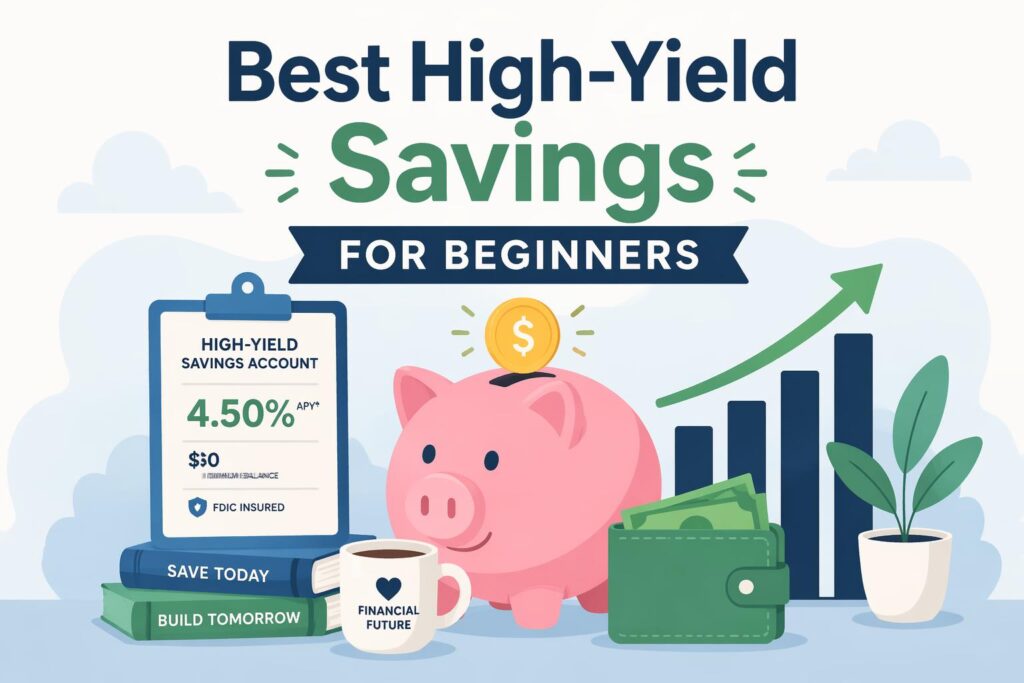
Most savings accounts at traditional banks still pay very little interest. Online banks and fintech platforms have changed that, offering noticeably higher rates and fewer fees.
This overview looks at eight commonly used high-yield savings options in 2026. The focus is on interest rates, fees, access to funds, and how the accounts are structured. Some lean more toward investing tools, others stay closer to traditional banking.
The goal here isn’t to declare a winner, but to make it easier to see what each account actually offers.
—
Overview at a Glance
Account Best suited for Approx. APY Fees Ally Bank Savings General everyday savings ~4.20% None SoFi Savings Banking with higher interest Up to ~4.60% None Marcus by Goldman Sachs Simple savings setup ~4.40% None Capital One 360 Mixed online + branch users ~4.25% None Discover Online Savings First savings account ~4.20% None American Express Savings Brand reliability ~4.30% None Wealthfront Cash Account Automated cash management ~4.75% None CIT Bank Platinum Savings Larger balances ~4.60% None
How These Accounts Were Reviewed
Each account was looked at using a few basic factors:
- Interest rate relative to the market
- Fees and balance requirements
- Ease of moving money in and out
- Stability of the institution
- Quality of the app or online tools
No single factor was weighted above the rest. Some accounts are strong on simplicity, others on features or rate.
—
Wealthfront Cash Account — Automated Cash Management
Wealthfront’s Cash Account sits somewhere between savings and a cash management system. Money is distributed across partner banks to extend FDIC coverage beyond the usual single-bank limit structure.
It’s designed to run with minimal input from the user. Transfers, interest, and allocation are handled automatically.
Key features
- Automated allocation across partner banks
- FDIC insurance through a multi-bank structure
- Instant transfers to investing accounts
- No minimum balance
Costs
- No account fees
- No transfer fees
What stands out
The account is built for people who want a hands-off setup. It behaves more like a system than a traditional savings account.Limitations
- No physical branches
- Requires comfort with app-based banking
—
SoFi Savings — Banking and Savings Combined
SoFi combines a checking and savings structure in one platform. Interest rates can increase when direct deposit is enabled, though the exact rate depends on account activity.
It’s part of a broader financial ecosystem that includes loans and investing tools.
Key features
- Higher APY with qualifying direct deposit
- Integrated checking and savings
- Early paycheck access
- Budgeting tools
Costs
- No monthly fees
What stands out
It functions as a full banking app rather than just a savings account.Limitations
- Highest rates depend on conditions
- Limited in-person support
—
Marcus by Goldman Sachs — Straightforward Savings
Marcus keeps things simple. There are no tiers, bonuses, or conditions tied to account behavior.
Interest accrues at a steady rate and the structure is easy to understand.
Key features
- Flat interest rate
- No fees or minimums
- Simple transfer system
- Backed by Goldman Sachs
Costs
- No maintenance fees
What stands out
There’s little to manage or optimize.Limitations
- Few additional features
- No physical locations
—
Ally Bank Savings — Balanced Online Banking
Ally is often used as a standard online savings account with a mix of usability and features.
It includes tools for organizing savings goals and separating funds into categories.
Key features
- Goal-based savings tools
- Customer support available 24/7
- Competitive interest rate
- No overdraft fees
Costs
- No monthly fees
- No minimum deposit
What stands out
It balances usability and structure without feeling complex.Limitations
- Rates may trail newer fintech platforms slightly
—
Capital One 360 Performance Savings — Online with Branch Access
Capital One combines digital banking with a physical branch network, which sets it apart from most online-only banks.
Key features
- Online account with branch access
- Integrated checking and savings
- Mobile deposit features
- Easy internal transfers
Costs
- No monthly fees
What stands out
It suits users who still want occasional in-person banking.Limitations
- Interest rates slightly lower than fintech-focused accounts
—
Discover Online Savings — Simple Entry Option
Discover’s savings account is often chosen by people opening their first high-yield account.
It avoids complexity and focuses on basic savings functions.
Key features
- Easy setup process
- 24/7 customer service
- No minimum deposit
- Stable interest rate
Costs
- No fees
What stands out
It’s easy to open and maintain without much learning curve.Limitations
- Limited advanced features
—
American Express High Yield Savings — Trust-Focused Option
American Express applies its established brand to savings accounts, focusing on stability and ease of use.
Key features
- Consistent interest rates
- Strong customer support
- Simple interface
- Reliable transfers
Costs
- No monthly fees
What stands out
It’s often chosen for brand familiarity and perceived stability.Limitations
- Fewer tools or customization options
—
CIT Bank Platinum Savings — Designed for Larger Balances
CIT Bank uses a tiered structure where higher balances may qualify for higher interest rates.
Key features
- Tiered interest system
- Online-only account
- Higher rates at larger balances
Costs
- No monthly fees
What stands out
It may be more effective for people holding larger amounts in cash.Limitations
- Lower returns at smaller balances
—
Comparison Notes
- Wealthfront and SoFi tend to sit at the higher end of rate offerings, depending on conditions
- Traditional banks like Capital One and Ally focus more on balance and usability
- Marcus and Discover prioritize simplicity
- CIT Bank rewards larger deposits rather than small balances
—
Choosing Between Them
A simple way to narrow it down:
- If automation matters more than anything else, Wealthfront is often used
- If you want banking and savings in one place, SoFi is a common choice
- If you prefer something simple and predictable, Marcus fits that style
- If you want a traditional structure with solid tools, Ally is a middle ground
- If branch access still matters, Capital One remains relevant
- If you’re just starting out, Discover is easy to begin with
- If trust in an established brand matters most, American Express is often selected
- If you keep larger cash balances, CIT Bank may offer better returns
—
Final Note
Interest rates change frequently, sometimes without much notice. The difference between accounts is often smaller in practice than it looks on paper, especially once conditions like direct deposit requirements are factored in.
The right choice usually depends less on the headline rate and more on how you plan to use the account day to day.