Emergency fund options for small budgets in 2026
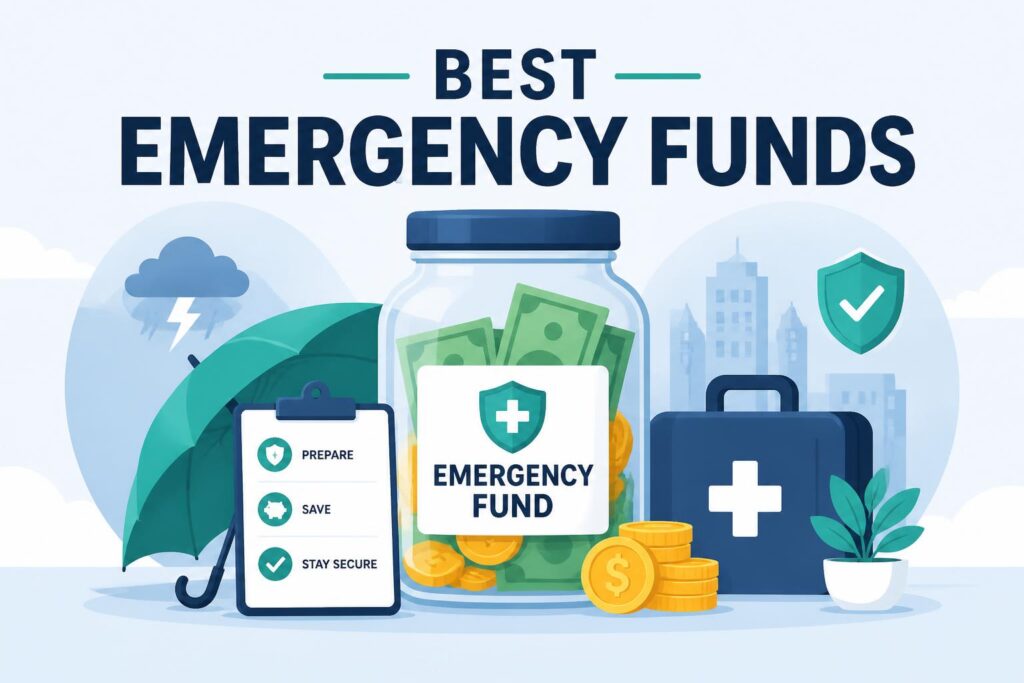
Building an emergency fund isn’t really about finding the perfect place to store money. It’s more about getting started with what you can actually stick to, even if that’s just a few dollars a week.
Prices have gone up, interest rates have shifted around, and traditional savings accounts don’t stretch as far as they used to. Because of that, people now mix a few different tools depending on how much access they want, how safe they want things to be, and how much effort they’re willing to put in.
Below are some of the common options people use right now for emergency savings, especially if you’re starting small.
—
A quick comparison of common options
Option What it’s usually used for Yield (rough) Access speed Ally Savings Simple starter savings ~3–4% 1–3 days Capital One 360 Savings Everyday banking feel ~3–4% Fast inside bank SoFi Savings Automated saving tools ~4% Fast Marcus (Goldman Sachs) Stable, no-frills saving ~3–4% 1–3 days Wealthfront Cash Account Automated cash management ~4–5% Fast Treasury Bills Very low-risk savings ~4–5% (varies) Locked until maturity Fidelity Money Market Brokerage cash holding ~4–5% Same/next day Credit Union savings Local banking option ~2–4% Depends on institution
What I looked at when comparing them
A few practical things matter more than branding:
- how quickly you can get your money in an emergency
- whether deposits are insured or government-backed
- realistic interest rates (not marketing numbers)
- any fees that quietly reduce savings
- how easy it is to set up and forget
- whether small balances are actually usable
—
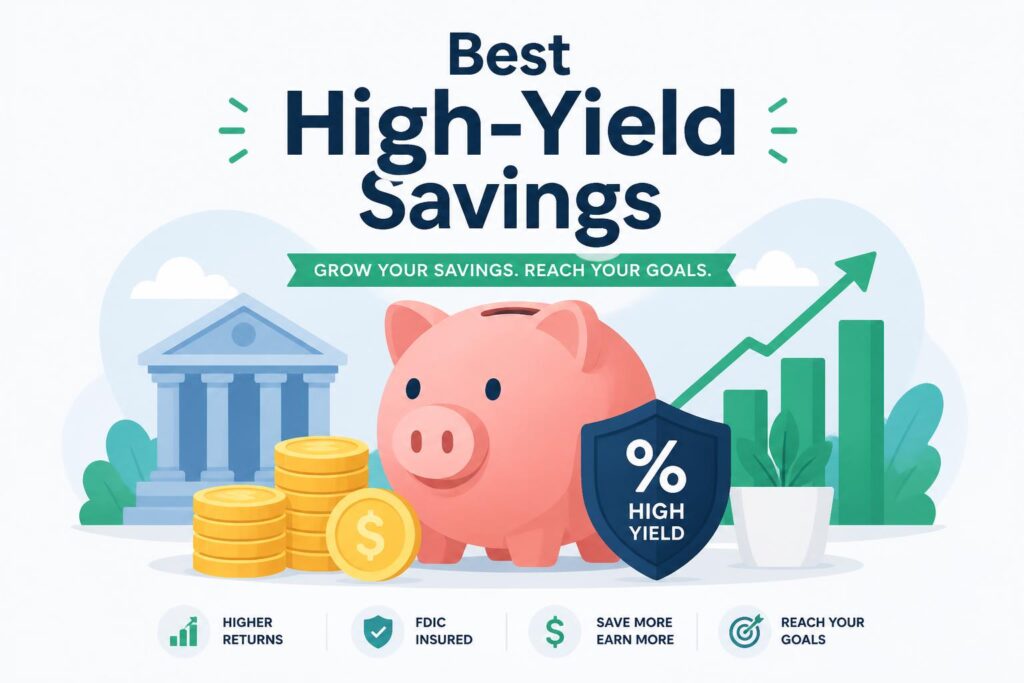
Ally High-Yield Savings
This is often where people end up when they just want something simple that works.
It’s an online savings account with no maintenance fees and a straightforward setup. Nothing complicated, no branches, just a clean place to park money and let it grow slowly.
What stands out is the automation. You can split savings into buckets and set small recurring transfers, which helps if you’re building the habit from scratch.
Best for: people starting their first emergency fund and wanting something low-maintenance.
—
Capital One 360 Savings
This one feels closer to a traditional bank but without much of the friction.
There are no fees or minimums, and the mobile app is solid. If you already use Capital One for other accounts, moving money around is especially smooth.
It doesn’t try to do too much, which is kind of the point.
Best for: people who want something familiar but still modern.
—
SoFi Savings
SoFi leans more into automation and incentives than most banks.
It often offers higher rates when you set up direct deposit, and it includes features that automatically move money into savings without much thinking.
It can feel a bit more “app-based finance ecosystem” than a normal bank account.
Best for: people who want structure and automation to do most of the work.
—
Marcus by Goldman Sachs
Marcus is very stripped down. No branches, no extras, just a savings account with a steady interest rate and a clean interface.
It doesn’t really try to compete on features. It competes on stability and simplicity.
Transfers can take a little longer compared to fintech apps, but that’s part of its conservative design.
Best for: people who prefer predictable, low-distraction banking.
—
Wealthfront Cash Account
This is closer to a hybrid between a savings account and a cash management system.
It automatically moves funds between partner banks and tries to optimize returns in the background. The user experience is smooth, and it’s built for people who don’t want to think too much about allocation.
It also offers relatively quick access through a debit card setup.
Best for: people who want automation and slightly higher yields without micromanaging.
—
U.S. Treasury Bills
Treasury bills are different from savings accounts. You’re essentially lending money to the government for a fixed period.
The main appeal is safety. The tradeoff is access—you don’t just withdraw whenever you want. You either wait for maturity or sell early.
They’re often used as a place for part of an emergency fund rather than the entire thing.
Best for: people who care most about safety and can tolerate limited access.
—
Fidelity Money Market Funds
These are cash-like investment funds held inside a brokerage account.
They tend to offer competitive yields and can be accessed fairly quickly, sometimes within the same day. But they are not bank accounts, so they don’t have FDIC insurance, even though they’re generally considered low risk.
They sit in a middle space between savings accounts and investments.
Best for: people comfortable using a brokerage account for cash storage.
—
Credit Union savings accounts
Credit unions vary a lot depending on where you are. Some offer decent rates and very personal service, others are more basic.
They can be a good option if you prefer local banking and don’t mind fewer digital features.
Best for: people who like community-based banking or already have a credit union nearby.
—
How people usually choose
There isn’t really a universal “best” option. It depends on how you plan to use the money.
- If you’re just getting started, simple high-yield savings accounts tend to be the easiest entry point.
- If you like automation, fintech tools can help you save without thinking about it too much.
- If safety is the top concern, Treasury bills often come into the picture.
- If you already use a brokerage, money market funds can make sense as part of a broader setup.
Most people don’t pick just one. They end up mixing two: one for quick access, and one for slightly better returns.
—
A few common questions
Where should a small emergency fund go first? Usually a basic high-yield savings account. It keeps things simple while you’re still building the habit.
What’s the safest option? Treasury bills and insured bank accounts are generally considered the lowest-risk places.
Can you lose money in these accounts? Bank savings accounts and T-bills are very low risk. Money market funds are also conservative but not insured the same way banks are.
How much should you start with? Even a few hundred dollars is fine. The more important part is consistency over time.
—
Closing thought
The exact account matters less than getting something set up and adding to it regularly.
A lot of people overthink this step and end up not starting at all. In practice, a simple account you actually use is better than a “perfect” setup you never touch.