AI Image Generators in 2026: The Honest Pros and Cons Nobody Tells You
Meta description: What is AI image generation? We tested every major tool in 2026. Here’s what actually works, the hidden costs, and which generator fits your workflow.
Target keyword: what is ai image Secondary keywords: AI image generator, best AI image tools 2026, Nano Banana, Midjourney vs ChatGPT
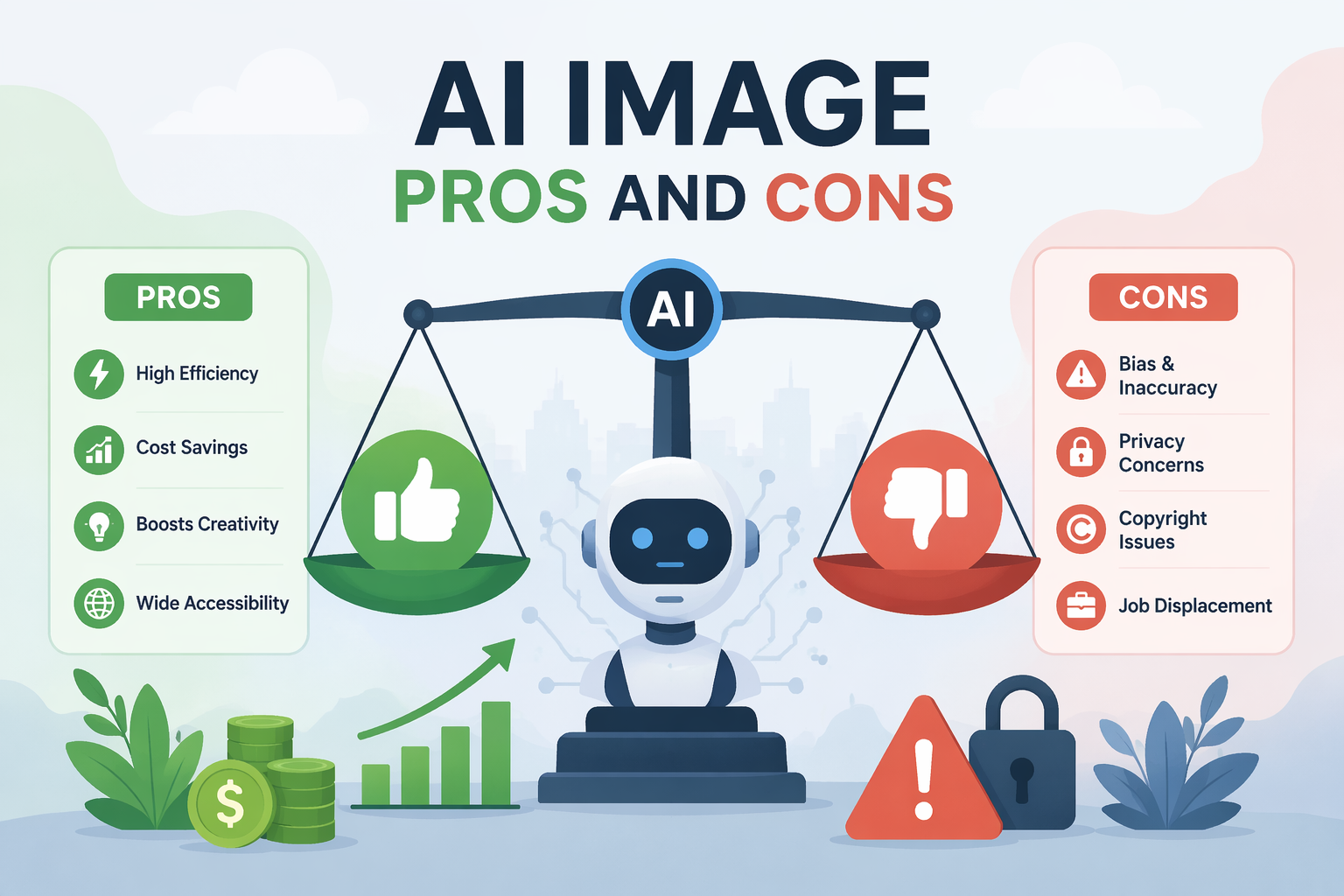
AI image generation stopped being a novelty somewhere around late 2025. By 2026, designers use it like Photoshop, marketers build it into their workflows, and casual users expect their phones to generate visuals on command.
But the gap between “generates an image” and “generates the right image” got wider, not narrower. You can burn $200 testing tools that all claim to be the best and still end up with results that miss. The question in 2026 isn’t “what is AI image generation,” it’s “which tool solves my problem without wasting my time or budget?”
This guide breaks down what AI image generation does in 2026, the specific pros and cons of each major tool based on real testing, and how to pick the right one for your use case.
Table of Contents
- What AI Image Generation Actually Means in 2026
- The Four Tools Professionals Actually Use Every Day
- Nano Banana Pro: Unmatched Logic, Brutal Learning Curve
- Midjourney: The Aesthetic King That Can’t Follow Instructions
- ChatGPT: Conversational Magic, Rarely Great Output
- The Mid-Tier Contenders: Flux 2, Ideogram, and the Rest
- The Real Costs Nobody Mentions
- How to Pick Your Tool (Decision Framework)
- Common Mistakes That Waste Money
- FAQ
—
What AI image generation actually means in 2026
AI image generation turns a text description (a “prompt”) into a visual output using machine learning models trained on millions of images. You describe what you want, the model interprets it, and you get a render. Sometimes in seconds, sometimes after a dozen refinements.
The technology hasn’t fundamentally changed since 2024, but three things shifted in 2026:
- Quality plateaued. Most tools hit “good enough” by late 2025. The race now is specificity: how well does the model understand exactly what you meant?
- Speed became table stakes. Nano Banana renders high-fidelity images in under 5 seconds. Flux 2 Pro outputs 4-megabyte resolution files almost as fast. If your tool takes 30 seconds per image, you’re already behind.
- Workflow integration matters more than raw output. A perfect image that takes 10 prompts to get right is less useful than a “pretty good” image that appears in the design tool you’re already using.
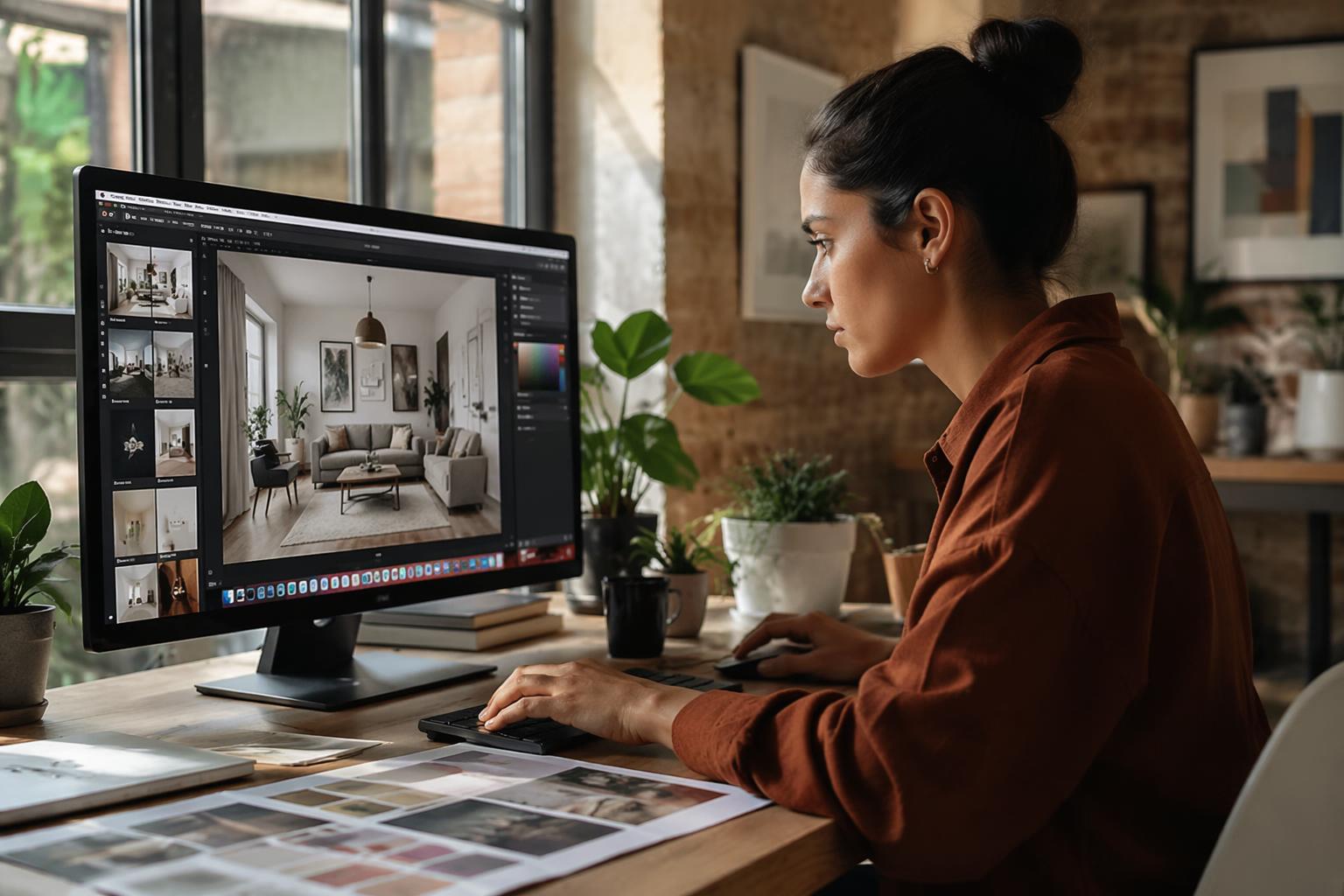
Think of AI image generation in 2026 as a spectrum. On one end: tools that prioritize aesthetics and cinematic style (Midjourney). On the other: tools built for prompt adherence and logical accuracy (Nano Banana Pro). In the middle: conversational tools that feel collaborative but sacrifice precision (ChatGPT).
Your job isn’t to pick “the best.” Pick the one that matches where you fall on that spectrum.
—
The four tools professionals actually use every day
2026 testing data shows most AI image generators are good enough, but there are four that professionals use every day (source: The Best AI Image Generator for 2026).
The tools that matter:
Tool Overall Score What It’s Best At Monthly Cost Nano Banana Pro 9.50/10 Prompt adherence, data synthesis, realism Part of Google ecosystem ChatGPT 5.2 8.55/10 Conversational refinement, natural language $20/mo Midjourney 7.0 8.62/10 Cinematic style, moodboards, concept art $10/mo Flux 2 Pro 8.78/10 High-resolution outputs, detailed textures Varies by platform
The “best” tool depends entirely on your workflow. If you’re creating moodboards for a client pitch, Midjourney wins on pure aesthetic. If you need an image that matches your prompt exactly (down to the number of objects, spatial relationships, and lighting logic), Nano Banana Pro is the only one that consistently delivers.
And if you just want to describe what you need in plain English and iterate through conversation? ChatGPT feels like collaborating with a creative partner, even if the final output rarely hits “great.”
—
Nano Banana Pro: unmatched logic, brutal learning curve
Score: 9.50/10 (source: The Best AI Image Tools for 2026, Compared and Evaluated)
Nano Banana Pro (part of Google’s Gemini 3 ecosystem) is the best all-rounder in 2026. It excels at three things no other tool can match consistently:
- Prompt adherence. You ask for five objects in a specific spatial arrangement, you get five objects in that arrangement. Midjourney will give you six. ChatGPT will give you four and make them look dreamy. Nano Banana gives you five.
- Data synthesis. It understands relationships between objects, realistic physics, and logical consistency. Ask for “a glass of water on a wooden table, early morning light through a window on the left” and it nails the shadows, the refraction, the warmth of the light.
- Speed. Nano Banana renders high-quality images fast (source: The Best AI Image Generators for 2026).
Pros:
- Consistently accurate prompt interpretation
- Fast render times (under 5 seconds for most images)
- Integrated into Google Workspace if you’re already in that ecosystem
- Handles complex, multi-object scenes better than competitors
Cons:
- Steep learning curve. It rewards precise prompting. Vague descriptions get mediocre results.
- Aesthetic ceiling. It’s realistic and accurate, but it doesn’t have Midjourney’s “wow factor.” If you need cinematic drama, you’ll be disappointed.
- Less forgiving. ChatGPT lets you describe something badly and still guesses what you meant. Nano Banana doesn’t guess. It renders what you said, even if you said it wrong.
Use it if you need accuracy more than artistry. Product mockups, data visualizations, technical illustrations, instructional content, or any scenario where “close enough” isn’t good enough.
Skip it if you’re creating concept art, mood boards, or anything where vibe matters more than precision. You’ll spend more time fighting it than you would in Midjourney.
—
Midjourney: the aesthetic king that can’t follow instructions
Score: 8.62/10 (source: The Best AI Image Tools for 2026, Compared and Evaluated)
Midjourney is still the king of style in 2026. It generates incredibly cinematic images (source: The Best AI Image Tools for 2026, Compared and Evaluated). If you need a moodboard, a pitch deck visual, or concept art for a client, Midjourney delivers images that feel like they belong in a film or high-end magazine.
Version 7.0 added two major features: the ability to create images directly on its site (no more Discord-only workflow) and the ability to animate images (source: The Best AI Image Generators for 2026).
Pros:
- Unmatched aesthetic quality. Midjourney’s outputs have a cinematic polish that no other tool can match.
- Strong for concept art and creative exploration. Designers use it to generate dozens of variations quickly.
- Active community. The Midjourney Discord is still the best place to learn advanced prompting techniques.
- New animation feature makes it more versatile for motion design and video pre-vis.
Cons:
- Terrible at following instructions. Ask for “three red apples on a table” and you might get four, or two, or a bowl of fruit instead.
- Inconsistent results. The same prompt can give wildly different outputs depending on random seed and mood.
- Not great for text rendering. If your image needs legible text, use something else.
- Pricing creep. At $10/mo for the basic plan, it’s competitive, but serious users end up on higher tiers quickly.
Use it if you’re a designer, art director, or creative professional who needs high-impact visuals and can iterate. Midjourney rewards exploration. If you’re willing to generate 20 images to find the one perfect one, you’ll love it.
Skip it if you need precision, text-heavy images, or consistent output across prompts. It’s an aesthetic tool, not a logic tool.
—
ChatGPT: conversational magic, rarely great output
Score: 8.55/10 (source: The Best AI Image Tools for 2026, Compared and Evaluated)
ChatGPT’s image generator (DALL·E 3 integrated into ChatGPT 5.2) feels like collaborating with a creative partner (source: The Best AI Image Generators for 2026). You describe what you want in natural language, and it interprets, clarifies, and refines through conversation.
The workflow is the product. You can say “make the lighting warmer” or “move the subject to the left” and it understands you without needing to rewrite the entire prompt. For non-designers, this is liberating.
Pros:
- Natural language refinement. You can iterate using plain English: “make it more vintage,” “add a plant in the background,” “less dramatic.”
- Low barrier to entry. No need to learn prompt syntax or formatting tricks.
- Integrated into ChatGPT. If you’re already using it for writing, research, or coding, image generation is just another tool in the same interface.
- Fast and responsive. Renders in 5 to 10 seconds.
Cons:
- Rarely great, often good. ChatGPT is good, but rarely great (source: The Best AI Image Generator for 2026). The outputs are polished but safe. They lack the drama of Midjourney and the precision of Nano Banana.
- Bland aesthetic. Everything looks like a well-lit stock photo. It’s professional, but it’s not striking.
- Inconsistent style. Hard to maintain a visual style across multiple images unless you copy-paste the same detailed prompt every time.
Use it if you’re a writer, marketer, or casual user who needs “good enough” images quickly and doesn’t want to learn a new tool. ChatGPT’s strength is accessibility. It’s the best tool for people who don’t think of themselves as designers.
Skip it if you need standout visuals, consistent branding, or pixel-perfect accuracy.
—
The mid-tier contenders: Flux 2, Ideogram, and the rest
Below the top four, there’s a crowded middle tier of tools that excel in specific use cases but don’t make the daily-driver cut.
Flux 2 Pro (Score: 8.78/10) Flux 2 re-entered the conversation in 2026 as a top AI image generator (source: The Best AI Image Tools for 2026, Compared and Evaluated). It renders images at 4-megabyte resolution (source: Best AI Image Generators 2026 (Most Realistic)) with detailed textures and improved realism.
Best for: High-resolution print work, product photography, or any scenario where file size and detail matter.
Weakness: Slower than Nano Banana, less aesthetic than Midjourney, and less conversational than ChatGPT. It’s great at what it does, but it’s a specialist tool.
Ideogram (Score: 8.51/10) Solid middle-tier tool. Good at text rendering (better than Midjourney), decent prompt adherence, but nothing exceptional.
Best for: Social media graphics, posters, or anything that needs legible text in the image.
Imagen 4 (Score: 8.49/10) Google’s alternative to Nano Banana, built into the Workspace ecosystem. Slightly weaker on prompt adherence, but faster iteration if you’re already in Google tools.
Kling 3 Kling 3 uses a visual chain of thought for realistic lighting (source: Best AI Image Generators 2026 (Most Realistic)). It excels at understanding tension and physics in images.
Best for: Realistic lighting scenarios, product shots, or images where physical accuracy matters (shadows, reflections, material properties).
SeaArt 5.0 SeaArt 5.0 understands physics and logic for accurate image generation (source: Best AI Image Generators 2026 (Most Realistic)). It has advanced editing capabilities and can change image elements intelligently.
Best for: Post-generation editing, iterative refinement, or workflows where you need to adjust specific parts of an image without regenerating the whole thing.
—
The real costs nobody mentions
Pricing is deceptive in 2026. Monthly fees don’t tell the whole story.
ChatGPT: $20/mo Includes GPT-5.2 access, so image generation is a bonus feature. If you’re already paying for ChatGPT, the images are “free.” If you’re paying just for image generation, it’s overpriced.
Midjourney: $10/mo (Basic) Sounds cheap until you realize the Basic plan limits you to 200 images/month. Serious users burn through that in a week and upgrade to the $30 or $60 tiers.
Nano Banana Pro: Part of Google Ecosystem No standalone pricing. It’s bundled with Google Workspace or Gemini subscriptions. If you’re already in that world, it’s effectively free. If not, you’re paying for an entire ecosystem just to access one tool.
Flux 2 Pro: Varies by Platform Flux 2 is available through multiple platforms (Replicate, NightCafe, etc.), each with different pricing. Costs vary wildly depending on resolution and usage.
The hidden cost: iteration time This is the cost nobody talks about. If you spend 20 minutes refining a prompt in Midjourney to get one usable image, that’s 20 minutes you’re not billing or creating. Nano Banana gets it right faster, but it demands more upfront precision. ChatGPT is fast to iterate but rarely great on the first try.
Real cost = subscription + (time per image × your hourly rate).
A $10/mo tool that takes 15 minutes per image is more expensive than a $20/mo tool that takes 2 minutes.
—
How to pick your tool
Stop asking “which is best?” Start asking “which fits my workflow?”
You need Nano Banana Pro if:
- Accuracy matters more than aesthetics
- You’re creating product mockups, instructional content, or data visualizations
- You’re comfortable writing detailed, specific prompts
- Speed is critical and you want consistent results
You need Midjourney if:
- You’re a designer, art director, or creative professional
- You need high-impact visuals for pitches, moodboards, or concept art
- You’re willing to iterate and explore
- Style and vibe matter more than precision
You need ChatGPT if:
- You’re a marketer, writer, or casual user
- You want to describe what you need in plain English
- “Good enough” is good enough for your use case
- You’re already paying for ChatGPT and want image generation as a bonus feature
You need a specialist tool (Flux 2, Kling, SeaArt) if:
- You have a specific technical requirement (high-res, realistic lighting, text rendering)
- You’re working in a niche that rewards specialization
- You’ve already tried the top three and they don’t solve your problem
—
Common mistakes that waste money
Mistake 1: Paying for multiple tools at once You don’t need Midjourney and Nano Banana and ChatGPT. Pick one, learn it deeply, and only add a second tool when you hit a genuine limitation.
Mistake 2: Using the wrong tool for the job Midjourney for product mockups is like using a paintbrush to tighten a screw. It’ll technically work, but you’ll waste time. Match the tool to the task.
Mistake 3: Blaming the tool for bad prompts If your images consistently miss the mark, the problem might not be the tool. It might be your prompting. Nano Banana and Flux 2 reward precision. Midjourney rewards experimentation. ChatGPT rewards conversational iteration. Learn the tool’s language before you dismiss it.
Mistake 4: Ignoring workflow integration A standalone tool that forces you to download images, upload them to your design app, and manually manage versions is slower than a “worse” tool that’s already built into your workflow. Canva AI isn’t the best generator, but if you’re already designing in Canva, it’s faster than switching to Midjourney.
Mistake 5: Chasing “the best” tool There is no best. There’s only “best for X use case.” Stop chasing reviews and start testing the tool against your actual work.
—
FAQ
What is the best AI image generator in 2026? Nano Banana Pro scores highest overall (9.50/10) for prompt adherence and logical accuracy. Midjourney (8.62/10) is the aesthetic king for concept art and moodboards. ChatGPT (8.55/10) is best for conversational, low-friction workflows. The “best” tool depends entirely on your use case.
How much do AI image generators cost? ChatGPT is $20/mo (includes GPT-5.2 access). Midjourney starts at $10/mo but serious users upgrade to $30 to $60/mo. Nano Banana Pro is bundled with Google Workspace. Flux 2 pricing varies by platform. Most tools offer free trials or limited free tiers. Test before committing.
Can AI image generators create realistic photos? Yes. In 2026, tools like Nano Banana, Flux 2 Pro, and Kling 3 generate photo-realistic images with accurate lighting, physics, and textures. ChatGPT 5.2, Midjourney 7, and Firefly 5 created photo-realistic images that stood out in testing (source: The Best AI Image Generators for 2026).
Which AI image generator is best for beginners? ChatGPT. It lets you describe what you want in plain English and refine through conversation. No need to learn prompt syntax or technical formatting. It’s not the most powerful tool, but it has the lowest learning curve.
Do I need multiple AI image tools? Most people don’t. Pick one tool, learn it deeply, and only add a second when you hit a genuine limitation. Paying for three tools simultaneously is usually a waste. You’ll default to one anyway.
How do I choose between Nano Banana and Midjourney? Ask yourself: do I need accuracy or aesthetics? Nano Banana excels at prompt adherence and logical consistency. It’s the best choice for product mockups, instructional content, or anything where precision matters. Midjourney excels at cinematic style and creative exploration. It’s the best choice for concept art, moodboards, or high-impact visuals. If you’re still unsure, test both with the same prompt and see which output fits your workflow better.