Best AI SEO for Small Budgets: A Complete Guide to Affordable SEO Tools
Finding good AI SEO tools when you’re broke is hard. You look at the prices, see $500/month enterprise plans, and wonder if you’re supposed to just give up on ranking.
You’re not. The tools have gotten cheaper. Some of them are actually good now.
This guide covers which AI SEO tools work without costing more than your rent. What matters when you’re comparing them. Which ones do more than they cost. And which traps waste money you don’t have.
Understanding AI SEO: What You’re Actually Paying For
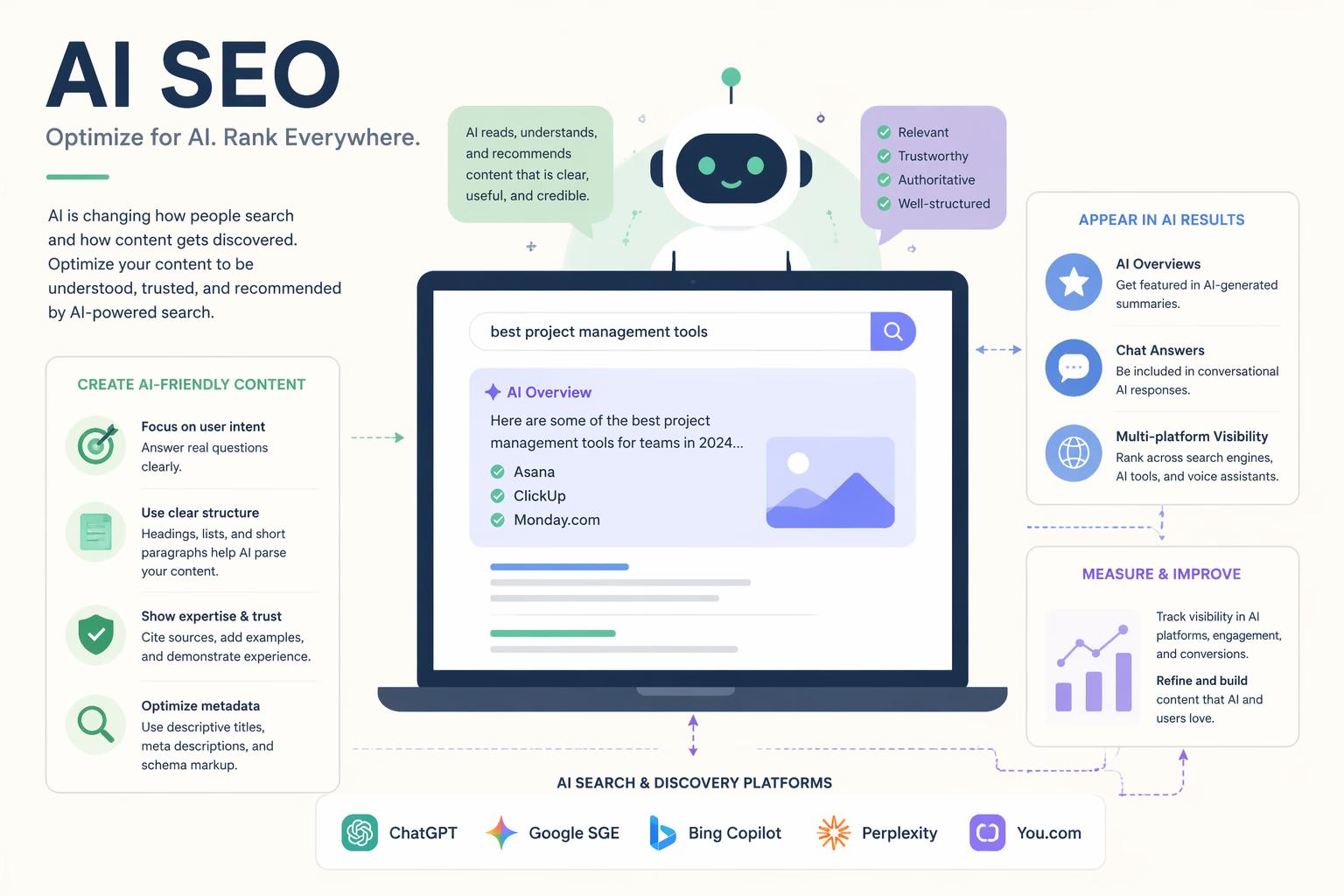
“AI SEO” mostly means the tool uses machine learning to analyze keywords, suggest content improvements, and audit your site. The good ones don’t just dump data on you. They tell you what to do next.
Real AI capabilities analyze search intent and semantic relationships between keywords. They spot patterns you’d miss because they’ve seen millions of pages.
Automation handles the boring stuff. Rank tracking, site audits, competitor monitoring. You get to focus on the work that matters.
The insights are supposed to be actionable. Not “your page speed is slow” but “compress these three images and you’ll load 2 seconds faster.”
For small budgets, you want tools that focus AI on the tasks that actually matter: finding keywords you can rank for, fixing your existing content, and catching technical problems before they tank your traffic.
The Small Budget Reality: What You Actually Need
Most small businesses don’t need half of what Semrush or Ahrefs can do. Paying for features you won’t use is the fastest way to waste money.
Here’s what actually matters:
Keyword research that finds opportunities – You need to discover keywords with decent search volume that you can actually rank for. A database with 50 million keywords doesn’t help if you can’t identify the 20 you should target this quarter.
Content optimization guidance – Suggestions as you write, not after you publish. The good tools compare your content to what’s ranking and tell you what’s missing.
Basic rank tracking – You need to know if your work is paying off. You probably don’t need daily updates for 500 keywords. Weekly tracking for 25-50 terms is usually enough.
Site health monitoring – Alerts when something breaks. Broken links, slow pages, mobile problems. You need to know when it happens, not a report on every minor issue.
Competitor intelligence – What’s working for similar sites. Their content strategy, where they’re getting backlinks.
Notice what’s not on this list: white label reporting, API access, unlimited users, historical backlink data going back 10 years. Those are nice if someone else is paying. They’re not where your money should go.
Top AI SEO Tools for Small Budgets
These are the tools that work without requiring you to max out a credit card.
Surfer SEO: Best for Content Optimization
Surfer costs $89/month and focuses on content optimization. It does that one thing really well.
The Content Editor pulls data from top ranking pages for your keyword and gives you suggestions as you write. Which related terms to include, how to structure the content, ideal word count, where to add images.
The Content Planner finds keyword clusters and gaps in your niche. So you’re not randomly publishing articles hoping something sticks.
Best for: Anyone focused on growing traffic through content.
Budget note: The Essential plan ($89/month) includes 30 articles. That’s enough for weekly publishing.
Semrush: Best All-Around Value
Semrush starts at $129.95/month. It’s more expensive but you’re getting six tools in one: keyword research, rank tracking, site auditing, content optimization, competitor analysis, and backlink monitoring.
The AI Writing Assistant works in Google Docs and WordPress. Real-time SEO recommendations, readability scores, tone checks. The Keyword Magic Tool generates thousands of keyword ideas with accurate difficulty scores.
The value is paying for one subscription instead of three or four separate tools.
Best for: Small businesses that need multiple SEO capabilities without juggling multiple subscriptions.
Budget note: The Pro plan limits you to 500 tracked keywords and 10,000 results per report. That’s rarely a problem for small businesses.
Frase: Best for Question-Based Content
Frase starts at $15/month (limited features) or $45/month for the full version. It specializes in question based content and topic research.
The tool scrapes top ranking content for your keyword, finds common questions, creates content briefs, and scores your optimization as you write. It can also generate outlines or drafts based on your target keyword.
For businesses targeting informational keywords and building authority content, Frase delivers good results at a price that’s actually affordable.
Best for: Content creators focused on answering customer questions.
Limitation: The Basic plan ($15/month) only includes 4 articles. You’ll probably need the Team plan ($45/month) for regular publishing.
NeuronWriter: Best Budget Alternative
NeuronWriter starts at $23/month (annual billing). It does content optimization similar to tools that cost 3-4x more.
It analyzes top ranking competitors, suggests related terms and questions, recommends structure, and tracks your optimization score in real time. It’s not as polished as Surfer or as full featured as Semrush, but the core content optimization works.
Best for: Solopreneurs and micro-businesses getting serious about SEO for the first time.
Trade-off: Smaller keyword database and less sophisticated competitor analysis than premium tools. But the content optimization itself is solid.
ChatGPT Plus with SEO Prompts: The Scrappy Budget Option
ChatGPT Plus ($20/month) plus free SEO tools can work as a budget solution.
Use ChatGPT for content ideas, outlines, meta descriptions, and content expansion. Combine it with Google Search Console, Google Keyword Planner, and Ubersuggest’s free tier for keyword research and rank tracking.
This requires more manual work and SEO knowledge. But it’s doable on a minimal budget. You need to learn effective prompts for SEO tasks and combine AI writing with basic SEO data.
Best for: Absolute beginners or businesses testing content marketing before committing to paid tools.
Reality check: You’ll spend more time on manual work. But you can produce optimized content for $20/month.
Making the Best AI SEO Choice for Your Situation
There’s no single best option. It depends on your needs, skills, and budget.
Choose Surfer SEO if: Content is your main SEO strategy and you publish at least 4-8 optimized articles monthly. The ROI shows up fast when content drives your traffic.
Choose Semrush if: You need multiple SEO capabilities and don’t want to manage multiple subscriptions. The higher monthly cost is offset by not paying for separate tools.
Choose Frase if: You’re building content around customer questions and need affordable AI writing help. The lower price makes it easier to test content marketing.
Choose NeuronWriter if: Budget is the main constraint and you’re comfortable with a less polished interface.
Choose the ChatGPT approach if: You’re validating the idea, have SEO knowledge, and need to prove content marketing works before investing in tools.
Avoiding Common Traps That Waste Budget
Small budgets can’t afford mistakes. These traps consistently waste money:
Paying for features you won’t use – Unlimited keyword tracking sounds great. But do you need to track 1,000 keywords? Most small businesses get better results focusing on 25-50 terms.
Switching tools too often – Every tool has a learning curve. Switching every 60 days because you’re not seeing instant results means you never master any tool well enough to get value from it.
Ignoring annual discounts – Most AI SEO tools offer 20-30% off annual billing. If you’re serious about SEO, annual usually pays for itself.
Buying based on feature lists instead of workflow – A tool with 50 features you don’t understand is less valuable than one with 10 features that match how you work.
Expecting AI to replace strategy – AI SEO tools optimize execution. They don’t create strategy. You still need to understand your audience, competition, and business goals.
Maximizing ROI from Budget AI SEO Tools
Once you pick a tool, these practices get you the most value:
Start with quick wins – Optimize existing content before creating new pieces. Improving pages that already rank on page 2-3 often delivers faster results than building new content.
Focus on keyword clusters, not individual keywords – Target related keyword groups with comprehensive content, not isolated keywords with thin pages.
Set up automated monitoring – Configure alerts for ranking changes, technical issues, and competitor movements. You catch critical changes without manually checking daily.
Track business metrics, not just SEO metrics – Rankings and traffic matter, but connect them to leads, sales, or revenue. This proves ROI and justifies continued investment.
Invest time in learning – Budget tools become more valuable when you understand them. Make time for tutorials, documentation, and experimentation.
The Long Term Perspective
The best AI SEO for small budgets isn’t the cheapest option. It’s the tool that delivers sustainable results within your constraints.
SEO compounds over time. Consistent work with an appropriate tool will eventually outperform expensive tools used sporadically or abandoned after a few months.
Start where your budget allows. Master the basics. Scale your tools as revenue grows. A business doing $10K monthly can justify $100/month on SEO tools. When you hit $50K monthly, upgrading makes sense.
Match investment to current reality while building foundation for future growth.
Taking Action: Your Next Steps
Overthinking this helps no one.
This week: Audit your current SEO. What works? What’s broken? What’s your biggest constraint—content creation, technical issues, or keyword strategy?
This month: Pick one AI SEO tool based on your main need. Start with monthly billing to test fit before committing annually.
This quarter: Set specific, measurable goals. Track 3-5 metrics that connect SEO to business outcomes.
The best AI SEO tool is the one you actually use consistently. Perfection isn’t the goal. Progress is.
Your competition isn’t waiting for you to find the perfect tool at the perfect price. They’re executing with whatever they have. Join them. Start optimizing. Adjust as you learn.
For more guidance on implementing AI SEO with limited resources, check out our resource on best AI SEO practices for small businesses.
The gap between where you are and where you want to be closes through consistent execution with good enough tools. Pick your AI SEO solution, commit to the process, and start building organic traffic.