Best Emergency Funds for Beginners in 2026 (Top Safe Places to Store Your Cash)
Introduction
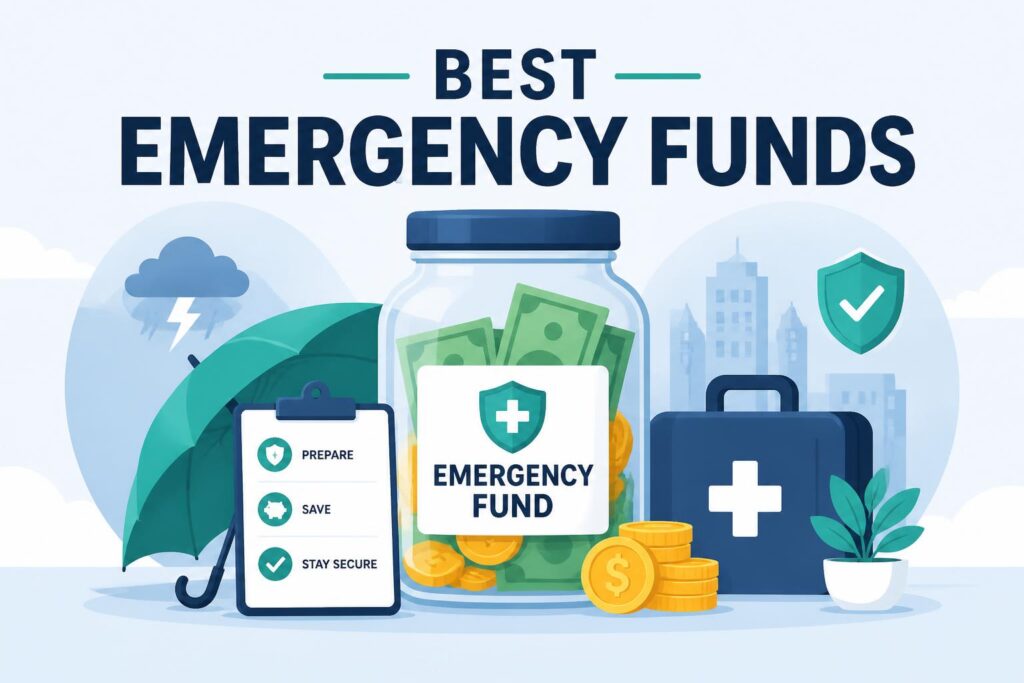
Building an emergency fund is one of the most important financial foundations for beginners, yet many people delay it because they are unsure where to keep their money safely while still earning a decent return. The challenge is simple: you want instant access in case of emergencies, but you also don’t want your cash sitting idle with zero growth.
In 2026, the landscape of emergency savings options has expanded beyond traditional bank savings accounts. Today, high-yield savings accounts, cash management accounts, and money market funds all compete to become the safest and most efficient place for your financial safety net.
In this guide, we reviewed and compared the most reliable options available, including popular choices like Ally Bank, Capital One, and other top-tier providers that balance safety, liquidity, and returns.
For a deeper breakdown of strategies, you can also explore: https://moneysavingway.com/best-emergency-funds/
Here are the best emergency fund options for beginners in 2026.
—
At a Glance: Best Emergency Funds in 2026
| Tool | Best For | Starting Yield | Liquidity |
|---|---|---|---|
| Ally High-Yield Savings | Beginners & automation | ~4.0% APY | Instant transfer |
| Capital One 360 Savings | Simple banking users | ~4.1% APY | Fast access |
| Marcus by Goldman Sachs | Higher stable yields | ~4.3% APY | 1–2 days |
| SoFi Savings | All-in-one finance app users | ~4.5% APY | Instant |
| Discover Online Savings | No-fee savers | ~4.0% APY | Fast access |
| Fidelity CMA | Investors wanting flexibility | Variable | Same-day |
| Vanguard Money Market | Ultra-stable cash holding | Variable | Same-day |
| Wealthfront Cash Account | Automated optimization | ~4.5% APY | Instant |
—
Evaluation Criteria (How We Ranked These Options)
To ensure beginners choose the right emergency fund, each option was evaluated using:
- Safety of capital (FDIC/insured or government-backed instruments)
- Liquidity (how quickly you can access funds)
- Yield stability (consistent returns vs fluctuating rates)
- Fees and minimum balances
- Ease of use for beginners
- Automation features (auto-save, round-ups, recurring transfers)
—
1.Ally Bank High-Yield Savings — Best Overall for Beginners
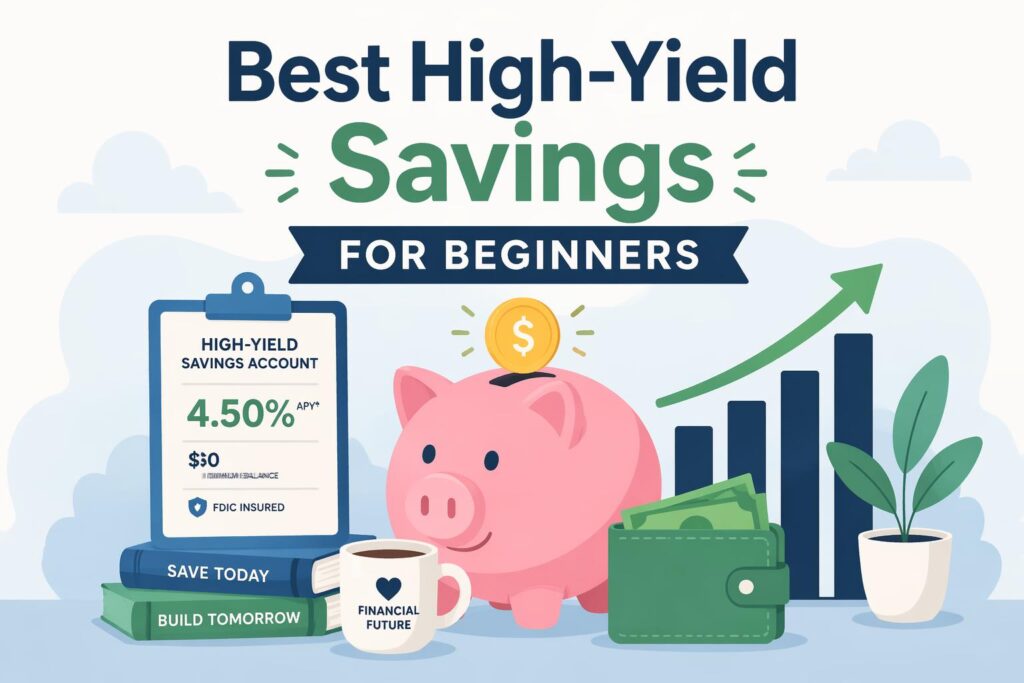
Ally Bank consistently ranks as one of the most beginner-friendly places to build an emergency fund. Its high-yield savings account combines simplicity, automation, and competitive interest rates without requiring complex financial knowledge.
This option is especially appealing for people who want a “set it and forget it” system. You can automate monthly transfers and divide savings into buckets (rent, emergencies, travel), making financial organization effortless.
Key Features
- No monthly maintenance fees
- Automated savings buckets
- Competitive APY (variable)
- 24/7 online access
- Fast transfers to checking accounts
Pricing
- Monthly fee: $0
- Minimum deposit: $0
- APY: Variable (~4% range in 2026 conditions)
Pros
- Extremely beginner-friendly
- Strong automation tools
- No hidden fees
- Reliable banking infrastructure
Cons
- No physical branches
- APY can fluctuate with market rates
Best for: Beginners who want a simple, automated emergency fund system.
—
2. Capital One 360 Performance Savings — Best for Simplicity
Capital One 360 Performance Savings account is designed for users who want a straightforward, no-friction savings experience. It removes complexity while still offering strong returns compared to traditional banks.
This is ideal if you prefer a mainstream banking brand with strong mobile apps and physical branch access.
Key Features
- No fees or minimum balance
- Strong mobile banking app
- Fast transfers between accounts
- FDIC insured
Pricing
- Monthly fee: $0
- Minimum deposit: $0
- APY: Competitive variable rate
Pros
- Trusted banking brand
- Easy onboarding
- Good mobile experience
Cons
- Slightly fewer automation features than fintech apps
Best for: Users who want traditional banking simplicity with modern rates.
—
3. Marcus by Goldman Sachs — Best for Stable High Yields
Marcus offers one of the most stable high-yield savings environments available. Backed by Goldman Sachs, it focuses purely on savings with no checking account distractions.
It’s a strong choice for people who prioritize consistency over flashy features.
Key Features
- High APY savings account
- No fees
- Simple interface
- Trusted financial institution
Pricing
- Monthly fee: $0
- Minimum deposit: $0
- APY: Typically among the top tier
Pros
- Strong yield stability
- Clean, minimal interface
- Trusted backing
Cons
- No checking account integration
- Limited advanced features
Best for: Users who want a pure savings-focused emergency fund.
—
4. SoFi Checking & Savings — Best All-in-One Financial Hub
SoFi combines checking and savings into a single ecosystem, making it a strong choice for beginners who want everything in one app.
It also includes budgeting tools, automatic savings features, and sometimes bonus interest for direct deposit users.
Key Features
- High-yield savings with checking integration
- Early paycheck access
- Automated savings tools
- Financial tracking dashboard
Pricing
- Monthly fee: $0
- Minimum deposit: $0
- APY: Tiered based on activity
Pros
- All-in-one platform
- Strong automation
- User-friendly mobile app
Cons
- Best rates require direct deposit setup
Best for: Beginners who want banking + savings in one place.
—
5. Discover Online Savings — Best Fee-Free Traditional Option
Discover offers a clean, no-fee savings account with competitive interest rates and strong customer service.
It is especially useful for users who prefer established financial institutions with strong reputations.
Key Features
- No monthly fees
- 24/7 customer support
- FDIC insured
- Easy transfers
Pricing
- Monthly fee: $0
- Minimum deposit: $0
- APY: Competitive
Pros
- Reliable customer service
- Simple structure
- Trusted brand
Cons
- Fewer advanced features
Best for: Beginners who value traditional banking reliability.
—
6. Fidelity Cash Management Account — Best for Investors
Fidelity’s Cash Management Account is designed for people who already invest or plan to invest. It acts like a hybrid between a checking and savings account.
Key Features
- ATM fee reimbursement
- Cash sweep into money market funds
- Strong liquidity
- Integrated investment platform
Pros
- Excellent flexibility
- Investment integration
- Strong cash management tools
Cons
- Slightly more complex than basic savings accounts
Best for: Users already investing with Fidelity.
—
7. Vanguard Money Market Fund — Best Ultra-Stable Cash Holding
Money market funds like Vanguard’s are not traditional savings accounts but are widely used as emergency fund alternatives.
They invest in ultra-safe short-term government securities.
Key Features
- Very low risk
- Competitive yields
- High liquidity (T+1 access)
- Institutional-grade stability
Pros
- Extremely stable
- Often higher yield than banks
- Trusted investment provider
Cons
- Not FDIC insured (though very low risk)
- Slightly less beginner-friendly
Best for: Conservative investors wanting maximum stability.
—
8. Wealthfront Cash Account — Best Automated Optimization
Wealthfront uses automation to move your emergency funds into high-yield environments while maintaining instant liquidity.
Key Features
- Automated yield optimization
- FDIC insurance through partner banks
- Instant transfers
- Financial planning tools
Pros
- Fully automated system
- Strong APY
- Easy setup
Cons
- Fully digital platform only
Best for: Users who want “hands-off” optimization.
—
How to Choose the Right Emergency Fund
If you’re unsure where to start, the decision comes down to simplicity vs optimization.
- If you are a beginner, choose Ally Bank or Capital One for ease of use.
- If you want maximum yield, consider SoFi or Wealthfront.
- If you want investment integration, Fidelity or Vanguard works best.
- If you want pure simplicity, Discover or Marcus is ideal.
The key rule: your emergency fund should be easy to access within 24–48 hours without penalties.
—
FAQ
What is the best emergency fund for beginners?
High-yield savings accounts like Ally or Capital One are the most beginner-friendly options.
How much should I keep in an emergency fund?
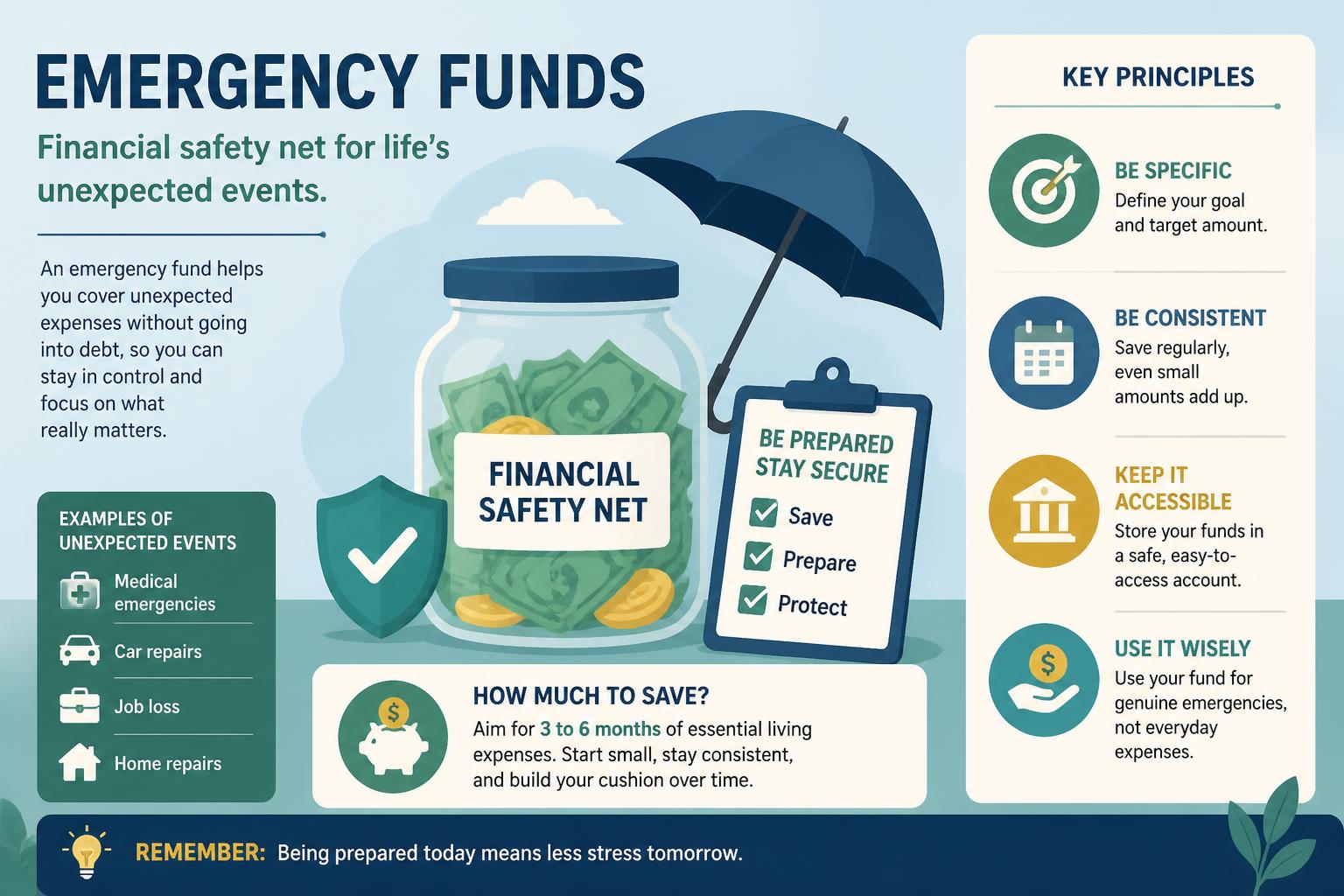
Typically 3–6 months of essential expenses.
Are money market funds safe for emergency savings?
Yes, but they are not FDIC insured, though they are considered very low risk.
Can I lose money in a high-yield savings account?
No, as long as it is FDIC insured.
Should I use multiple accounts?
You can, but beginners usually benefit from keeping it simple.
—
Final Recommendation
For most beginners in 2026, the best emergency fund is still a high-yield savings account with strong automation and zero fees. Ally Bank stands out as the most balanced option for ease, reliability, and usability.
If you want a slightly more traditional banking experience, Capital One is an excellent alternative.
Start with a simple account, automate deposits, and build consistency — that matters more than chasing small yield differences.