Cheapest Debt Payoff Tools in 2026 (Ranked and Reviewed)

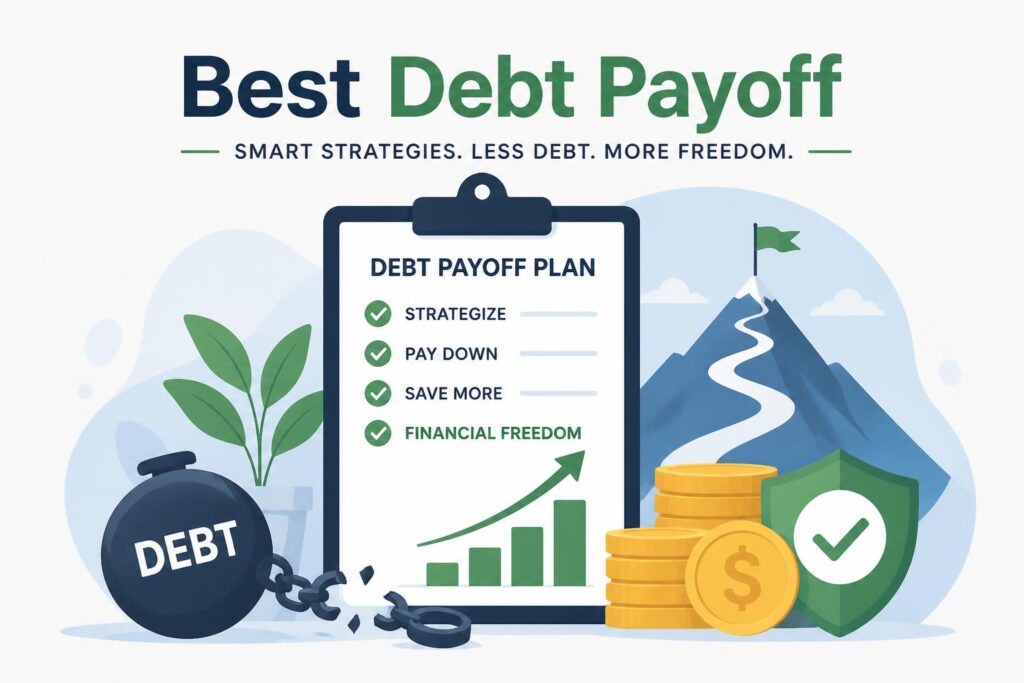
Debt problems usually aren’t just about the total amount owed. Interest rates, scattered accounts, and inconsistent repayment habits tend to do most of the damage over time. A decent payoff tool doesn’t solve everything, but it can make the path clearer and easier to stick with.
In 2026, most of these tools go beyond simple calculators. Many now combine budgeting, automation, and behavior tracking to help users stay consistent and reduce interest costs through structured repayment strategies.
Below is a breakdown of the most affordable and useful debt payoff tools available right now.
—
At a Glance
Tool Best For Starting Price Free Plan Undebt.it Strategy planning Free / $11.99 lifetime Yes Debt Payoff Planner Simple tracking Free / $2.99–$6.99 Yes YNAB Behavior change $14.99/month No Rocket Money Subscription tracking Free / $6–$12/month Yes Simplifi by Quicken Budgeting + tracking $2.99–$5.99/month (promo) No PocketGuard Overspending control Free / $12.99/month Yes EveryDollar Zero-based budgeting Free / $17.99/month Yes Credit Karma Tools Credit overview Free Yes
What I looked at
These tools were compared based on:
- Total cost over time
- How well they support faster repayment (snowball vs avalanche)
- Ease of setup and daily use
- Level of automation and syncing
- Whether they actually help people stay consistent
- Clarity of progress tracking
Lower cost alone wasn’t enough. The tools that performed best were the ones that made repayment easier to follow through on.
—
1. Undebt.it — Best low-cost repayment planner
Undebt.it is focused entirely on debt payoff planning. It doesn’t try to be a full budgeting app, and that keeps it simple and fast.
You can test different repayment approaches like snowball, avalanche, or custom mixes and immediately see how long each path takes and how much interest you’d pay.
What it does well
- Simulates multiple repayment strategies
- Shows payoff timelines clearly
- Lets you test extra payments
- Supports consolidation scenarios
- Lightweight and fast
Pricing
| Plan | Cost |
|---|---|
| Free | Core features |
| Lifetime Pro | $11.99 one-time |
Limitations
- No bank syncing
- Interface is fairly basic
- Not a full budgeting system
This works best if you already know your numbers and just want a clear payoff plan without paying monthly fees.
—
2. Debt Payoff Planner — Simple mobile tracking
This one keeps things minimal. It’s mainly for people who want to see progress without dealing with too many settings or financial complexity.
Features
- Snowball and avalanche tracking
- Manual debt entry
- Payment scheduling
- Visual progress updates
- Payoff date estimates
Pricing
| Plan | Cost |
|---|---|
| Free | Basic tracking |
| Premium | $2.99–$6.99 |
Limitations
- No automation
- No account syncing
- Limited planning depth
It’s mostly a visibility tool rather than a strategy engine.
—
3. YNAB — Budgeting that indirectly drives debt payoff
YNAB isn’t built specifically for debt payoff, but it often ends up helping people reduce debt because it forces strict budgeting discipline.
Every dollar gets assigned a job before it’s spent, which naturally limits overspending.
Features
- Zero-based budgeting
- Bank syncing
- Goal tracking
- Debt categories
- Spending awareness tools
Pricing
| Plan | Cost |
|---|---|
| Trial | 34 days |
| Paid | $14.99/month |
Limitations
- Higher monthly cost
- Takes time to learn
- Not focused purely on debt payoff
It works best when spending habits are the main issue, not just repayment structure.
—
4. Rocket Money — Finding wasted subscriptions
Rocket Money focuses more on cash flow than debt strategy. It’s useful for spotting recurring charges that quietly reduce how much money goes toward debt.
Features
- Subscription tracking and cancellation
- Budgeting tools
- Bill negotiation support
- Spending insights
Pricing
| Plan | Cost |
|---|---|
| Free | Basic features |
| Premium | $6–$12/month |
Limitations
- Debt tools are secondary
- Some useful features require paid plan
It’s helpful if monthly leaks are part of the problem.
—
5. Simplifi by Quicken — Structured budgeting
Simplifi sits somewhere between traditional budgeting and modern apps. It’s fairly balanced without being overwhelming.
Features
- Budget tracking
- Cash flow overview
- Debt dashboards
- Spending planning
Pricing
| Plan | Cost |
|---|---|
| Paid | $2.99–$5.99/month (varies) |
Limitations
- No strong debt optimization tools
- Subscription required
Good for people who want structure without going fully manual.
—
6. PocketGuard — Spending control focus
PocketGuard is built around preventing overspending after essentials are covered. It helps protect money that could go toward debt.
Features
- “Available to spend” tracking
- Bill monitoring
- Budget limits
- Subscription tracking
Pricing
| Plan | Cost |
|---|---|
| Free | Basic use |
| Plus | $12.99/month |
Limitations
- Weak debt planning tools
- Paid tier needed for full value
Useful if overspending is the main issue.
—
7. EveryDollar — strict budgeting structure
EveryDollar uses a zero-based budgeting approach where everything must be assigned before spending.
Features
- Monthly budget planning
- Debt tracking categories
- Manual or bank-connected tracking
Pricing
| Plan | Cost |
|---|---|
| Free | Manual version |
| Paid | $17.99/month |
Limitations
- Paid version needed for automation
- Less flexible than other tools
It works best for people who want strict structure.
—
8. Credit Karma Tools — free overview only
Credit Karma gives a basic snapshot of debt and credit health. It’s more of a starting point than a full strategy tool.
Features
- Credit score tracking
- Debt summaries
- Loan suggestions
- Basic insights
Limitations
- No payoff planning
- No optimization tools
It’s mainly useful for getting oriented.
—
Comparison summary
Feature Undebt.it Debt Planner YNAB Rocket Money Simplifi PocketGuard EveryDollar Credit Karma Free plan Yes Yes No Yes No Yes Yes Yes Debt strategy tools High Medium Medium Low Medium Low Medium Low Bank syncing No No Yes Yes Yes Yes Yes No Automation Low Low High High High High Medium Low
How to choose
If the goal is reducing total interest and finding the most efficient repayment plan, Undebt.it is usually enough on its own.
If staying consistent is the hard part, a budgeting system like YNAB or EveryDollar tends to help more than pure calculation tools.
If spending leaks are the issue, Rocket Money or PocketGuard can free up extra cash without changing your repayment plan.
Simplifi sits in the middle for people who want budgeting and tracking in one place without much complexity.
Credit Karma works best as a starting reference before committing to a plan.
—
FAQ
What is the cheapest useful tool? Undebt.it, since the core features are free and the paid upgrade is a one-time cost.
Which method saves more money, snowball or avalanche? Avalanche usually reduces total interest. Snowball helps with consistency.
Do these tools actually help? They help most when they reduce friction and keep repayment visible and consistent.
Can I do this without paid apps? Yes. Several free tools are enough for a basic repayment plan.
Which tool helps you pay off debt fastest? The ones that either optimize repayment order or prevent overspending tend to have the biggest impact.
—
Final note
Undebt.it is the most cost-efficient option here if the main goal is minimizing interest and organizing repayment clearly. It stays simple and avoids ongoing fees.
For people who need more structure around spending habits, budgeting apps like YNAB can make a bigger difference, even if they cost more over time.