
Arrived Review 2026: Real Estate Investing Without the Headache
Most people don’t struggle with the idea of real estate investing. The hard part is everything around it: high entry costs, tenant issues, maintenance, and the fact that your money is usually locked up for years.
Arrived tries to simplify that by letting you buy small fractions of rental properties instead of purchasing an entire home. You earn a share of rental income and, hopefully, some appreciation over time.
In 2026, though, there are plenty of ways to get real estate exposure. So the real question is simple: does this approach actually improve things, or just shift the complexity somewhere else?
This breakdown keeps things practical.
—
Table of contents
- What Arrived is
- How it works
- Returns and what they look like in practice
- Fees and what they quietly reduce
- Risks people tend to overlook
- How it compares to REITs and other platforms
- Who it fits, and who should skip it
- Final thoughts
—
What is Arrived?
Arrived is a fractional real estate investing platform. Instead of buying a whole property, you buy shares in individual rental homes.
That means you can get exposure with a relatively small amount of money, rather than needing hundreds of thousands upfront.
Most properties on the platform are:
- Single-family homes or short-term rentals
- Professionally managed
- Rented to tenants or guests
- Split into shares across many investors
The basic idea is to make real estate accessible without requiring you to be a landlord.
It sounds simple, but the outcomes are still tied to real property performance.
—
How Arrived works
The structure is fairly straightforward once you see it step by step.
1. Property selection
The platform acquires or partners on rental properties in specific U.S. markets and evaluates each one individually.2. Fractional ownership
Each property is divided into shares. You purchase shares instead of the full asset.3. Rental income
When the property earns rent, net income is distributed to shareholders based on ownership percentage.4. Appreciation
If the property is eventually sold at a higher price, investors share in the gain.5. Exit timing
There is no quick exit like with stocks. Most investors are looking at multi year holds, often around 5 to 8 years, unless secondary liquidity becomes available.In practice, this behaves more like private real estate investing than anything on a public exchange.
—
Returns: what they tend to look like
Returns are usually discussed in ranges, but real outcomes vary quite a bit depending on the property.
A few moving parts matter most:
- Location and local demand
- Occupancy and vacancy periods
- Maintenance and repair costs
- Broader housing market conditions
In simple terms
- Rental income often lands somewhere in the low single digits annually after costs
- Appreciation depends heavily on market cycles and is not consistent
- Combined returns are usually discussed in moderate single to low double digit ranges in favorable conditions
The key difference from stocks is not just return level, but behavior. It doesn’t move daily, but it also doesn’t adjust quickly when conditions change.
It can feel steady on the surface, but it is still exposed to housing cycles.
—
Fees and costs
This is where expectations can drift from reality.
There isn’t usually a single obvious fee line. Costs are spread across the structure:
- Property management
- Platform servicing
- Repairs and maintenance
- Acquisition and setup costs embedded in pricing
What matters is the net result after everything is taken out.
A property that looks like it earns a higher gross yield can end up producing noticeably less once expenses are accounted for.
It’s still potentially reasonable, but it’s not “set it and forget it” income in the pure sense.
—
Risks people tend to miss
Real estate often feels stable until you look closely at how it actually behaves.
A few important risks:
Illiquidity
You can’t reliably sell whenever you want. Your capital is tied up until an exit event.Timing exposure
Buying into a strong price period can mean lower returns for years.Local concentration
Each property is tied to its own market conditions. One good region doesn’t protect everything.Platform dependence
You are relying on execution, including property selection, management, and timing of exits.Vacancies
Even short gaps in occupancy reduce income.None of this makes it invalid, but it does make it very different from broad index investing or REITs.
—
Arrived vs REITs vs direct property
Option Liquidity Diversification Control Complexity Arrived Low Medium Low Medium REITs High High None Low Direct ownership Very low Low High High
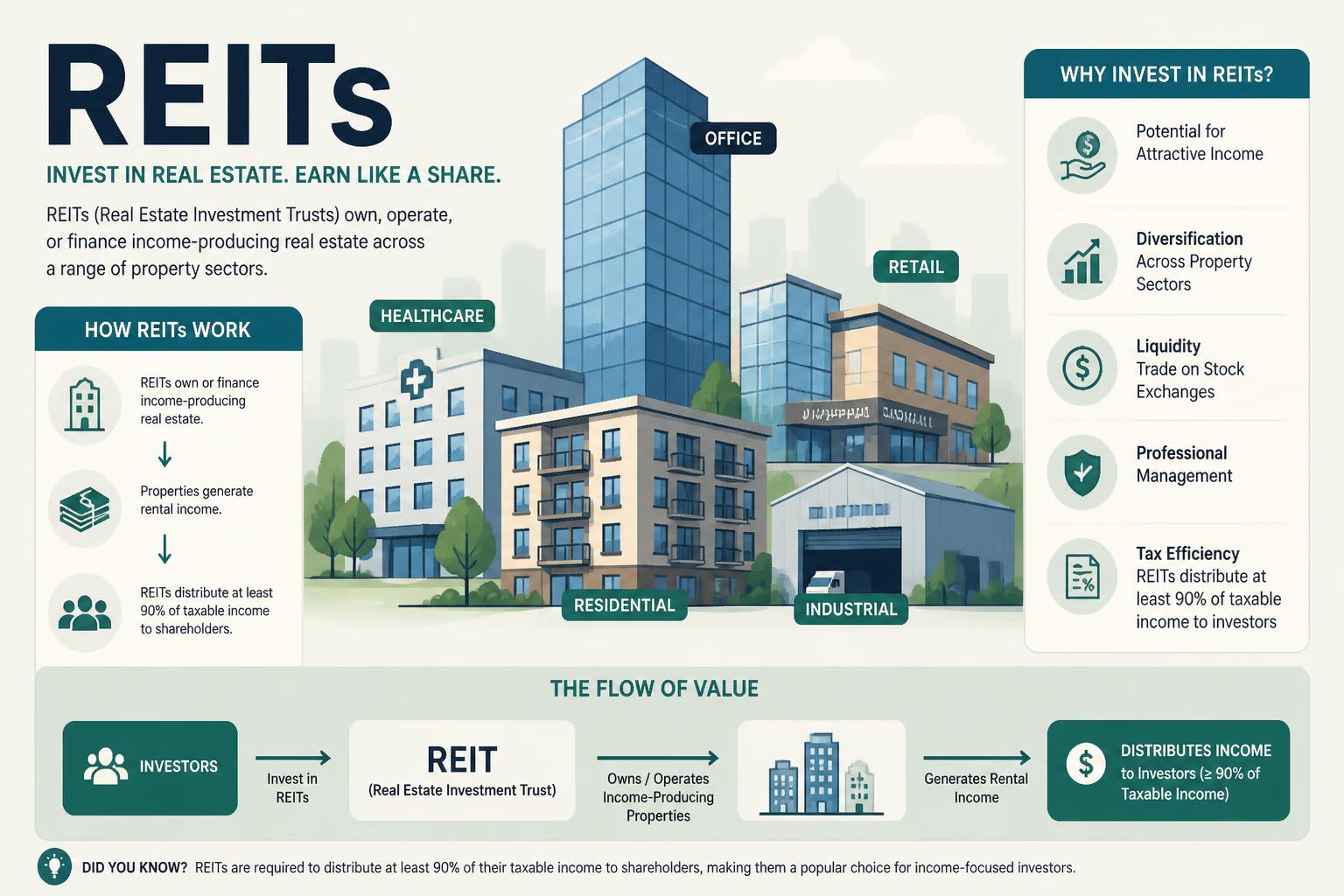
REITs
These trade like stocks, are easy to enter and exit, and spread exposure across many properties. You don’t control anything, but you also don’t deal with operations.Arrived
You get exposure to specific homes. It feels more tangible, but you give up liquidity and some diversification.Direct ownership
Full control and leverage potential, but also full responsibility.Arrived sits in the middle. Not as liquid as REITs, not as demanding as owning property yourself.
—
Who it fits
This tends to make sense for people who:
- Want real estate exposure without being landlords
- Prefer slower, long term investing
- Are fine with limited liquidity
- Want diversification beyond stocks
It may not fit well if you:
- Need access to your money quickly
- Want active trading or fast returns
- Prefer full control over assets
- Expect stable monthly income without variation
—
A quieter reality about investing here
There is also a psychological angle that matters more than people expect.
Because it resembles home ownership, investors sometimes assume:
- Income will be smooth and predictable
- Property values will steadily rise
- Risk is lower than it actually is
In practice, it behaves more like a hybrid between private real estate funds and conservative equity exposure.
Once you accept that, expectations become more realistic.
—
Final thoughts
Arrived is not a shortcut to easy income. It is a way to get exposure to rental real estate without taking on the full responsibility of owning property.
That tradeoff cuts both ways.
It can work well if you want long term exposure and are comfortable leaving money parked for years. It is less suitable if you want flexibility or fast-moving returns.
A fair way to think about it is this:
It’s a slow, structured way to participate in real estate, not a tool for optimizing income or liquidity.
—
FAQ
Is Arrived safe?
It operates as a regulated investment platform, but it still carries market risk and illiquidity risk like any real estate exposure.Can you lose money?
Yes. Property values and rental income can decline depending on conditions.How are payouts handled?
Rental income is distributed periodically, depending on how the property performs.Is it better than REITs?
They are different tools. REITs are more liquid and diversified. Arrived is more direct and property specific.Can beginners use it?
Yes, but only if they understand that money may be locked up for years.—
Structured data
“`json { “@context”: “https://schema.org”, “@type”: “Article”, “headline”: “Arrived Review 2026: Real Estate Investing Without the Headache”, “description”: “Review of Arrived covering returns, fees, risks, and how fractional real estate compares to REITs in 2026.”, “image”: [ “images/featured.png”, “images/image_2.png”, “images/image_3.png”, “images/image_4.png” ], “author”: { “@type”: “Organization”, “name”: “NotFair Editorial” }, “datePublished”: “2026-06-22” } —Internal linking notes
- Link from broader guides on real estate investing and passive income
- Connect to comparisons with REITs and diversification strategies
- Link out to beginner explanations of real estate investing terms
—
Publishing checklist
- Title and meta description set
- URL slug configured
- Images optimized
- Table of contents linked
- Internal links added
- Mobile formatting checked