Best Free Retirement Accounts (IRA/401k): Your Complete Guide to Building Wealth Without Fees
Choosing the right retirement account shouldn’t feel like navigating a minefield of hidden fees and confusing fine print. Yet millions of Americans struggle with this exact problem—overwhelmed by options, worried about making costly mistakes, and frustrated by platforms that nickel-and-dime their hard-earned savings.
The truth is, you don’t need to pay high fees to build a secure retirement. The best free retirement accounts offer robust features, excellent investment options, and zero account maintenance fees—letting your money grow faster through the power of compound interest.
In this comprehensive guide, we’ll cut through the noise and show you exactly which retirement accounts deliver the most value without unnecessary costs.
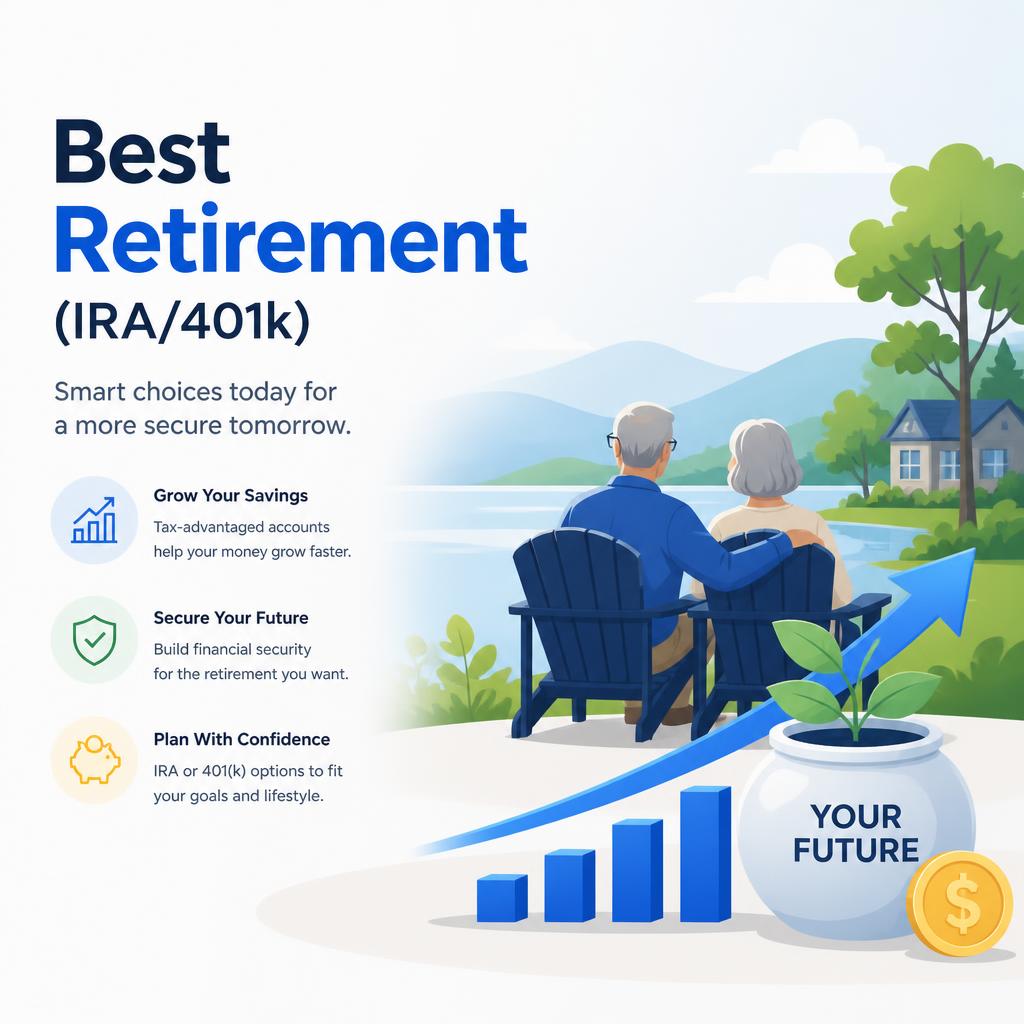
Understanding Retirement Account Basics: IRA vs 401(k)
Before diving into specific providers, let’s clarify what sets these accounts apart.
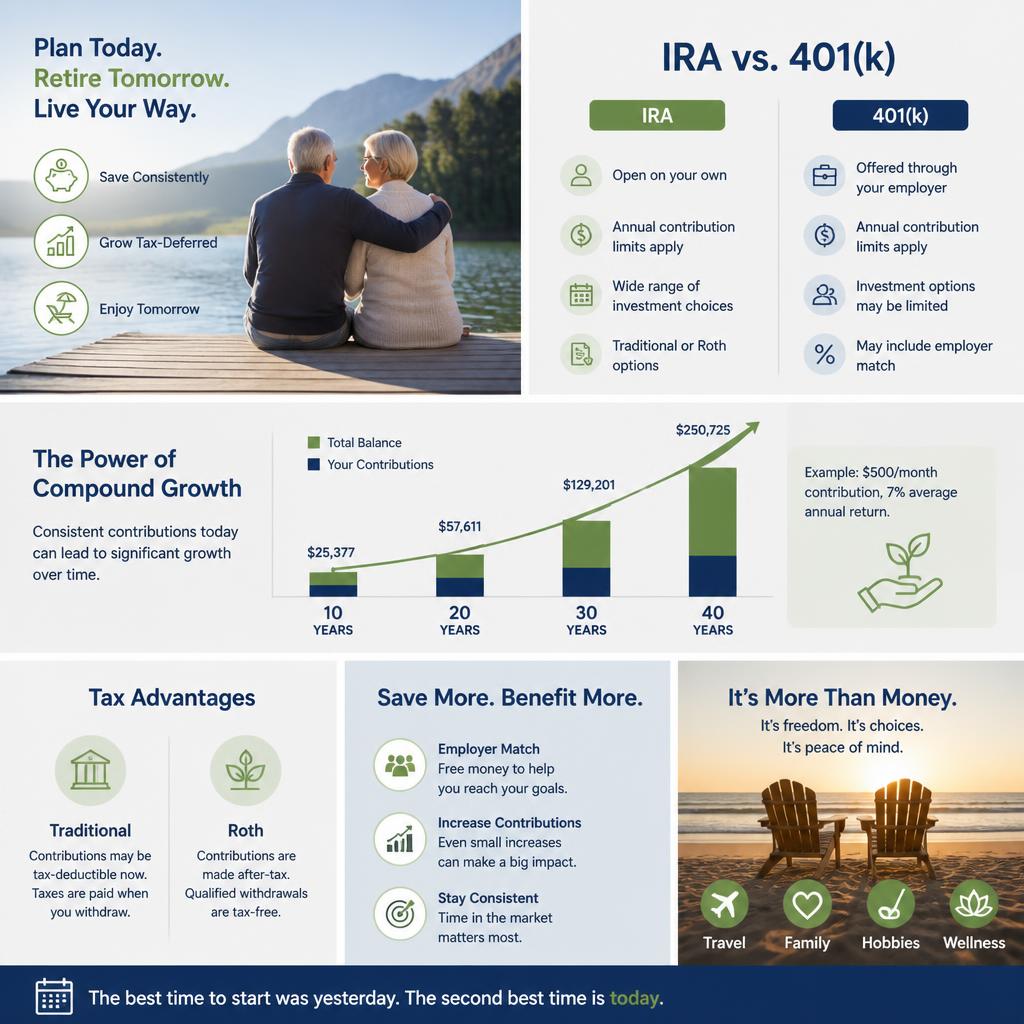
Individual Retirement Accounts (IRAs) are self-directed retirement accounts you open independently. You control where you open it, what you invest in, and how you manage it. IRAs come in two primary flavors:
- Traditional IRA: Contributions may be tax-deductible now, but you’ll pay taxes on withdrawals in retirement
- Roth IRA: Contributions are made with after-tax dollars, but qualified withdrawals in retirement are completely tax-free
401(k) plans are employer-sponsored retirement accounts. Your employer chooses the provider and investment options, though you decide how much to contribute and how to allocate your investments. Like IRAs, 401(k)s come in traditional (pre-tax) and Roth (after-tax) versions.
The 2024 contribution limits are:
- IRA: $7,000 ($8,000 if age 50+)
- 401(k): $23,000 ($30,500 if age 50+)
Why Free Retirement Accounts Matter More Than You Think
A 1% difference in fees might sound insignificant, but over decades, it’s devastating. Consider this: A $10,000 investment growing at 7% annually for 30 years becomes $76,123. That same investment with a 1% annual fee becomes just $57,435—a loss of nearly $19,000.
When you’re investing for 20, 30, or 40 years, every percentage point of fees compounds against you. Free retirement accounts eliminate this drag on your returns, letting you keep more of what you earn.
Top Free IRA Providers: Our Detailed Analysis
Fidelity: Best Overall Free IRA
Fidelity stands out as the gold standard for free retirement accounts. With zero account fees, no minimums to open, and an exceptional range of investment options, it’s the complete package.
What makes Fidelity exceptional:
- Zero account maintenance fees and no minimum balance requirements
- Commission-free trades on stocks, ETFs, and options
- Access to over 3,300 mutual funds with no transaction fees
- Fidelity’s own zero-fee index funds (FZROX, FZILX, etc.) with 0.00% expense ratios
- Excellent research tools and educational resources
- Top-rated customer service with 24/7 phone support
- Robust mobile app for managing accounts on the go
Fidelity also offers a unique advantage for hands-off investors: their index funds and ETFs include some of the only true zero-expense-ratio funds available anywhere. The Fidelity ZERO Total Market Index Fund (FZROX) charges absolutely nothing in ongoing fees—not even 0.01%.
Best for: Investors of all experience levels who want maximum flexibility without paying fees.
Charles Schwab: Best for Comprehensive Financial Services
Schwab rivals Fidelity in almost every category and edges ahead in certain areas, particularly for investors who want banking services integrated with their investments.
Schwab’s key advantages:
- No account fees or minimums for IRAs
- Commission-free stock, ETF, and options trading
- Schwab’s own low-cost index funds
- Integrated banking with high-yield checking and savings
- Excellent robo-advisor option (Schwab Intelligent Portfolios) at no advisory fee
- Over 4,000 mutual funds available without transaction fees
- Physical branch locations for in-person support
Schwab’s Intelligent Portfolios robo-advisor is particularly compelling—it requires a $5,000 minimum but charges no advisory fees, making it one of the best automated investing solutions for retirement accounts.
Best for: Investors who want a one-stop shop for banking and investing, or those who value having physical branches.
Vanguard: Best for Index Fund Investors
Vanguard pioneered low-cost index investing and remains the gold standard for investors focused on long-term, buy-and-hold strategies.
Why Vanguard remains exceptional:
- No account fees for IRAs when you opt for electronic delivery
- Industry-leading low-cost index funds and ETFs
- Owned by the funds themselves, aligning incentives with investors
- Strong commitment to investor education
- Excellent target-date retirement funds
- Robust research and planning tools
While Vanguard’s user interface isn’t as modern as Fidelity or Schwab, and customer service can be slower, the company’s steadfast commitment to low costs and investor-first principles makes it a top choice for serious long-term investors.
Best for: Buy-and-hold investors focused on low-cost index funds and ETFs.
E*TRADE: Best for Active Traders Planning for Retirement
E*TRADE combines free retirement accounts with advanced trading tools, making it ideal for more active investors who still want the tax advantages of an IRA.
E*TRADE’s standout features:
- No account maintenance fees or minimums
- Commission-free stock and ETF trades
- Advanced trading platform with powerful research tools
- Excellent options trading capabilities
- Strong mobile trading app
- Access to dividend investing opportunities with robust screening tools
E*TRADE offers more sophisticated trading tools than traditional retirement-focused brokers, though this comes with a steeper learning curve. The platform is owned by Morgan Stanley, providing additional financial resources.
Best for: Active traders and more experienced investors who want advanced tools in their retirement accounts.
TD Ameritrade: Best Educational Resources
TD Ameritrade (now part of Schwab, though still operating separately) offers exceptional educational content alongside free retirement accounts.
TD Ameritrade highlights:
- Zero account fees and no minimums
- Commission-free stock and ETF trading
- Industry-leading thinkorswim trading platform
- Extensive library of educational content and webinars
- Paper trading for practicing strategies risk-free
- Strong options and futures trading capabilities
TD Ameritrade’s educational resources are unmatched in the industry, with hundreds of hours of courses, webinars, and tutorials covering everything from basic investing to advanced options strategies.
Best for: Newer investors who want to learn while they invest, and experienced traders who want professional-grade tools.
Best Free 401(k) Providers for Small Businesses
If you’re self-employed or run a small business, you control your 401(k) provider choice. Here are the best free or low-cost options:
Vanguard Small Business 401(k)
Vanguard offers 401(k) plans for businesses with as few as one employee. While there are some administrative costs, Vanguard’s low investment expenses and straightforward approach make it highly cost-effective.
Key features:
- Low-cost index fund investment options
- No advisor commissions or revenue sharing
- Access to institutional share classes for larger balances
- Straightforward fee structure
Fidelity Workplace 401(k)
Fidelity’s small business 401(k) platform provides enterprise-grade features without enterprise-level fees.
Advantages:
- Competitive pricing for small businesses
- Extensive investment menu including zero-fee index funds
- Strong administrative support
- Easy employee enrollment and management
Employee Fiduciary: Best for Self-Employed
Employee Fiduciary specializes in solo 401(k) plans for self-employed individuals and offers some of the lowest fees in the industry.
Why it’s exceptional:
- Flat annual fee structure (starts around $125/year)
- Access to institutional funds through TD Ameritrade or Schwab
- Mega backdoor Roth capabilities
- Simple administration for solo businesses
How to Choose the Right Free Retirement Account for You
Selecting the best retirement account depends on your specific situation. Here’s a decision framework:
Choose Fidelity if:
- You want the most well-rounded free option
- You’re interested in zero-expense-ratio index funds
- You value excellent customer service and user experience
- You want a wide range of investment options
Choose Schwab if:
- You want integrated banking and investing
- You’re interested in a free robo-advisor
- You prefer having physical branches for support
- You’re looking to consolidate all financial services in one place
Choose Vanguard if:
- You’re committed to a buy-and-hold index investing strategy
- You want the lowest possible expense ratios on funds
- You value Vanguard’s unique ownership structure and philosophy
- You don’t need frequent customer service or active trading
Choose E*TRADE or TD Ameritrade if:
- You’re a more active trader who still wants IRA tax advantages
- You need advanced charting and research tools
- You trade options or want sophisticated order types
- You’re an experienced investor comfortable with complex platforms
Maximizing Your Free Retirement Account
Opening a free retirement account is just the beginning. Here’s how to maximize its value:
1. Contribute Consistently
Set up automatic contributions from each paycheck. Even small amounts compound significantly over time. A $200 monthly contribution growing at 7% annually becomes over $240,000 in 30 years.
2. Choose Low-Cost Index Funds
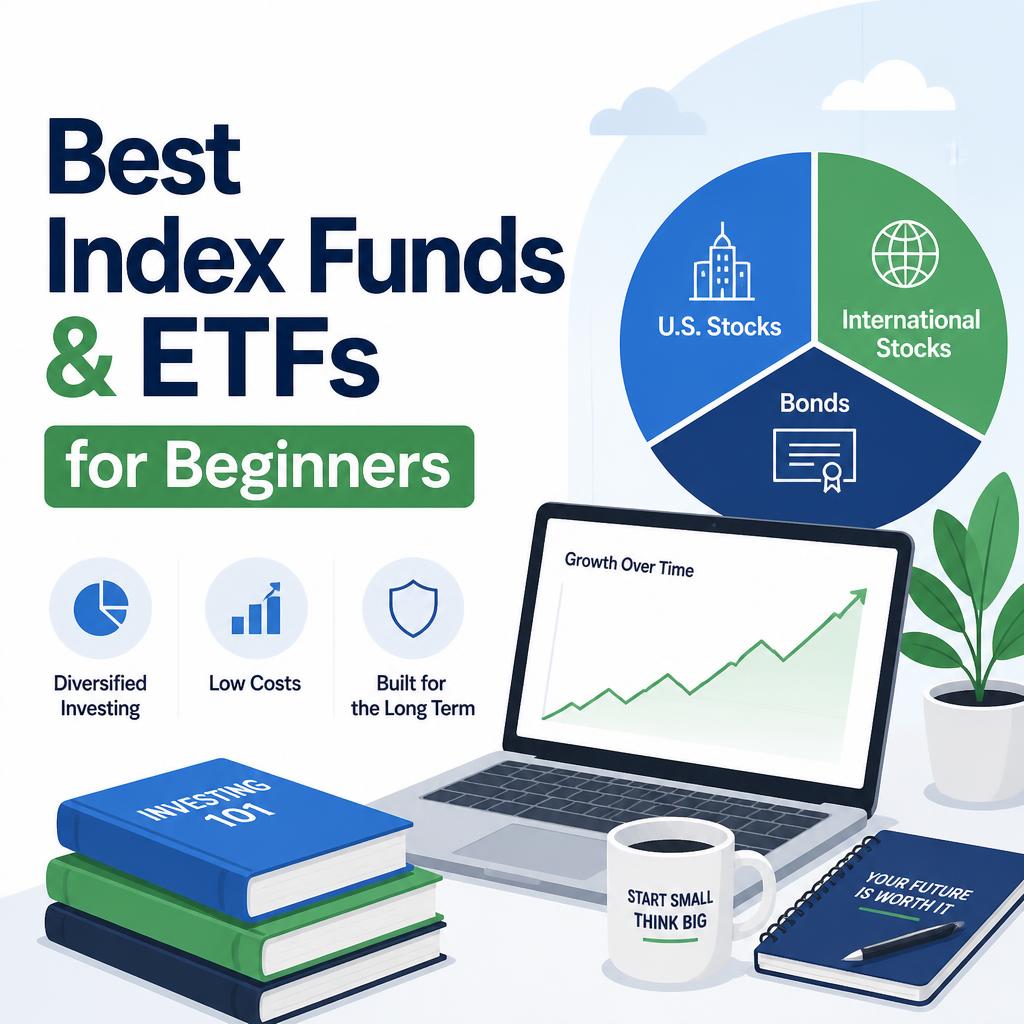
Within your free account, focus on low-cost index funds that track broad market indexes. These best index funds and ETFs typically outperform actively managed funds over long periods while charging far less in fees.
3. Consider a Three-Fund Portfolio
Many successful investors use a simple three-fund approach:
- Total U.S. stock market index fund (60-70%)
- Total international stock market index fund (20-30%)
- Total bond market index fund (10-20%, increasing with age)
This provides broad diversification with minimal complexity and cost.
4. Rebalance Annually
Once a year, rebalance your portfolio back to your target allocation. This forces you to “buy low and sell high” automatically.
5. Increase Contributions Over Time
Commit to increasing your contribution rate by 1% annually, or whenever you receive a raise. This painless approach dramatically increases your retirement savings over time.
Common Mistakes to Avoid
Even with a free retirement account, these mistakes can cost you:
Not investing after opening the account: Simply opening an IRA and contributing cash isn’t enough. Your money needs to be invested in funds or stocks to grow.
Choosing expensive funds: Just because your account is free doesn’t mean all investment options are. Avoid funds with expense ratios above 0.20% when equivalent low-cost options exist.
Ignoring employer 401(k) matching: If your employer offers 401(k) matching, contribute enough to get the full match before prioritizing an IRA. This is free money you can’t get anywhere else.
Making emotional decisions: Market downturns are normal and temporary. Selling during crashes locks in losses and misses the recovery. Stay the course.
Forgetting about taxes: Understand whether you’re using traditional (pre-tax) or Roth (after-tax) accounts and how this impacts your tax situation both now and in retirement.
Free Retirement Accounts vs. Robo-Advisors
Some investors wonder whether they should use a traditional free IRA or a robo-advisor service. Here’s the comparison:
Traditional Free IRA Advantages:
- Complete control over investment choices
- Lowest possible costs if you choose index funds
- No advisory fees
- More flexibility in tax-loss harvesting and withdrawals
Robo-Advisor Advantages:
- Automated portfolio management and rebalancing
- No need to choose individual funds
- Built-in tax-loss harvesting (premium tiers)
- Easier for hands-off investors
For most investors, a free IRA with a simple index fund portfolio offers better long-term value. However, Schwab’s free Intelligent Portfolios robo-advisor bridges this gap, offering automated management without advisory fees.
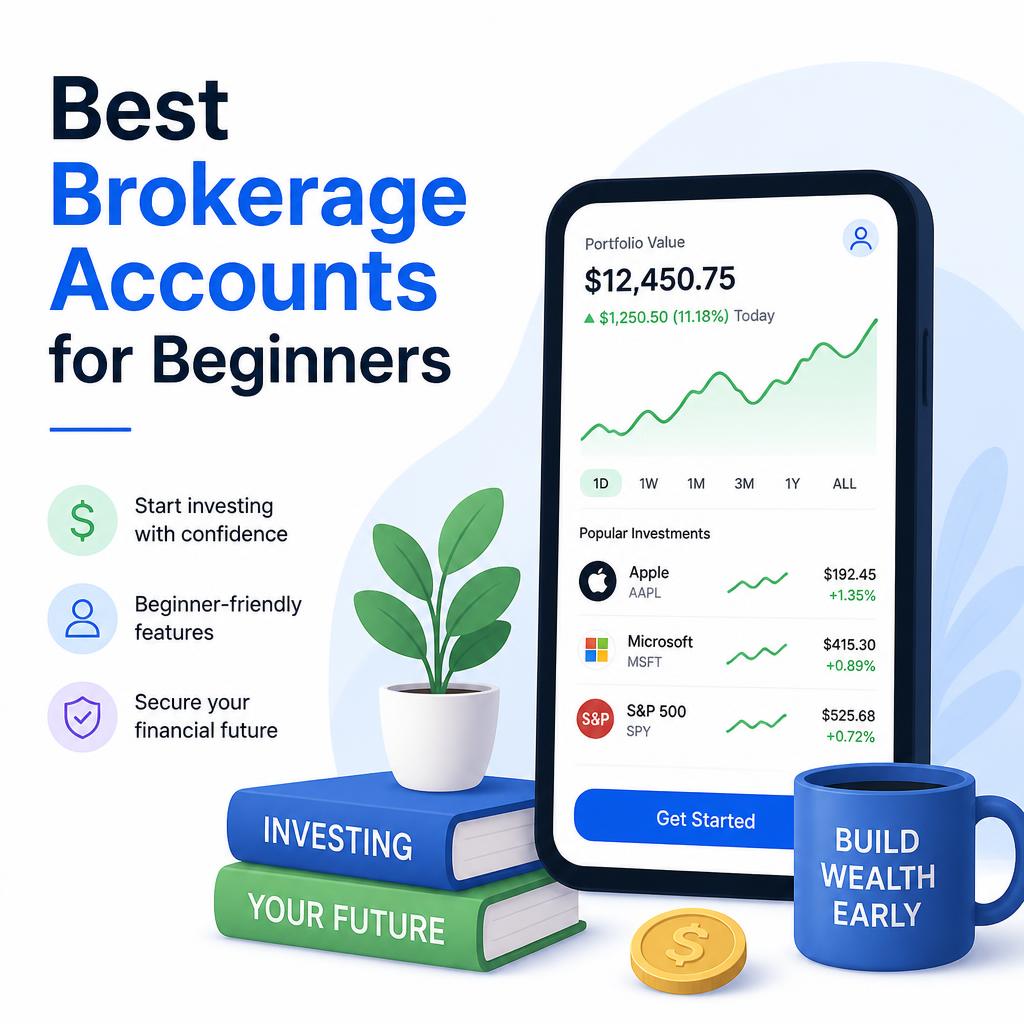
If you’re just starting out with investing and want a completely hands-off approach, exploring brokerage accounts for beginners can help you understand which platform matches your comfort level.
The Bottom Line: Start Today
The best time to start saving for retirement was yesterday. The second-best time is today. Every year you delay costs you thousands in compound growth.
With truly free retirement accounts from providers like Fidelity, Schwab, and Vanguard, there’s no excuse to wait. These platforms have eliminated the barriers of high fees, account minimums, and transaction costs that once made retirement investing expensive and intimidating.
Here’s your action plan:
- Choose a provider based on your needs and preferences
- Open your account (takes 10-15 minutes online)
- Set up automatic contributions from your paycheck or bank account
- Invest in a diversified portfolio of low-cost index funds
- Review and rebalance once per year
- Increase contributions whenever possible
Remember: it’s not about timing the market or finding the perfect investment. It’s about time in the market with consistent contributions and low costs. Free retirement accounts give you everything you need to build substantial wealth for your future—no fees required.
The sooner you start, the more your money works for you. Choose your free retirement account today and take control of your financial future.
—
Ready to open your retirement account? Compare the leading best brokerage accounts to find the perfect fit for your complete investment strategy beyond just retirement savings.
—
Affiliate Disclosure: We may earn a commission from some of the products mentioned in this article.