Best Free Dividend Investing: A Complete Guide to Building Passive Income Without Fees
Dividend investing has long been a cornerstone strategy for building wealth and generating passive income. But here’s the problem: traditional dividend investing often comes with account fees, trading commissions, and minimum balance requirements that eat into your returns before you even start. For new investors or those with limited capital, these barriers can make dividend investing feel out of reach.
The good news? The landscape has changed dramatically. Today, you can build a robust dividend portfolio completely free—no commissions, no account fees, and no minimums. This guide will show you exactly how to find the best dividend investments without overpaying or wasting time on platforms that don’t deliver.
Why Dividend Investing Still Matters in 2025
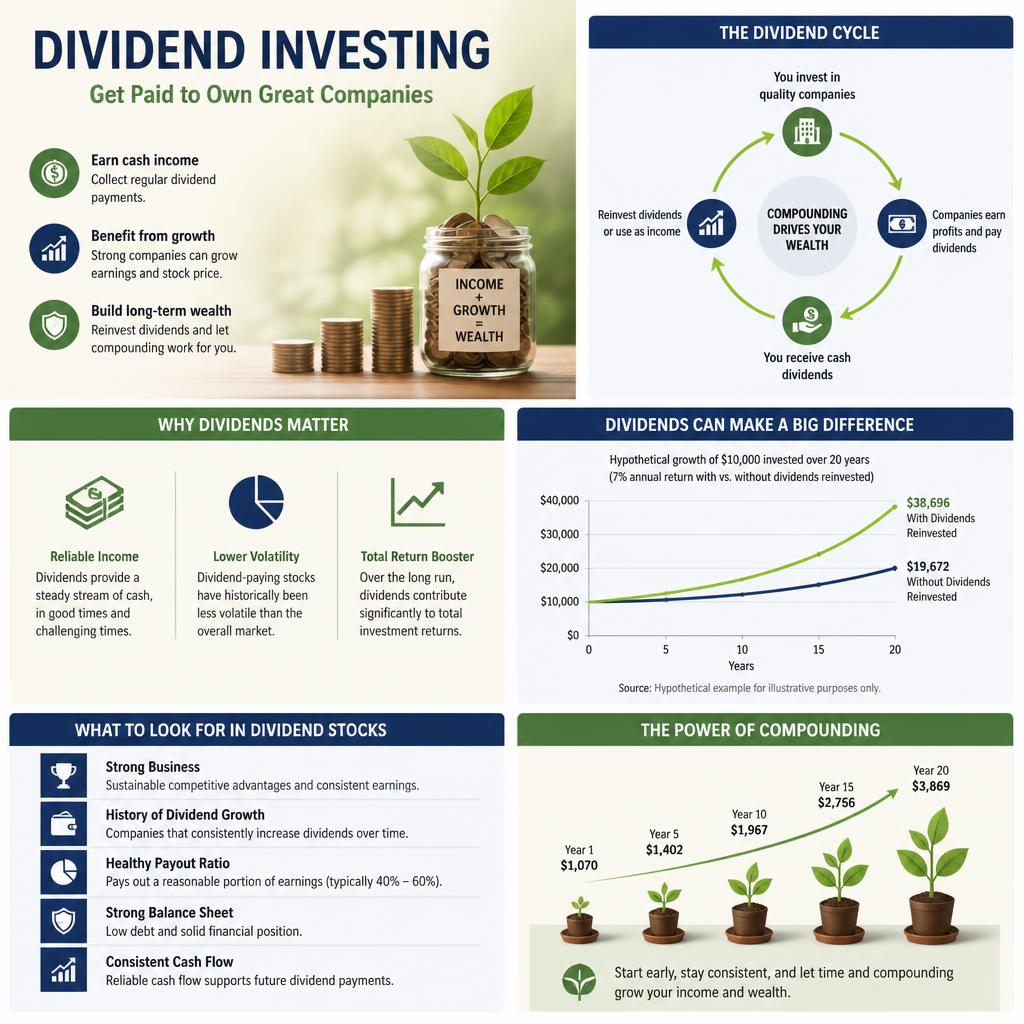
Before diving into the “how,” let’s address the “why.” Dividend investing offers several compelling advantages:
Passive Income Stream: Dividends provide regular cash payments, typically quarterly, that you can reinvest or use as income.
Lower Volatility: Dividend-paying companies tend to be more established and stable, leading to less price volatility compared to growth stocks.
Total Return Potential: You benefit from both stock price appreciation and dividend income, compounding your returns over time.
Inflation Hedge: Many dividend stocks increase their payouts annually, helping your income keep pace with inflation.
The challenge isn’t whether dividend investing works—it’s finding the right approach without unnecessary costs draining your returns.
Understanding the True Cost of “Free” Dividend Investing
When platforms advertise “free” dividend investing, what does that actually mean? Here’s what to look for:
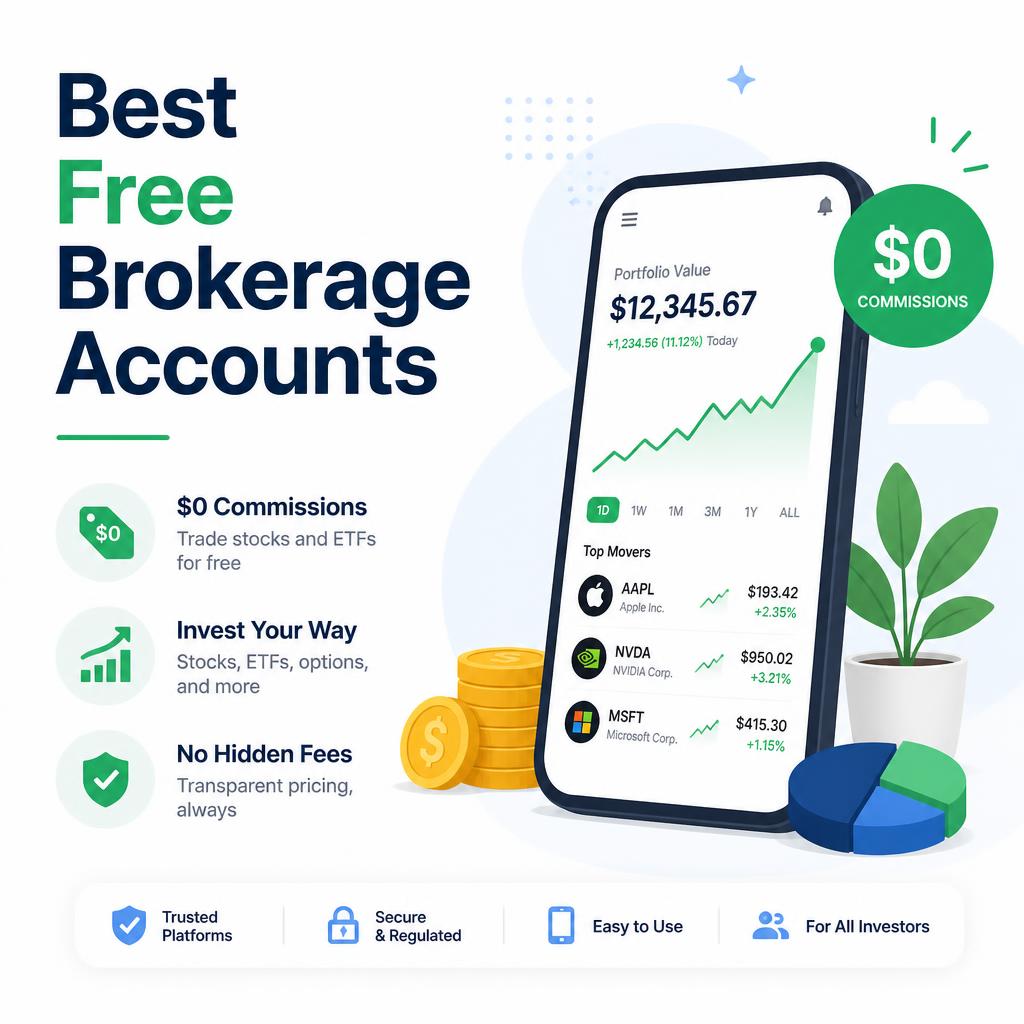
Zero Commission Trading: No fees when you buy or sell dividend stocks or ETFs.
No Account Fees: No monthly maintenance fees, inactivity fees, or account minimums.
Free Dividend Reinvestment: Automatic reinvestment of dividends without transaction fees.
No Hidden Costs: Watch out for payment for order flow practices that might give you worse execution prices.
The best brokerage accounts now offer all of these features as standard. But beyond just being “free,” you need to evaluate which platforms provide the best tools, research, and user experience for dividend investors specifically.
Top Features to Look for in a Free Dividend Investing Platform
Not all free platforms are created equal. Here’s what separates the best from the rest:
1. Robust Dividend Screening Tools
Look for platforms that let you filter stocks by:
- Dividend yield
- Payout ratio
- Dividend growth history
- Years of consecutive dividend increases
- Sector and industry
2. Automatic Dividend Reinvestment Plans (DRIPs)
The best platforms offer fractional share reinvestment, ensuring every penny of your dividends goes back to work immediately—even if it’s not enough to buy a full share.
3. Research and Analysis Resources
Quality dividend investing requires research. Seek platforms offering:
- Analyst reports and ratings
- Financial statements and metrics
- Dividend calendars
- Historical dividend data
4. Portfolio Tracking and Reporting
Track your dividend income with tools that show:
- Total dividends received
- Dividend yield on cost
- Projected annual income
- Dividend payment schedules
5. Educational Resources
Especially important for beginners, look for platforms with articles, videos, and courses specifically about dividend investing strategies.
Building Your Free Dividend Portfolio: A Step-by-Step Approach
Now that you understand what to look for, here’s how to actually build your dividend portfolio without paying unnecessary fees:
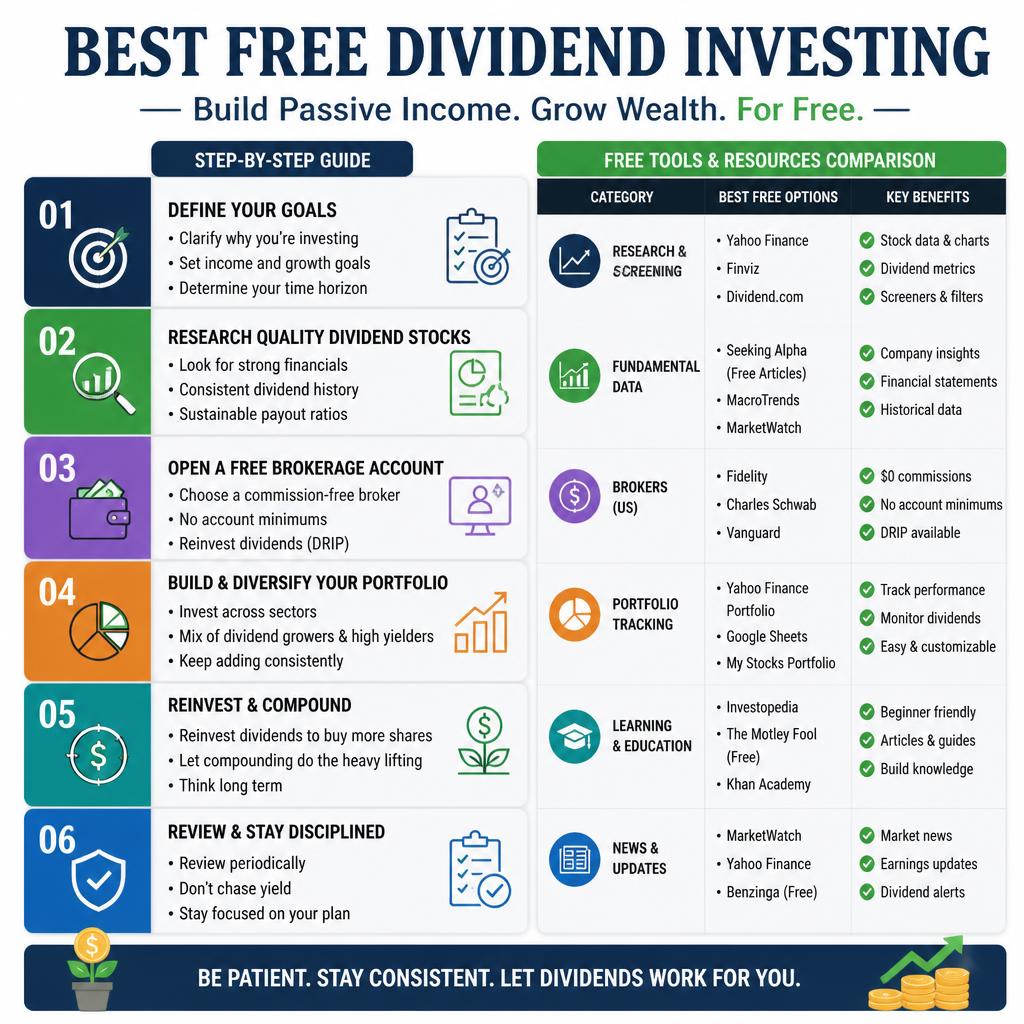
Step 1: Open the Right Account
Start with one of the best brokerage accounts for beginners that offers commission-free trading and strong dividend investor tools. Popular options include Fidelity, Charles Schwab, and Vanguard—all of which now offer $0 stock trades and no account minimums.
Step 2: Determine Your Dividend Strategy
Choose between three primary approaches:
High-Yield Dividend Stocks: Focus on companies paying 4%+ yields. Higher income now but potentially less growth.
Dividend Growth Investing: Target companies consistently increasing dividends, even if current yields are lower (2-3%). Prioritizes growing income over time.
Dividend Aristocrats: Invest in companies with 25+ years of consecutive dividend increases. Balances stability with moderate yields.
Most successful dividend investors combine all three approaches based on their timeline and goals.
Step 3: Diversify Across Sectors
Don’t concentrate all your dividend investments in one sector. A balanced dividend portfolio typically includes:
- Financial Services (15-20%): Banks and insurance companies often pay solid dividends
- Consumer Staples (15-20%): Companies selling essential products provide stability
- Healthcare (10-15%): Pharmaceutical and medical device companies offer growing dividends
- Utilities (10-15%): Regulated businesses with predictable cash flows
- Technology (10-15%): Mature tech companies increasingly returning cash to shareholders
- Industrials (10-15%): Manufacturing and distribution companies with steady dividends
- Real Estate (REITs) (10-15%): Required to distribute 90% of income as dividends
Step 4: Consider Dividend ETFs and Index Funds
For instant diversification without research time, dividend-focused ETFs offer an excellent free option. The best index funds and ETFs in this category provide:
- Automatic rebalancing
- Lower individual stock risk
- Professional selection criteria
- Often lower expense ratios than actively managed funds
Popular choices include dividend aristocrat ETFs, high-yield dividend ETFs, and dividend growth ETFs. These can be purchased commission-free on most major platforms.
Step 5: Set Up Automatic Dividend Reinvestment
Enable DRIP on all your holdings. This automates the compounding process and ensures you’re constantly increasing your share count—and future dividend payments—without any additional cost or effort.
Step 6: Monitor and Rebalance Quarterly
Review your portfolio each quarter:
- Check for dividend cuts or suspensions
- Ensure sector allocation remains balanced
- Look for new opportunities
- Rebalance if any position becomes more than 5-10% of your portfolio
Common Dividend Investing Mistakes to Avoid
Even with free trading, investors can still make costly errors:
Chasing Yield Without Due Diligence
An 8% yield looks attractive, but it might signal financial distress. Always investigate:
- Is the payout ratio sustainable (below 60-70% for most industries)?
- Has the company cut dividends recently?
- Are earnings stable or declining?
Ignoring Tax Implications
Dividends are taxable income. Qualified dividends receive favorable tax treatment, but you’ll still owe taxes annually—even if you reinvest. Consider holding dividend stocks in tax-advantaged accounts like IRAs when possible. Learn more about the best retirement and 401(k) accounts for tax-efficient dividend investing.
Over-Concentrating in High-Yield Sectors
Utilities and REITs often offer the highest yields, but loading up too heavily on these sectors increases risk if interest rates rise or sector-specific challenges emerge.
Neglecting Growth Potential
A stock paying 7% annually but declining 10% in value each year is destroying your wealth. Total return—dividends plus price appreciation—matters more than yield alone.
Trading Too Frequently
Even with free trades, excessive buying and selling:
- Triggers taxable events
- Interrupts compounding
- Often leads to worse returns than buy-and-hold
Advanced Strategies for Free Dividend Investing
Once you’ve mastered the basics, consider these more sophisticated approaches:
The Dividend Snowball Method
Start with dividend growth stocks even if yields are modest (2-3%). As these companies increase dividends annually (often 7-10% growth rates), your yield on original cost compounds dramatically over time. A stock yielding 3% today might yield 10%+ on your original purchase price in 15 years.
Sector Rotation Based on Economic Cycles
Different sectors perform better in different economic environments:
- Early cycle: Financials and consumer discretionary
- Mid cycle: Industrials and technology
- Late cycle: Energy and materials
- Recession: Consumer staples and utilities
Gradually shift allocations as the economy evolves.
International Dividend Stocks
Don’t limit yourself to U.S. companies. Many international stocks offer higher yields and different economic exposures. Most free platforms now offer commission-free trading on major international stocks and ETFs.
Combining Dividends with Covered Calls
For advanced investors with 100+ shares of a dividend stock, selling covered calls generates additional income beyond dividends. This strategy works best in sideways or slightly bullish markets.
Tax-Efficient Dividend Investing on a Free Platform
Maximize your after-tax returns with these strategies:
Prioritize Qualified Dividends
Qualified dividends are taxed at long-term capital gains rates (0%, 15%, or 20% depending on income) rather than ordinary income rates. Hold stocks for more than 60 days during the 121-day period surrounding the ex-dividend date to qualify.
Use Tax-Advantaged Accounts Strategically
- Roth IRA: Best for high-yield investments since all income and growth is tax-free in retirement
- Traditional IRA/401(k): Defers taxes on dividends but converts them to ordinary income later
- Taxable Accounts: Better for qualified dividends from dividend growth stocks with lower current yields
Harvest Tax Losses
If a dividend stock declines, consider selling to harvest the loss (which offsets other capital gains) and immediately buying a similar dividend ETF to maintain exposure. This is legal and reduces your tax bill.
Building a Dividend Income Timeline
Your dividend investing strategy should evolve with your timeline:
10+ Years to Goal (Accumulation Phase)
- Focus on dividend growth stocks (2-4% yields)
- Reinvest all dividends automatically
- Prioritize companies increasing dividends 7%+ annually
- Accept more volatility for higher growth potential
5-10 Years to Goal (Transition Phase)
- Mix growth and income (3-5% portfolio yield)
- Continue reinvesting but start considering income needs
- Add some dividend aristocrats for stability
- Reduce sector concentration risk
Less Than 5 Years to Goal (Income Phase)
- Shift toward higher-yield, stable dividends (4-6% portfolio yield)
- Consider stopping reinvestment and taking income
- Prioritize capital preservation
- Increase allocation to dividend aristocrats and utilities
At Goal (Distribution Phase)
- Target 4-5% safe withdrawal rate from dividends
- Maintain some growth exposure for inflation protection
- Create a dividend calendar to ensure consistent monthly income
- Keep 1-2 years of expenses in cash/bonds as buffer
Monitoring Your Dividend Portfolio
Successful dividend investing requires regular review without obsessive tracking:
Monthly Tasks (15 minutes)
- Review dividend payments received
- Check for any dividend announcements from holdings
- Verify DRIP purchases executed correctly
Quarterly Tasks (1-2 hours)
- Review earnings reports from major holdings
- Check payout ratios remain sustainable
- Rebalance if allocations drift more than 5%
- Research 1-2 new potential investments
Annual Tasks (3-4 hours)
- Calculate total dividend income and growth rate
- Review tax efficiency and consider rebalancing between accounts
- Reassess overall strategy based on changing goals
- Adjust contributions or allocations as needed
The Best Free Dividend Investing Resources
Leverage these free tools to improve your dividend investing:
Screening and Research
- Dividend.com: Comprehensive dividend data and calendars
- Sure Dividend: Quality rankings and dividend growth metrics
- Seeking Alpha: Dividend-focused articles and analysis
- Portfolio visualizer: Backtesting and analysis tools
Education
- Investor.gov: SEC educational resources
- Brokerage learning centers: Most major platforms offer free courses
- Dividend investing blogs: Follow experienced investors sharing strategies
Community
- Reddit r/dividends: Active community discussing strategies
- Bogleheads forum: Dividend investing discussions
- Local investment clubs: Many focus on dividend strategies
Conclusion: Start Your Free Dividend Investing Journey Today
The barriers to dividend investing have never been lower. With commission-free trading, no account minimums, and powerful free tools, anyone can build a dividend portfolio regardless of starting capital.
Remember these key principles:
- Start with education: Understand dividend metrics and risks before investing
- Choose quality over yield: Sustainable, growing dividends beat high but risky yields
- Diversify broadly: Spread investments across sectors and individual companies
- Automate everything: Set up DRIPs and recurring investments
- Think long-term: Dividend investing rewards patience and consistency
- Keep costs zero: Never pay unnecessary fees that erode returns
The pain point of overpaying for dividend investing is now entirely avoidable. The real challenge is choosing the right investments and maintaining discipline—not finding affordable access.
Whether you’re building toward financial independence, generating retirement income, or simply creating an additional income stream, free dividend investing platforms give you all the tools you need. The question isn’t whether you can afford to start dividend investing—it’s whether you can afford not to.
Ready to begin? Open a free account with one of the best dividend investing platforms, fund it with whatever amount you’re comfortable investing, and make your first purchase. Your first dividend payment might be small, but it’s the beginning of a potentially life-changing compounding journey.
The best time to start dividend investing was 20 years ago. The second best time is today—and now you can do it completely free.