best free robo-advisors in 2026 (ranked and reviewed)
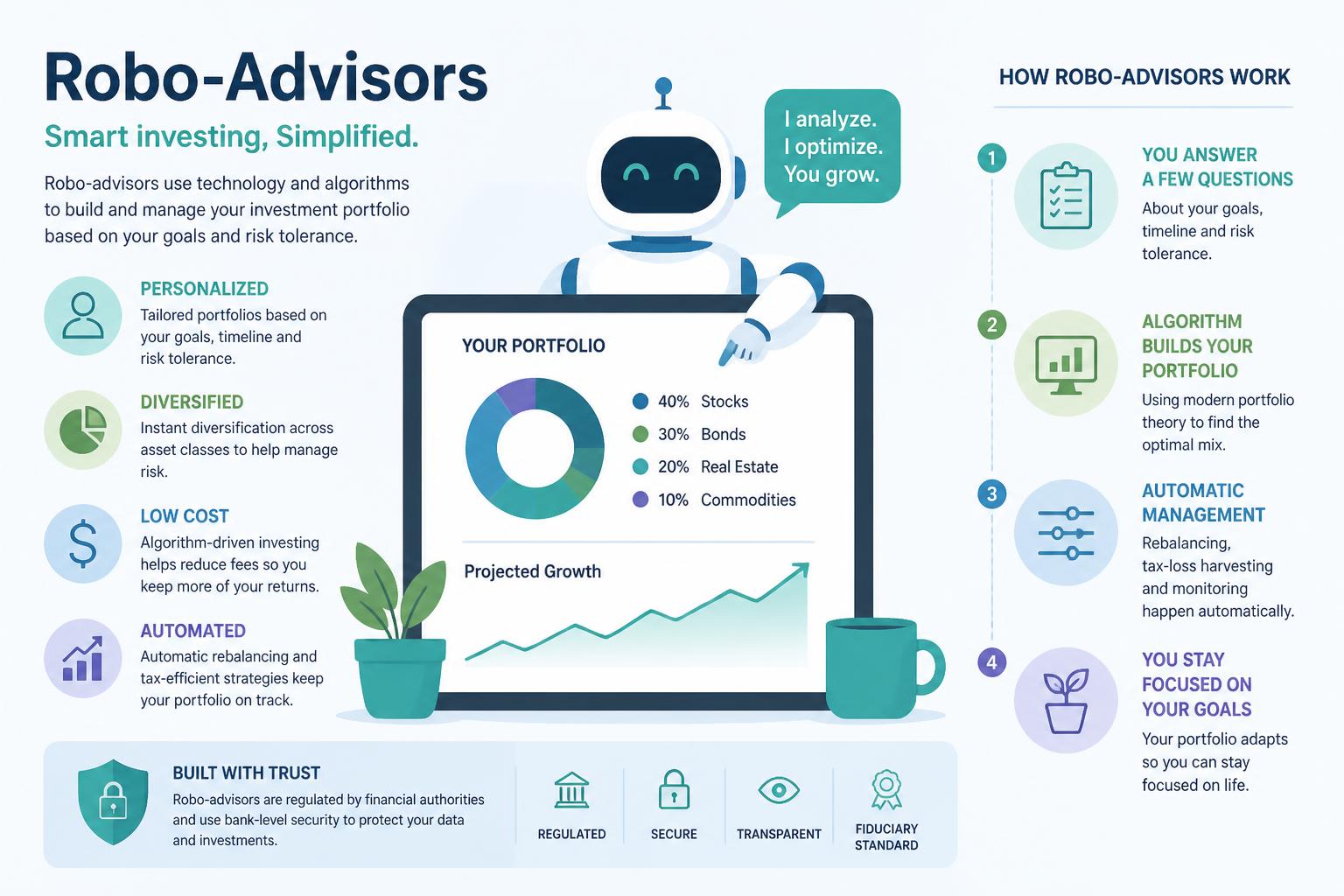
Investing tends to feel more complicated than it needs to. Robo-advisors try to remove some of that friction by automatically building and managing a diversified portfolio for you. They handle things like rebalancing and risk allocation in the background, so you do not have to think about it every day.
The tricky part is the word “free.” Some platforms really do remove advisory fees, while others only waive them under certain conditions or balance tiers.
This guide looks at the main options in 2026 that come close to zero-cost investing, along with what each one is actually good for.
—
at a glance: free robo-advisors (2026)
Tool Best for Starting price Free plan SoFi Automated Investing No advisory fees $0 Yes Schwab Intelligent Portfolios Hands-off investing $5,000 min Yes Fidelity Go Beginner-friendly setup $0 Partial M1 Finance DIY automation mix $0 Yes Betterment Goal-based planning $0 (cash only) Partial Vanguard Digital Advisor Retirement focus $3,000 min No Acorns Small savings habits $3/mo No
how these platforms were evaluated
A few things matter more than marketing when comparing robo-advisors:
- total cost over time (fees + fund expenses)
- how much automation actually handles for you
- portfolio construction and diversification
- minimum deposit requirements
- ease of getting started
- long-term usefulness for goals like retirement
—
1. sofi automated investing — closest thing to fee-free investing
SoFi keeps things simple. You answer a short questionnaire, and it builds an ETF-based portfolio around your risk level. After that, it mostly runs on autopilot.
There is no advisory fee here, which is the main reason it often gets attention in “free investing” discussions.
what it offers
- automated ETF portfolios
- automatic rebalancing
- goal-based setup
- integration with SoFi accounts
pricing
- advisory fee: $0
- ETF costs: roughly 0.03%–0.08%
- minimum: $0
pros
- no management fee
- easy onboarding
- no minimum balance
- simple mobile experience
cons
- limited tax optimization tools
- not much portfolio customization
- smaller ecosystem than large brokers
best for: people who want something automatic without paying advisory fees.
👉 Try SoFi Automated Investing → (affiliate link placeholder)
—
2. schwab intelligent portfolios — built for low-maintenance investing
Schwab’s robo-advisor is designed for people who want to set things up once and mostly leave it alone. It builds diversified ETF portfolios and manages them automatically.
One detail that stands out: part of the portfolio is kept in cash, which some investors like and others do not.
what it offers
- automated global ETF portfolios
- rebalancing
- tax-loss harvesting (premium access)
- retirement tracking tools
pricing
- advisory fee: $0
- minimum: $5,000
- ETF expenses apply
pros
- no advisory fee
- backed by a large, established broker
- solid diversification approach
- optional tax features
cons
- cash allocation may feel high
- relatively high entry requirement
- limited customization
best for: people who want something hands-off with a traditional brokerage behind it.
—
3. fidelity go — simple entry point for beginners
Fidelity Go keeps the process straightforward. You answer a few questions and get a managed portfolio without needing to pick funds yourself.
It is built for people who just want to start investing without learning too much upfront.
what it offers
- managed portfolios
- automatic rebalancing
- guided setup
- access to Fidelity platform
pricing
- $0 for smaller balances (promotional tiers)
- 0.35% annual fee above thresholds
- minimum: $0
pros
- easy to use
- strong brokerage backing
- no starting minimum
- smooth upgrade path inside Fidelity
cons
- fees increase with higher balances
- limited customization
- basic tax features
best for: first-time investors who want a simple starting point.
—
4. m1 finance — automation with room for control
M1 Finance sits between robo-advisor and DIY investing. You choose or build a portfolio, then the system handles buying and rebalancing.
It works around “pies,” which are custom allocations of ETFs and stocks.
what it offers
- custom portfolio pies
- automatic rebalancing
- fractional shares
- dividend reinvestment
pricing
- $0 basic investing
- optional premium tiers
- minimum: $0
pros
- flexible portfolio design
- strong automation once set up
- no advisory fee
- good long-term structure
cons
- takes some setup effort
- not fully hands-off
- limited tax optimization
best for: people who want some control but still want automation doing the heavy lifting.
—
5. betterment — structured goal-based investing
Betterment is known for its goal-driven approach. Instead of just managing a portfolio, it organizes investing around targets like retirement or major purchases.
It is not fully free for investing accounts, but it does offer strong automation and planning tools.
what it offers
- goal tracking dashboards
- tax-loss harvesting
- automated rebalancing
- retirement planning tools
pricing
- 0.25% annual advisory fee (investing accounts)
- cash management: $0 advisory fee
- minimum: $0
pros
- very polished user experience
- strong automation tools
- good tax optimization
- clear goal structure
cons
- investing accounts are not free
- customization is limited
- fees apply at all balance levels
best for: people who want structure around financial goals.
—
6. vanguard digital advisor — retirement-focused approach
Vanguard’s robo-advisor is built around long-term investing discipline. It uses low-cost ETFs and leans heavily toward retirement planning.
what it offers
- retirement-focused portfolios
- automatic rebalancing
- goal tracking
- diversified ETF allocations
pricing
- around 0.20% advisory fee
- minimum: $3,000
pros
- strong long-term strategy
- very low fund costs
- simple diversification model
- trusted provider
cons
- not free
- higher entry barrier
- less flexibility
best for: retirement-focused investors who prefer a steady, long-term setup.
—
7. acorns — small habits through automation
Acorns takes a different approach. It rounds up everyday purchases and invests the spare change. The idea is more about building habits than optimizing returns.
what it offers
- round-up investing
- prebuilt portfolios
- retirement accounts
- basic financial education tools
pricing
- $3–$12 per month
- minimum: $0
pros
- very easy to start
- encourages saving habits
- fully automated
- beginner-friendly
cons
- monthly fee adds up
- limited control
- less efficient for larger balances
best for: people who want to build consistent saving habits without thinking about it too much.
—
master comparison
Feature SoFi Schwab Fidelity Go M1 Finance Betterment Vanguard Acorns Advisory fee Free Free Partial Free Paid Paid Paid Minimum deposit $0 $5,000 $0 $0 $0 $3,000 $0 Tax-loss harvesting No Limited No No Yes Yes No Custom portfolios No No No Yes Limited No No Fully automated Yes Yes Yes Yes Yes Yes Yes Typical use Free investing Hands-off setup Beginners DIY + automation Goal planning Retirement Micro saving
how to pick one
A simple way to narrow it down:
- want no advisory fees at all → SoFi
- want something you set and forget → Schwab
- want the simplest start → Fidelity Go
- want control plus automation → M1 Finance
- want goal-based structure → Betterment
- focused on retirement → Vanguard
- want habit-based saving → Acorns
—
faq
what is the best free robo-advisor in 2026? SoFi and M1 Finance are the closest options to no-fee automated investing.
are robo-advisors safe? They operate as regulated brokerage platforms and typically use diversified ETF portfolios.
do robo-advisors beat the market? No. They are designed to track the market with less effort, not outperform it.
which robo-advisor has zero fees? SoFi and M1 Finance do not charge advisory fees, though ETF costs still apply.
can you lose money with robo-advisors? Yes. They invest in markets, so values can go up or down.
—
final note
If the goal is simply to start investing without paying advisory fees, SoFi is usually the easiest entry point. If you want more structure or planning tools, Betterment is often the next step people look at.
Start simple, then adjust once you get a feel for how you want to invest.