How to Compare AI Image Generators in 2026
FTC Disclosure: This article contains affiliate links. If you purchase through these links, I may earn a commission at no additional cost to you.
You’re staring at 15+ AI image generators. One costs $10, another $20, several claim to be free. You need images for your project tomorrow, and choosing the wrong tool means wasted time and starting over.
This guide shows you how to evaluate any AI image generator using five criteria that actually matter. You’ll know which tools are good at what, how to test them, and how to pick the right one for your work—social media content, design projects, whatever.
AI image generation shifted in early 2026. Tools like Nano Banana Pro and Flux 2 raised the bar. Midjourney and ChatGPT went different directions. Here’s how to compare them without falling for marketing.
What You Need First
Know what type of images you need. Realistic photos, illustrations, concept art—be specific. Have a budget range ($0-$50/month is typical). Estimate how many images you’ll make. 10 per week is different from 1000.
This takes 30-45 minutes if you follow the process.
You don’t need accounts yet. Test before you pay.
Define Your Use Case
Write down your use case in one sentence before you look at any tools.
Ask yourself:
- What will you create? Social posts, marketing materials, concept art, product shots, website graphics
- How realistic does it need to be?
- How often will you use it?
- Have you used AI tools before?
You need something like “I create 20-30 realistic product lifestyle images per week for social media” or “I need concept art and moodboards for client presentations twice a month.”
“I want good images” won’t help. Get specific.
Pick Your Five Comparison Criteria
Not all features matter. These five separate useful tools from overhyped ones:
Prompt Adherence (30%)
Does it generate what you asked for? Imagen 4 nails prompt adherence. Other tools drift from your instructions.
Visual Quality (25%)
How professional are the outputs? Flux 2 Pro renders at 4-megabyte resolution now.
Consistency (20%)
Can you generate similar images multiple times? Nano Banana 2 stays consistent across generations, which matters if you’re building a brand.
Speed and Workflow (15%)
How fast can you iterate? ChatGPT’s conversational interface lets you make changes without starting over. Discord-based tools add friction.
Cost Per Output (10%)
What’s your actual cost per usable image? Not just the subscription price. Count the generation failures and iteration needs.
Write these down. You’ll score each tool against them.
Pick 3-4 Tools to Test
Don’t test everything. Pick from these tiers:
Professional all-rounders
- Nano Banana Pro — 9.50/10 overall in recent testing
- Flux 2 — 8.78/10, strong at high-resolution professional outputs
- Midjourney — 8.62/10, best for creative prompts and moodboarding
Specialized tools
- ChatGPT 1.5 — 8.55/10, conversational workflow
- Imagen 4 — 8.49/10, reliable prompt adherence
- Ideogram — 8.51/10, strong text rendering
Budget options
- Canva AI — works if you’re already in their ecosystem
- Adobe Firefly — same deal, though performance lags
Choose 3-4 tools from the tier that fits your use case. Testing more than four just makes it harder to decide.
Create Three Test Prompts
You need consistent prompts to compare fairly. Make three that represent your actual work:
Prompt 1: Straightforward realistic request
Example: “A professional woman in her 30s working on a laptop in a modern coffee shop, natural lighting, shallow depth of field”
Prompt 2: Complex multi-element scene
Example: “A wooden desk with a smartphone, coffee cup, notebook, and succulent plant, top-down view, morning light through window, product photography style”
Prompt 3: Creative or abstract
Example: “Abstract representation of digital transformation, flowing data streams, blue and purple gradient, tech aesthetic”
Write your three prompts and save them. You’ll run these exact prompts through each tool.
Run Free Trials or Limited Tests
Most major tools have free tiers or trial periods in 2026:
- ChatGPT: Free tier includes limited image generation, $20/mo for unlimited
- Midjourney: Starts at $10/mo, no free tier as of 2026
- Canva AI: Included with Canva Pro trial
- Adobe Firefly: Free limited access, $10/mo for full features
- OpenArt: Access to multiple generators including Flux through one subscription
For tools without free tiers, check community showcases on Discord or Reddit, YouTube comparison videos from 2026 (not older—tools changed), or example galleries on official sites.
Run your three test prompts on each tool. Save the outputs: [tool-name]-[prompt-number].png
Generate each prompt 2-3 times if you can. Single generations can be flukes.
You should have 9-12 images total for side by side comparison.
Score Each Tool
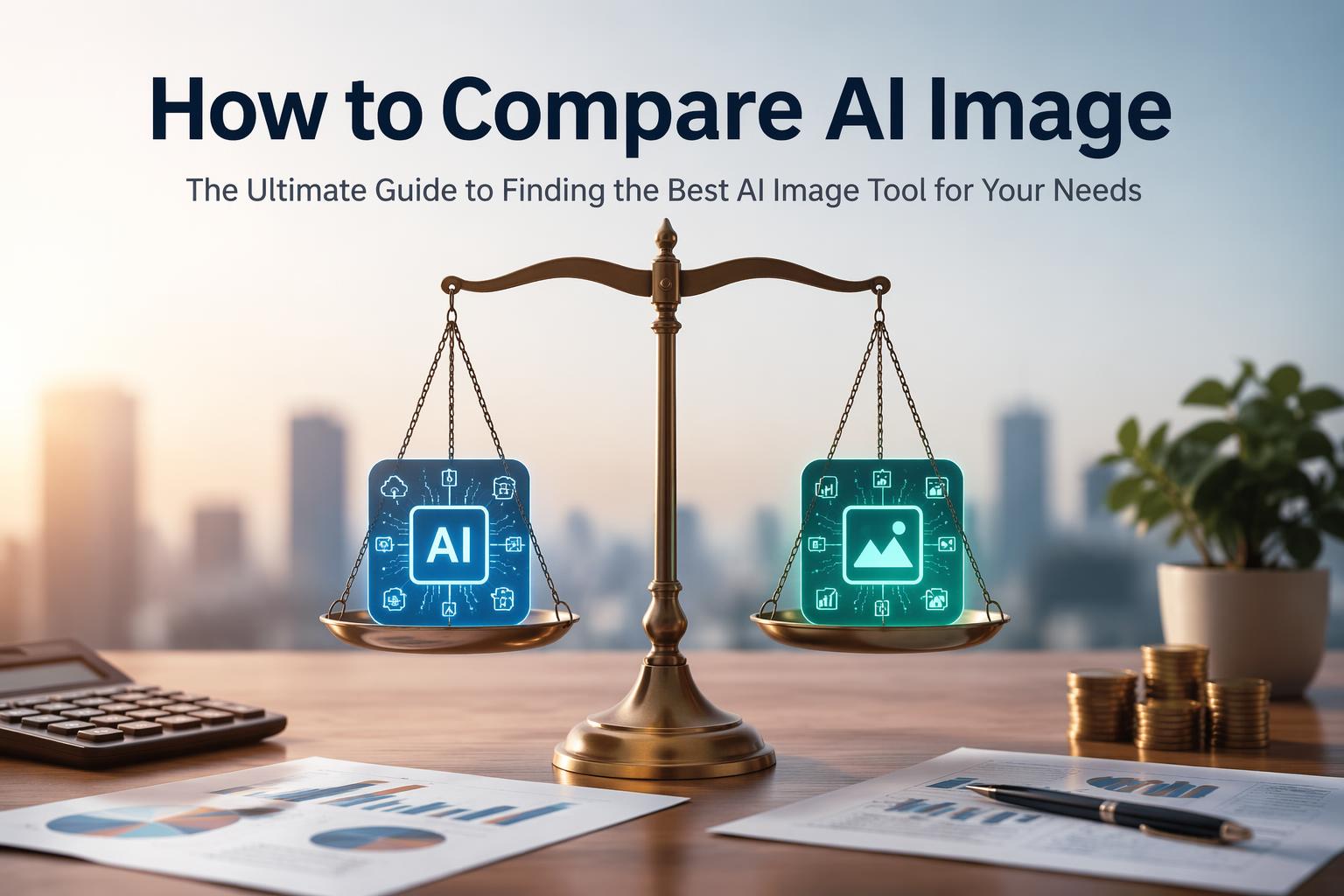
Open a spreadsheet. Score each tool 1-10 on your five criteria. Be honest.
- Prompt Adherence: Did it generate what you asked? Count how many elements from your prompt appear correctly.
- Visual Quality: Would you publish this without edits? Does it look professional or obviously AI generated?
- Consistency: How similar were repeat generations? Did style or quality vary wildly?
- Speed and Workflow: Time from prompt to usable output, including interface friction.
- Cost Per Output: Subscription cost ÷ estimated monthly outputs you’d actually use.
Apply your weights. If Prompt Adherence is 30% and a tool scores 9/10, that’s 2.7 points toward the final score.
A clear winner should emerge based on your priorities, not generic “best overall” claims.
Test the Integration
The best tool in isolation can be terrible if it doesn’t fit your workflow.
For content creators:
- Can you export in the formats and resolutions you need?
- Does it integrate with your editing software?
- Can you batch generate multiple variations?
For teams:
- Can multiple people access the same account?
- Is there asset management?
- Can you maintain brand consistency across team members?
For commercial use:
- Is commercial use allowed in your plan tier?
- Are there licensing restrictions?
- Does the training data create legal concerns? Adobe Firefly uses licensed training data specifically for this reason.
Spend 10-15 minutes moving outputs from the tool into your existing workflow. If it’s clunky now, it’ll be worse on a deadline.
Calculate True Cost Per Image
Subscription price doesn’t tell you much. Calculate actual cost per usable image:
True Cost = (Monthly Subscription + Time Cost) ÷ Usable Images Generated
Time cost: your hourly rate (or $50/hr as default) times average minutes per usable image including iterations. If you spend 10 minutes per final image, that’s $8.33 in time at $50/hr.
Example:
- Tool: ChatGPT at $20/mo
- You generate 40 images per month, 30 are usable
- Average 5 minutes per final image = 2.5 hours = $125 time cost
- True cost: ($20 + $125) ÷ 30 = $4.83 per usable image
Run this for each tool. The cheapest subscription isn’t always most cost effective. Premium tools with better prompt adherence often cost less per usable output.
Make Your Decision with a 30 Day Checkpoint
Pick one tool to commit to for 30 days. Not six months, not multiple tools—one tool for one month.
Set a calendar reminder for 30 days:
- Am I using this as often as I planned?
- Has the quality stayed consistent?
- Have I hit unexpected limitations?
- Would I pay for another month?
This prevents sunk cost fallacy. If a tool seemed perfect in testing but fails in production, you’re only out one month.
Tool quality and features change constantly. Nano Banana Pro was released in early 2026 and immediately jumped to the top. Your 30 day checkpoints let you pivot.
What You’ve Built
You have a repeatable framework for comparing AI image generators. You tested real tools with your real use cases, calculated true costs, and made a decision weighted to your priorities.
The 2026 leaders for different use cases:
- All around: Nano Banana Pro at 9.50/10
- Creative work: Midjourney at 8.62/10
- Iterative workflow: ChatGPT 1.5 at 8.55/10
- Prompt adherence: Imagen 4 near perfect
As you use your tool over 30 days, you’ll develop intuition for prompt engineering specific to that platform. This is why committing to one tool matters. Scattered usage across multiple platforms prevents you from mastering any.
Troubleshooting Common Problems
“All the tools look the same to me”
Your test prompts weren’t specific enough. Instead of “a person working,” try “a Black woman in her 40s with natural hair, wearing a yellow blazer, typing on a MacBook Pro in a sunlit room with plants visible in the background.”
“The best rated tool didn’t work well for me”
Generic ratings reflect averaged performance across diverse use cases. Your use case might be an outlier. Trust your own weighted scores.
“Free trials ran out before I finished testing”
Use the first tool’s free tier to refine your test prompts, then run the polished prompts through remaining tools. Don’t waste trial credits figuring out what to test.
“I can’t afford any of the top rated tools”
Start with ChatGPT’s free tier or explore OpenArt’s multi-generator access. The gap between free and paid tiers narrowed in 2026. You can produce professional work on limited budgets, just with more iteration.
“My industry has specific requirements not covered here”
Add industry specific criteria. Medical or scientific users should add “anatomical accuracy.” Architects might add “perspective accuracy.” Adjust the weights.
Next Steps
- Set up your chosen tool properly. Don’t skip onboarding tutorials. Each platform has nuances.
- Build a prompt library. Save prompts that work. Small wording changes can affect outputs dramatically.
- Join the community. Most tools have Discord servers, Reddit communities, or forums where users share tips.
- Schedule your 30 day review. Actually do the checkpoint. Tool quality changes, your needs evolve, better options emerge.
FAQ
Do I need expensive AI image generators or will free ones work?
Depends on your quality bar and volume. Free tiers of ChatGPT or limited Firefly access can produce professional results for occasional use. If you’re generating 20+ images per week or need consistent brand aesthetics, paid tools like Nano Banana Pro or Flux 2 deliver better consistency and quality. Calculate your true cost per usable image. Premium tools often cost less per output than free tools that require extensive iteration.
How long does it take to properly compare AI image tools?
30-45 minutes of focused testing. That includes defining your use case, creating test prompts, running 3-4 tools, and scoring results. Most people spend hours testing randomly and still can’t decide. This compresses it into under an hour.
Can I use free AI image generators for commercial work?
Check each tool’s terms. ChatGPT allows commercial use of generated images under current terms. Adobe Firefly focuses on commercial safe training data, making it lower risk for businesses concerned about licensing. Midjourney has specific commercial use provisions. Free tiers often have different commercial rights than paid plans. Read the fine print.
Which AI image generator is best for beginners in 2026?
ChatGPT 1.5 has the most forgiving learning curve. Its conversational interface lets you describe what you want naturally and ask for adjustments in plain language. Canva AI is another beginner friendly option if you’re comfortable with Canva’s design interface. Avoid starting with Discord based tools like Midjourney until you’re comfortable with prompt syntax.
What should I do if my chosen tool stops working well after a few weeks?
This is why the 30 day checkpoint exists. Tools update frequently, sometimes degrading specific capabilities. If quality drops, check community forums to see if others report the same issue. It might be temporary. If the problem persists, run your original test prompts on 2-3 alternative tools to see if switching makes sense. Don’t keep using a tool that no longer meets your needs just because you paid for a month.
How often do AI image generator rankings change?
Constantly. Nano Banana Pro didn’t exist before 2026 and immediately became the highest rated option. Flux 2 re-entered as a top generator in early 2026 after updates. Plan to reassess your tool choice every 3-6 months, or whenever you hear about major updates. The evaluation framework in this guide stays constant even as specific tools rise and fall.