How to Use Dividend Investing: A Step-by-Step Guide for 2026
Disclosure: This article contains affiliate links. If you purchase through these links, I may earn a commission at no extra cost to you.
You want your money to work for you. Not sit idle. Not just grow slowly. But actually send you cash while you hold it.
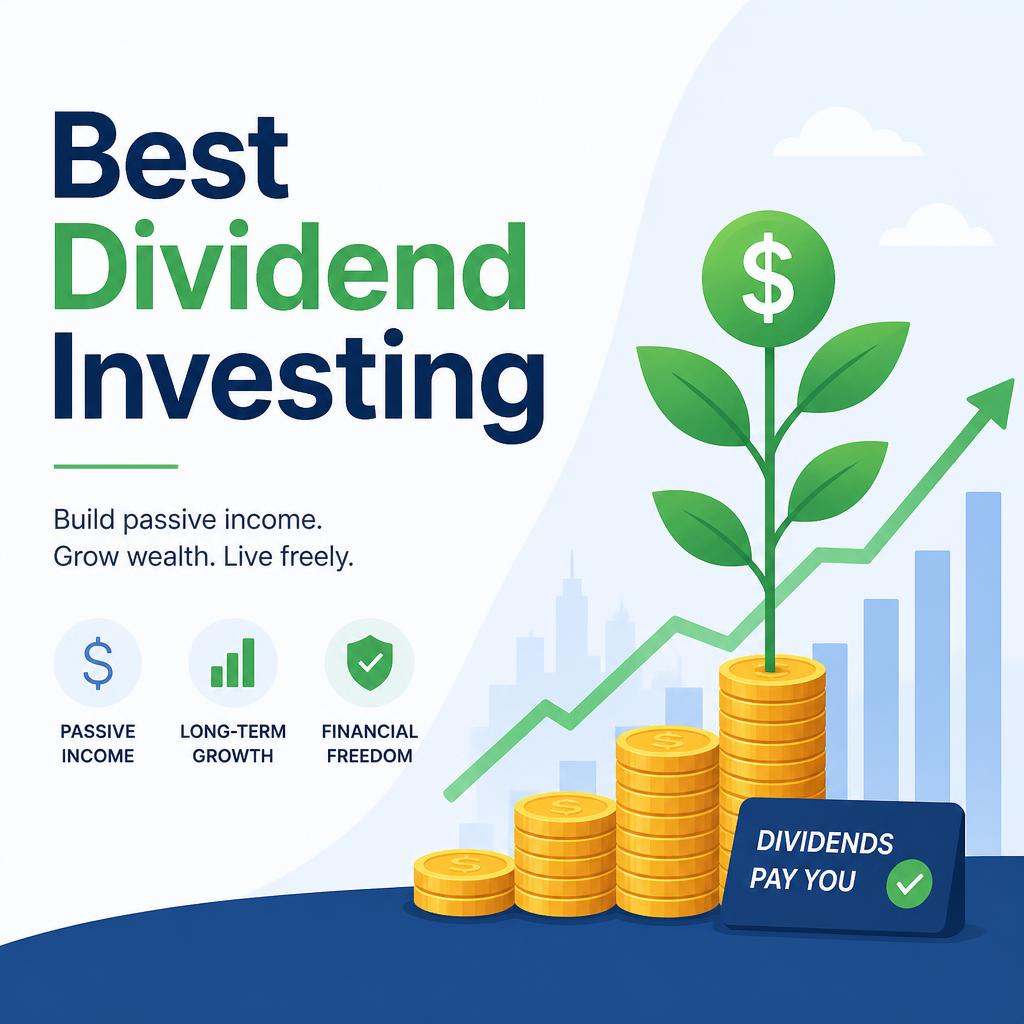
That’s dividend investing. Companies pay you regularly just for owning their stock. The best part? You keep the shares and can collect those payments year after year.
But here’s the trap most beginners fall into: chasing high yields without checking if those dividends are sustainable. A 10% yield looks attractive until the company cuts it in half next quarter.
By the end of this guide, you’ll know exactly how to pick dividend stocks that actually deliver, build a portfolio that generates steady income, and avoid the mistakes that cost beginners thousands.
What you need before starting:
- A brokerage account (free to open with most platforms)
- Starting capital (even $100 works — you can buy fractional shares)
- 30-45 minutes to complete this tutorial
- Basic understanding of what stocks are
Estimated time: 45 minutes for setup, ongoing 15 minutes per month for monitoring.
Step 1: Understand How Dividend Investing Actually Works
Before you buy anything, you need to know what you’re getting into.
Dividend investing means buying shares in companies that distribute part of their profits to shareholders. Most US dividend stocks pay quarterly — four times per year. You receive cash directly into your brokerage account.
Here’s what matters:
- Dividend yield shows how much income a stock produces relative to its price. If a $100 stock pays $4 annually, that’s a 4% yield.
- Payout ratio reveals what percentage of earnings the company pays as dividends. A 90% payout ratio means the company keeps only 10% of earnings — risky territory.
- Dividend growth matters more than current yield. A company that raises dividends consistently (Dividend Aristocrats maintain 25+ year streaks) protects you from inflation.
You should see: A clear picture of why dividend investing differs from growth investing. Dividend stocks provide income now; growth stocks bet on future price appreciation.
> Warning: A higher yield than normal often signals a falling stock price, not generosity. Always investigate why a yield looks unusually high.
Step 2: Decide Your Dividend Strategy
Not all dividend approaches are equal. Pick one that matches your goals.
Four proven strategies for 2026:
Dividend Aristocrats approach — Focus on companies with 25+ consecutive years of dividend increases. These stocks have survived recessions, market crashes, and economic chaos while still paying shareholders.
High-yield approach — Target stocks with above-average yields (4%+). More income now, but higher risk of dividend cuts.
Dividend growth approach — Buy stocks with lower current yields but strong growth rates. Your income compounds faster over time.
Dogs of the Dow method — Buy the 10 highest-yielding stocks in the Dow Jones. Rebalance annually.
For beginners in 2026, I recommend the Dividend Aristocrats approach. Why? These companies have proven they can maintain dividends during tough times. Most portfolios yield between 2.5% and 3.5%, and that’s healthy.
You should see: One strategy that fits your risk tolerance and time horizon. If you’re under 40 and focused on long-term growth, prioritize dividend growth over current yield. If you need income now, high-yield makes sense.
Step 3: Learn the Four Critical Dividend Dates
Miss these dates and you miss your payment. Every dividend has four dates that matter:
- Declaration date — When the company announces the dividend amount
- Ex-dividend date — The cutoff. Own the stock before this date or you don’t get paid
- Record date — The company checks who owns shares (usually 1-2 days after ex-dividend date)
- Payment date — Cash hits your account
Here’s what you need to do:
- Check the ex-dividend date before buying
- Buy at least one day before the ex-dividend date
- Hold through the payment date to receive your dividend
You should see: Dividend payment deposited into your brokerage account on the payment date, typically as cash unless you’ve elected dividend reinvestment.
> Note: Stock prices typically drop by the dividend amount on the ex-dividend date. This is normal — you’re receiving that value as cash instead.
Step 4: Screen for Quality Dividend Stocks
Now you’re ready to find actual stocks. Quality matters more than yield.
Use these filters when screening:
- Economic moat rating — Look for “wide moat” companies. According to Morningstar’s 2026 data, companies with wide economic moats are less likely to cut dividends than those with narrow moats.
- Payout ratio below 75% — The company needs breathing room. PepsiCo’s payout ratio sits at 89.33% in 2026 (too high for comfort), while S&P Global maintains 24.35% (plenty of cushion).
- Dividend growth streak — Minimum 5 consecutive years of increases. Dividend Kings have 50+ years.
- Price-to-fair-value ratio — Avoid overvalued stocks. Morningstar’s 2026 analysis shows PepsiCo trading at 0.85 of fair value ($169 fair value estimate) and S&P Global at 0.79 of fair value ($530 fair value estimate). Both are undervalued entry points.
- Capital allocation rating — Look for “Exemplary” ratings. This shows management returns cash to shareholders effectively.
You should see: A shortlist of 3-5 stocks that pass all quality filters. Strong balance sheets, reasonable valuations, and sustainable payouts.
> Warning: Chasing high dividend yields is dangerous. A 10% yield often means the market expects a dividend cut. Stick to yields between 2.5% and 5% for safety.
Step 5: Evaluate Specific Dividend Stocks
Let’s walk through how to analyze a real example using 2026 data.
Take PepsiCo (PEP):
- Forward dividend yield: 4.10%
- Current quarterly dividend: $1.48
- Economic moat: Wide
- Capital allocation: Exemplary
- Morningstar price/fair value: 0.85 (undervalued)
- Payout ratio: 89.33% (high — watch for sustainability)
Here’s the analysis process:
- Check the forward dividend yield (4.10% is attractive in 2026)
- Verify the economic moat (Wide = competitive advantages protect the business)
- Review payout ratio (89.33% is elevated but Pepsi has pricing power)
- Compare current price to fair value (trading at 15% discount)
- Read recent earnings reports for dividend sustainability commentary
Contrast with S&P Global (SPGI):
- Forward dividend yield: 0.91%
- Current quarterly dividend: $0.97
- Economic moat: Wide
- Capital allocation: Exemplary
- Morningstar price/fair value: 0.79 (deeply undervalued)
- Payout ratio: 24.35% (very safe)
S&P Global offers a lower yield but much higher dividend growth potential and safety. The 24.35% payout ratio means the company can easily double its dividend without financial stress.
You should see: Clear trade-offs. PepsiCo gives you more income now; S&P Global offers more growth and safety for the future.
Step 6: Consider Dividend ETFs for Instant Diversification
If picking individual stocks feels overwhelming, dividend ETFs offer one-click diversification across hundreds of dividend payers.
Three beginner-friendly options for 2026:
SCHD (Schwab U.S. Dividend Equity ETF)
- Cost: $50-$150 per share (or fractional shares)
- Strategy: High-quality dividend growers
- Best for: Total beginners who want one-click diversification
VIG (Vanguard Dividend Appreciation ETF)
- Cost: $50-$150 per share
- Strategy: Broad diversification across dividend growers
- Best for: Long-term growth with steady income
NOBL (ProShares S&P 500 Dividend Aristocrats ETF)
- Cost: $50-$150 per share
- Strategy: Only stocks with 25+ year dividend growth streaks
- Best for: Set-it-and-forget-it investors who want proven reliability
How to buy a dividend ETF:
- Log into your brokerage account
- Search for the ticker symbol (e.g., “SCHD”)
- Review the current yield and expense ratio
- Enter the number of shares or dollar amount you want to invest
- Select “Market Order” for immediate execution
- Confirm and submit
You should see: Instant exposure to 50-100+ dividend-paying stocks with a single purchase. Your portfolio now generates dividends from multiple companies without individual stock research.
> Note: ETFs charge expense ratios (typically 0.06% – 0.30% annually). This is automatically deducted from returns — you don’t pay it separately.
Step 7: Set Up Dividend Reinvestment (DRIP)
Once you own dividend stocks, decide what to do with the payments.
Two options:
- Take cash — Dividends deposit into your account as cash (useful if you need income)
- Reinvest automatically — Use a DRIP (Dividend Reinvestment Plan) to buy more shares automatically
For beginners building wealth, reinvest.
How to enable DRIP in most brokerages:
- Navigate to account settings or holdings
- Find “Dividend Reinvestment” or “DRIP” options
- Select which holdings should reinvest dividends
- Choose “Reinvest all dividends” for automatic compounding
- Save your preferences
You should see: Future dividends automatically purchasing additional fractional shares instead of sitting as cash. This compounds your returns — you earn dividends on your dividends.
Example math: If you own $10,000 of a stock yielding 4% with dividends reinvested, you’ll receive $400 in year one. That $400 buys more shares, which generate their own dividends. After 20 years at 4% yield with 5% annual dividend growth, you’d have approximately $35,000+ without adding a single dollar beyond the initial investment.
Step 8: Monitor Financial Health and Balance Sheet Strength
Dividends don’t pay themselves. You need to check periodically that your companies can still afford their payouts.
Quarterly monitoring checklist (15 minutes per quarter):
- Check earnings reports — Did the company beat or miss earnings estimates?
- Review free cash flow — Is the company generating enough cash to cover dividends?
- Monitor debt levels — Rising debt can threaten dividend sustainability
- Track payout ratio changes — Is the ratio increasing toward dangerous territory (80%+)?
- Read management commentary — Any mention of dividend policy changes?
Warning signs to watch for:
- Payout ratio climbing above 80%
- Declining revenue for 2+ consecutive quarters
- Management cutting guidance
- Increasing debt without corresponding revenue growth
- Industry headwinds affecting all competitors
You should see: Quarterly confirmation that your dividend stocks remain healthy. Most quarters will show nothing concerning — that’s good. You’re watching for red flags that appear before dividend cuts.
> Real 2026 example: Air Products and Chemicals (APD) raised its dividend to $1.81 from $1.79, maintaining its 44-year growth streak. That’s the stability you want to see.
Step 9: Understand Tax Implications
Dividends create tax obligations. Know what you owe before you owe it.
Two types of dividends for tax purposes:
- Qualified dividends — Taxed at favorable capital gains rates (0%, 15%, or 20% depending on income)
- Ordinary dividends — Taxed as regular income (potentially higher rates)
To qualify for the lower tax rate, you must:
- Hold the stock for more than 60 days during the 121-day period around the ex-dividend date
- The company must be a U.S. corporation or qualified foreign corporation
Tax-advantaged accounts bypass most of this:
- Roth IRA: Tax-free dividend growth if you follow withdrawal rules
- Traditional IRA: Tax-deferred until retirement withdrawals
- 401(k): Tax-deferred dividend accumulation
You should see: Form 1099-DIV from your brokerage in January showing total dividends received. Qualified and ordinary dividends are reported separately.
> Note: International dividend stocks (like Roche Holding) may have foreign tax withholding deducted before you receive payment. This is automatic and you may be able to claim a foreign tax credit.
Step 10: Avoid Common Dividend Traps
Smart investors learn from others’ mistakes. Here are the traps that cost beginners money:
Trap 1: Yield chasing
Don’t buy a stock just because it has an 8% yield. High yields often signal impending dividend cuts. Stick to yields between 2.5% and 5% for sustainable income.
Trap 2: Buying overvalued stocks for dividends
According to VanEck’s 2026 research, buying overvalued stocks just for dividends results in poor total returns over time. Check the price-to-fair-value ratio before buying.
Trap 3: Ignoring dividend growth
A stock yielding 2% that grows dividends 10% annually will outperform a 5% yielder with flat payments within 5-7 years.
Trap 4: Forgetting about total return
Dividends matter, but price appreciation does too. A stock that pays 4% but drops 15% in value leaves you down 11% — not up 4%.
Trap 5: Concentrating in one sector
Don’t build a portfolio of only bank stocks or only utility stocks. Sector concentration amplifies risk when that industry faces headwinds.
You should see: A diversified portfolio across at least 3-4 sectors, reasonable valuations, sustainable payout ratios, and healthy dividend growth rates.
Step 11: Calculate How Much You Need for Your Income Goal
Let’s make this concrete. How much do you need invested to generate meaningful income?
The formula:
Annual income goal ÷ Average portfolio yield = Required investment
Examples using 2026 average yields (3%):
- $1,000/month income = $12,000 annual ÷ 0.03 = $400,000 invested
- $500/month income = $6,000 annual ÷ 0.03 = $200,000 invested
- $100/month income = $1,200 annual ÷ 0.03 = $40,000 invested
If you’re starting from zero, here’s the accumulation timeline:
Investing $500/month at 8% average annual return (5% price growth + 3% dividends):
- After 5 years: $36,700 portfolio → $92/month dividend income
- After 10 years: $91,500 portfolio → $229/month dividend income
- After 20 years: $294,500 portfolio → $736/month dividend income
- After 30 years: $745,000 portfolio → $1,863/month dividend income
You should see: Realistic expectations for timeline and capital requirements. Building meaningful dividend income takes years, not months.
Step 12: Build Your First Dividend Portfolio
Time to put it all together. Here’s a beginner-friendly portfolio structure for 2026:
Starter Portfolio ($5,000 – $10,000):
40% Dividend ETF (SCHD or VIG) — $2,000-$4,000
- Instant diversification
- Low maintenance
- Reliable baseline income
30% Dividend Aristocrats — $1,500-$3,000
- Split between 2-3 individual stocks
- Examples from 2026: S&P Global (SPGI), PepsiCo (PEP)
- Proven track records
20% Dividend Growth Stocks — $1,000-$2,000
- Lower current yield, higher growth potential
- Look for payout ratios under 50%
- Examples: Fidelity National Information Services (10% dividend growth in 2026)
10% Cash Reserve — $500-$1,000
- For opportunistic buying during market dips
- Covers any immediate cash needs without selling
How to execute:
- Open your brokerage account if you haven’t already
- Transfer your starting capital
- Buy your ETF position first (foundation layer)
- Add 2-3 individual Dividend Aristocrats
- Add 1-2 dividend growth stocks
- Keep the remainder in cash
- Set all positions to reinvest dividends automatically
You should see: A diversified portfolio generating quarterly dividend income from multiple sources, with automatic reinvestment compounding your returns.
Next Steps: Growing Your Dividend Income
You’ve built your foundation. Now you maintain and expand it.
Monthly maintenance (15 minutes):
- Add new capital if possible (dollar-cost averaging beats timing the market)
- Check for any dividend announcements from your holdings
- Review portfolio balance — rebalance if any position exceeds 15% of total
Quarterly deep dive (1 hour):
- Read earnings reports from your individual stock holdings
- Verify dividend sustainability using the monitoring checklist from Step 8
- Consider adding new positions if you’ve identified quality opportunities
Annual review (2-3 hours):
- Calculate total dividend income received
- Review tax documents and plan for next year’s tax strategy
- Assess whether your portfolio allocation still matches your goals
- Consider tax-loss harvesting opportunities in December
Advanced moves as you grow:
- Explore international dividend stocks for geographic diversification
- Research sector-specific dividend ETFs (real estate, utilities, financials)
- Learn about covered call strategies to generate additional income
- Study dividend capture strategies (advanced — not recommended for beginners)
VanEck’s 2026 research shows that dividend-paying stocks have historically outperformed non-dividend-paying stocks in terms of total return. You’re positioning yourself for both income and growth.
Troubleshooting Common Issues
Problem: “My dividend stock dropped 10% right after I bought it”
Solution: Stock prices fluctuate constantly. If the dividend remains safe and the company fundamentals haven’t changed, this is normal volatility. Focus on the dividend income, not daily price swings.
Problem: “I’m only earning $20 per quarter in dividends — is this worth it?”
Solution: Yes. That $20 is automatic, passive income you didn’t have before. It compounds over time. Focus on consistently adding capital and reinvesting dividends.
Problem: “One of my stocks cut its dividend”
Solution: Evaluate why. If it’s a temporary issue with a recovery plan, hold. If it’s permanent business model damage, sell and redeploy capital to a healthier dividend stock.
Problem: “I can’t decide between high yield now or dividend growth”
Solution: For investors under 50, prioritize dividend growth. Your income will compound faster. Over 50 and needing income now? Lean toward higher current yields with sustainable payout ratios.
Problem: “My portfolio yields less than I expected”
Solution: Quality over yield. A 3% yield from sustainable, growing dividends beats a 7% yield that gets cut to 3.5% next year. Focus on total return, not just current yield.
Frequently Asked Questions
Can you make $1,000 a month in dividends?
Yes, but it requires approximately $400,000 invested at a 3% average yield. Most investors build toward this goal over 15-25 years through consistent contributions and dividend reinvestment.
Do I need a paid plan for any tools to follow this tutorial?
No. Free brokerage accounts (Robinhood, Fidelity, Schwab, etc.) provide everything you need to buy dividend stocks and ETFs. Premium research services help but aren’t required.
Should I reinvest dividends or take cash?
Reinvest while building wealth (under age 60 typically). Take cash if you need the income for living expenses. Most investors transition from reinvestment to cash distribution as they approach retirement.
What’s the difference between qualified and ordinary dividends?
Qualified dividends are taxed at lower capital gains rates (0-20%), while ordinary dividends are taxed as regular income (potentially higher). Most U.S. stock dividends qualify for the lower rate if you hold the stock for 60+ days.
Are dividend stocks good for beginners?
Yes. Dividend stocks are ideal for beginners because they provide regular cash feedback on your investment, encouraging long-term holding. The companies tend to be established and less volatile than growth stocks.
How are dividends taxed?
In taxable accounts, dividends are taxed as qualified (capital gains rates) or ordinary income. In Roth IRAs, dividends grow tax-free. In traditional IRAs and 401(k)s, dividends are tax-deferred until withdrawal.
—
You now have a complete system for dividend investing. Start small, stay consistent, and let compound interest work in your favor. The investors who generate serious dividend income in 2036 are the ones who started building their portfolios in 2026.
Most importantly: focus on quality companies with sustainable dividends, not the highest yields. A disciplined dividend plan aligned with your goals and risk tolerance will serve you better than chasing quick income that disappears when the market turns.
Ready to open your first brokerage account and start building dividend income? The best time to start was ten years ago. The second best time is today.