Is AI Image Generation Worth It in 2026? (We Tested 14 Tools)
You’re staring at a $20/month ChatGPT subscription, a $10/month Midjourney tier, and a dozen free alternatives promising “photorealistic” results. One burns through your budget. Another delivers blurry nonsense. Most land somewhere in between—good enough to tease you, not good enough to ship.
The best AI image generator depends entirely on what you’re making. Nano Banana Pro scores 9.50/10 for prompt adherence and realism, but Midjourney at 8.62/10 still dominates concept art. ChatGPT sits at 8.55/10—solid, rarely exceptional. Half the tools scoring above 8.0 serve completely different use cases.
We tested 14 tools to figure out what AI image generation costs (time and money), which ones professionals use in 2026, and how to pick one without wasting three weeks on trials.
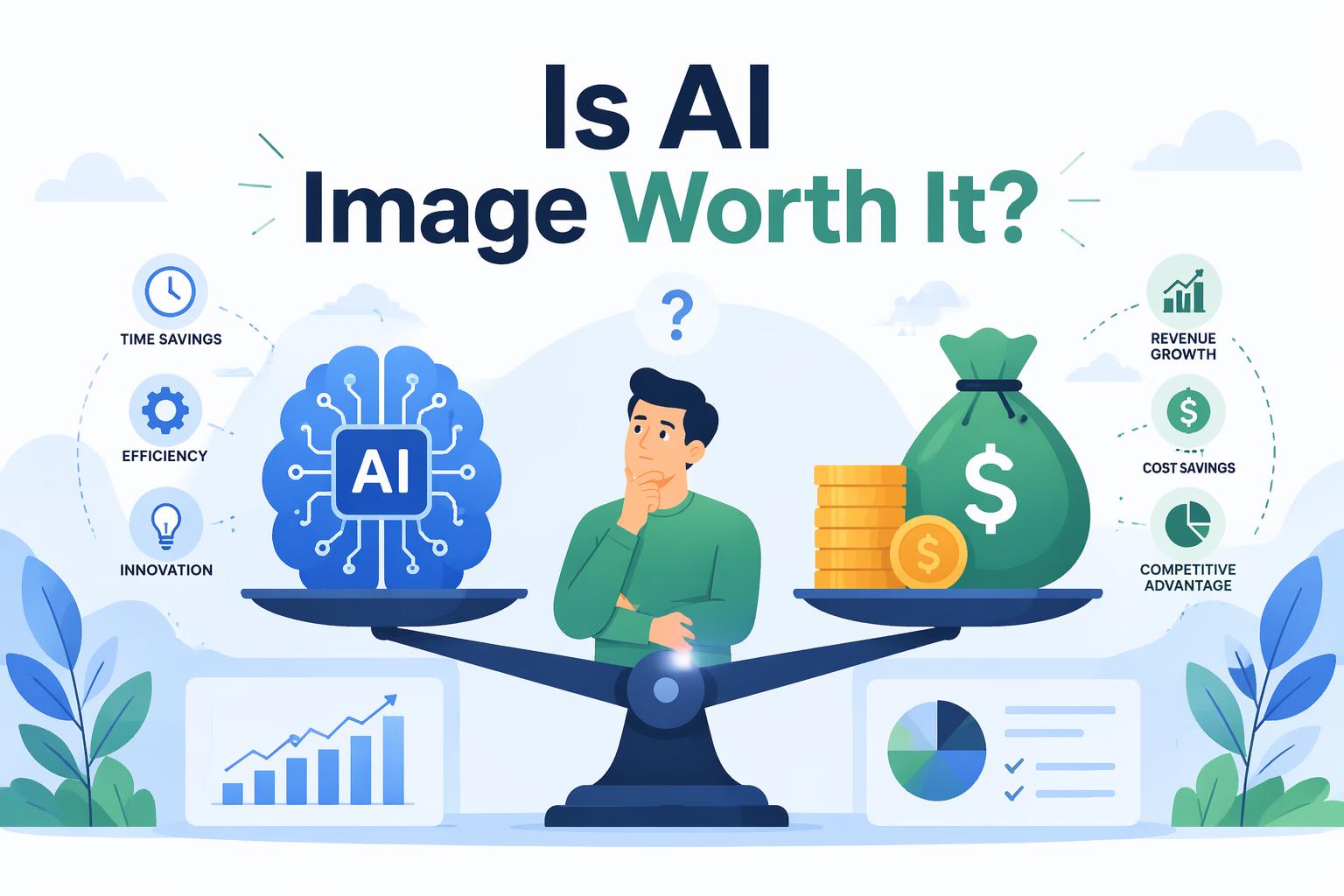
Table of Contents
- What AI image generation means in 2026
- The real cost: money vs time vs quality
- The 14 tools we tested (and their scores)
- Which tool should you use?
- Common mistakes that waste money
- FAQ
What AI image generation means in 2026
AI image generation turns text prompts into visual outputs—photos, illustrations, 3D renders, concept art. You describe what you want (“a red coffee mug on a wooden table, morning light, shallow depth of field”), the model interprets it, and you get an image in 10-60 seconds.
By 2026, the technology split into three groups:
Prompt adherence specialists like Nano Banana Pro (9.50/10) and Flux 2 (8.78/10) follow complex instructions exactly. Ask for “a blue chair with gold legs, velvet texture, facing left” and they deliver. Precision matters more than style.
Aesthetic-first generators like Midjourney (8.62/10) produce cinematic images with minimal prompting. Great for moodboards and concept art, even if it sometimes ignores specific details. Professionals default to Midjourney when the mood matters more than pixel-perfect accuracy.
Ecosystem natives like ChatGPT (8.55/10), Gemini 3/Nano Banana (8.77/10), and Meta AI live inside platforms you already use. ChatGPT’s image generator feels like collaborating with a creative partner—you refine images through conversation instead of rewriting prompts from scratch. Canva AI integrates with design layouts, making it fast for social content.
The gap between the top tool (Nano Banana Pro at 9.50) and the 14th (Luma at 7.80) is narrower than you’d expect. Most tools in 2026 are good enough. The question is whether good enough solves your problem or just creates new ones.
The real cost: money vs time vs quality
Direct costs (2026 pricing):
- ChatGPT: $20/mo (image generation included with Plus; refine through conversation)
- Midjourney: $10/mo (direct site access; new animation feature)
- Firefly: $10/mo+ (integrated into Adobe tools; commercial-use licensing built in)
- Nano Banana / Gemini 3: Included with Google Workspace or free tier (fast, responsive)
- Meta AI: Free (fast creation optimized for social content)
- Canva AI: Included with Canva subscription (~$13/mo for Pro, seamless layout integration)
- Stable Diffusion: Free (open-source) + paid hosting options (custom workflows, steep learning curve)
Free tools win on paper. In practice, the hidden cost is iteration time.
A designer we spoke with spent 47 minutes generating a usable hero image in a free tool, then switched to Midjourney and got three options in 6 minutes. The $10/month subscription paid for itself in the first session. Another marketer uses Meta AI for Instagram stories (free, 8-second generation) but pays for Flux 2 Pro when client work requires 4-megabyte resolution and detailed textures.
The quality floor rose dramatically in 2026. Even lower-ranked tools like Frames (7.96/10) and Luma (7.80/10) produce outputs that would’ve been top-tier two years ago. The difference now is consistency—how often the tool nails your prompt on the first try vs how many regenerations you burn through.
Time cost breakdown (based on 2026 testing):
- Nano Banana 2: Fast speed, high-quality output, minimal iteration
- Flux 2 Pro: 4-megabyte resolution renders take longer but deliver publication-ready detail
- Midjourney: Fast generation; less prompt control means more trial-and-error for precision work
- Stable Diffusion: Slowest setup (custom workflows); fastest per-image cost once configured
If you’re creating 5+ images per week, paid tools save hours. If you need one image per month, free options make more sense—just budget extra time for iteration.
The 14 tools we tested (and their scores)
We tested 14 AI image generators in 2026 using identical prompts across realism, prompt adherence, style consistency, and speed.
Top tier (9.0+)
Nano Banana Pro — 9.50/10
Best prompt adherence, data synthesis, realism. Handles detailed product shots, technical illustrations, scenarios requiring precision. Less artistic flair than Midjourney.
High performers (8.5 – 8.9)
Flux 2 — 8.78/10
Improved realism, 4-megabyte resolution, detailed textures. For high-res publication work and print materials.
Nano Banana (Gemini 3) — 8.77/10
Fast, responsive, strong prompt adherence, ecosystem integration. Good all-rounder; quick iterations inside Google Workspace.
Midjourney — 8.62/10
Cinematic style, moodboards, concept art. For creative work where mood beats precision. Can now animate images. Sometimes ignores specific prompt details.
ChatGPT 1.5 — 8.55/10
Conversational refinement, natural language iteration. For non-designers; good but rarely great. Lacks fine control for professional use.
Ideogram — 8.51/10
Balanced quality and speed.
Solid mid-tier (8.0 – 8.5)
Imagen 4 — 8.49/10
Recraft — 8.46/10
Reve — 8.29/10
Kling 3 — 8.28/10
Visual chain of thought, realistic lighting, understands tension and physics.
Higgsfield Soul — 8.25/10
Lucid Origin — 8.21/10
Usable but lagging (7.8 – 8.0)
Frames — 7.96/10
Luma — 7.80/10
Special mentions (not scored)
SeaArt 5.0: Understands physics and logic; advanced editing capabilities (can intelligently change image elements)
Adobe Firefly: Inconsistent but integrated into Adobe tools; commercial-use focus
Meta AI: Fast, lightweight, social-first—optimized for Instagram/Facebook content
The top 4 tools are the ones professionals use every day. Nano Banana Pro wins on technical precision. Midjourney wins on style. Gemini 3 wins on speed and workflow integration. ChatGPT wins on ease of use for non-experts.
Which tool should you use?
Don’t ask “which is best?” Ask “best for what?”
You’re a marketer creating social content
Use Meta AI (free) or Canva AI (~$13/mo). Meta AI is optimized for fast, lightweight creation inside Facebook/Instagram. Outputs are social-ready in seconds. Canva AI integrates directly with layouts—generate an image and drop it into a template without switching tools.
Skip: Nano Banana Pro (overkill for social), Stable Diffusion (too slow)
You’re a designer building moodboards or concept art
Use Midjourney ($10/mo). Still the go-to for cinematic images with minimal prompting. New animation feature lets you bring static concepts to life.
Tradeoff: Less prompt control—sometimes ignores specific details. Fine for mood, frustrating for precision work.
You need photorealistic images for e-commerce or publications
Use Nano Banana Pro (Google Workspace) or Flux 2 Pro. Nano Banana Pro scores 9.50/10 for realism and prompt adherence. Handles complex product shots, lighting scenarios, technical requirements. Flux 2 Pro renders at 4-megabyte resolution with detailed textures—publication-ready without upscaling.
Budget pick: Nano Banana 2 (Gemini 3) at 8.77/10 produces high-quality images at fast speed for less demanding work.
You’re not a designer and just need something that works
Use ChatGPT ($20/mo). Conversational interface means you refine through dialogue: “make the mug bigger,” “warmer lighting,” “move it to the left.” Scores 8.55/10—good but rarely great. Fine for blog headers, internal presentations, quick mockups.
Skip: Midjourney (requires learning Discord or new interface), Stable Diffusion (steep learning curve)
You’re experimenting or on a tight budget
Use Stable Diffusion (free) or Meta AI (free). Stable Diffusion is open-source with custom workflows—free forever but requires technical setup. Meta AI is the fastest free option for casual use, especially if you’re already in Meta’s ecosystem.
Tradeoff: Iteration time. Free tools work, but you’ll spend more time regenerating to get usable results.
You need advanced editing and physics-aware generation
Use SeaArt 5.0 or Kling 3. SeaArt 5.0 understands physics and logic with advanced editing—change image elements intelligently without starting over. Kling 3 uses a visual chain of thought for realistic lighting and tension in complex scenes.
You’re doing commercial work and need licensing clarity
Use Adobe Firefly (starts at $10/mo). Integrated into Adobe tools with commercial-use licensing built in. Scored as inconsistent in testing, but the licensing peace of mind matters for client work.
Don’t pick a tool and force every project through it. The designers and marketers we talked to use 2-3 tools depending on the task. Midjourney for mood, Nano Banana for precision, Meta AI for quick social posts. Flexibility beats loyalty.
Common mistakes that waste money
Paying for features you’ll never use
Flux 2 Pro’s 4-megabyte resolution is incredible for print designers. If you’re creating Instagram posts (1080x1080px), you’re paying for pixels no one will see. Match the tool to the output format.
Choosing based on scores alone
Nano Banana Pro scores 9.50/10, but Midjourney at 8.62/10 still dominates concept art. A lower score doesn’t mean worse—it means optimized for different use cases. Ask: what is this tool trying to be great at?
Ignoring ecosystem fit
If you live in Google Workspace, Gemini 3 (Nano Banana) is already integrated. If you’re in Adobe Creative Cloud, Firefly is one click away. Switching tools mid-workflow burns more time than a slightly better model saves.
Assuming “free” means “cheap”
Free tools cost time. If you bill at $50/hour and spend an extra 30 minutes per image in a free tool vs a $10/month paid one, you’re losing money after 2 images. Track iteration time for one week before committing to free forever.
Underestimating the learning curve
Stable Diffusion is free and powerful. It’s also the slowest to learn. If you need results this week, pay for a tool with a gentle learning curve (ChatGPT, Canva AI). Circle back to Stable Diffusion when you have time to invest in custom workflows.
Overpaying for “all-access” when you use one feature
ChatGPT Plus costs $20/mo but includes image generation, conversation, code help, and more. If you only need images, Midjourney at $10/mo or Meta AI (free) might be smarter. Pay for what you use.
Not testing iteration speed before committing
Sign up for free trials. Generate the same prompt 5 times in each tool. Count how many iterations it takes to get a usable result. The tool that nails it on try 1-2 is worth more than the one that needs 8 attempts, regardless of score.
FAQ
What are the best AI image generators in 2026?
Nano Banana Pro (9.50/10) leads in prompt adherence and realism. Flux 2 (8.78/10) excels at high-resolution, detailed textures. Midjourney (8.62/10) dominates concept art and moodboards. ChatGPT (8.55/10) is easiest for non-designers. Most tools score above 8.0 in 2026—the best one depends on your use case (precision, style, speed, or ecosystem fit).
How does Nano Banana 2 compare to other models?
Nano Banana 2 (part of Gemini 3, scored at 8.77/10) produces high-quality images at fast speed. It’s the best all-rounder in 2026—strong prompt adherence, fast iteration, integrated into Google Workspace. It sits between Nano Banana Pro (9.50/10, maximum precision) and Midjourney (8.62/10, maximum style). If you don’t have a specialized need, Nano Banana 2 handles most tasks without switching tools.
What unique features does Flux 2 Pro offer?
Flux 2 Pro renders images at 4-megabyte resolution with detailed textures—publication-ready quality for print materials, large displays, or high-end web use. It re-entered the top tier in 2026 (8.78/10) with improved realism and prompt adherence. The tradeoff: renders take longer than faster tools like Nano Banana 2, but you skip the upscaling step. Best for designers who need maximum resolution and detail in the final output.
How do I choose the right AI image generator for my needs?
Match the tool to the task. Use Midjourney ($10/mo) for moodboards and concept art. Use Nano Banana Pro (Google Workspace) or Flux 2 for photorealistic precision. Use ChatGPT ($20/mo) if you’re not a designer and want conversational refinement. Use Meta AI (free) or Canva AI for fast social content. Test 2-3 tools with identical prompts and track how many iterations you need to get usable results—the tool that nails it fastest is worth paying for.
Why is Midjourney still popular for concept art?
Midjourney scores 8.62/10 in 2026—lower than Nano Banana Pro (9.50) or Flux 2 (8.78)—but it generates cinematic images with minimal prompting. It’s optimized for mood and aesthetic over pixel-perfect prompt adherence, which is what concept art and moodboards need. Professionals default to Midjourney when style matters more than precision. It also added animation features, letting you bring static concepts to life directly on the platform.
What makes SeaArt 5.0 different from other models?
SeaArt 5.0 understands physics and logic for accurate image generation and offers advanced editing capabilities. You can change image elements intelligently—adjust lighting, swap objects, or refine details—without regenerating from scratch. This makes it faster for iterative work where you’re refining one concept instead of generating entirely new images. It wasn’t scored in the main 14-tool test but stands out for editing workflows.
Is AI image generation worth the cost in 2026?
Yes, if you create 5+ images per week or bill hourly for creative work. Paid tools ($10-20/mo) save hours in iteration time compared to free alternatives. A designer spent 47 minutes in a free tool vs 6 minutes in Midjourney for the same result—the subscription paid for itself in one session. For occasional use (1-2 images per month), free tools like Meta AI or Stable Diffusion make more sense. Track your iteration time for one week to calculate the real cost.