Are Robo-Advisors Worth It? The 2026 Truth About Automated Investing
You’ve seen the ads. “Invest smarter with AI.” “Let algorithms build your wealth.” Robo-advisors promise professional portfolio management for a fraction of what human advisors charge, but most robo-advisors deliver nearly identical returns because they’re all running the same playbook. The question is whether the convenience fee is worth paying when you could replicate 90% of the strategy yourself in an afternoon.
This guide cuts through the marketing. We’ll show you exactly what robo-advisors do, what they cost, where they actually add value, and when you’re better off going DIY. By the end, you’ll know if handing over 0.25%–0.50% of your wealth annually makes financial sense or if you’re paying for automation you don’t need.
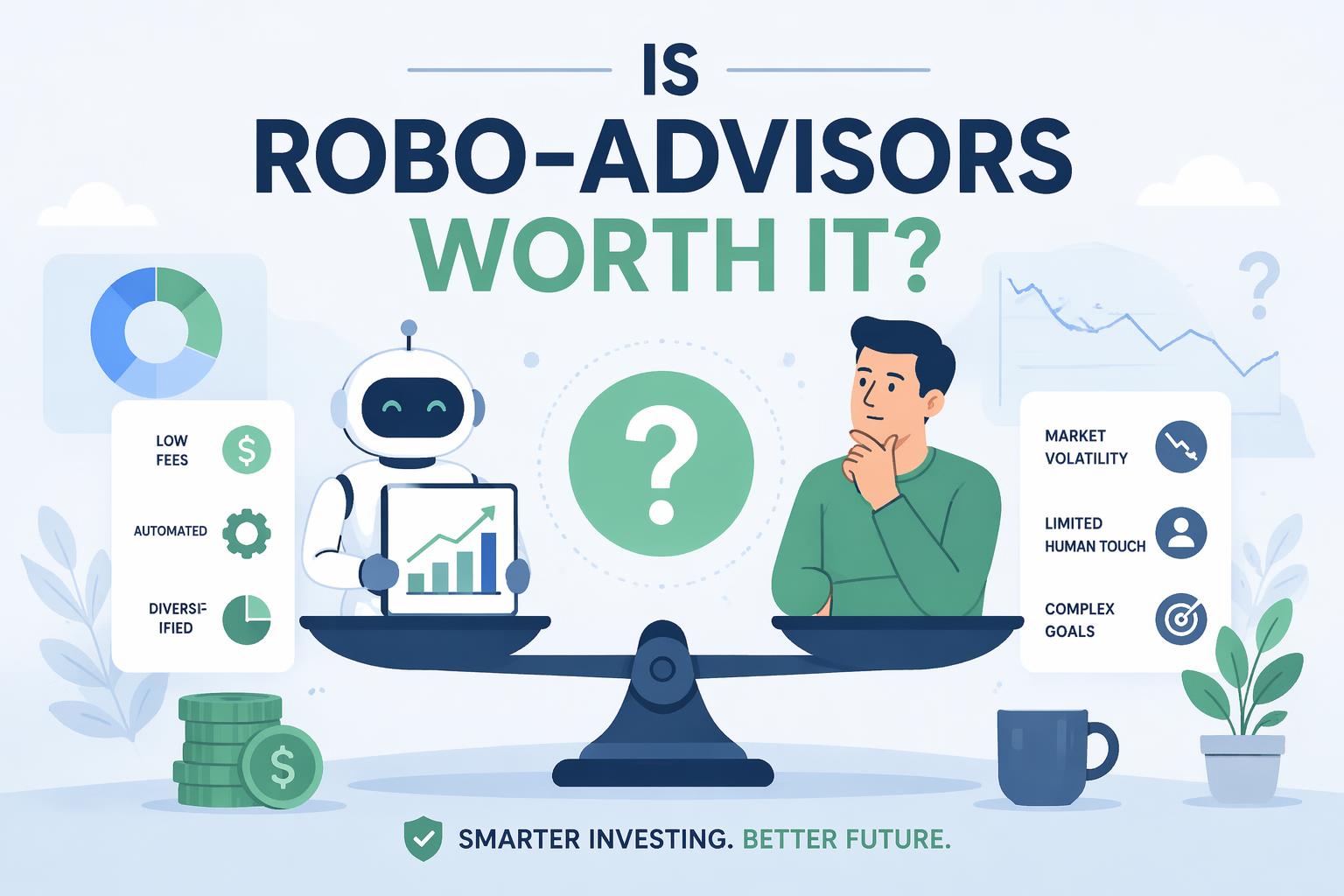
Table of Contents
- What Exactly Is a Robo-Advisor?
- How Robo-Advisors Actually Work (The Playbook They All Use)
- The Real Cost: Fees Break Down Over Time
- Performance Reality Check: Do They Beat DIY?
- When Robo-Advisors Are Actually Worth It
- When You’re Better Off Without One
- The Hidden Extras That Matter More Than Marketing
- How to Pick a Robo-Advisor (If You Decide to Use One)
- FAQ
What Exactly Is a Robo-Advisor?
A robo-advisor is an automated investment platform that builds and manages a diversified portfolio for you based on your risk tolerance, timeline, and goals. You answer a questionnaire, deposit money, and the algorithm handles everything: asset allocation, buying ETFs, rebalancing, tax-loss harvesting, and dividend reinvestment.
What you get:
- Automated portfolio construction (usually 5–10 ETFs across stocks, bonds, and sometimes alternatives)
- Automatic rebalancing when your allocations drift
- Tax-loss harvesting (on accounts above certain minimums)
- Dividend reinvestment
- Goal tracking tools
What you don’t get:
- Custom stock picking
- Active trading or market timing
- Complex estate planning
- Personalized financial advice (unless you pay extra for hybrid human + robo)
Think of it as hiring a junior portfolio manager who follows Modern Portfolio Theory religiously but never deviates from the script. They’re disciplined, consistent, and emotion-free, but also inflexible.
Popular robo-advisors in 2026 include Betterment, Wealthfront, Schwab Intelligent Portfolios, Vanguard Digital Advisor, SoFi Automated Investing, and Fidelity Go. They all claim to be different, but under the hood, they’re running variations of the same index-investing strategy.
How Robo-Advisors Actually Work (The Playbook They All Use)
Every robo-advisor uses the same formula. There’s no secret sauce:
Step 1: Risk Assessment
You complete a questionnaire: your age, income, investment timeline, risk tolerance, and financial goals. The algorithm maps your answers to a risk score (usually 1–10, conservative to aggressive).Step 2: Asset Allocation
Based on your risk score, the robo-advisor assigns a portfolio template. A conservative investor might get 30% stocks / 70% bonds. An aggressive 25-year-old might get 90% stocks / 10% bonds.These templates are built on Modern Portfolio Theory (diversification reduces risk without sacrificing returns). Nothing controversial. It’s the same approach Vanguard and academic research have promoted for decades.
Step 3: ETF Selection
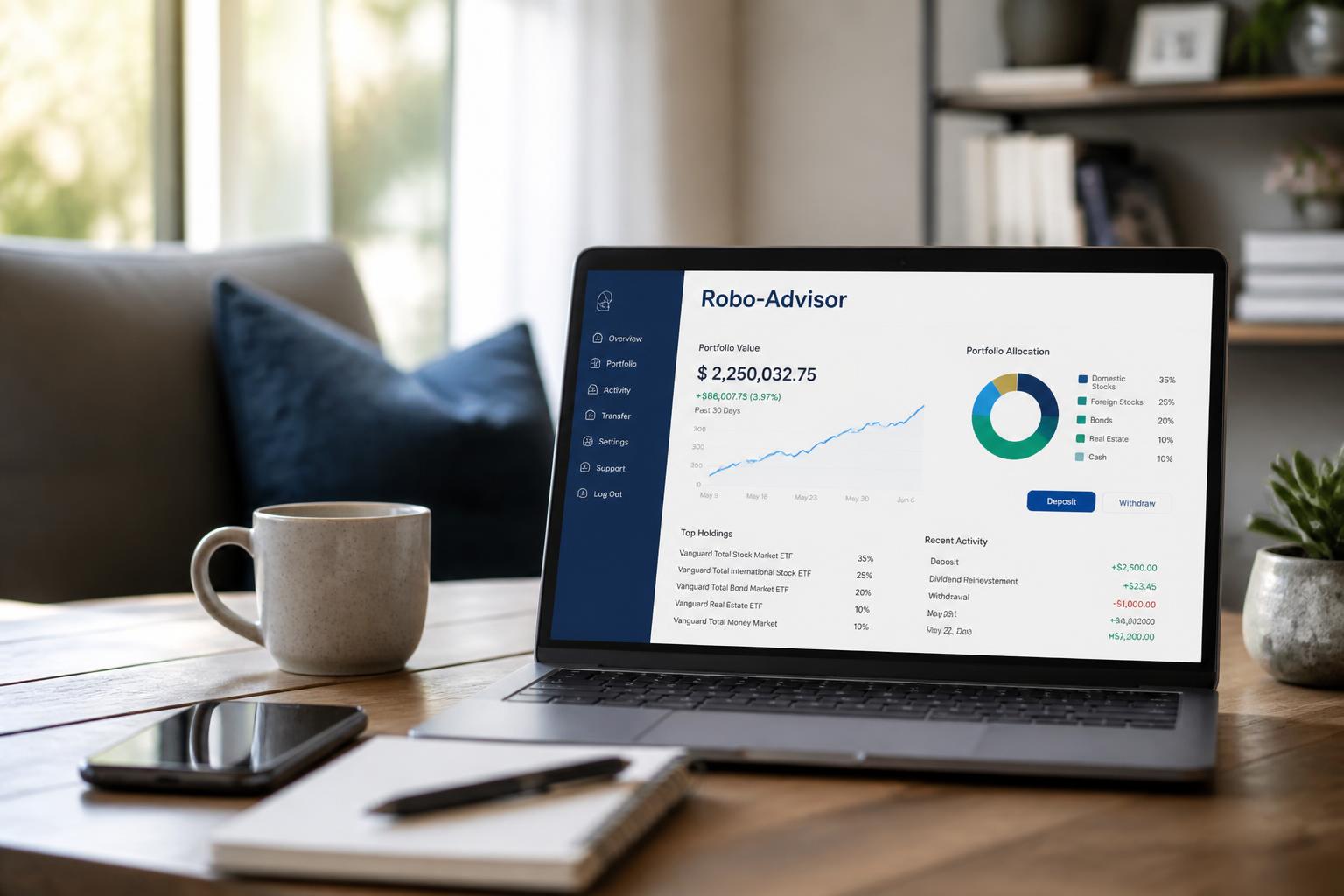
The robo-advisor fills your allocation with low-cost index ETFs. For example:- U.S. stocks: VTI (Vanguard Total Stock Market) or equivalent
- International stocks: VXUS (Vanguard Total International Stock)
- Bonds: BND (Vanguard Total Bond Market) or AGG (iShares Core U.S. Aggregate Bond)
- Sometimes small caps, REITs, or emerging markets for diversification
Most robo-advisors use 5–10 ETFs total. Betterment might pick slightly different funds than Wealthfront, but the underlying strategy is identical: passive indexing with broad diversification.
Step 4: Automatic Rebalancing
Over time, your portfolio drifts. If stocks surge and bonds lag, your 80/20 allocation might become 85/15. The robo-advisor automatically rebalances (selling winners and buying losers) to restore your target allocation. This happens quarterly or when drift exceeds a threshold (usually 5%).Why this matters: Rebalancing forces you to “buy low, sell high” without emotion. Simple but effective.
Step 5: Tax-Loss Harvesting (TLH)
On taxable accounts above a minimum balance ($50k–$100k depending on the platform), robo-advisors scan your portfolio daily for losses. If an ETF drops, they sell it at a loss (to offset taxable gains) and immediately buy a similar ETF to maintain your allocation without triggering a wash sale.The claim: TLH can add 0.50%–1.50% in annual after-tax returns.
The reality: TLH is most valuable in the first few years or during market downturns. After that, gains diminish. If you’re investing in tax-advantaged accounts (401k, IRA), TLH does nothing for you.
Step 6: Set It and Forget It
Once deployed, the robo-advisor runs on autopilot. You can add money, adjust your risk level, or set up automatic deposits. Otherwise, you do nothing.The Real Cost: Fees Break Down Over Time
Robo-advisors advertise low fees compared to human advisors (who charge 1%–2% annually). But “low” is relative. What you actually pay:
Management Fees
- Betterment: 0.25% annually (Digital plan)
- Wealthfront: 0.25% annually
- Schwab Intelligent Portfolios: 0% management fee (but requires $5k cash allocation, which is a hidden cost)
- Vanguard Digital Advisor: 0.20% annually
- Fidelity Go: 0% up to $25k, then 0.35%
- SoFi Automated Investing: 0%
These fees are charged as a percentage of assets under management (AUM). On a $100k portfolio, 0.25% = $250/year.
Underlying ETF Expense Ratios
The ETFs inside your portfolio also charge fees (usually 0.03%–0.15% per fund). Total blended expense ratio across your portfolio: 0.05%–0.10% on average.Total Cost Example
$100k portfolio with Betterment:- Robo-advisor fee: 0.25% = $250
- ETF expense ratios: ~0.07% = $70
- Total annual cost: $320
Compare that to DIY:
- If you buy the same ETFs yourself: $70 (ETF fees only)
- You save $250/year by skipping the robo-advisor
Fee Impact Over Time
Fees compound negatively. Assume 7% average annual returns over 20 years on a $100k initial investment with $500/month contributions:Scenario Total Fees Paid Portfolio Value DIY (0.07% fees) $8,400 $431,000 Robo-advisor (0.32% fees) $38,000 $408,000
Performance Reality Check: Do They Beat DIY?
Short answer: No, they don’t beat DIY, but they also don’t lose to it by much.
Robo-advisors use the same index ETFs you’d buy yourself. The performance difference comes down to:
- Rebalancing discipline — Robo-advisors rebalance automatically; DIY investors often forget or hesitate.
- Tax-loss harvesting — TLH can add 0.50%–1.00% annually in taxable accounts during the first few years.
- Behavioral coaching — Robo-advisors prevent panic selling during crashes (because you’re not manually managing the account).
2020–2025 performance data (from Betterment, Wealthfront, and Vanguard studies):
- Robo-advisors with TLH delivered 0.30%–0.80% higher after-tax returns than DIY investors in taxable accounts during volatile periods.
- In tax-advantaged accounts (IRA, 401k), performance was identical minus the management fee.
The verdict: If you’re disciplined and rebalance annually, DIY wins on cost. If you’re likely to panic-sell during downturns or forget to rebalance, the robo-advisor’s behavioral guardrails are worth 0.25%.
When Robo-Advisors Are Actually Worth It
Robo-advisors aren’t for everyone, but they shine in these scenarios:
1. You’re a Beginner with No Investing Experience
If you don’t know the difference between a stock and a bond, or you’re paralyzed by choice, a robo-advisor removes the learning curve. You get a professionally diversified portfolio without needing to understand asset allocation.Why it’s worth it: The alternative is sitting in cash (0% return) or picking random stocks (high risk). The 0.25% fee is cheaper than costly mistakes.
2. You Have a Taxable Account Over $100k
Tax-loss harvesting adds real value in taxable accounts, especially during market volatility. If your robo-advisor harvests $5k in losses and you’re in the 24% tax bracket, you save $1,200 in taxes that year.Break-even math: If TLH saves you $1,200 and the robo-advisor costs $320/year, you’re $880 ahead.
3. You Know You’ll Panic-Sell During Crashes
In March 2020, DIY investors sold at the bottom and missed the recovery. Robo-advisors kept rebalancing and stayed the course. If you lack discipline, automation prevents expensive emotional decisions.Why it’s worth it: One panic-sell can cost you 10+ years of fees.
4. You Want True Set and Forget Simplicity
If you’d rather spend time on your business, career, or hobbies than managing investments, the 0.25% fee buys you mental space. You deposit money, and the robo-advisor handles everything else.Why it’s worth it: Your time has value. If managing a DIY portfolio takes 5 hours/year and your hourly rate is $100, you’re paying $500 in opportunity cost (more than the robo-advisor fee).
When You’re Better Off Without One
Skip the robo-advisor if:
1. You’re Investing in Tax-Advantaged Accounts Only
If all your money is in a 401(k) or IRA, tax-loss harvesting does nothing. You’re paying 0.25% for rebalancing you could do yourself once a year in 10 minutes.DIY alternative: Buy a target-date fund (like Vanguard Target Retirement 2050) with a 0.08% expense ratio. It rebalances automatically and costs 70% less than a robo-advisor.
2. You Have Less Than $10k to Invest
At small balances, the absolute dollar savings from DIY are minimal, but so are the robo-advisor’s added benefits. Tax-loss harvesting doesn’t kick in until $50k+, and rebalancing a $5k portfolio is trivial.DIY alternative: Put everything in a single all-in-one ETF like VTSAX (Vanguard Total Stock Market) or a target-date fund. Rebalance when you hit $25k+.
3. You’re Already Disciplined and Comfortable with Investing
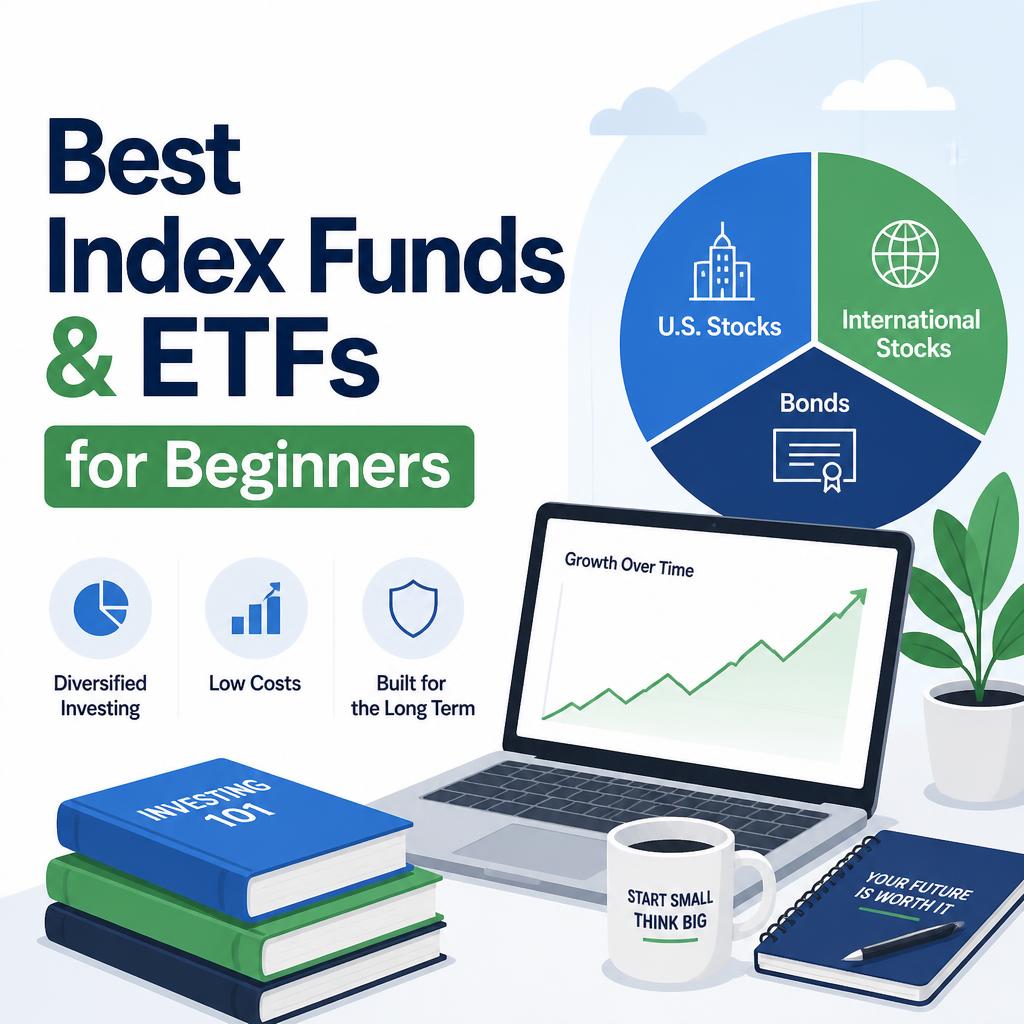
If you understand asset allocation, rebalance annually, and don’t panic during downturns, there’s no reason to pay 0.25%. You’re capable of doing exactly what the robo-advisor does.DIY alternative: Build a three-fund portfolio (U.S. stocks, international stocks, bonds) and rebalance once a year. Total cost: 0.05%–0.10%.
4. You Want to Invest in Individual Stocks or Crypto
Robo-advisors stick to index ETFs. If you want to pick stocks, invest in real estate, or hold Bitcoin, you need a brokerage account (not a robo-advisor).DIY alternative: Open a Schwab, Fidelity, or Robinhood account and manage everything yourself.
The Hidden Extras That Matter More Than Marketing
Most robo-advisors market the same features (low fees, automatic rebalancing, tax-loss harvesting). What actually differentiates them:
1. Cash Drag (Schwab’s Hidden Cost)
Schwab Intelligent Portfolios charges 0% management fees but requires 6%–30% of your portfolio sit in cash (earning minimal interest). On a $100k portfolio, that’s $6k–$30k earning 0.50% instead of 7% (a hidden cost of 0.40%–1.00%/year).Verdict: Schwab’s “free” robo-advisor isn’t actually cheaper than Betterment or Wealthfront once you account for cash drag.
2. Minimum Balances
- Betterment: $10 minimum (lowest barrier to entry)
- Wealthfront: $500 minimum
- Vanguard Digital Advisor: $3,000 minimum
- Schwab Intelligent Portfolios: $5,000 minimum
If you’re starting with less than $500, Betterment or SoFi (no minimum) are your only realistic options.
3. Human Advisor Access (Hybrid Plans)
Most robo-advisors offer hybrid plans where you pay extra (0.40%–0.85%) to talk to a CFP. Unless you have complex tax situations, estate planning needs, or $500k+, the human add-on isn’t worth it.When it’s worth it: If you’re navigating a major life event (inheritance, divorce, selling a business) and need one-time guidance, pay for a flat-fee CFP consultation instead of an ongoing 0.85% hybrid plan.
4. Fractional Shares
Betterment and Wealthfront support fractional shares, meaning every dollar you invest is fully allocated (no cash sitting idle). Schwab and Vanguard don’t support fractional shares, so small deposits might leave cash uninvested temporarily.Why it matters: On small accounts, fractional shares improve returns by 0.10%–0.20%/year.
How to Pick a Robo-Advisor (If You Decide to Use One)
If you’ve decided a robo-advisor is worth it, how to choose:
Step 1: Match Your Account Type
- Taxable account over $50k? Pick Betterment or Wealthfront for aggressive tax-loss harvesting.
- IRA or 401(k) rollover? Vanguard Digital Advisor or Fidelity Go (lower fees, TLH doesn’t matter).
- Starting with under $500? Betterment ($10 minimum) or SoFi (no minimum).
Step 2: Compare Total Costs
Don’t just look at management fees. Factor in cash drag (Schwab) and ETF expense ratios. Use this formula:Total annual cost = Management fee + ETF expense ratios + cash drag
Example:
- Betterment: 0.25% + 0.07% = 0.32%
- Schwab Intelligent Portfolios: 0% + 0.07% + 0.50% (cash drag) = 0.57%
Betterment is cheaper despite charging a management fee.
Step 3: Check for Extra Features You’ll Actually Use
- Goal-based investing — Do you want separate “buckets” for retirement, house down payment, and vacation? Betterment and Wealthfront support multiple goals.
- Socially responsible investing (SRI) — Wealthfront and Betterment offer SRI portfolios (fossil fuel-free, ESG-focused).
- Automatic rebalancing frequency — Betterment rebalances daily; Vanguard rebalances quarterly. Daily is overkill for most investors.
Step 4: Test the User Experience
Most robo-advisors offer free trials or demo accounts. Sign up, explore the dashboard, and see if the interface makes sense. If the app feels clunky or confusing, you’re less likely to stick with it.Step 5: Start Small and Scale
Don’t dump your entire portfolio into a robo-advisor on day one. Start with $1k–$5k, watch how it rebalances, and add more once you’re comfortable.FAQ
Can I lose money with a robo-advisor?
Yes. Robo-advisors invest in the stock market, which fluctuates. If the market drops 20%, your portfolio drops too. Robo-advisors reduce risk through diversification, but they don’t eliminate it. If you need your money in less than 3–5 years, don’t invest it. Keep it in a high-yield savings account instead.Do robo-advisors pay dividends?
Yes. ETFs inside your robo-advisor portfolio pay dividends, which are automatically reinvested (buying more shares). You won’t receive dividend checks. The money stays invested and compounds.Can I withdraw money anytime?
Yes, in taxable accounts. You can withdraw anytime without penalties (though you’ll owe capital gains tax on profits). In IRAs, early withdrawals before age 59½ trigger a 10% penalty plus income tax (with some exceptions like first-home purchases or medical expenses).What happens if the robo-advisor company shuts down?
Your investments are held in a custodial brokerage account (like Apex Clearing or the platform’s own brokerage). If the robo-advisor company goes bankrupt, your assets are protected and transferred to another broker. You won’t lose your investments, but you might need to move them manually.Do robo-advisors work for retirement accounts?
Yes. Most robo-advisors support Traditional IRAs, Roth IRAs, and SEP IRAs. Some (like Betterment) also support 401(k) rollovers. Tax-loss harvesting doesn’t apply to retirement accounts, but automatic rebalancing and goal tracking still work.How often should I check my robo-advisor account?
As little as possible. Checking daily increases anxiety and temptation to tinker. Review quarterly or annually to confirm contributions are deposited and the allocation matches your goals. The whole point of automation is to avoid obsessive monitoring.Can I use a robo-advisor AND pick my own stocks?
Not in the same account. If you want both passive indexing and active stock picking, open two accounts: a robo-advisor for your core long-term portfolio and a separate brokerage account for individual stocks. Keep the active trading account small (10%–20% of total investments) to limit risk.Are robo-advisors FDIC insured?
No. FDIC insurance covers bank deposits (savings accounts, checking accounts), not investments. Your robo-advisor account is covered by SIPC insurance (up to $500k in securities, $250k in cash) if the brokerage fails, but SIPC doesn’t protect against market losses.What’s the minimum I need to start?
- Betterment: $10
- SoFi Automated Investing: $0
- Wealthfront: $500
- Vanguard Digital Advisor: $3,000
- Schwab Intelligent Portfolios: $5,000
If you’re starting with less than $500, Betterment or SoFi are your best options.
Can I switch robo-advisors later?
Yes. You can transfer your account to another robo-advisor or brokerage (called an ACAT transfer). Most platforms cover transfer fees if you’re moving over $5k+. In taxable accounts, transferring avoids triggering capital gains tax (unlike selling and re-buying). Just initiate the transfer from your new platform. They’ll handle the paperwork.—
Final verdict: Robo-advisors are worth it if you’re a beginner, have a taxable account over $50k, or lack discipline during market crashes. For everyone else (especially those investing in IRAs with small balances), DIY with a target-date fund or three-fund portfolio saves you thousands in fees without sacrificing returns. The math is simple: if you can rebalance once a year and avoid panic-selling, skip the robo-advisor and keep the 0.25%.