High-Yield Savings Explained: Why You’re Probably Earning 0.38% When You Could Be Earning 4.15%
If your emergency fund is sitting in a regular savings account at a big bank, you’re earning about 0.38% interest. Some high-yield savings accounts are paying 4.15% right now—July 2026—with no minimum deposit and the same federal insurance.
This isn’t a promotional trick or an investment product. It’s a savings account that pays more because the bank doesn’t spend money on branches. Most people don’t know these accounts exist, or they assume the higher rate means hidden fees. It doesn’t.
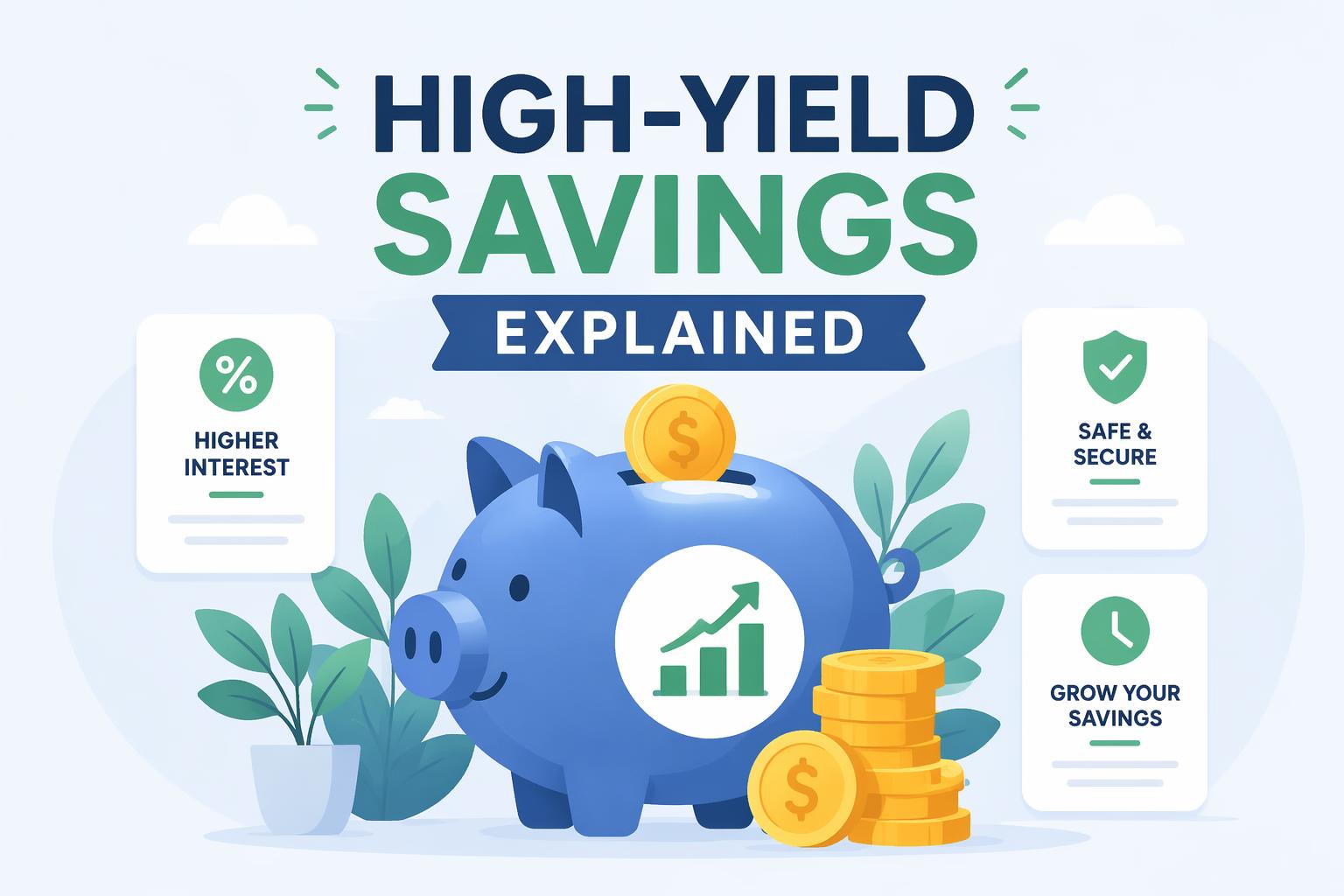
Table of Contents
- What Is a High-Yield Savings Account?
- Why High-Yield Savings Accounts Pay More
- How Much More Money Are We Talking About?
- The Best High-Yield Savings Accounts in July 2026
- What to Look for When Choosing a High-Yield Savings Account
- Common Traps and How to Avoid Them
- How to Open a High-Yield Savings Account
- High-Yield Savings vs. CDs: Which One Should You Pick?
- Is Your Money Actually Safe?
- FAQ
What Is a High-Yield Savings Account?
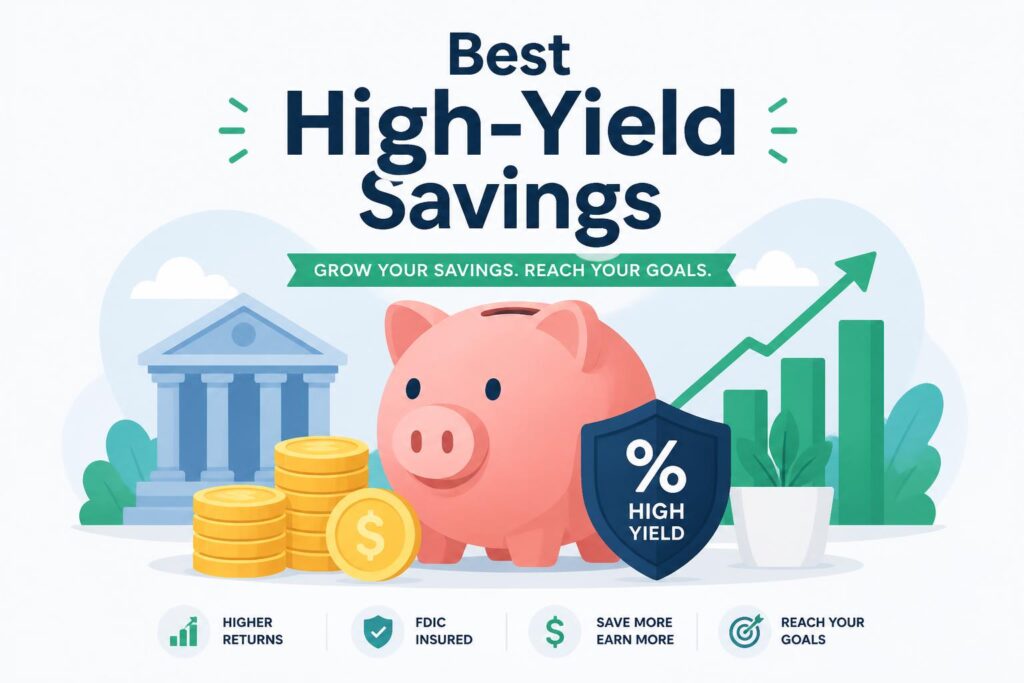
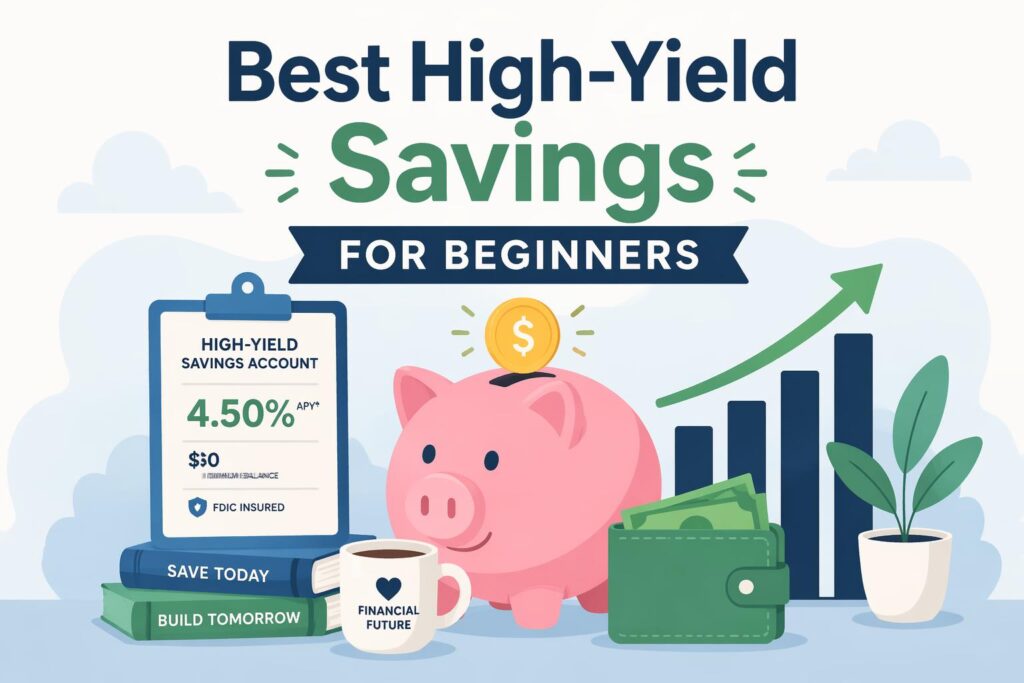
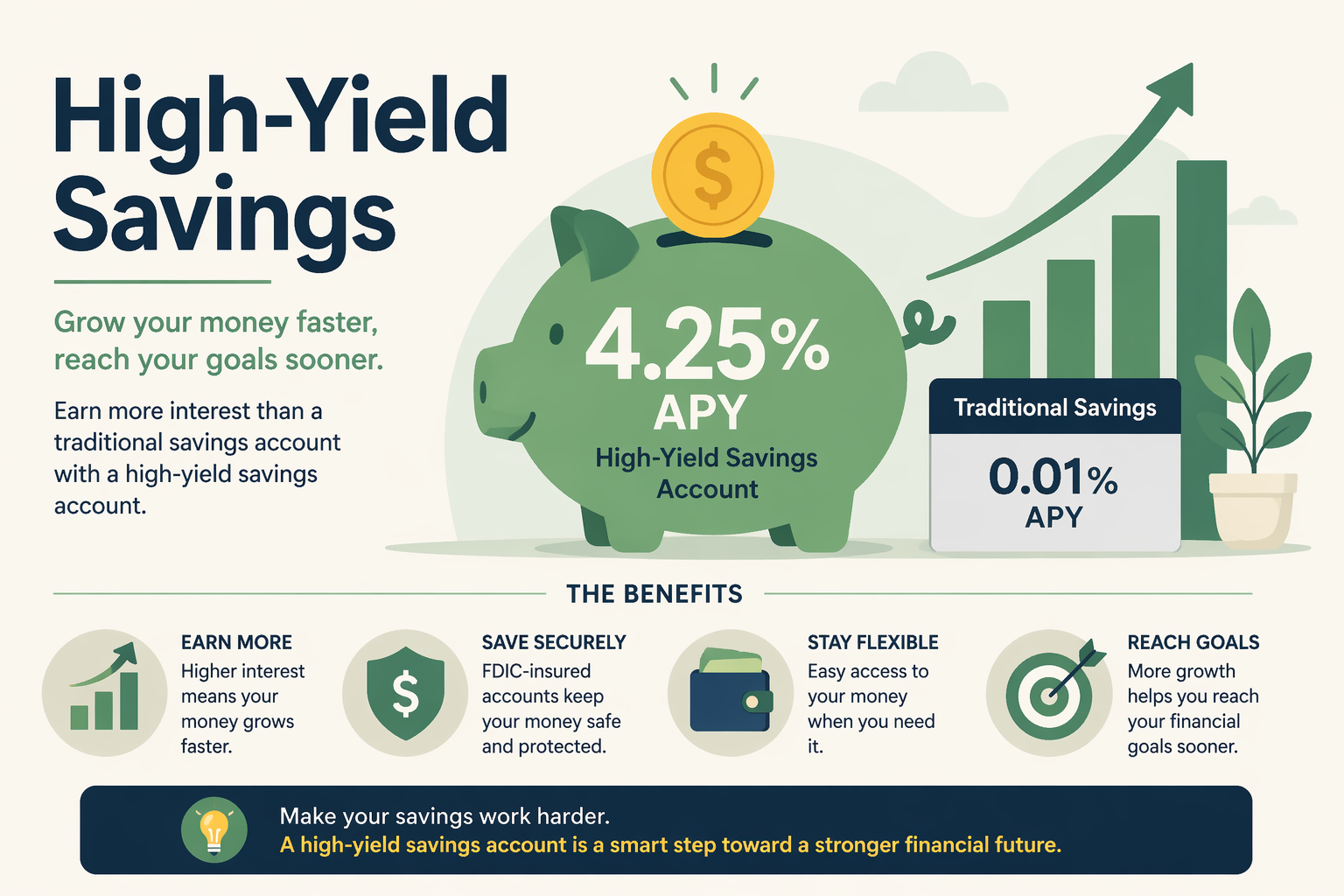
A high-yield savings account pays significantly more interest than a traditional savings account. The national average is 0.38% APY as of July 2026, according to NerdWallet’s survey of around 100 financial institutions. High-yield accounts from online banks are paying 4.01% to 4.15%—over ten times that.
The accounts are FDIC insured up to $250,000 per depositor. If the bank fails, your money is protected by the federal government. The money is liquid. You can withdraw it whenever you need it, usually without penalty, though some banks still limit you to six withdrawals per month.
High-yield savings accounts are not investment accounts. You’re depositing cash, and the bank pays you interest for holding it. The rate fluctuates, but the principal never drops.
Why High-Yield Savings Accounts Pay More
Online banks don’t maintain physical branches. No rent, no tellers, no ATMs to stock. They pass those savings on as higher interest rates.
Traditional banks pay lower rates because they can. If you’ve banked with the same institution for years and never looked elsewhere, they have no reason to compete. Inertia is profitable.
High-yield accounts also tend to come from smaller or newer institutions trying to attract depositors. They need your money to grow, so they offer competitive rates. Once they hit their deposit targets, rates can drop—but you can move your money elsewhere. There’s no penalty for closing a high-yield savings account.
How Much More Money Are We Talking About?
Say you keep $10,000 in a traditional savings account earning 0.38% APY. After one year, you have $10,038.
Put that $10,000 in a high-yield account earning 4.15% APY, and after one year you have $10,415. That’s an extra $377.
Over five years, the gap widens. At 0.38%, your $10,000 grows to $10,191. At 4.15%, it grows to $12,253. You’ve earned an extra $2,062 by moving your money to a different type of account.
If you’re holding $50,000, a high-yield account earning 4.15% generates $2,075 in interest in one year. The same balance in a traditional account earns $190. That’s $1,885 you didn’t get.
The Best High-Yield Savings Accounts in July 2026
Bankrate surveyed over 850 institutions monthly to track current rates. As of July 6, 2026, these accounts are offering the highest APYs with no or low minimums:
- Forbright Bank — 4.15% APY, $0 minimum, no fees
- CIT Bank — 4.10% APY, $100 minimum
- Vio Bank — 4.01% APY, $100 minimum
- Happen Bank — 4.00% APY, $250 minimum to earn APY
- Bread Savings — 3.95% APY, $100 minimum
- EverBank — 3.90% APY, $0 minimum
- Limelight Bank — 3.90% APY, $100 minimum
- Popular Direct — 3.90% APY, $100 minimum
- Live Oak Bank — 3.80% APY, $0 minimum
- Colorado Federal Savings Bank — 3.80% APY, $1 minimum
GO2bank pays 4.50% APY, but only on balances up to $5,000. If you’re parking a small emergency fund, it’s the highest rate available. Above $5,000, the excess earns less, so you’re better off with Forbright or CIT.
Climate First Bank offers 4.01% APY and was recognized as NerdWallet’s Best Savings Account for 2026. SoFi offers 3.80% APY and is popular if you want checking and savings in one app.
All of these accounts are FDIC insured. Most have no monthly fees. Most let you open an account with $0 to $100. Rates change frequently—sometimes weekly—so today’s leader might not stay on top.
What to Look for When Choosing a High-Yield Savings Account
APY is the headline number, but it’s not the only thing that matters.
Minimum deposit to open
Some accounts require $0. Others want $100 or $250. If you’re starting with a small balance, pick an account with no minimum.
Minimum balance to earn the advertised APY
A few banks advertise a high rate but only pay it if you maintain a certain balance. Read the fine print. If you drop below the threshold, your rate might fall to near zero.
Monthly fees
Most high-yield accounts have no monthly fees. If one does, skip it. There are too many fee-free options.
Withdrawal limits
Federal regulations used to cap savings withdrawals at six per month. That rule was suspended during the pandemic, but some banks still enforce it. Check the account terms. If you need frequent access, pair your high-yield account with a checking account.
Access to your money
Online banks don’t have branches, so you’ll move money via ACH transfer, which takes 1-3 business days. Wire transfers are faster but often cost $15-$30. If you need same-day access to cash, keep a small buffer in checking and treat the high-yield account as your longer-term holding spot.
Rate stability
APYs change. The rate you open with today might drop next month if the Federal Reserve cuts rates or the bank hits its deposit goal. That’s normal. Monitor your rate every few months and be ready to switch if a competitor is paying significantly more.
Customer service hours
If something goes wrong, can you reach a human? Some online banks offer 24/7 phone support. Others are email-only or have limited hours. This matters more if you’re moving a large balance.
Common Traps and How to Avoid Them
Promotional rates that expire
Some banks advertise a high APY for the first three or six months, then drop it. The account details should say “introductory rate” or “promotional APY.” Find out what the rate becomes after the promo ends. If it’s not competitive, plan to move your money before the promo expires.
Tiered rates
A few banks pay different APYs depending on your balance. For example, 4.00% on balances up to $10,000, then 2.00% on anything above that. If you’re holding $25,000, you’ll earn the blended rate, which might be lower than a flat-rate competitor. Do the math.
Accounts that require a linked checking account
Some high-yield savings accounts are only available if you also open a checking account with the same bank. That’s fine if the checking account is fee-free. If it has monthly fees or requires direct deposit to avoid charges, skip it.
Accounts with hard-to-meet requirements
A small number of high-yield accounts require you to make a certain number of debit card purchases per month or maintain direct deposit to earn the high rate. These are usually marketed as “rewards checking” accounts. They can work if you’re organized, but most people find the requirements annoying and end up earning less than advertised.
Ignoring rate changes
Your bank will notify you when your APY changes, but the notice is usually buried in an email or a PDF statement. Set a reminder to check your rate every quarter. If it’s dropped by 0.50% or more and competitors are still paying higher rates, switch.
How to Open a High-Yield Savings Account
The process takes about 10 minutes. You’ll need:
- Your personal information — name, address, date of birth, Social Security number
- A form of ID — driver’s license or passport
- Funding source — the routing and account number for your checking account, or a debit card
Most banks let you apply online. You fill out a form, upload a photo of your ID, and link your existing bank account to transfer money. Some banks verify your identity instantly. Others take 1-2 business days.
Once the account is open, you can set up automatic transfers from checking. Many people treat their high-yield savings as a “set it and forget it” account—direct deposit goes into checking, and a fixed amount gets transferred to savings every payday.
High-Yield Savings vs. CDs: Which One Should You Pick?
Certificates of Deposit often pay slightly higher rates than high-yield savings accounts, but your money is locked in for a fixed term—six months, one year, five years. If you withdraw early, you pay a penalty, usually a few months’ worth of interest.
High-yield savings accounts are liquid. You can pull your money out anytime without penalty. The rate is variable, so it can go up or down, but you’re not locked in.
Use a high-yield savings account if you’re building an emergency fund, you might need the money in the next 6-12 months, or rates are rising and you want to benefit from future increases.
Use a CD if you know you won’t need the money for a specific period, you want a guaranteed rate, or rates are high now and you think they’ll drop.
You can also split the difference: keep 3-6 months of expenses in a high-yield savings account for emergencies, and put the rest in a 1-year CD if the rate is better.
Is Your Money Actually Safe?
Yes. High-yield savings accounts at FDIC-member banks are insured up to $250,000 per depositor, per ownership category. If the bank fails, the FDIC reimburses you, usually within a few days.
The $250,000 limit applies per ownership category. If you have an individual account, you’re covered up to $250,000. If you have a joint account with a spouse, that’s a separate $250,000 per person—$500,000 total. If you’re holding more than that, split it across multiple banks to stay within the insured limits.
Credit unions offer similar protection through the NCUA, also up to $250,000.
Online banks are not riskier than traditional banks. They’re regulated the same way and backed by the same federal insurance. The only difference is the lack of a physical branch, which is why they can afford to pay higher rates.
FAQ
Is my money safe in a high-yield savings account?
Yes. High-yield savings accounts at FDIC-member banks are federally insured up to $250,000 per depositor, per ownership category. If the bank fails, the FDIC reimburses you. Online banks follow the same regulations as traditional banks.
What should I do if I’m unable to open a high-yield savings account?
Some online banks deny applications due to credit history issues or if you appear on ChexSystems, a database of people who’ve had checking or savings accounts closed for misuse. If that happens, try a different bank—requirements vary. You can also request your ChexSystems report and dispute any errors. A few banks specialize in “second chance” accounts.
Should I get a CD instead of a high-yield savings account?
CDs pay slightly higher rates but lock your money in for a fixed term. High-yield savings accounts are liquid—you can withdraw anytime without penalty. Use a high-yield savings account for emergency funds or money you might need soon. Use a CD if you’re certain you won’t need the money for 6-12+ months and you want a guaranteed rate.
How are APYs calculated?
APY stands for Annual Percentage Yield. It reflects the total interest you’ll earn in one year, including compounding. Most high-yield savings accounts compound interest daily or monthly. The more frequently interest compounds, the more you earn. The APY accounts for compounding, so it’s the number to compare across banks.
Are online banks better for high-yield savings?
Usually, yes. Online banks have lower overhead costs—no branches, no tellers—so they can afford to pay higher rates. As of July 2026, the top high-yield savings rates, 4.01% to 4.15% APY, come from online banks. Traditional banks average 0.38% APY.
What are the fees associated with a high-yield savings account?
Most high-yield savings accounts have no monthly maintenance fees, no minimum balance fees, and no fees to open or close the account. Some banks charge for wire transfers, paper statements, or overdrafts if the account is linked to checking. Read the fee schedule before opening an account, but expect most high-yield accounts to be fee-free.
How can I access my money?
You can transfer money from your high-yield savings account to your linked checking account via ACH transfer, which takes 1-3 business days. Some banks offer same-day transfers for a fee. A few provide ATM cards, though high-yield savings accounts are designed for holding money, not frequent withdrawals. If you need same-day access, keep a buffer in checking.
How do I make deposits into my high-yield savings account?
Most people link their high-yield savings account to their checking account and transfer money via ACH. You can also set up direct deposit from your paycheck, deposit checks via mobile app if the bank offers it, or wire money in. Online banks don’t accept cash deposits—if you’re regularly depositing cash, deposit it into a traditional checking account first, then transfer it.
—
High-yield savings accounts are not complicated. They’re not risky. They’re just a better place to park cash you’re not investing.
If you’re holding more than a month’s expenses in a traditional savings account, you’re giving up hundreds or thousands of dollars a year. Moving that money to a high-yield account takes ten minutes and costs nothing.
Most people don’t bother. You can.