How to Choose Brokerage Accounts: A Step-by-Step Guide (2026)
This post contains affiliate links. If you sign up through our links, we may earn a commission at no extra cost to you. Read our full disclosure.
You’re ready to start investing, but there’s a problem: dozens of brokerage platforms are competing for your attention, each claiming to be the best. Some promise zero fees. Others tout advanced tools. A few offer cash bonuses just for signing up.
The truth? Picking the wrong brokerage won’t just cost you money in hidden fees — it’ll cost you time navigating clunky interfaces and frustration when you can’t access the features you actually need.
By the end of this guide, you’ll know exactly how to evaluate brokerage accounts based on what matters: fees, features, ease of use, and investment options. You’ll avoid common mistakes beginners make and choose a platform that fits your investing style — whether you’re buying your first stock or building a diversified portfolio.
Estimated time: 15-20 minutes to read and compare options
What You Need Before Starting
Before you dive into comparing brokerages, gather:
- Basic personal information: Social Security number, employment details, and bank account info for funding
- Investment goals clarity: Are you investing for retirement, building wealth, or learning to trade actively?
- Starting capital amount: Many brokers have $0 minimums, but knowing how much you’ll invest helps narrow your options
- Time commitment: Will you check your portfolio daily or set-and-forget with index funds?
No brokerage account yet? That’s fine — this guide will help you choose and open one.
Step 1: Understand What a Brokerage Account Actually Does
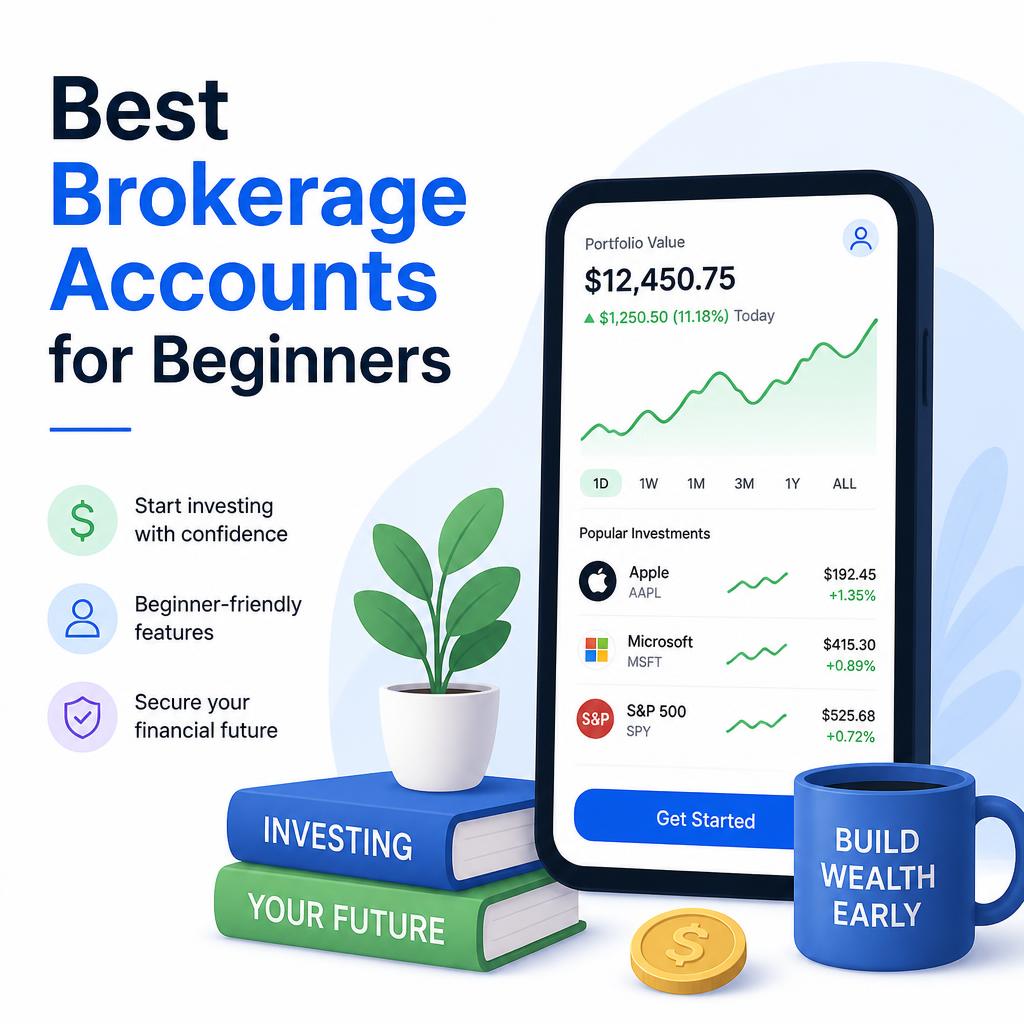
A brokerage account is your gateway to buying and selling investments like stocks, ETFs, bonds, and mutual funds. Think of it as a specialized bank account designed for investing rather than everyday spending.
There are three main types:
- Taxable brokerage accounts — No tax advantages, but complete flexibility to deposit and withdraw anytime
- Tax-advantaged retirement accounts — IRAs that reduce your tax bill now (traditional IRA) or later (Roth IRA)
- Margin accounts — Allow you to borrow money to invest (higher risk, not recommended for beginners)
For most people starting out, a standard taxable brokerage account or Roth IRA makes the most sense.
You should understand: The type of account you choose affects your tax situation and withdrawal rules. Start with a taxable account if you want maximum flexibility, or a Roth IRA if you’re investing for retirement and won’t need the money for decades.
Step 2: Identify Your Must-Have Features
Not all brokerages are built the same. Before comparing platforms, decide which features are non-negotiable for your investing style.
Ask yourself:
- Do you want to invest in individual stocks, or stick with index funds? — Some platforms excel at one over the other
- Will you trade frequently or buy and hold? — Active traders need advanced charting tools; long-term investors don’t
- Do you want human advice or are you comfortable DIY? — Some brokerages offer free advisor access
- Do you need educational content? — Beginners benefit from platforms with strong learning resources
Common beginner priorities:
- $0 account minimum
- Commission-free stock and ETF trades
- Easy-to-use mobile app
- Educational resources
- Fractional shares (invest with any dollar amount)
You should see: A clearer picture of whether you need a simple platform like Robinhood or a feature-rich one like Fidelity.
> Note: Don’t choose a brokerage just because a friend uses it. Your investing style and goals determine the right platform for you.
Step 3: Compare Fee Structures (Where Brokers Actually Make Money)
The brokerage industry shifted to $0 commission stock trades years ago, but that doesn’t mean investing is free. Brokers make money in other ways, and these costs add up.
Key fees to compare:
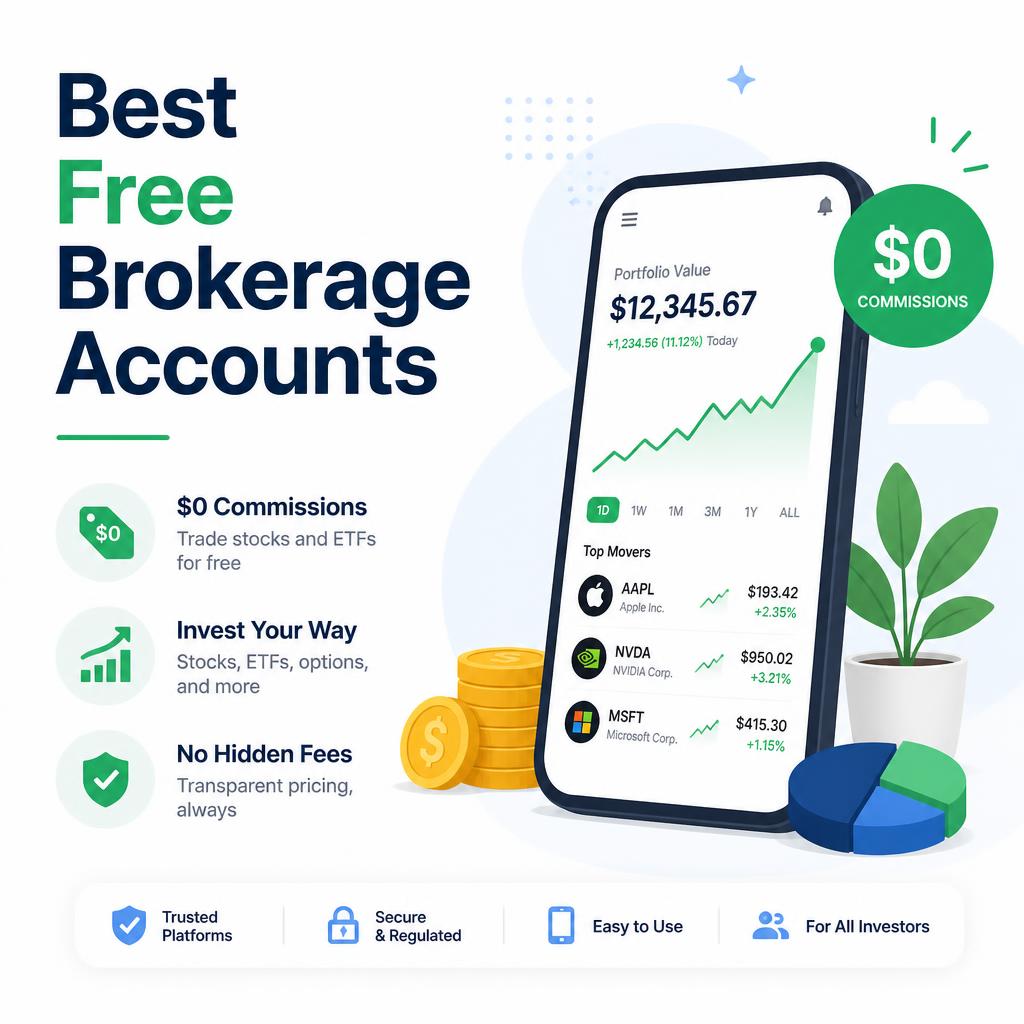
- Stock and ETF commissions — Should be $0 in 2026 at any reputable broker
- Options trading fees — Typically $0.50-$0.65 per contract
- Mutual fund fees — Some brokers charge $50+ per transaction for certain funds
- Account maintenance fees — Rare, but some brokers charge annual fees for small accounts
- Transfer fees — Moving your money to another broker can cost $50-$75
According to NerdWallet’s 2026 analysis, major brokers like Fidelity, Charles Schwab, Robinhood, and E*TRADE all offer $0 commissions on U.S. stock and ETF trades.
Hidden cost: Even with zero commissions, you pay the fund’s expense ratio — a percentage taken annually from index fund investments. According to the research data, expense ratios range from 0.02% to 0.6%. A $10,000 investment in a fund with a 0.6% expense ratio costs you $60 per year. Choose low-cost index funds whenever possible.
You should see: Total fee transparency. If a broker’s fee schedule is hard to find or understand, that’s a red flag.
Step 4: Evaluate Platform Usability and Mobile Experience
You’ll spend hours in your brokerage’s interface over the years. A confusing platform turns investing into a chore instead of a habit.
Test these aspects:
- Sign-up flow — Can you open an account in under 10 minutes?
- Search and discovery — How easy is it to find specific stocks or ETFs?
- Order execution — Is the buying process straightforward with clear confirmation?
- Portfolio view — Can you quickly see your holdings, gains/losses, and performance?
- Mobile experience — Does the app work smoothly or feel like an afterthought?
2026 platform leaders:
- Robinhood is rated best for basic stock trading with its sleek mobile app and intuitive interface
- Fidelity offers the best all-around investing experience with a balance of simplicity and advanced features
- Webull provides robust research tools in a mobile-friendly design
> Tip: Many brokers offer paper trading accounts where you can practice with simulated money. Try before committing real dollars.
You should see: An interface that feels natural to navigate, not like deciphering a spaceship control panel.

Step 5: Check Investment Options and Asset Classes
The best platform is useless if it doesn’t offer what you want to buy.
Standard offerings (most brokers have these):
- U.S. stocks
- ETFs
- Mutual funds
- Bonds
Extended offerings (not everywhere):
- Fractional shares (invest $10 in expensive stocks like Amazon)
- International stocks
- Options trading
- Cryptocurrency
- Futures and commodities
According to SmartAsset’s 2026 brokerage analysis, Fidelity offers a wide range of investment options, while Interactive Brokers provides access to a particularly extensive array of investment choices including international markets.
If you want to invest in index funds tracking the S&P 500 or QQQ (top 100 US tech companies), verify that your broker offers popular low-cost options like VOO, SPY, or QQQ with minimal expense ratios.
You should see: Every investment type you plan to use within the next 2-3 years. Don’t pay for features you won’t use, but don’t paint yourself into a corner either.
Step 6: Review Educational Resources and Support Quality
Beginners need guidance. Even experienced investors occasionally need help.
Educational content to look for:
- Video tutorials on how to place trades
- Articles explaining investment concepts
- Webinars on market trends and strategies
- Glossaries of investing terms
- Retirement planning calculators
E*TRADE earned recognition in 2026 for offering the best educational content, including a large selection of resources, webinars, and daily market discussions, according to NerdWallet’s analysis.
Customer support channels:
- Phone support (24/7 is ideal)
- Live chat
- Email support
- In-person branches (for brokers like Charles Schwab and Fidelity)
Charles Schwab provides 24/7 support and extensive educational materials as of 2026.
You should see: Resources written for humans, not finance PhDs. If you read three articles and feel more confused, the platform isn’t doing its job.
Step 7: Examine Account Minimums and Funding Options
Competition has driven most brokers to eliminate account minimums, but some still require minimums for specific account types or services.
As of 2026:
- Fidelity: $0 account minimum
- Robinhood: $0 account minimum
- E*TRADE: $0 account minimum (with promotions for new accounts)
- Interactive Brokers: $0 account minimum
According to Investopedia’s 2026 data, many brokers now allow opening an account with $1,000 or less.
Funding methods to verify:
- Bank transfer (ACH) — slowest but free
- Wire transfer — faster but usually costs $25-$30
- Check deposit — old school but available
- Account transfer from another brokerage — can take 5-7 days
You should see: Multiple ways to fund your account with at least one that’s free and relatively fast (ACH transfers typically take 3-5 business days).
Step 8: Compare Sign-Up Bonuses and Promotions
Brokers compete aggressively for new customers. In 2026, many offer cash bonuses or other incentives.
Common promotion types:
- Cash deposit bonuses (e.g., “$100 bonus when you deposit $1,000”)
- Commission-free trades for your first 90 days
- Higher interest rates on uninvested cash
- Free stock shares
According to the 2026 research:
- E*TRADE offers promotions for new accounts
- SoFi Active Investing provides promotional incentives for new users
- Public offers rebates for options trading
The catch: Most promotions require keeping your account open and funded for 6-12 months. If you close early, they claw back the bonus.
You should see: Clear terms explaining exactly what you must do to earn and keep any bonus. If the requirements feel predatory, skip it.
Step 9: Verify Security Features and Insurance Protection
Your brokerage holds your life savings. Security isn’t optional.
Essential security features:
- Two-factor authentication (2FA)
- Biometric login (fingerprint/face recognition)
- Transaction alerts
- Account freeze options
- Session timeouts
SIPC insurance: All legitimate U.S. brokers carry Securities Investor Protection Corporation (SIPC) insurance, which protects up to $500,000 of your securities (including $250,000 cash) if the broker goes bankrupt. This doesn’t protect against investment losses — only broker failure.
Additional insurance: Some brokers carry supplementary insurance beyond SIPC limits. Fidelity and Charles Schwab both offer excess coverage.
You should see: SIPC membership clearly stated on the broker’s website. If you can’t find it within 30 seconds, that’s a warning sign.
Step 10: Test the Platform with a Practice Account
Before committing real money, many brokers let you test-drive their platform.
Webull is specifically highlighted in the 2026 research as the best platform for paper trading, allowing you to practice with simulated accounts before risking real capital.
What to test:
- Place a mock trade for a stock you recognize (like Apple or Microsoft)
- Set up a watchlist of stocks you’re interested in
- Try finding and comparing two similar ETFs
- Navigate to the educational resources section
- Attempt to customize your dashboard view
Spend at least 30 minutes exploring. If anything feels unnecessarily complicated or confusing, try a different platform.
You should see: Smooth execution of basic tasks without consulting help documentation. A good interface is intuitive, not just functional.
Step 11: Read Recent User Reviews and Complaints
Marketing materials lie. User reviews tell the truth (mostly).
Where to research:
- Reddit communities (r/investing, r/stocks)
- Trustpilot reviews
- Better Business Bureau complaints
- App store ratings and recent reviews
Red flags to watch for:
- Frequent complaints about delayed withdrawals
- Reports of surprise fees not mentioned upfront
- Poor customer service response times
- Platform outages during high-trading periods
- Difficulty closing accounts
Green flags:
- Responsive customer service examples
- Positive feedback about mobile app updates
- Users praising educational resources
- Quick resolution of reported issues
You should see: A balanced mix of reviews. Perfect 5-star ratings are suspicious. So are overwhelmingly negative reviews (often from a vocal minority).
> Note: Some negative reviews come from users who made poor investment decisions and blame the platform. Focus on complaints about the brokerage’s service, not market losses.
Step 12: Make Your Decision and Open Your Account
You’ve done the research. Now it’s time to commit.
Opening an account typically requires:
- Personal information (name, address, date of birth, SSN)
- Employment information
- Financial details (annual income, net worth estimates)
- Investment experience level
- Linked bank account for funding
The process takes 10-15 minutes with most brokers. According to Investopedia’s 2026 guide, you can often start trading quickly after opening an account, though some features may require additional verification.
First funding recommendation: Start with an amount you’re comfortable seeing fluctuate. For many beginners, $500-$1,000 is a good starting point. You can always add more later.
Initial investment suggestion: Consider starting with a low-cost index fund rather than individual stocks. The S&P 500 tracks the 500 largest US companies and provides instant diversification. According to the research, investing in index funds reduces risk compared to individual stocks.
You should see: Clear confirmation that your account is open and ready to fund. Most brokers send a welcome email with next steps.
What You’ve Just Accomplished
You now have a systematic framework for evaluating and choosing a brokerage account that fits your investing goals, experience level, and budget.
Your next steps:
- Fund your new account via bank transfer
- Set up automatic deposits if you plan to invest regularly
- Place your first trade or set up automatic investments
- Explore the platform’s educational resources to deepen your knowledge
Remember: The “best” brokerage is the one you’ll actually use consistently. A feature-rich platform that intimidates you is worse than a simple one that encourages regular investing.
As the research confirms, investing protects against inflation and compound growth allows you to earn returns on your returns over time. The sooner you start, the more time your money has to grow.
—
Frequently Asked Questions
How much money do I need to open a brokerage account in 2026?
Most major brokers now have $0 account minimums, including Fidelity, Robinhood, E*TRADE, and Interactive Brokers. According to the 2026 research, many brokers allow opening an account with $1,000 or less, though you can start with even smaller amounts through fractional share investing.
Are zero-commission brokers really free?
Yes and no. Stock and ETF trades are genuinely commission-free at major brokers in 2026, but brokers still make money through payment for order flow, interest on your uninvested cash, premium features, and options trading fees (typically $0.50-$0.65 per contract). The research confirms that competition has reduced stock trading commissions, making the cheapest broker not always the best broker overall.
Is my money safe if my broker goes bankrupt?
Yes, up to limits. SIPC insurance protects up to $500,000 of your securities (including $250,000 cash) if your broker fails. This doesn’t protect against investment losses from market declines — only broker insolvency. Major brokers often carry additional insurance beyond SIPC limits.
Can I open more than one brokerage account?
Absolutely. According to the research, you can open multiple online brokerage accounts. Many investors maintain accounts at different brokers to access specific features, take advantage of promotions, or separate different investment strategies.
When is the best time to start investing?
Now. According to the 2026 research, compound growth allows you to earn returns on your returns over time, and investing protects against inflation. The earlier you start, the more time your investments have to grow. You don’t need to wait for a “perfect” market moment.
What’s the difference between a brokerage account and a 401(k)?
A 401(k) is an employer-sponsored retirement account with tax advantages but strict withdrawal rules. A brokerage account offers complete flexibility — you can withdraw anytime without penalties, but you pay taxes on gains. Many investors use both: 401(k) for retirement, brokerage for other goals.
Should I practice with a paper trading account before using real money?
Yes, especially if you’re new to investing. According to the research, investors can practice trading with simulated accounts, with Webull specifically highlighted as the best platform for paper trading in 2026. Spend a few weeks practicing to understand the platform mechanics before risking actual capital.
Do I pay taxes on money in my brokerage account?
You pay taxes on realized gains (when you sell investments for profit) and dividends received. Simply holding investments that increase in value doesn’t create a tax bill until you sell. Tax-advantaged accounts like IRAs have different rules — the IRS provides guidelines on 401(k) plans and IRAs that clarify the specifics.
—
FTC Disclosure
This website contains affiliate links. If you sign up for a brokerage account through our links, we may earn a commission at no extra cost to you. We only recommend brokers we’ve researched and believe offer genuine value. Our editorial opinions remain independent of any affiliate partnerships.