Best Dividend Investing for Beginners: Your Complete Guide to Building Passive Income
Dividend investing offers one of the most straightforward paths to building wealth and generating passive income. Yet for beginners, the sheer number of dividend stocks, funds, and strategies can feel overwhelming. How do you identify quality dividend investments without overpaying? Which approach actually builds long-term wealth versus just chasing high yields?
This comprehensive guide cuts through the noise to show you exactly how to start dividend investing the right way—without wasting time on poor performers or falling into common traps that erode your returns.
What Is Dividend Investing?
Dividend investing is a strategy focused on buying shares of companies that regularly distribute a portion of their profits to shareholders. Instead of relying solely on stock price appreciation, dividend investors generate ongoing cash flow from their portfolios.
When you own dividend-paying stocks, you receive periodic payments (typically quarterly) that you can reinvest to compound your returns or use as income. This dual benefit—potential price growth plus regular income—makes dividend investing particularly attractive for building wealth over time.
Why Dividend Investing Works for Beginners
Dividend investing offers several advantages that make it ideal for those just starting their investment journey:
Tangible returns: Unlike growth stocks where gains exist only on paper until you sell, dividends provide real cash you can see in your account.
Lower volatility: Dividend-paying companies tend to be more established and stable, resulting in less dramatic price swings than high-growth stocks.
Built-in discipline: Regular dividend payments encourage a long-term mindset and make it harder to panic sell during market downturns.
Compound growth potential: Reinvesting dividends accelerates wealth building through the power of compounding—your dividends generate more dividends.
Inflation hedge: Quality dividend stocks typically increase their payouts over time, helping your income keep pace with rising costs.
Understanding Dividend Metrics
Before selecting specific investments, you need to understand the key metrics that separate strong dividend investments from weak ones.
Dividend Yield
Dividend yield shows the annual dividend payment as a percentage of the stock price. Calculate it by dividing annual dividends per share by the current share price.
A 3-4% yield is generally considered solid for large, stable companies. Be cautious of yields above 7-8%—they often signal underlying problems or unsustainable payouts.
Payout Ratio
The payout ratio reveals what percentage of earnings a company distributes as dividends. A ratio between 40-60% typically indicates sustainability—the company retains enough earnings to reinvest in growth while still rewarding shareholders.
Payout ratios above 80% raise red flags. The company may struggle to maintain dividends if earnings decline.
Dividend Growth Rate
This metric tracks how much a company increases its dividend over time. Companies that consistently raise dividends demonstrate strong business fundamentals and management commitment to shareholders.
Look for companies with 5-10 year records of annual dividend increases. These “dividend aristocrats” often outperform over the long term.
Best Dividend Investing Strategies for Beginners
Strategy 1: Dividend Growth Investing
Focus on companies with strong track records of consistently increasing their dividends rather than chasing the highest current yields. This approach prioritizes quality and sustainability over immediate income.
Target companies that have raised dividends for at least 10 consecutive years. These businesses typically have competitive advantages, strong cash flow, and shareholder-friendly management.
The dividend growth strategy works particularly well when you’re starting with smaller amounts and have time to let compounding work its magic.
Strategy 2: Index Fund and ETF Approach
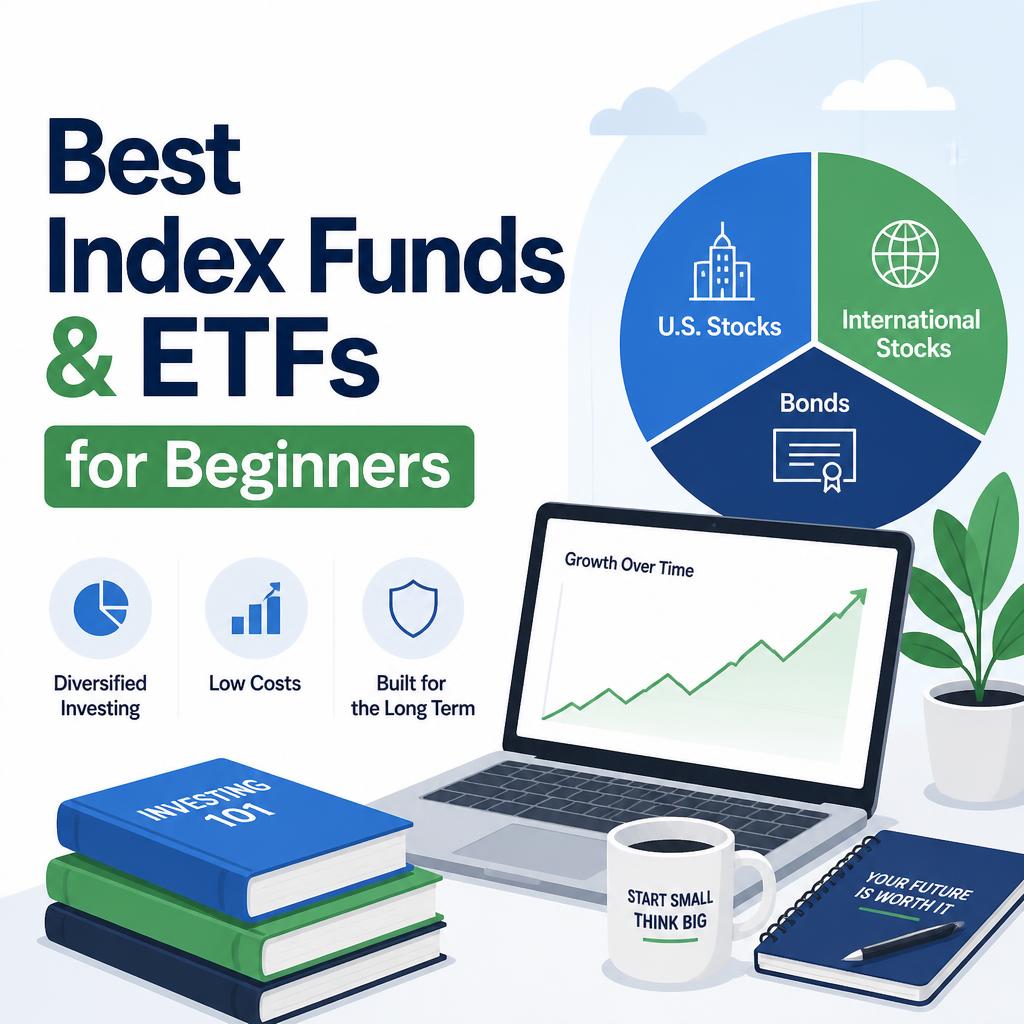
For true beginners, dividend-focused index funds and ETFs offer instant diversification without requiring individual stock selection skills.
Popular options include funds tracking dividend aristocrats or high-dividend indexes. You get exposure to dozens or hundreds of dividend payers in a single investment, reducing company-specific risk.
This approach pairs well with accounts at the best brokerage accounts for beginners, many of which offer commission-free ETF trading. You can learn more about selecting funds in our guide to the best index funds and ETFs.
Strategy 3: Dividend Reinvestment Plans (DRIPs)
Dividend reinvestment automatically uses your dividend payments to purchase additional shares. This eliminates the temptation to spend dividends and maximizes compounding.
Most brokers offer automatic dividend reinvestment at no cost. Some companies even offer direct stock purchase plans with discounted shares for DRIP participants.
Over decades, reinvesting dividends can dramatically amplify your returns—often contributing 40% or more of total returns.
Finding the Best Dividend Investments
Blue-Chip Dividend Stocks
Blue-chip companies—large, established businesses with strong competitive positions—form the foundation of most dividend portfolios. Think companies like Johnson & Johnson, Coca-Cola, or Procter & Gamble.
These businesses generate reliable cash flow, maintain strong balance sheets, and have proven their ability to pay dividends through multiple economic cycles.
Dividend ETFs and Funds
Several ETFs specifically target dividend investors:
Vanguard Dividend Appreciation ETF (VIG): Focuses on companies with 10+ years of dividend increases. Lower yield but strong growth potential.
Schwab U.S. Dividend Equity ETF (SCHD): Balances yield and quality, tracking high-dividend companies with strong fundamentals.
iShares Select Dividend ETF (DVY): Higher current yield, focuses on consistent dividend payers.
These funds provide instant diversification and professional management at low costs—typically 0.06% to 0.35% annually.
Real Estate Investment Trusts (REITs)
REITs must distribute 90% of taxable income as dividends, making them natural high-yield investments. They provide exposure to real estate without the hassles of property ownership.
Consider diversified REITs that own multiple property types rather than specialized REITs concentrated in one sector. This reduces risk from sector-specific downturns.
Setting Up Your Dividend Portfolio
Choosing the Right Account
Your account type significantly impacts your dividend investing results:
Tax-advantaged accounts (retirement accounts like IRAs and 401(k)s): Ideal for dividend investing since dividends grow tax-free or tax-deferred. Reinvest without annual tax bills.
Taxable brokerage accounts: More flexible but dividends face annual taxation. Better for investments you might need to access before retirement.
Many investors use both—maxing out tax-advantaged space first, then using taxable accounts for additional investments. Start by opening an account with one of the best brokerage accounts that offers commission-free trading and automatic dividend reinvestment.
Portfolio Allocation
Beginners should start with broad diversification:
- 40-50%: Dividend growth stocks or funds (established companies with rising payouts)
- 30-40%: Dividend aristocrat ETFs (companies with 25+ years of increases)
- 10-20%: Higher-yield investments like REITs or utility stocks
- 10%: Cash reserves for opportunities
This allocation balances current income, growth potential, and risk management.
Building Positions Gradually
Don’t rush to deploy all your capital immediately. Dollar-cost averaging—investing fixed amounts regularly—reduces the risk of buying everything at market peaks.
Invest consistently each month regardless of market conditions. This disciplined approach removes emotion from investing and typically results in lower average costs over time.
Common Dividend Investing Mistakes to Avoid
Chasing High Yields
The biggest beginner mistake is buying stocks solely because they offer high dividend yields. Yields above 7-8% often indicate problems:
- The stock price has fallen due to business challenges
- The dividend is unsustainable and likely to be cut
- The company operates in a declining industry
A cut dividend often triggers further stock price declines, creating losses that far exceed any income received.
Ignoring Total Return
Focusing only on dividend income while ignoring price appreciation limits your results. The best dividend investments combine solid yields with price growth over time.
A stock with a 3% yield that appreciates 7% annually outperforms a 6% yielder that declines 2% annually—despite the lower yield.
Neglecting Diversification
Concentrating your portfolio in a few high-yielding stocks or sectors creates unnecessary risk. Industry downturns or company-specific problems can devastate concentrated portfolios.
Aim for at least 15-20 different companies across various sectors, or use dividend ETFs for instant diversification.
Forgetting About Taxes
Dividends face taxation in taxable accounts—qualified dividends at capital gains rates, non-qualified at ordinary income rates. This reduces your effective return.
Prioritize dividend investments in tax-advantaged accounts where possible. If using taxable accounts, focus on qualified dividends from U.S. corporations and be aware of your tax bracket’s impact.
Taking Your First Steps
Starting your dividend investing journey doesn’t require thousands of dollars or advanced financial knowledge. Here’s your action plan:
Month 1: Open a brokerage account (preferably one offering commission-free trading and automatic dividend reinvestment). Fund it with whatever amount you can invest consistently.
Month 2: Make your first investment in a broad dividend ETF like VIG or SCHD. This provides instant diversification while you learn.
Months 3-6: Continue investing regularly in your initial fund. Use this time to research individual dividend stocks and understand their business models.
Months 7-12: Gradually add 2-3 individual dividend growth stocks to complement your ETF holdings. Focus on companies with products you understand and use.
Year 2+: Expand to 15-20 holdings across different sectors while maintaining your core ETF position. Continue learning and refining your approach.
Advanced Considerations
As you gain experience, consider these refinements:
Sector rotation: Adjust allocations based on economic cycles. Defensive sectors (utilities, consumer staples) perform better during downturns; cyclical sectors (industrials, materials) excel during expansions.
International diversification: Foreign dividend stocks offer geographic diversification and potentially higher yields, though they face currency risk and different tax treatment.
Options strategies: Covered calls on dividend stocks can enhance income for experienced investors, though they cap upside potential.
Building Wealth Through Dividends
The best dividend investing strategy combines patience, discipline, and continuous learning. Start with broad, diversified funds to build your foundation. Add quality individual stocks as your knowledge grows. Reinvest dividends consistently to harness compounding.
Most importantly, maintain a long-term perspective. Dividend investing rewards those who stay the course through market cycles, focusing on business quality rather than short-term price movements.
Your dividend portfolio should evolve as your financial situation changes. Young investors can emphasize dividend growth over current income. Those approaching retirement might shift toward higher yields for cash flow.
The key is starting now with whatever amount you can invest regularly. Even modest monthly investments grow significantly over decades when dividends compound. The best time to plant a tree was 20 years ago—the second best time is today.
Ready to begin building your dividend portfolio? Open an account with a broker that supports your strategy, choose your first investment, and commit to consistent contributions. Your future self will thank you for starting today.