Best Free Brokerage Accounts: Your Complete Guide to Commission-Free Trading in 2024
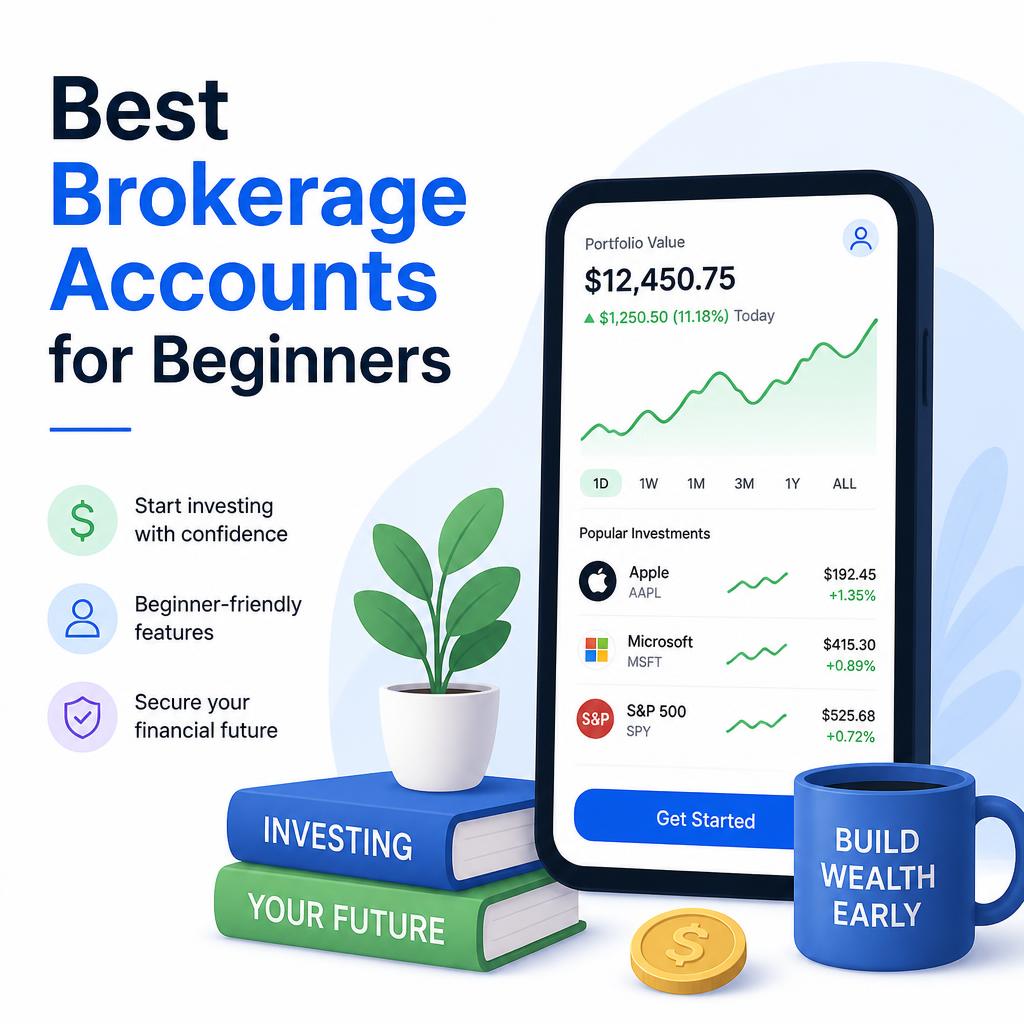
Choosing the right brokerage account shouldn’t feel like navigating a minefield of hidden fees and confusing fine print. Yet many investors waste hundreds—even thousands—of dollars annually on unnecessary commissions, account maintenance fees, and inflated expense ratios simply because they didn’t know better options existed.
The good news? The brokerage industry has been revolutionized. Commission-free trading is now the standard, not the exception, and several top-tier platforms offer robust features without charging you a dime for basic services.
This guide cuts through the noise to help you identify the best brokerage accounts that won’t drain your portfolio before you even start investing.
Why Free Brokerage Accounts Matter More Than You Think
A decade ago, paying $7-10 per trade was considered reasonable. If you bought stocks monthly, those fees alone could cost you $120-240 annually. For active traders, costs spiraled into thousands.
Today’s competitive landscape has eliminated most of these barriers. But “free” doesn’t mean all brokerages are created equal. The difference between a mediocre platform and an excellent one can mean:
- Better execution prices that save you money on every trade
- Superior research tools that help you make smarter decisions
- More investment options including fractional shares and international markets
- Educational resources that accelerate your learning curve
For beginners exploring brokerage accounts, the right platform can mean the difference between building confidence and making costly mistakes.
What Makes a Brokerage Account Truly “Free”?
Before diving into specific platforms, understand what “free” actually means in brokerage terms:
Commission-Free Trading
No charges for buying or selling stocks, ETFs, or options (though options may have per-contract fees).
No Account Minimums
You can open an account with $0 and start investing with whatever amount you have.
No Monthly Maintenance Fees
Your account won’t bleed money just for existing.
What’s NOT Free (And That’s Normal)
Even the best free brokerages charge for certain services:
- Regulatory fees: Mandated by the SEC and FINRA
- Wire transfer fees: Usually $25-30 for outgoing wires
- Options contracts: Typically $0.50-0.65 per contract
- Margin interest: If you borrow money to invest
- Expense ratios: Built into mutual funds and ETFs (not charged by the broker)
Top Free Brokerage Accounts: Our Picks
1. Fidelity Investments — Best Overall
Why it stands out: Fidelity combines zero commissions with institutional-grade research tools and exceptional customer service.
Key Features:
- Commission-free stocks, ETFs, and options (plus $0 contract fees on options)
- No account minimums or maintenance fees
- Fractional shares available for stocks and ETFs
- Outstanding research platform with 20+ third-party research providers
- 24/7 customer support via phone
- Extensive branch network for in-person assistance
Best for: Serious investors who want professional-caliber tools without professional fees. Particularly strong for those building diversified portfolios with index funds and ETFs.
Watch out for: The platform can feel overwhelming for absolute beginners, though the mobile app simplifies things.
2. Charles Schwab — Best for Customer Service
Why it stands out: Schwab’s reputation for treating clients well is legendary, and their platform backs it up.
Key Features:
- $0 commissions on stocks, ETFs, and options ($0.65 per contract)
- No account minimums
- Schwab Stock Slices (fractional shares) for S&P 500 companies
- Excellent telephone and chat support
- Over 300 physical branches
- Strong checking account integration (great for cash management)
Best for: Investors who value personal service and want the option of face-to-face guidance. Also excellent for those managing retirement accounts like IRAs.
Watch out for: Mutual fund selection is somewhat limited compared to Fidelity.
3. Vanguard — Best for Long-Term Investors
Why it stands out: Vanguard practically invented low-cost index investing, and their brokerage account reflects that philosophy.
Key Features:
- Commission-free trading for stocks and ETFs
- Access to Vanguard’s legendary low-cost mutual funds
- Strong focus on investor education
- Excellent retirement planning tools
- Client-owned structure (no outside shareholders to appease)
Best for: Buy-and-hold investors focused on index funds and dividend investing strategies. Perfect for those building long-term wealth through consistent contributions.
Watch out for: The platform feels dated compared to competitors, and customer service can be slow during market hours.
4. TD Ameritrade — Best Research and Education
Why it stands out: TD Ameritrade’s thinkorswim platform is the gold standard for research tools and technical analysis.
Key Features:
- Commission-free stocks, ETFs, and options ($0.65 per contract)
- No account minimums
- thinkorswim desktop platform (professional-grade charting)
- Extensive educational content and webinars
- Paper trading account for practice
- 24/7 customer support
Best for: Investors who want to deepen their market knowledge and those interested in options trading.
Watch out for: Now owned by Schwab (merger in progress), so expect platform changes over the next few years.
5. E*TRADE — Best Mobile Experience
Why it stands out: ETRADE‘s mobile app is consistently rated among the best for usability and features.
Key Features:
- $0 commissions on stocks, ETFs, and options ($0.50-0.65 per contract)
- No account minimums
- Excellent mobile and web platforms
- Strong options and futures trading capabilities
- Power E*TRADE platform for active traders
Best for: Mobile-first investors who do most of their trading on-the-go.
Watch out for: Also owned by Morgan Stanley, which may lead to platform changes.
6. Robinhood — Best for Simplicity
Why it stands out: Robinhood pioneered commission-free trading and remains the simplest platform to use.
Key Features:
- True $0 commissions (even on options contracts)
- Fractional shares for thousands of stocks
- Cryptocurrency trading integrated
- Clean, intuitive interface
- Instant deposit access
Best for: Absolute beginners who want the simplest possible entry point to investing.
Watch out for: Limited research tools, customer service issues, and past controversies around order execution. Not recommended for serious investors.
How to Choose Your Best Brokerage Account
With so many solid options, how do you decide? Ask yourself these questions:
1. What’s Your Investing Style?
Buy-and-hold investor: Fidelity or Vanguard
Active trader: TD Ameritrade or E*TRADE
Options trader: TD Ameritrade
Total beginner: Schwab or Robinhood
2. What Features Matter Most?
Research depth: TD Ameritrade or Fidelity
Customer service: Schwab or Fidelity
Mobile experience: E*TRADE
Educational content: TD Ameritrade or Fidelity
Fractional shares: Fidelity or Robinhood
3. What Are You Investing In?
Stocks and ETFs: Any of these platforms work well
Mutual funds: Fidelity or Vanguard
Options: TD Ameritrade or E*TRADE
International stocks: Fidelity or Schwab
Cryptocurrency: Robinhood (though a dedicated crypto exchange is usually better)
4. Do You Want Human Support?
If yes: Schwab or Fidelity (branch access + phone support)
If no: Any platform will work
Key Features to Compare
Account Minimums and Fees
All platforms mentioned have $0 account minimums and no monthly fees. However, check for:
- Inactivity fees (rare but possible)
- Paper statement fees ($1-2/month, easily avoided by going paperless)
- Account closure fees (some brokers charge $50-75 to transfer out)
Investment Options
Most brokerages offer:
- US stocks and ETFs
- Mutual funds
- Options
- Bonds
But availability varies for:
- International stocks
- Fractional shares
- Cryptocurrency
- Forex
- Futures
Trading Platform Quality
Consider:
- Web platform: Is it intuitive? Fast? Feature-rich?
- Mobile app: Can you do everything you need on your phone?
- Desktop software: Available for advanced traders?
- Charting tools: Quality and customization options
Research and Analysis
Look for:
- Real-time quotes
- Company fundamentals and earnings data
- Analyst ratings
- Market news and commentary
- Screeners for stocks, ETFs, and mutual funds
- Educational articles and videos
Common Mistakes to Avoid
1. Choosing Based on Promotions Alone
Many brokerages offer cash bonuses for new accounts. While nice, a $100 bonus doesn’t justify using an inferior platform for years. Focus on long-term value.
2. Overlooking Order Execution Quality
“Free” isn’t free if you’re getting worse prices on your trades. Reputable brokerages like Fidelity, Schwab, and TD Ameritrade prioritize execution quality. Smaller platforms may sell your order flow for profit, costing you money through worse fill prices.
3. Ignoring the Learning Curve
A platform with every feature imaginable won’t help if you can’t figure out how to use it. Match the platform complexity to your current skill level, knowing you can always transfer later.
4. Forgetting About Tax Support
Come tax season, you’ll want:
- Easy-to-download tax documents
- Good cost-basis tracking
- Clear gain/loss reporting
- Tax-loss harvesting tools (on premium accounts)
All major brokerages handle this well, but it’s worth confirming.
Opening Your Account: What to Expect
The process is straightforward across all platforms:
- Provide personal information: Name, address, birth date, Social Security number
- Answer financial questions: Employment, income, net worth, investment experience
- Choose account type: Individual, joint, IRA, custodial, etc.
- Agree to terms: Review and accept account agreements
- Fund your account: Bank transfer, wire, check, or account transfer
Most accounts are approved within minutes, though funding can take 1-3 business days.
Maximizing Your Free Brokerage Account
Start Small But Consistent
You don’t need thousands to start. Even $50/month invested consistently can build wealth over decades. Fractional shares mean you can buy into expensive stocks like Amazon or Google with whatever you have.
Take Advantage of Educational Resources
Every platform offers free education. Use it. The knowledge you gain will pay far bigger dividends than any stock pick.
Automate Your Investing
Set up automatic transfers from your checking account to your brokerage account. Many investors find the “best brokerage accounts” are the ones they consistently fund, regardless of specific features.
Consider Multiple Accounts
There’s no rule saying you can have only one brokerage account. Many investors use:
- One for long-term buy-and-hold investing
- Another for active trading or learning
- A third for retirement accounts
The Bottom Line
The democratization of investing through free brokerage accounts is one of the most significant financial developments of the past decade. You no longer need thousands of dollars or high fees to build wealth through the stock market.
For most investors, Fidelity or Charles Schwab represent the sweet spot of features, reliability, and service. They offer everything you need to build a diversified portfolio without overwhelming you with complexity.
Vanguard remains unbeatable if you’re focused on low-cost index fund investing for the long haul.
TD Ameritrade is worth the (temporary) extra complexity if you’re serious about learning market analysis and trading strategies.
ETRADE excels if you live on your phone and want your brokerage to follow you everywhere.
And Robinhood, despite its flaws, still serves as the simplest on-ramp for absolute beginners—just plan to graduate to a more robust platform as you grow.
The best brokerage account is the one you’ll actually use consistently to build wealth over time. Choose a reputable platform, fund it regularly, invest in diversified holdings, and resist the urge to constantly tinker. That simple formula, executed through any of these free brokerage accounts, will serve you far better than searching endlessly for the “perfect” platform.
Ready to start investing? Pick a platform from this list, open your account today, and take your first step toward building long-term wealth. Your future self will thank you.
—
Affiliate Disclosure: We may earn a commission from some of the products mentioned in this article.