Best Dividend Investing 2026: Your Complete Guide to Building Passive Income
Dividend investing is one of the most reliable ways to build wealth and generate passive income. But with thousands of dividend-paying stocks out there, how do you find the good ones without wasting time on dead ends?
This guide will help you master dividend investing in 2025, whether you’re starting from scratch or trying to improve what you already have.
What Is Dividend Investing?
Dividend investing means buying shares of companies that regularly pay out some of their earnings to shareholders. Unlike growth investing, which only makes money when the stock price goes up, dividend investing gives you two ways to profit: regular cash payments and potential price gains.
You get quarterly or monthly checks while your investment can still grow. That’s why people like it.
Why Dividend Investing Works in 2025
Interest rates have stabilized after years of chaos. Dividend stocks now offer better yields than most bonds and savings accounts.
A few reasons this matters now:
Established companies are paying out more. Buybacks and dividends are up as mature businesses return cash to shareholders.
More people need income. Retirees and near-retirees want reliable cash flow, not just growth.
Inflation hedge. Good dividend companies can raise prices, which means they can keep paying and even increase dividends when everything else gets more expensive.
Tax treatment. Qualified dividends get taxed less than regular income, so you keep more of what you earn.
The Pillars of Best Dividend Investing
1. Dividend Yield vs. Dividend Growth
Chasing the highest yields is a mistake. A 10% yield might mean the company is struggling and about to cut the dividend.
Better to balance current yield with growth potential. Companies that raise dividends every year often beat high-yield stocks over time, even if they start with lower payouts.
2. Payout Ratio Analysis
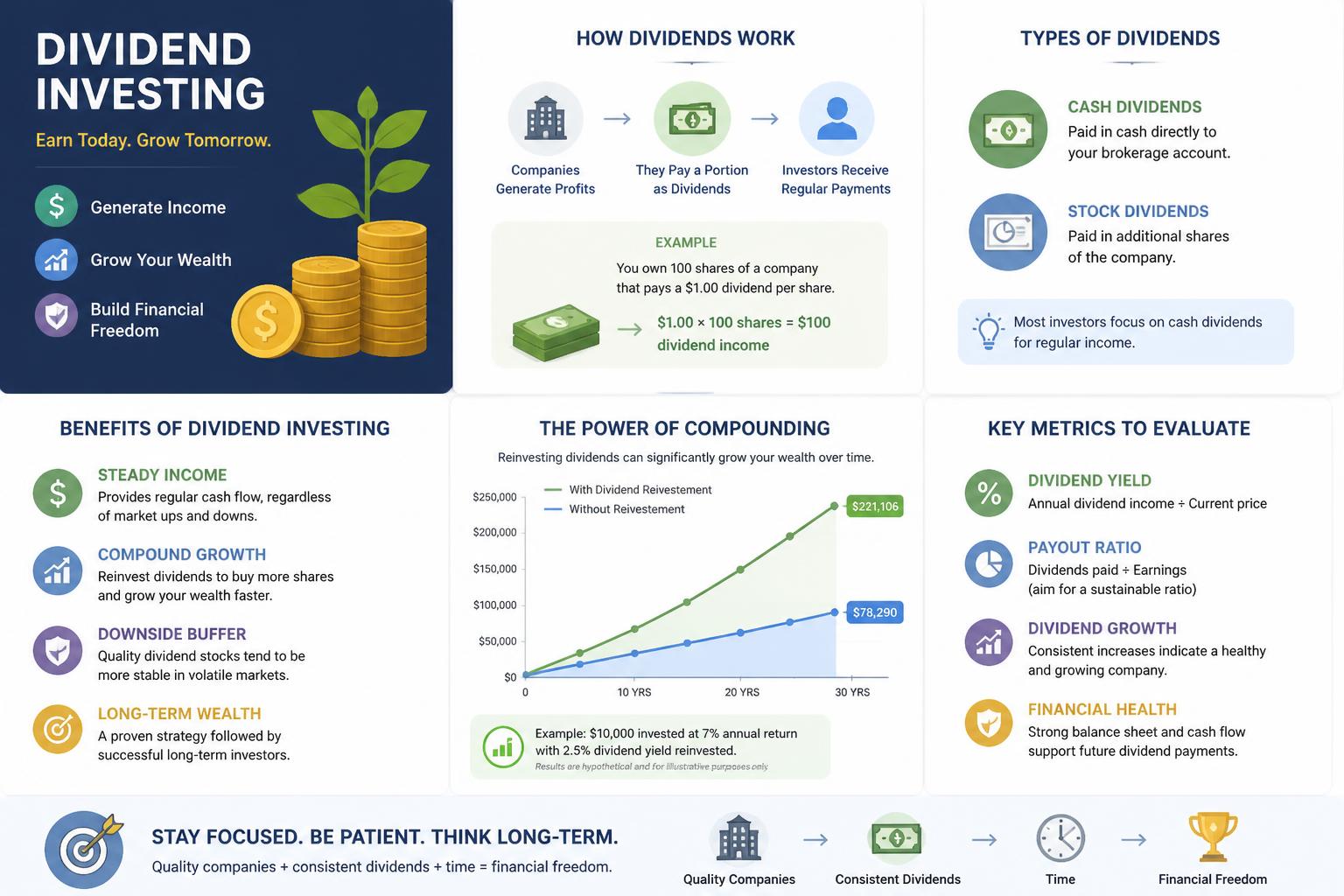
The payout ratio shows what percentage of earnings goes to dividends. Sustainable is usually 40-60% for most industries. That leaves room to reinvest in the business, weather downturns, and increase dividends later.
Above 80% is a red flag. The dividend is probably at risk if things go wrong.
3. Dividend Aristocrats and Kings
Dividend Aristocrats are S&P 500 companies that have raised dividends for at least 25 straight years. Dividend Kings have done it for 50+ years.
These companies have proven they can survive recessions, adapt to change, and still reward shareholders. Not all of them are worth buying, but it’s a good place to start your research.
Building Your Dividend Portfolio Strategy
Diversification Across Sectors
Spread your money across different industries. Different sectors do well at different times:
Defensive sectors (consumer staples, utilities, healthcare) stay stable no matter what the economy does.
Cyclical sectors (financials, industrials, materials) grow faster but can cut dividends in recessions.
REITs are required by law to distribute 90% of taxable income. High yields, but watch the tax treatment.
The Dividend Reinvestment Advantage
Dividend reinvestment plans (DRIPs) automatically buy more shares with your dividend payments. No commissions, fractional shares allowed, and you’re dollar-cost averaging without thinking about it.
Over decades, reinvested dividends can make up 40-50% of your total returns.
Top Dividend Investing Strategies for 2026
The Income-Focused Approach
For people who need money now:
- High-yield stocks (4-6% range)
- Monthly dividend payers
- REITs and BDCs
- Preferred stocks
This works if you’re retired or trying to replace a paycheck.
The Growth-Oriented Dividend Strategy
For people who can wait:
- Moderate yields (2-4%)
- Strong dividend growth (8-12% per year)
- Expanding profit margins
- Industry leaders
Less income today, but usually better total returns over 10+ years.
The Dividend Momentum Strategy
Buy companies that just started or significantly increased their dividends. These moves often signal management confidence and improved finances.
Dividend initiators and growers tend to outperform the market in the following years.
Common Dividend Investing Mistakes to Avoid
Yield Chasing Without Due Diligence
High yields can mean trouble. Before buying a stock with an unusually high yield, check:
- Has it cut dividends recently?
- Are sales or earnings falling?
- Is the industry struggling?
- Is there too much debt?
Ignoring Total Return
A stock yielding 7% that drops 10% in value loses you money. Always look at the whole picture: share price stability, business fundamentals, competitive position, management quality.
Overconcentration in a Single Sector
Loading up on utilities or REITs because they pay well leaves you vulnerable to sector-specific problems. Own stocks across at least 8-10 different sectors.
Neglecting International Opportunities
International dividend stocks offer different economic cycles, unique industries, currency diversification, and often higher yields. Don’t ignore them.
Tax Considerations for Dividend Investors
Taxes matter:
Qualified dividends get taxed at capital gains rates (0%, 15%, or 20% depending on your income).
Ordinary dividends get taxed as regular income.
Tax-advantaged accounts (IRAs, 401(k)s) let you defer or avoid taxes on dividends entirely. Put high-yield stocks there.
REIT dividends usually count as ordinary income since REITs don’t pay corporate taxes.
Smart account placement can save you thousands per year.
Tools and Resources for Best Dividend Investing
Screening and Research Platforms
Use dividend screening tools to filter stocks by yield, growth rate, payout ratio, and streak length. Financial data platforms give you detailed analysis and historical dividend data. Portfolio tracking software monitors your income, reinvestment, and returns.
Key Metrics to Monitor
Track these for each holding:
- Dividend yield (annual dividend ÷ share price)
- Dividend growth rate (year-over-year increase)
- Payout ratio (dividends ÷ earnings)
- Dividend coverage (how many times earnings cover the payment)
- Total return (dividends + price change)
The Future of Dividend Investing
A few trends to watch:
Tech companies paying dividends. Apple, Microsoft, and others are maturing and paying out more cash.
ESG factors. Environmental, social, and governance issues are affecting who pays dividends and who investors choose.
Alternative income assets. MLPs, closed-end funds, and preferred securities add diversification.
Global opportunities. Emerging market dividend stocks offer higher yields with more risk.
Getting Started with Your Dividend Portfolio
Here’s how to start:
- Define your goals. Do you want income now, growth later, or both?
- Know your risk tolerance. How much can you stomach your portfolio dropping while you wait for dividends?
- Set your allocation. What percentage of your money goes to dividend stocks vs. everything else?
- Build a watch list. Research 20-30 quality dividend stocks across different sectors.
- Start small. Buy 10-15 companies, add more as you learn and save.
- Review quarterly. Check your holdings, drop the ones that deteriorate, add better opportunities.
Conclusion
The best dividend investing for 2025 comes down to picking quality companies, spreading your risk, and thinking long term. High yields are tempting, but sustainable dividend growth from healthy companies is what builds wealth.
Focus on strong fundamentals, reasonable payout ratios, and histories of raising dividends. You’ll get regular income and price gains.
Successful dividend investing isn’t about finding the perfect stock or timing the market. It’s about consistently buying quality companies, reinvesting dividends, and letting compound growth do its thing over years and decades.
Start by researching your first quality dividend stock. Your future self will appreciate the passive income stream you’re building now.
For more on maximizing returns, see our guide at https://moneysavingway.com/best-dividend-investing/.