# Schwab vs Vanguard in 2026: Which Wins for ETFs?
SEO Metadata
- Title tag: Schwab vs Vanguard: Best ETFs & Index Funds (2026)
- Meta description: Schwab vs Vanguard comparison in 2026—fees, ETFs, index funds, usability, and which brokerage is better for long-term investors.
- URL slug: /schwab-vs-vanguard-2026
- Target keyword: schwab vs vanguard
- Secondary keywords: Vanguard ETFs, Schwab index funds, brokerage comparison, low-cost investing 2026
Content

If you strip investing down to its core problem, it’s not “how do I pick stocks?” It’s: how do I build wealth without leaking money to fees, confusion, or bad timing?
That’s exactly where the debate between Charles Schwab and The Vanguard Group sits in 2026. Both are low-cost giants. Both offer index funds that quietly outperform most active investors. But they behave very differently once you actually start using them.
And that difference matters more than most people realize.
---
Table of Contents
- The real difference between Schwab and Vanguard
- Fees, ETFs, and index fund costs in 2026
- Platform experience: simplicity vs flexibility
- Best use cases for each broker
- Tax efficiency and long-term holding strategy
- Common mistakes investors make
- Final verdict: who should choose what
- FAQ
---
The Real Difference Between Schwab and Vanguard
On paper, Schwab and Vanguard look similar: low-cost ETFs, broad index funds, and strong reputations.
In practice, their philosophies are opposite.
Vanguard is structured like a client-owned fund company. Its priority is minimizing cost and maximizing long-term investor returns. It feels conservative, almost minimalist.
Schwab, on the other hand, behaves like a full-service financial ecosystem. It wants you to trade, bank, invest, and automate everything in one place.
So the question isn’t just “which is cheaper?”
It’s “do you want simplicity or flexibility?”
---
Fees, ETFs, and Index Funds in 2026
Core similarity: near-zero fees
Both platforms now compete at the bottom of the expense ratio curve:
- S&P 500 index funds: ~0.02%–0.03%
- Total market ETFs: ~0.03%–0.04%
- Commission-free ETF trading: standard on both platforms
The practical difference in cost is basically negligible for most investors.
Where Vanguard still stands out
Vanguard’s strength is in its fund structure discipline. It avoids unnecessary product sprawl. That means fewer “tempting distractions” like thematic ETFs or leveraged products.
You get:
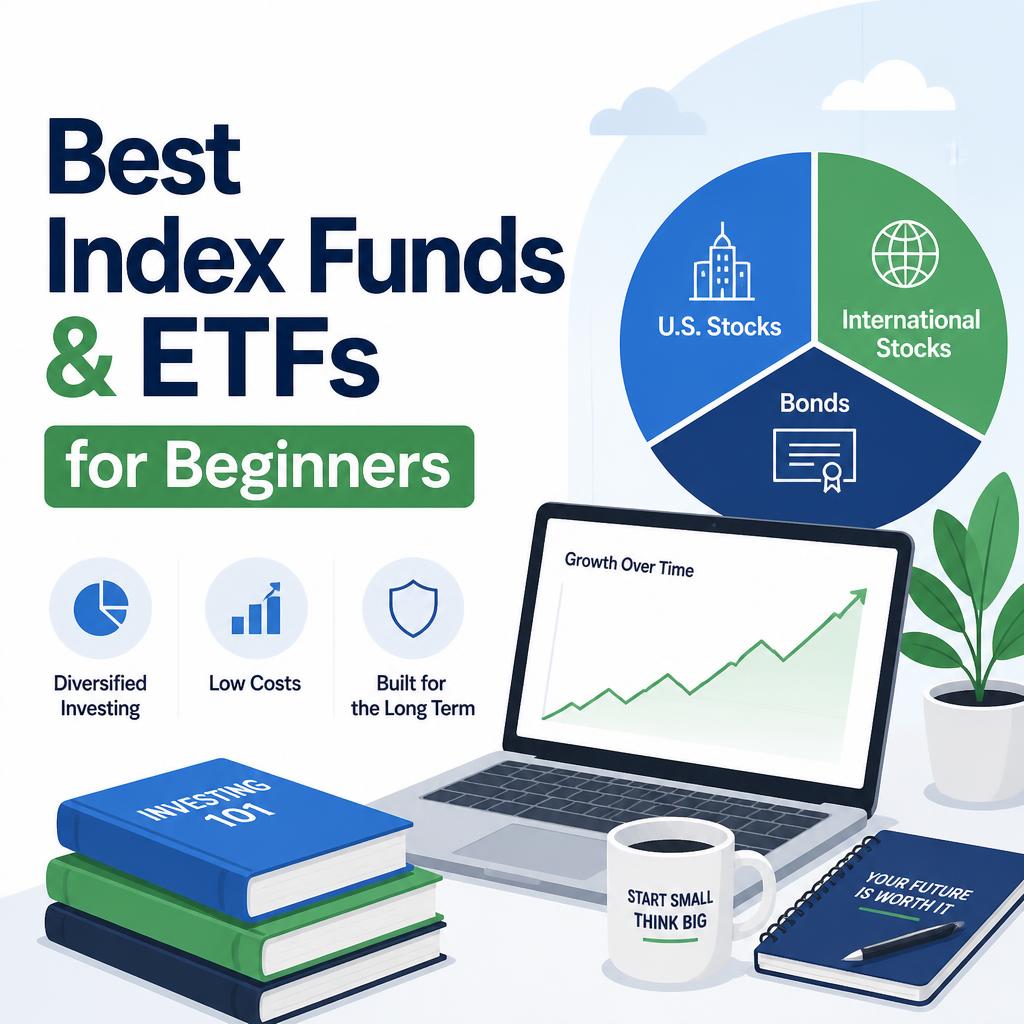
- Broad market index funds
- Target retirement funds
- Simple bond allocation options
It’s intentionally boring. That’s the point.
Where Schwab wins
Schwab offers:
- Schwab S&P 500 ETF equivalents
- A wider ETF marketplace
- Fractional shares (helpful for small accounts)
- More cash management integration
If you like building a custom portfolio, Schwab gives you more tools.
---
Platform Experience: Simplicity vs Flexibility
This is where the gap becomes real.
Vanguard: minimal interface, minimal temptation
Vanguard’s platform feels like it was designed for “set it and forget it” investors.
Pros:
- Simple dashboard
- Fewer decisions to make
- Strong focus on long-term holding
Cons:
- Slightly outdated UX
- Less intuitive for active portfolio building
Schwab: full trading ecosystem
Schwab feels like a hybrid between a bank and a trading platform.
Pros:
- Clean interface for beginners and advanced users
- Strong research tools
- Easy fund screening and ETF comparison
Cons:
- More options can lead to overtrading
- Slight learning curve if you want to stay simple
---
Best Use Cases for Each Broker
Let’s make this practical.
Choose Vanguard if you:
- Want to invest and forget about it for 10–20 years
- Prefer strict index investing
- Don’t want to be tempted into trading
- Value behavioral discipline over features
Choose Schwab if you:
- Want flexibility in portfolio design
- Like combining banking + investing
- Plan to adjust allocations over time
- Want better tools and interface design
---
Tax Efficiency and Long-Term Strategy
Both platforms are highly tax-efficient, but Vanguard has a slight edge in behavior-driven outcomes.
Why?
Because simplicity reduces turnover.
Lower turnover = fewer taxable events = better compounding.
Schwab can match this—but only if you behave like a passive investor. The platform itself doesn’t enforce discipline.
A useful mental model:
- Vanguard = system enforces discipline for you
- Schwab = system gives you tools, discipline is on you
---
Common Mistakes Investors Make
1. Overcomplicating portfolios
People often combine 6–10 ETFs thinking it improves returns. In reality, it usually just recreates the total market index with extra noise.
2. Ignoring behavior risk
The biggest risk isn’t fees—it’s emotional trading during volatility.
3. Chasing “better” ETFs
At this level, performance differences between major index funds are negligible.
---
Final Verdict: Schwab vs Vanguard
There is no universal winner in 2026.
But there is a clear pattern:
- If your goal is maximum simplicity + behavioral protection → Vanguard wins.
- If your goal is flexibility + tools + ecosystem control → Schwab wins.
Both will get you to the same destination: long-term index growth.
The difference is how much mental effort you want to spend along the way.
---
FAQ
Is Schwab or Vanguard cheaper?
They are effectively equal in ETF and index fund costs in 2026.
Which is better for beginners?
Vanguard for simplicity, Schwab for guided learning and tools.
Can I use both?
Yes. Many investors use Vanguard for core holdings and Schwab for cash management.
Which is safer?
Both are highly regulated U.S. financial institutions with strong protections.
---
Structured Data
json
{
“@context”: “https://schema.org”,
“@type”: “Article”,
“headline”: “Schwab vs Vanguard in 2026”,
“description”: “Comparison of Schwab vs Vanguard covering ETFs, index funds, fees, and long-term investing strategy in 2026.”,
“author”: {
“@type”: “Person”,
“name”: “Ryan Le”
}
}
---
Internal Linking Plan
- Link TO this page from: “Best index funds 2026”, “ETF investing guide”, “Beginner investing strategy”
- This page links to: Vanguard ETF guide, Schwab brokerage review, index fund basics
---
Publishing Checklist
- [ ] Title tag optimized and under 60 characters
- [ ] Meta description set (120–160 chars)
- [ ] URL slug configured
- [ ] Featured image uploaded
- [ ] Inline images placed correctly
- [ ] Structured data added
- [ ] Internal links inserted
- [ ] Mobile formatting checked