# Fidelity vs Vanguard (2026): Which Wins for Retirement Investing?

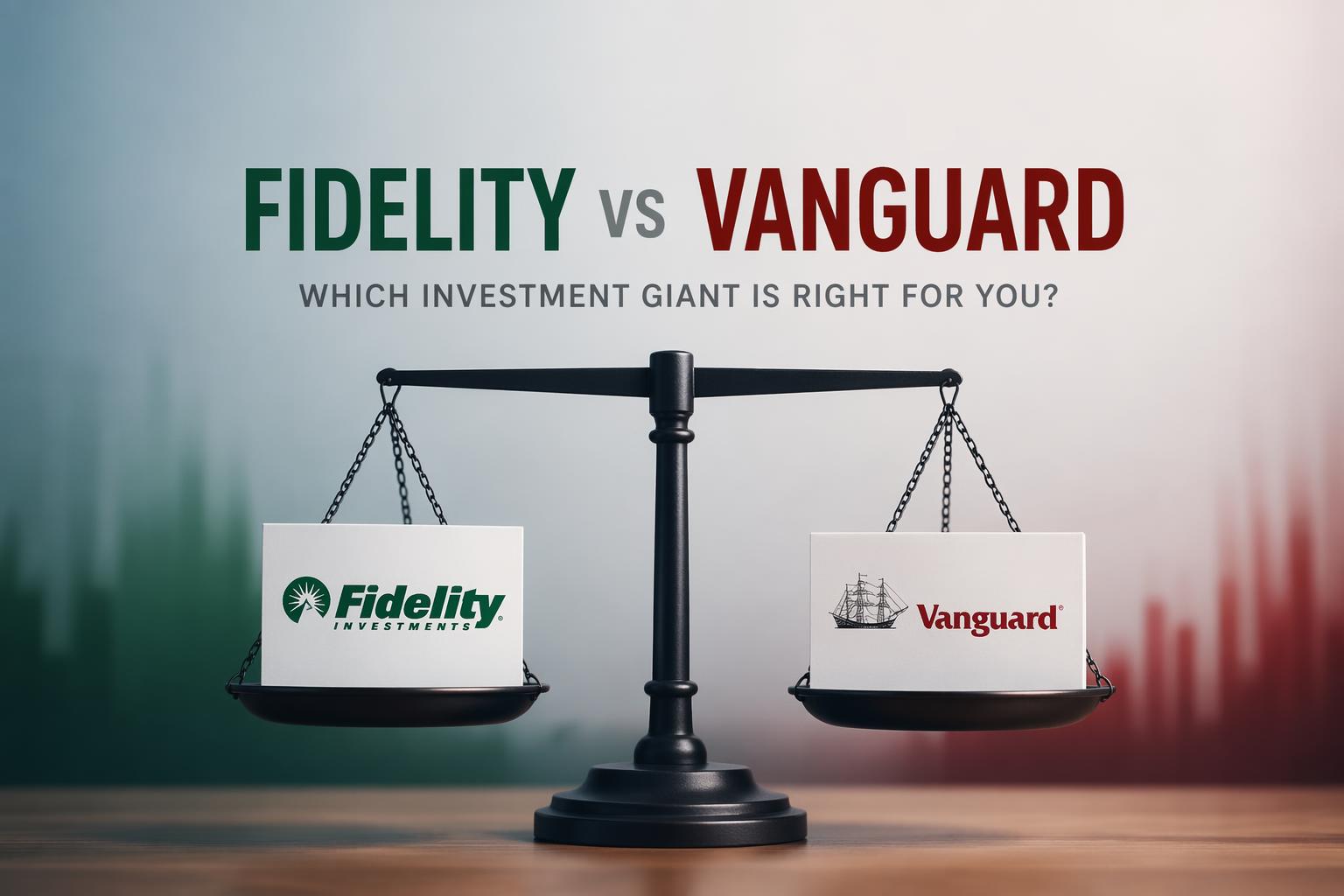
If you're building retirement wealth in 2026, two names dominate every serious conversation: Fidelity Investments and The Vanguard Group.
And yet most people still choose blindly—based on hearsay like “Vanguard is cheaper” or “Fidelity has better tools.” That shortcut thinking is exactly how investors end up paying more in hidden friction: worse fund selection, clunky interfaces, or missed tax advantages in IRAs and 401(k)s.
Here’s the uncomfortable truth: there is no universal winner. There is only a better fit for your investing behavior, patience level, and how hands-on you want to be.
Let’s break it down properly.
---
Table of Contents
- Why this comparison matters in 2026
- Core philosophy: passive vs flexible investing
- Fees and fund costs (where the real difference hides)
- ETFs vs mutual funds
- Retirement accounts: IRA & 401(k) experience
- Platform usability and tools
- Index fund performance reality check
- Tax efficiency considerations
- Who should choose Fidelity
- Who should choose Vanguard
- Common mistakes investors make
- Final verdict
---
Why this comparison matters in 2026
Retirement investing is no longer just “buy S&P 500 and forget it.” In 2026, investors face:
- More ETF options than ever
- Micro-fee competition (0.00–0.05% funds)
- Self-directed IRAs with complex asset choices
- Robo-advisors embedded into broker platforms
- Behavioral traps from overtrading tools
So your brokerage choice is not just about cost—it shapes your behavior. And behavior compounds more than fees over 20–30 years.
---
Core philosophy: passive vs flexible investing
Vanguard: simplicity-first investing
Vanguard built its reputation on one principle: low-cost indexing wins long-term.
Their structure encourages:
- Buy-and-hold behavior
- Broad index exposure
- Minimal trading temptation
You’ll typically see investors holding:
- Total market index funds
- Target-date retirement funds
- Broad bond ETFs
It’s intentionally “boring”—and that’s the point.
---
Fidelity: flexibility-first investing
Fidelity takes a different approach: give investors more tools, more options, and more control.
You get:
- Zero-fee index funds (select funds)
- Fractional shares
- Active and passive fund ecosystem
- Advanced research tools
The tradeoff? More choice = more temptation to overcomplicate.
---
Fees and fund costs (where the real difference hides)
In 2026, both platforms are aggressively low-cost.
Index fund expense ratios
- Vanguard S&P 500 ETF (VOO): ~0.03%
- Fidelity ZERO index funds: 0.00% (select funds)
At first glance, Fidelity looks cheaper.
But here’s the nuance:
- Vanguard funds often have better structural tax efficiency
- Fidelity ZERO funds may have slightly different tracking mechanics
Hidden cost: behavioral fees
This matters more than expense ratios:
- Vanguard → reduces trading behavior
- Fidelity → increases engagement (which can lead to overtrading)
Over 20 years, behavior can outweigh 0.03% fee differences.
---
ETFs vs mutual funds
Vanguard approach
- Strong ETF lineup (VOO, VTI, BND)
- Mutual funds still widely used in retirement accounts
Fidelity approach
- Very strong ETF + mutual fund hybrid ecosystem
- Easier fractional ETF investing
- More flexible order types
If you like precision control → Fidelity wins
If you prefer set-and-forget simplicity → Vanguard wins
---
Retirement accounts: IRA & 401(k) experience
IRA experience
Fidelity:
- Faster onboarding
- Strong UI
- Easy contribution tracking
- More automation options
Vanguard:
- Clean but minimal interface
- Fewer distractions
- Slower UX but stable
Winner:
- Fidelity for beginners
- Vanguard for long-term passive investors
---
401(k) management
This is where differences narrow:
- Both offer target-date funds
- Both support auto-rebalancing
- Both integrate employer plans well
But:
- Fidelity often powers more corporate 401(k) plans
- Vanguard is more common in government/nonprofit plans
---
Platform usability and tools
Fidelity tools
- Advanced screeners
- Real-time analytics
- Retirement planning dashboards
- AI-driven insights (2026 update)
Vanguard tools
- Basic portfolio tracking
- Minimalist dashboard
- Focus on allocation clarity
This is the clearest philosophical split:
- Fidelity = control center
- Vanguard = autopilot
---
Index fund performance reality check
Most investors assume one “performs better.”
In reality:
- Both track benchmarks extremely closely
- Differences are usually <0.1% annually
- Long-term divergence is negligible
So performance is not the deciding factor.
What matters is:
- Fees
- Taxes
- Investor behavior consistency
---
Tax efficiency considerations
Vanguard has historically led in:
- ETF share-class structure
- Capital gains minimization
Fidelity has improved significantly:
- Competitive ETF tax efficiency
- Strong retirement account optimization tools
In taxable accounts:
- Vanguard still slightly edges out in long-term tax drag efficiency
In retirement accounts:
- Difference becomes nearly irrelevant
---
Who should choose Fidelity
Choose Fidelity if you:
- Want full control over investments
- Prefer modern app/UI experience
- Use fractional shares or active trading occasionally
- Want strong research tools
- Are building multiple portfolios (IRA + taxable + trading)
Best for:
- Active beginners
- Tech-savvy investors
- People optimizing across multiple accounts
---
Who should choose Vanguard
Choose Vanguard if you:
- Want the simplest long-term investing setup
- Prefer low temptation to trade
- Focus purely on retirement accumulation
- Trust indexing philosophy deeply
Best for:
- Passive investors
- Long-term retirement planners
- Minimalist financial setups
---
Common mistakes investors make
1. Overvaluing small fee differences
0.03% vs 0.00% sounds big, but behavior dominates returns.
2. Switching platforms too often
Compounding works best when untouched.
3. Over-diversifying funds
Owning 10–15 overlapping ETFs reduces clarity, not risk.
4. Ignoring tax placement
Wrong assets in taxable vs retirement accounts can cost more than fees.
---
Final verdict
There is no universal winner between Fidelity and Vanguard.
But there is a clearer way to think about it:
- If you want simplicity, discipline, and long-term autopilot investing → Vanguard
- If you want flexibility, tools, and control over your portfolio → Fidelity
The best choice is not the platform with better features.
It’s the one that makes you behave like a long-term investor even when markets get noisy.