Finding a Cheap Brokerage Account That Actually Works
Picking a brokerage is annoying. Every platform claims low fees and great features, but most of that is marketing. The real question: how do you avoid overpaying without ending up on a platform that’s missing something you actually need?
Get this wrong and you’ll lose hundreds or thousands a year to fees you didn’t need to pay. Get it right and you’ll have a platform that gets out of your way and lets you invest.
This guide helps you find a brokerage that balances cost with functionality. Whether you’re starting out or switching to save money, you’ll know what matters and what doesn’t.
What You’re Actually Paying For
Before comparing platforms, understand what costs actually matter today.
What changed
Ten years ago, $7-10 per trade was normal. Brokerages made good money on commissions and investors accepted it. Then in 2019, major brokerages killed commission fees on stocks and ETFs. Not out of generosity—they had to. Discount brokerages proved commission-free trading worked, and the old guard had to follow or lose customers.
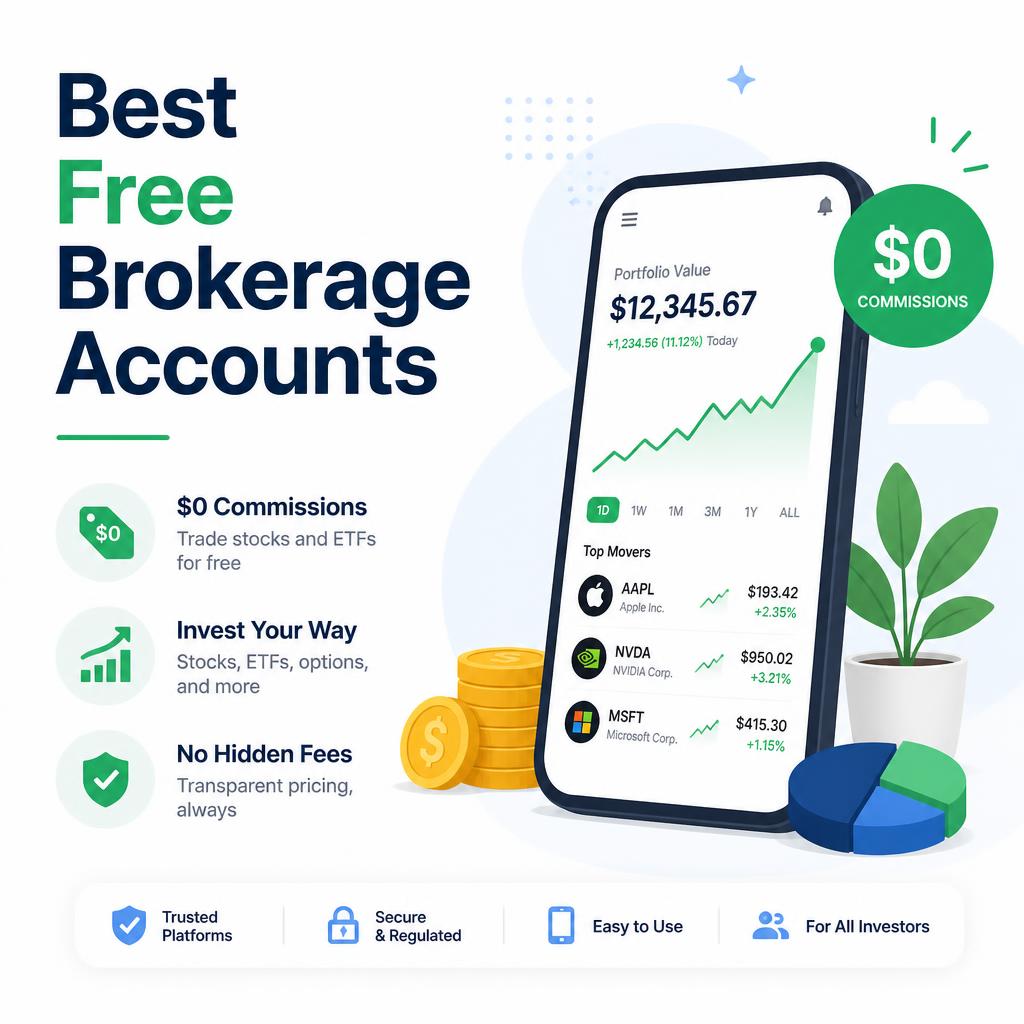
Now commission-free is standard. If a brokerage charges commissions on regular stock and ETF trades, they’re either offering something specialized or they’re behind.
Costs that still matter
Trading commissions are gone, but other costs aren’t:
Expense ratios: Annual fees on mutual funds and ETFs. A brokerage with low-cost index funds at 0.03% saves you real money compared to one pushing actively managed funds at 1%. On $100,000, that’s $30 vs $1,000 per year.
Bid-ask spreads: The gap between buy and sell prices. Quality brokerages route orders for best execution, minimizing this. Poor execution costs active traders thousands annually.
Options contract fees: Stock trades are free, but options typically cost $0.50-$0.65 per contract. Trade options regularly and these add up.
Account minimums: Some brokerages require $500 to $25,000 to open an account. Not a direct fee, but it stops you from starting if you don’t have the cash.
Inactivity fees: Some charge monthly or quarterly fees if you don’t trade. These hit small, passive investors the hardest.
Transfer and wire fees: Moving money in or out can cost $25-75 at some brokerages.
Which Brokerages Are Actually Cheap
Here are the platforms that combine low costs with features you’ll actually use.
Fidelity
Fidelity does most things well. Zero account minimums, no commissions, solid research, and good customer service.
What’s good:
- Four zero expense ratio index funds (FZROX, FZILX, FNILX, FZIPX)
- Fractional shares starting at $1
- Professional-grade research without paying for premium tiers
- 24/7 customer support
- No account fees, no minimums, no inactivity fees
Best for: Long-term investors who want retirement accounts, taxable investing, and research in one place.
Drawbacks: The platform looks dated compared to newer apps. Active traders looking for advanced charts will find it limiting.
Charles Schwab
After buying TD Ameritrade, Schwab became a powerhouse. Premium features without premium prices.
What’s good:
- Free robo-advisor (Schwab Intelligent Portfolios) with no advisory fees or commissions, $5,000 minimum
- Over 300 physical branches if you want face-to-face support
- Easy access to international markets
- Fractional shares of S&P 500 stocks starting at $5
- No foreign transaction fees on debit cards
Best for: Investors who want premium services and branch access. Also good for frequent travelers (ATM fee rebates, no foreign transaction fees).
Drawbacks: Can feel complex for beginners. $5,000 minimum for robo-advisory excludes some new investors.
Vanguard
Vanguard invented index investing and still leads on low-cost mutual funds and ETFs. The company is owned by its funds, which are owned by investors, so profits go back to customers through lower fees.
What’s good:
- Average expense ratio of 0.08% vs industry average of 0.44%
- Investor-owned structure means lower fees instead of shareholder profits
- Deep expertise in IRAs and 401(k) rollovers
- Admiral Shares with lower expense ratios for larger accounts (typically $3,000 minimum)
- Human advisors for 0.30% annually—far below traditional advisor fees
Best for: Buy-and-hold investors focused on low-cost index funds for retirement. Perfect for three-fund portfolios.
Drawbacks: The website and app lag behind competitors. Not for active traders or anyone wanting advanced charts.
Interactive Brokers
For active traders and sophisticated investors, Interactive Brokers offers professional tools, global access, and low costs despite a reputation for complexity.
What’s good:
- IBKR Lite: commission-free with no minimums for casual investors
- IBKR Pro: tiered pricing as low as $0.0005 per share for high-volume traders
- Trade across 150 markets in 33 countries
- Industry-leading margin rates starting at 5.83%
- Professional Trader Workstation and mobile apps with deep analytics
Best for: Active traders, international investors, sophisticated users who want advanced tools over simplicity.
Drawbacks: Steep learning curve. The platform scares beginners even with IBKR Lite. Customer service is improving but still trails competitors.
Webull
Webull targets younger, tech-savvy investors with mobile-first design, extended hours, and social features. No commissions, no minimums.
What’s good:
- Trade 4 AM to 8 PM ET, longer than most competitors
- Advanced charting on mobile, desktop quality
- Free Level 2 market data (order book visibility)
- Crypto trading alongside stocks
- Paper trading to practice before risking real money
Best for: Mobile-first investors, technical analysis enthusiasts, younger investors wanting social features.
Drawbacks: Limited retirement account options. No mutual funds. Customer service is mostly digital with little phone support.
Matching Platform to Your Situation
The “best” brokerage depends on how you invest.
Beginning investors
If you’re starting out, prioritize simplicity, education, and low minimums over features you won’t use yet.
Go with: Fidelity or Schwab. Intuitive, extensive education, great support, no minimums. You can grow into advanced features later.
Skip: Interactive Brokers (too complex) and platforms with limited account types.
Buy-and-hold index investors
If you’re running a passive, long-term strategy with index funds, minimize expense ratios and cut out complexity.
Go with: Vanguard or Fidelity. Vanguard has the lowest expense ratios industry-wide. Fidelity’s zero expense ratio funds beat even that on select funds.
Skip: Platforms pushing active trading features or expensive mutual funds. You’re paying for tools you don’t need.
Active traders
If you trade frequently, focus on execution quality, advanced tools, low per-share costs, and extended hours.
Go with: Interactive Brokers (IBKR Pro for volume) or Webull (mobile-focused). Both have professional tools without requiring a professional account size.
Skip: Platforms built for passive investing. Their execution and tools won’t cut it.
Options traders
Options require specialized tools and low per-contract fees since costs multiply fast with volume.
Go with: Interactive Brokers (IBKR Pro) for lowest per-contract fees at volume. Webull for solid mobile options with competitive fees.
Skip: Platforms charging $0.65 per contract without volume discounts.
Retirement accounts
IRAs and 401(k) rollovers need specialized support, tax expertise, and long-term tools.
Go with: Vanguard, Fidelity, or Schwab. All three specialize in retirement accounts with strong rollover support and low-cost target-date funds.
Skip: Newer platforms with limited retirement options or inexperienced support.
What Else Matters Beyond Fees
The cheapest option isn’t always the best value.
Research and education
Quality research tools help you make better decisions, potentially adding way more value than saving $50 a year in fees. Fidelity and Schwab offer institutional-grade research free. Vanguard has strong retirement planning tools. Interactive Brokers gives sophisticated traders professional analytics.
Customer service
When you need help—especially with time-sensitive issues—responsive, knowledgeable support matters. Fidelity’s 24/7 support and Schwab’s branch network stand out. Budget platforms often cut support to keep costs low.
Platform reliability
During volatility, your platform has to stay up. Established brokerages have proven infrastructure. Newer platforms have crashed during critical periods, locking users out when they needed to trade.
Account transfers
If you’re moving from another brokerage, the transfer process matters. Quality brokerages handle ACATS transfers efficiently and often reimburse fees. Budget platforms may lack dedicated transfer teams, dragging out the process.
Mistakes to Avoid
Chasing signup bonuses
Many brokerages offer cash for new accounts or transfers. Don’t sacrifice long-term value for a one-time bonus. A $100 signup bonus doesn’t offset years of higher expense ratios or worse execution.
Ignoring taxes
Tax-loss harvesting, cost basis tracking, and integrated tax reporting add real value. Platforms with strong tax tools (Fidelity’s Tax-Loss Harvesting, Schwab’s Intelligent Portfolios tax optimization) can save thousands annually in taxable accounts.
Not checking investment selection
Commission-free trading is useless if your preferred investments aren’t available. Make sure your brokerage offers the specific funds, ETFs, or securities you want. Vanguard focuses on Vanguard funds but offers others. Fidelity and Schwab have broader selection.
Using your bank’s brokerage
Banks often offer brokerage services for convenience, but they typically charge higher fees, offer limited options, and have worse platforms than dedicated brokerages. Seeing all accounts in one place rarely justifies the cost.
How to Decide
You don’t need to overthink this. Here’s the process:
- Define your style. Passive buy-and-hold, active trader, or somewhere between?
- Identify must-haves. Specific investment types? Retirement accounts? Physical branches?
- Shortlist 2-3 platforms from the recommendations above.
- Open accounts with your top choices. Most let you explore without funding right away.
- Test with small amounts before moving significant assets. Check execution, user experience, and support.
- Consolidate once you’re confident.
Bottom Line
The fee revolution means you don’t have to sacrifice quality for low cost. The best brokerages combine zero commissions, low expense ratios, solid research, and reliable platforms without charging premium prices.
For most people, Fidelity, Schwab, or Vanguard work well. Active traders do better with Interactive Brokers or Webull. Match platform strengths to your needs instead of chasing the absolute cheapest option.
The goal isn’t the cheapest brokerage in isolation—it’s the best value for your situation. A slightly higher per-contract fee doesn’t matter if better execution saves you more on spreads. No account minimum means nothing if the platform lacks what you want to buy.
Start with the recommended platform for your profile, test it, and adjust if needed. The right brokerage fades into the background and lets you focus on building wealth through consistent investing.
The wrong choice costs time, money, and opportunity. The right choice becomes invisible infrastructure supporting your financial goals for decades. Don’t overthink it—any quality brokerage here will work if matched to your needs.