Fidelity Review: Is This Brokerage Right for Your Investment Needs?

Picking a brokerage is annoying. Everyone promises low fees and great tools. Most of them are lying, or at least stretching the truth.
Fidelity has been around since 1946. They manage $4.5 trillion and have 40 million customers. Those numbers suggest they’re doing something right, but numbers don’t tell you whether it’s the right fit for you.
What Makes Fidelity Stand Out?
Fidelity built its reputation on three things: lots of investment options, reasonable prices, and solid research tools. Unlike newer discount brokers that strip everything down to an app, Fidelity gives you depth. That makes it work for beginners and for people managing complicated portfolios.
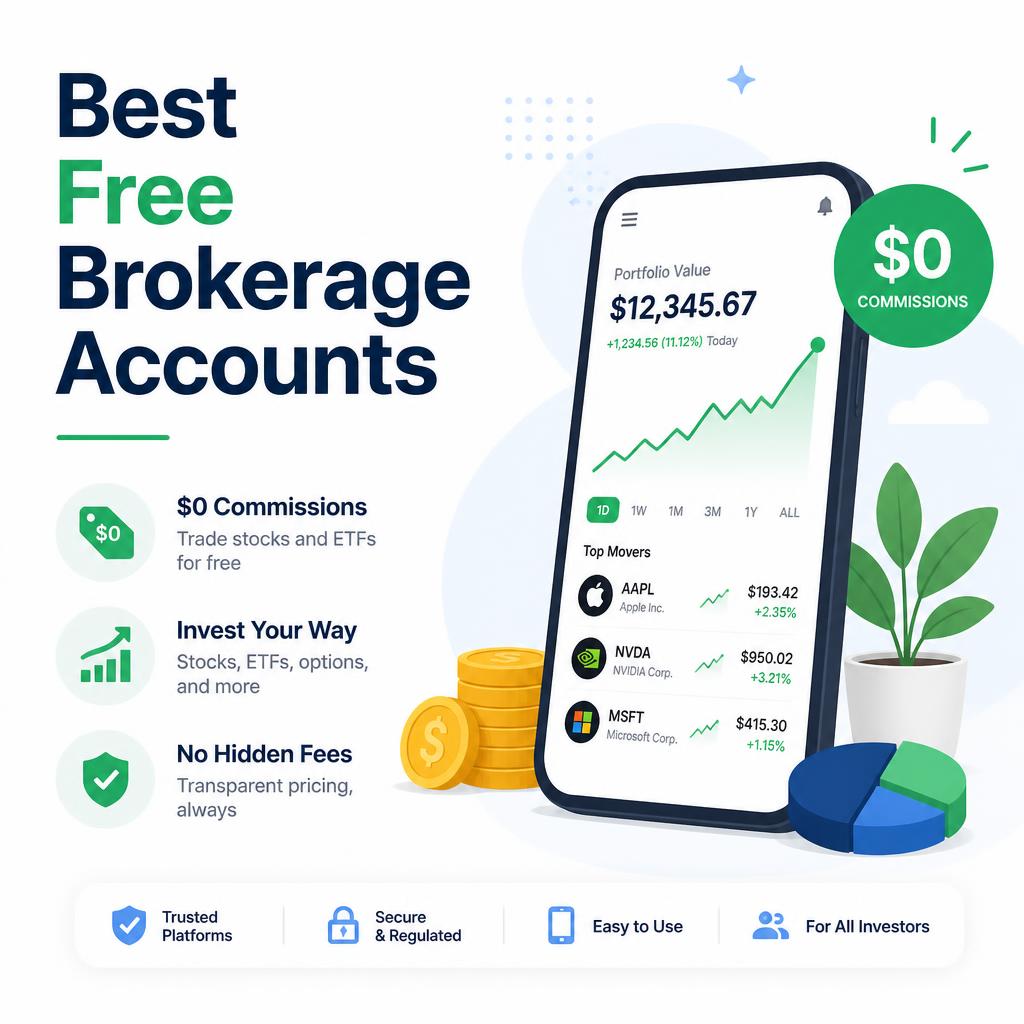
Commission-Free Trading
Fidelity doesn’t charge commissions on U.S. stocks, ETFs, or options trades. Options contracts cost $0.65 each, which is standard. Mutual fund trades are free, though some funds charge transaction fees. Check before you buy.
Account Types for Every Investor
Fidelity offers nearly every account type you’d need:
- Individual and joint brokerage accounts
- Traditional and Roth IRAs
- Rollover IRAs for old 401(k) money
- SEP IRAs and Solo 401(k)s for self-employed people
- 529 college savings plans
- Health Savings Accounts (HSAs)
- Custodial accounts for minors
- Trust accounts
You can consolidate everything in one place, which simplifies tracking.
Investment Options: More Than Just Stocks
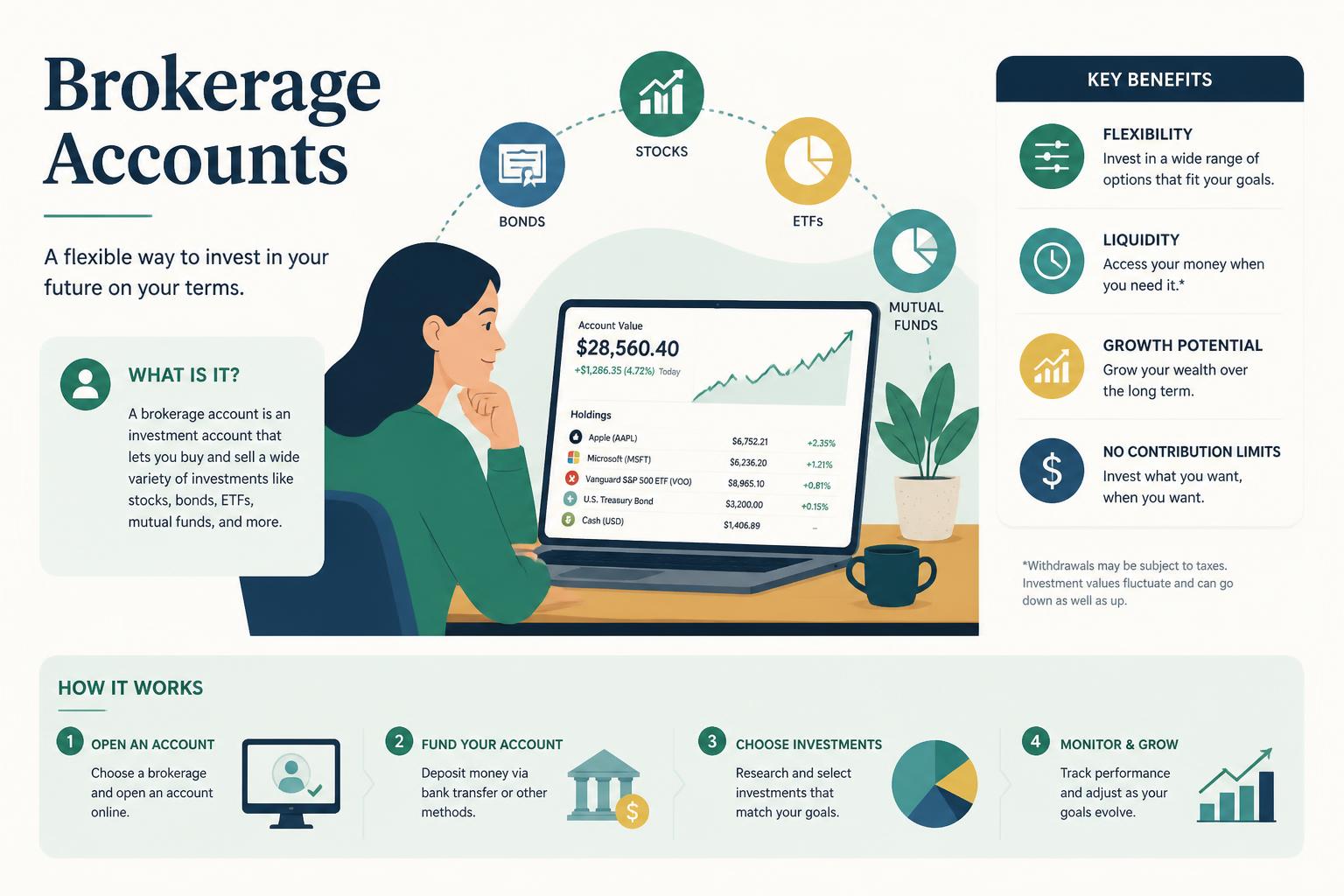
Most brokerages focus on stocks and ETFs. Fidelity gives you access to a lot more.
Stocks and ETFs
Thousands of U.S. and international stocks, plus over 3,400 commission-free ETFs. The platform supports market orders, limit orders, stop-loss orders, and more advanced types.
Mutual Funds
Over 10,000 mutual funds, including 3,300 no-transaction-fee funds. Fidelity is strong here, especially if you want actively managed funds or Fidelity’s own highly-rated funds.
Bonds and Fixed Income
Fidelity gives you real access to bonds—Treasuries, corporate bonds, municipal bonds, CDs. The bond platform has good screening tools and competitive pricing. Most competitors treat bonds as an afterthought.
Options and Advanced Trading
Active traders get single-leg and multi-leg options strategies, plus tools for analyzing risk and returns. The interface isn’t as polished as specialized platforms like tastytrade, but it’s more than adequate for most people.
Fractional Shares
Fidelity’s “Stocks by the Slice” program lets you invest in expensive stocks with as little as $1. You can buy a fraction of Amazon or Google instead of being priced out.
Research and Tools: Where Fidelity Truly Shines
If you actually want to make informed decisions, Fidelity’s research is among the best.
Independent Research Reports
Fidelity aggregates research from 20+ independent providers, including Morningstar, Argus, and MarketWatch. You get multiple perspectives instead of relying on one opinion.
Stock Screener
The screener lets you filter thousands of stocks by dozens of criteria—P/E ratio, market cap, technical indicators, whatever. You can save your screens and set up alerts.
Mutual Fund and ETF Evaluators
These tools help you compare funds side-by-side: expense ratios, performance, holdings, risk metrics. The interface makes it easy to find the best funds for your goals.
Fidelity Learning Center
Hundreds of articles, videos, and webinars covering basic investing through advanced trading strategies. The content is organized well and actually educational rather than just promotional.
Trading Platforms: Something for Everyone
Fidelity offers multiple platforms for different styles.
Fidelity.com Web Platform
The main web platform is clean and feature-rich. The dashboard shows your accounts, with easy access to trades, research, and management. The interface has been modernized in recent years and competes well with newer fintech competitors.
Fidelity Mobile App
The mobile app delivers nearly the full functionality of the web platform. You can trade, research, deposit checks, and manage accounts on the go. The app gets high ratings and frequent updates.
Active Trader Pro
For serious traders, Active Trader Pro is Fidelity’s desktop platform. Advanced charting, real-time data, customizable watchlists, sophisticated order tools. The interface looks dated compared to newer platforms, but it’s powerful and reliable.
The platform is free for all Fidelity customers. Many competitors charge monthly fees for comparable functionality.
Customer Service: Accessible and Knowledgeable
Fidelity’s customer service runs 24/7: phone, secure messaging, live chat. Representatives are generally knowledgeable and can handle both basic questions and complex inquiries.
They also have over 200 branch locations across the U.S. if you prefer in-person meetings.
Fees and Costs: Competitive but Not Always the Cheapest
Fidelity’s core trading fees are competitive. Here’s the full structure:
- Stock and ETF trades: $0 commissions
- Options: $0.65 per contract
- Mutual funds: $0 for Fidelity funds and most others; some funds charge transaction fees
- Broker-assisted trades: $32.95 per trade
- Account fees: No minimums or inactivity fees for most accounts
- Margin rates: Starting at 8.325% (varies by balance)
- Wire transfers: $0 incoming; $15-$30 outgoing depending on method
For most investors focused on stocks, ETFs, and no-transaction-fee mutual funds, fees are negligible. If you frequently need broker assistance or trade funds with transaction fees, costs add up.
Who Should Choose Fidelity?
Fidelity works well for:
- Long-term investors building retirement portfolios who value research and fund selection
- Buy-and-hold investors who want diverse options beyond stocks
- Mutual fund investors seeking broad selection with low costs
- Investors who value customer service and want phone or in-person support
- Those consolidating accounts who need multiple account types in one place
- Intermediate to advanced investors who want sophisticated research without paying for premium services
Fidelity may be less ideal for:
- Day traders who need the absolute fastest execution and most advanced charting (dedicated day trading platforms may be better)
- Cryptocurrency enthusiasts looking for extensive crypto trading (Fidelity’s crypto offerings are limited)
- Investors seeking the highest savings rates on cash (some fintech competitors offer higher APYs)
How Fidelity Compares to Other Brokerages
When evaluating best brokerage accounts, here’s how Fidelity stacks up.
vs. Charles Schwab: Both are full-service brokerages with similar fees and investment options. Fidelity has a slight edge in mutual fund selection. Schwab offers better checking account features and ATM access.
vs. Vanguard: Vanguard is ideal for passive index fund investors, with the lowest expense ratios on its proprietary funds. Fidelity provides a broader range of options and better trading tools, making it more versatile for active investors.
vs. Robinhood: Robinhood offers a simpler experience focused on stocks and crypto. Fidelity provides far more investment options, research tools, and customer support, making it better for serious long-term investing.
vs. TD Ameritrade: Both offer robust research and trading platforms. TD Ameritrade’s thinkorswim platform is particularly strong for options traders. Fidelity excels in mutual fund selection and fractional shares.
Account Opening and Funding
Opening a Fidelity account takes 10-15 minutes online. You’ll need:
- Personal information (name, address, Social Security number, date of birth)
- Employment information
- Financial information (income, net worth, investment experience)
- Beneficiary designations (optional but recommended)
Once approved, you can fund through:
- Electronic bank transfer (ACH)
- Wire transfer
- Check deposit via mobile app
- Rollovers from other retirement accounts
- Transfers from other brokerages
Electronic transfers take 1-3 business days. Wire transfers are usually same-day.
Tax-Loss Harvesting and Tax Efficiency
Fidelity doesn’t offer automated tax-loss harvesting like some robo-advisors, but the platform provides tools to manage tax efficiency manually. Tax reporting is comprehensive, with detailed year-end statements that integrate with tax software.
The platform shows cost basis information clearly, making it easy to identify positions with unrealized losses that could be harvested to offset gains.
Retirement Planning Tools
Fidelity’s retirement planning tools are among the best:
- Retirement Planner: Projects your retirement income based on current savings, contributions, and assumptions about future returns
- Retirement Income Calculator: Helps you determine safe withdrawal rates in retirement
- Social Security Optimizer: Analyzes the optimal time to claim Social Security benefits
- Required Minimum Distribution Calculator: Ensures you comply with RMD rules
These tools integrate with your actual account balances, providing personalized projections rather than generic estimates.
Security and Account Protection
Fidelity offers:
- Two-factor authentication for login protection
- SIPC insurance covering up to $500,000 per account (including $250,000 in cash)
- Additional private insurance beyond SIPC limits
- Biometric login on mobile devices
- Account alerts for suspicious activity
Your investments are held separately from Fidelity’s corporate assets. Your holdings are protected even if Fidelity faced financial difficulties.
The Bottom Line: Is Fidelity Worth It?
Fidelity delivers a solid combination of value, investment options, research, and customer service. It’s not the cheapest for every investor and the interface isn’t cutting-edge, but it provides a comprehensive, reliable platform for investors at every level.
If you’re looking for a brokerage that won’t nickel-and-dime you or waste your time, Fidelity is worth considering. Commission-free trading, extensive investment selection, and strong research tools give you what you need to build and manage wealth.
For long-term investors building diversified portfolios, Fidelity’s depth and educational resources are appealing. You can handle everything from basic stock investing to complex retirement planning in one place, which simplifies your financial life while keeping the flexibility to adapt as your needs change.
Whether you’re starting out or managing a sophisticated portfolio, Fidelity provides the tools and support to help you succeed without the fees and complexity that plague many other platforms.